After independence: Montenegro’s troubled present
On 21 May 2026, Montenegro celebrated the twentieth anniversary of its independence. With this final episode of the “Winds of Independence” series, OBCT retraces the period from the declaration of independence to the present day
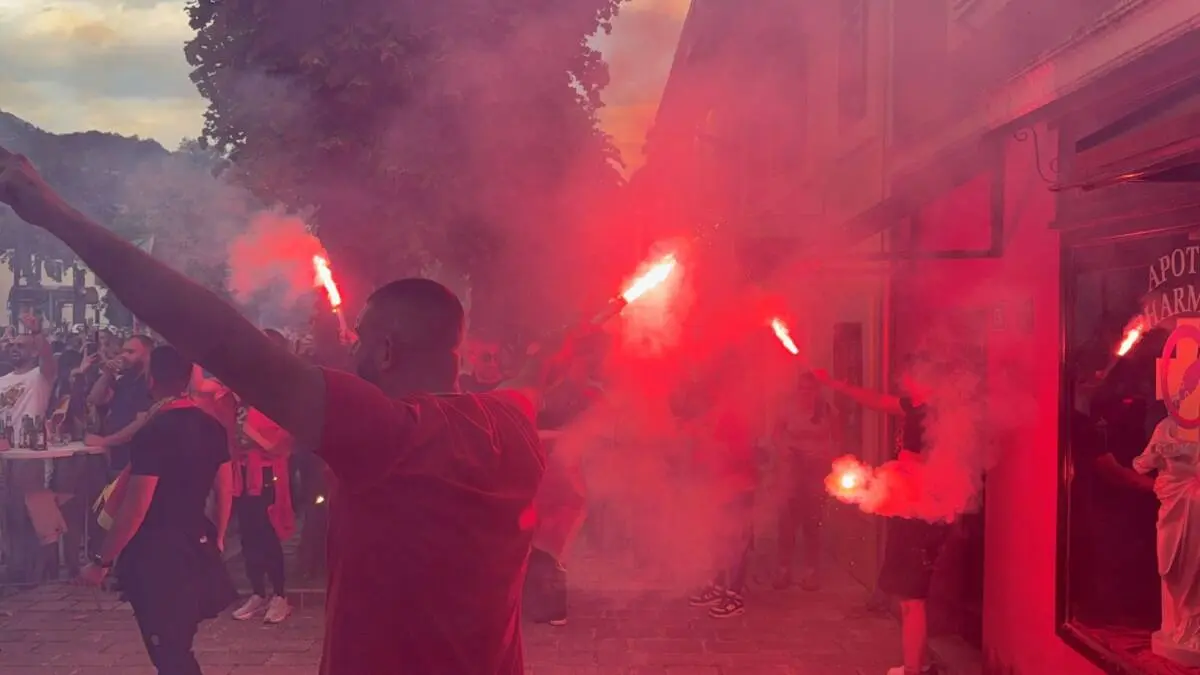
Independence Day celebrations in Cetinje, Montenegro, 21 May 2026 – photo F. Bortoletto
Independence Day celebrations in Cetinje, Montenegro, 21 May 2026 – photo F. Bortoletto
“It sucks to be twenty”, sang a recently disbanded duo from Milano. Like all twenty-year-olds, independent Montenegro is now experiencing a present rife with contradictions: some inherited from a burdensome past, others linked to the current historical moment. The Balkan country blew out twenty candles on 21 May, celebrating the anniversary of the restoration of its national independence, sanctioned in the 2006 referendum with its separation from Serbia.
Excluding Kosovo, whose international recognition as a sovereign state remains limited, Montenegro is the youngest state on the Old Continent. What impact have these two decades had on the life of the country and its citizens?
The DPS era
When Montenegro’s citizens voted for independence twenty years ago, political power in Montenegro was already firmly in the hands of then-prime minister Milo Đukanović, leader of the Democratic Party of Socialists (DPS). Alternating the roles of prime minister and president, Đukanović was the country’s de facto leader from 1997 to 2023, building what many citizens of Montenegro now call a patronage system, an autocratic regime, or a mafia state.
According to Milka Tadić, journalist and director of the Center for Investigative Journalism of Montenegro (CIN-CG), during the Đukanović era, Montenegro “was effectively a captured state”.
“During its three decades in power, the DPS had seized control of state institutions, especially the judiciary, public administration, culture and much of the media”, explains Tadić to OBCT. “The heads of these institutions were chosen based on their loyalty to the DPS and Đukanović”, points out the journalist, adding that “through an oligarchic system, the party also controlled the economy, shamelessly exploiting natural resources”.
In foreign policy, Đukanović had become the main promoter of the country’s entry into the Euro-Atlantic community. Even before independence, he had reestablished bilateral relations with regional partners, particularly with Zagreb, apologising for the 1991 attack on Dubrovnik. In late 2008 – shortly after recognizing Kosovo, in open conflict with Serbia – Montenegro applied for EU membership. The negotiations, started in 2012, now appear to be nearing the final stage. In June 2017, eight months after an alleged (and still mysterious) coup attempt, Montenegro became NATO’s 29th member.
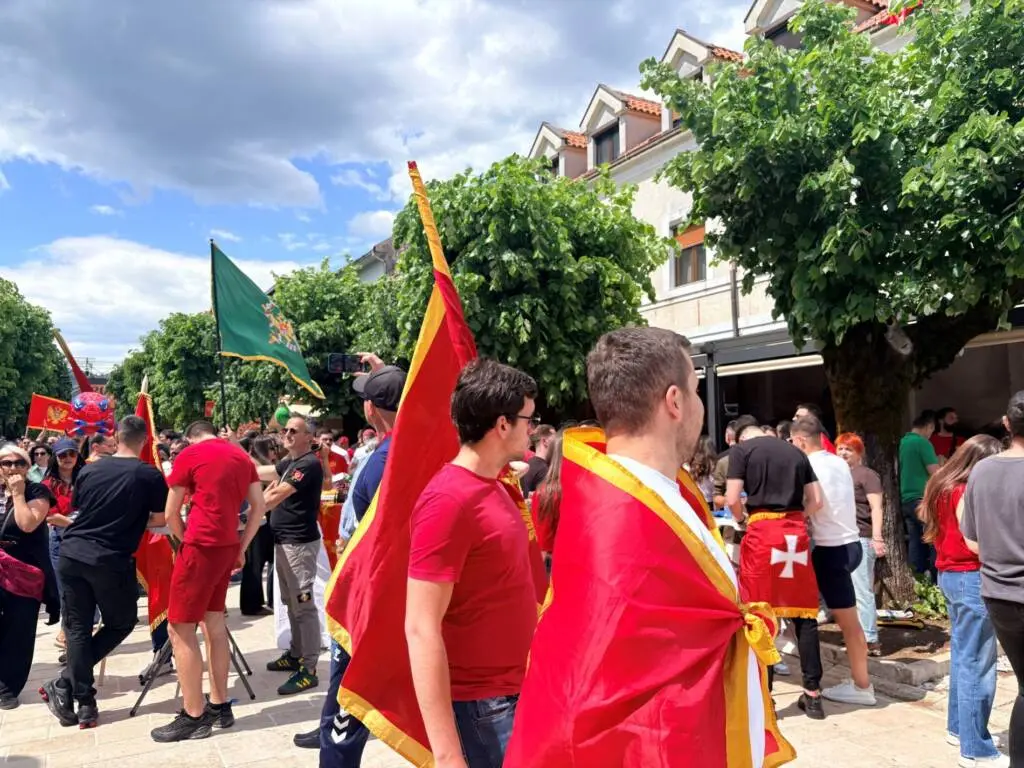 Independence Day celebrations in Cetinje, Montenegro, 21 May 2026 – photo F. Bortoletto
The challenge of alternation
The two-year period 2019-2020 marked a turning point in the country’s political history, viewed by many observers as a genuine shift in power. 2019 began with massive anti-government protests, which seemed to forge a united front between civil society and the opposition. At the end of the year, the DPS adopted a controversial law to nationalise the historic properties of the Serbian Orthodox Church (SPC), which is politically close to Belgrade. The ruling sparked further waves of demonstrations, led by the clergy, that continued until the following summer.
Precisely at this stage, the SPC, long politically influential but until then relatively low-profile, came out into the open, fanning the flames of anti-DPS tensions that had already been raging. The legitimacy of Đukanović and his party had been deeply compromised for several years, due in part to a series of corruption scandals, strong suspicions of irregularities in previous elections and, above all, the worsening economic conditions of citizens.
In August 2020, after three decades in power, the DPS lost elections for the first time. In a country confronted for the first time with the idea of democratic alternation, parliament was left without a clear majority. Two shaky technical governments followed, the first of which oversaw a significant wage increase and a reform of the contribution system.
Voting resumed in 2023, first in presidential elections (March-April) and then in parliamentary elections (June). The newly formed Europe Now Movement (PES), a liberal-conservative and pro-European party, won both rounds. Its co-founders, Milojko Spajić and Jakov Milatović – both outsiders before becoming ministers in 2020-2022 – became prime minister and head of state, respectively (Milatović left the party in early 2024). This marked the end of the Đukanović era.
The defeat of the DPS has led to a shift in state institutions. The “new” prosecutors’ offices have launched investigations into high-level corruption and organised crime, targeting many figures linked to the old nomenclature, including Đukanović and some of his family members. Despite the judicial diligence (considered by some to be politically motivated), the change of executive power has not altered the system of patronage.
“The new authorities are also trying to control institutions, place loyalists in key positions and influence the media, the judiciary and the economy”, says Milka Tadić, noting that “corruption remains a major challenge, and the judiciary is not yet able to address it effectively”. As in the classic lesson from “The Leopard”, it seems that everything has changed to stay the same.
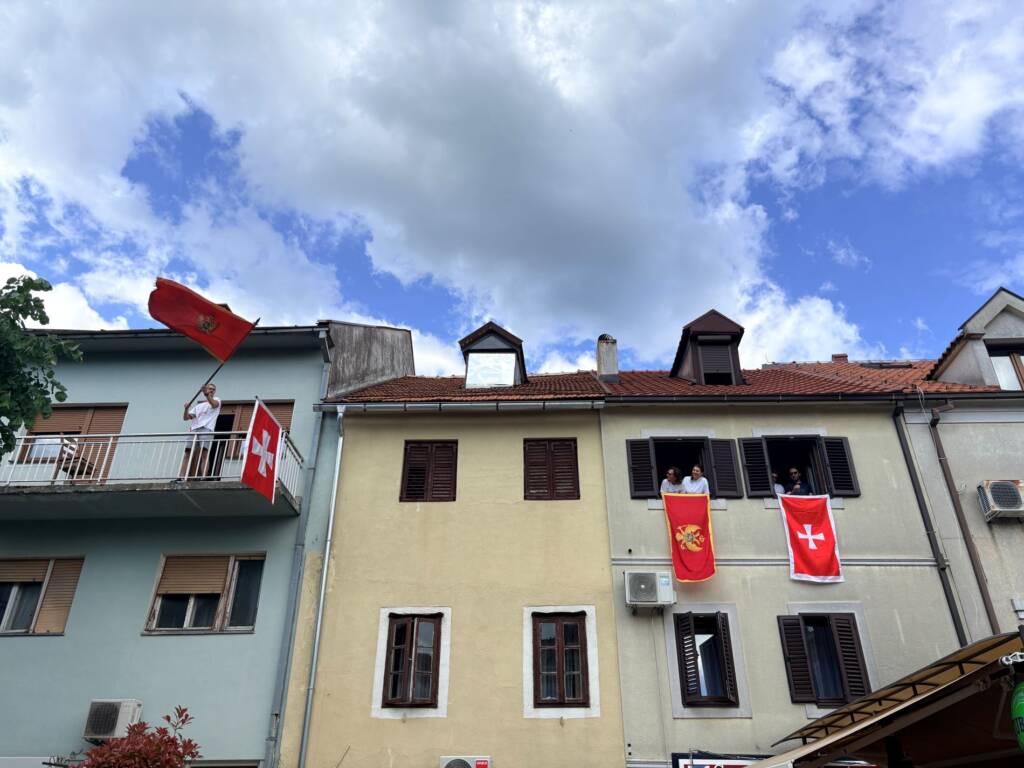
Independence Day celebrations in Cetinje, Montenegro, 21 May 2026 – photo F. Bortoletto
The identity question
In reality, something has indeed changed in recent years. Since the protests led by the Serbian Orthodox Church in 2019-2020, the issue of national identity has returned to the center of public debate, primarily driven by the pro-Serbian parties NOVA, DNP and DCG. Partners with Spajić’s PES in the governing coalition established in November 2023, these political entities are close to both the SPC and Serbian President Aleksandar Vučić. This positioning often leads to inter-institutional deadlocks and internal friction within the government, culminating in the DNP’s withdrawal from the majority last January.
Twenty years after the 2006 referendum, the eternal dispute between Montenegrin and Serbian nationalisms seems to be reopening. Today, the country’s international standing is no longer at stake – Montenegro is a NATO member whose population supports EU membership across the board. Rather, the core of the debate is the very concept of national community, questioned by those who maintain that Montenegrin identity does not exist as an autonomous entity compared to the Serbian one.
An ideological clash that involves (and overwhelms) historical, religious, linguistic and cultural dimensions, all conveniently exploited by the various factions. Thus, for example, Montenegrin nationalists defend the flag with the double-headed eagle, reminiscent of the monarchy, while unionists advocate a return to the Yugoslav tricolor. The adherence of Orthodox believers to the Montenegrin or Serbian rite is seen as a political stance as is their preference for the Latin alphabet over the Cyrillic one.
According to the 2023 census, 41.12% of the population is ethnically Montenegrin and 32.93% ethnically Serbian, while 43.18% of the population lists Serbian as their native language and 34.52% as Montenegrin. But is the society of the next EU member state really so polarised?
Katica Maksan, an analyst at the Center for Democracy and Human Rights (CEDEM), is wary of such narratives. “The reality is decidedly more complex, even if politicians and the media often portray a Manichean black-and-white alternative as unavoidable”, explains Maksan to OBCT, arguing that “this polarisation seems artificially created, and most citizens are only partially interested in this rhetoric”.
If there is one place where these arguments go unheard, it is Cetinje, the former royal capital and the beating heart of the national independence movement throughout the ages. There, on 21 May, alongside the flags with the eagle and lion, there were also flags with the cross of the Principality (1516-1852) and the green flags, adopted by the rebels who opposed union with the Kingdom of Serbia in 1919.
From the youngest to the oldest, everyone was showing the “L” (thumb and index finger raised) with their fingers, a symbol now inherent to independence: historically, it derives from the initials of Liberal Alliance of Montenegro (LSCG) which, among other things, took up the independence cause with the advent of the multi-party system (but, ironically, dissolved in 2005, the year before the referendum).
Found an error in this article? Please contact our editorial team at redazione@balcanicaucaso.org.
Featured articles
 the students' voices
 Investigation
 students' protest