Turkey, crackdown on the left before the NATO summit
Academics, journalists, lawyers, trade unionists and representatives of civil society have been arrested on arbitrary grounds in Turkey in the run-up to the forthcoming NATO summit, scheduled to take place in Ankara on 7 and 8 July. According to the opposition, the hundreds of arrests are aimed at preventing any form of protest or dissent
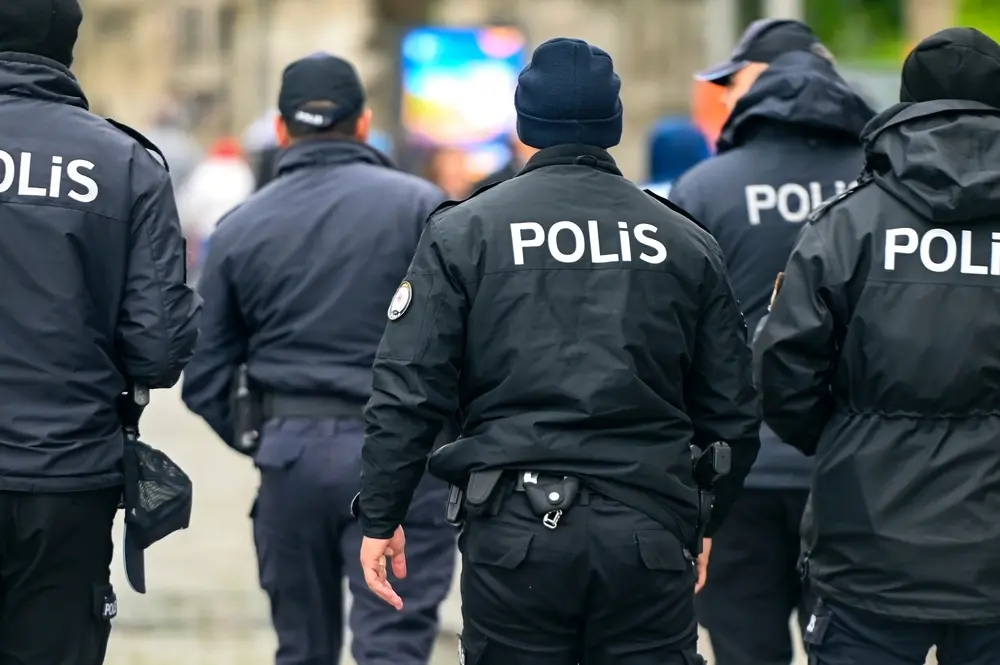
Turkish police © Savvapanf Photo/Shutterstock
Turkish police © Savvapanf Photo/Shutterstock
Burcu Arıkan, spokesperson for Umut-Sen, a collective aimed at supporting workers’ struggles, was asleep at her home in Turkey’s capital Ankara with her child when police showed up at her door around 5 a.m. last week. Her child woke up in a state of fear during the raid.
“They asked about the structure and activities of the banned Communist Party of Turkey/Marxist-Leninist (TKP/ML) organization, but not a single question was asked about how my client is connected to it,” Arikan’s lawyer Sabri Karagündüz told OBC Transeuropa. Burcu denied the accusations.
Ankara is set to host the 36th NATO Summit on July 7-8, bringing together heads of state and government from across the alliance. The NATO Summit has put the city’s authorities on high alert. Ahead of the summit, Turkish security forces carried out early morning raids on June 23, simultaneously targeting dozens of addresses across the capital and detaining people including academics, journalists, lawyers, trade unionists and civil society representatives.
According to the Ankara chief prosecutor’s office, 178 of 225 suspects taken into custody were arrested, where 34 others were released under judicial supervision.
According to Sabri Karagunduz, the fact that detention was requested for hundreds of people without a single exception shows that this is not a judicial investigation in any meaningful sense.
“They say ‘You are a member of a terrorist organization,’ yet they neither show us how they reached that conclusion nor ask about it,” Karagunduz added.
Lawyers say that a confidentiality order on the case file prevents them from accessing its contents, leaving them unable to examine the evidence on which the accusations rest.
Ankara has stepped up security measures in preparation for the NATO Summit. The Governor’s Office announced a ban on meetings, demonstrations, press statements, sit-ins, rallies, stands and similar events from June 28 to July 10.
Between July 6 and 12, events organized by public institutions or civil society organizations across Ankara, including exams, symposiums, panels, graduation ceremonies, festivals, concerts and other celebrations, have also been suspended.
Giant billboards have been put up to conceal poor neighborhoods along the foreign leaders’ route.
The detentions carried out in the June 23 sweep drew widespread criticism. Journalist Yıldız Tar, editor in chief at Turkey’s largest LGBTI+ rights organization Kaos GL, was among those detained. Tar’s lawyer Kerem Dikmen said that his client faced allegations of membership in TKP/ML like Burcu Arıkan did. She also rejected the accusations.
According to her lawyer, Tar was accused of TKP/ML membership in the morning, only to be questioned about ISIS by midday. While this confusion may stem from the fact that ISIS suspects were also among those detained in the same wave of operations, the mix-up itself points to the carelessness with which the interrogations were conducted.
Yet when questioning began, Yıldız Tar faced questions that appeared to have been prepared for ISIS suspects, such as “What is jihad?”, “What is Salafism?”
The lawyer noted that no concrete charge was put to his client at any point, and that the evidence presented had no legal standing. “The file is completely empty,” says Dikmen, Human Rights Program Coordinator at Kaos GL.
Politicians also voiced sharp criticism of the detentions and arrests. Sevda Karaca, a member of parliament from the Labour Party, said that police operations targeting anti-imperialist groups ahead of the NATO Summit amounted to a political intimidation campaign disguised as a legal investigation. “The government wants to silence voices that oppose war policies, imperialist military alliances and NATO,” she said. Karaca said that NATO-related detentions and arrests had raised the bar on what she called a system of “lawlessness, illegitimacy and arbitrariness”.
“They are trying to turn martial-law-style practices, an unnamed state of emergency, into the new normal,” she said.
Namık Tan, a member of Parliament from the main opposition Republican People’s Party (CHP), said that governments of all NATO member states recognize that protesting the alliance is a democratic right. Addressing President Tayyip Erdoğan’s government directly, “You’re worried that even a simple protest against NATO could turn into a major movement against your government,” he said.
Among those detained was Emel Memiş, a feminist academic from Ankara University’s Department of Economics, known for her work in the field of gender studies. Memiş was asked questions such as “Did you use a code name?” and “Did you receive armed or unarmed training on behalf of the organization?”. She denied the accusations.
Environmental activists were not spared from the NATO-related operations either. Volunteers for TEMA, a grassroots movement established to protect natural assets, also faced the same accusations. 42 of them, mostly retired teachers and civil servants between the ages of 60 and 79, returning from a trip to observe endemic plants, were detained, and 14 of them were jailed.
During his testimony before the judge, TEMA’s Ankara representative Nevzat Özer said he had volunteered with TEMA for 30 years and denied all accusations like all others, stating he had never even heard the name of the organization he was accused of belonging to.
Found an error in this article? Please contact our editorial team at redazione@balcanicaucaso.org.
Tag: In evidenza
Featured articles
 Investigation
 students' protest
 Montenegro Pride 2026