Moldova, Bulgarian University Against Russian Influence
150 km south of Chișinău, Taraclia is the capital of Moldova’s Bulgarian minority. In 2025, an agreement with Sofia led to the creation of a new university, a branch campus of the University of Ruse in Bulgaria. For the Bulgarian government it is a strategic investment; for the Moldovan one, a political gamble that has yet to pay off.
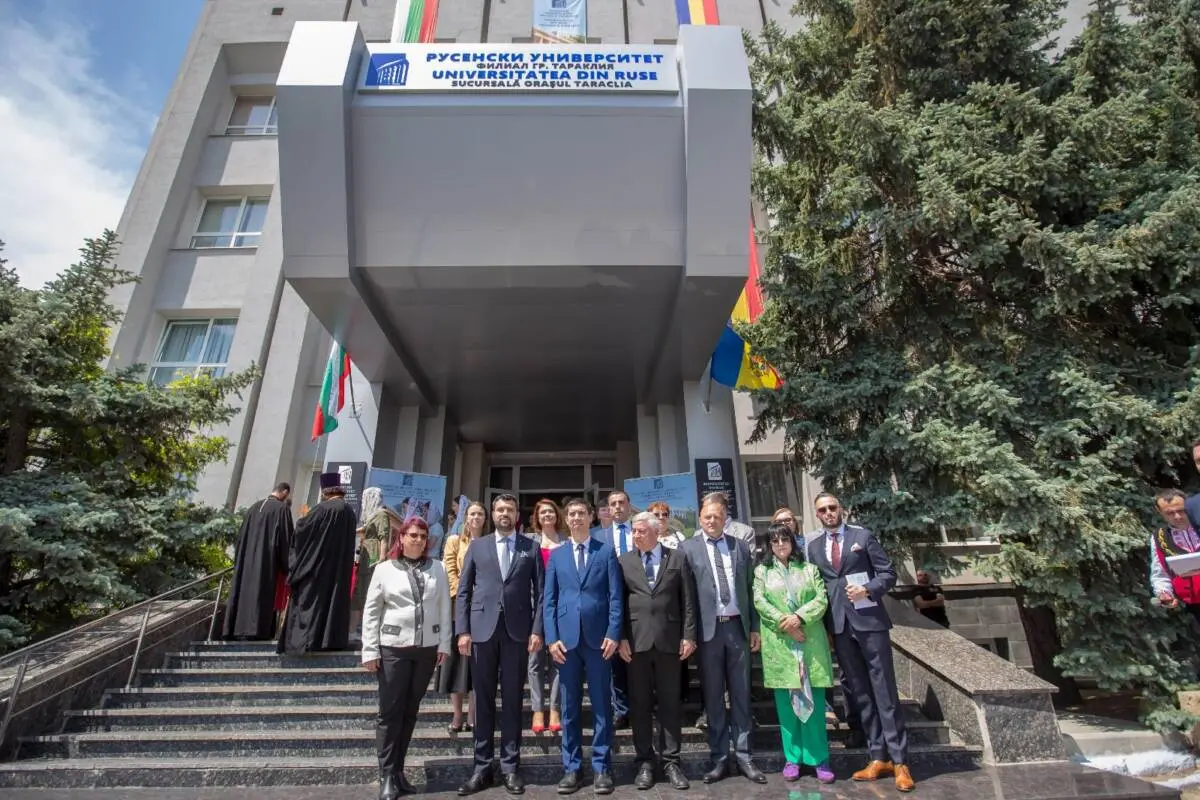
The inauguration of the Bulgarian University in Taraclia (May 2025). Photo: Bulgarian Ministry of Foreign Affairs
The inauguration of the Bulgarian University in Taraclia (May 2025). Photo: Bulgarian Ministry of Foreign Affairs
According to the most recent census, taken in 2024, 38,200 Bulgarians live in the Republic of Moldova, amounting to 1.6% of the total population. Although a minority nationwide, Bulgarians make up the majority of residents in 8 towns and villages located in the Taraclia, Leova and Cantemir districts. The capital, Chișinău, is home to 5,900 Bulgarians. With 7,700 people, or 77% of the town’s population, however, it is Taraclia that is considered Moldova’s Bulgarian capital.
Despite these high numbers, it is the political influence of the Russian Federation rather than Bulgaria’s that prevails in the region. Local citizens traditionally side with pro-Russian parties, often speak Russian as a second language and are tied to the Moscow Orthodox Patriarchate. In December 2025, Veaceslav Lupov, a mayor affiliated with the pro-Russian party of Ilan Shor — the fugitive Moldovan oligarch who holds Russian citizenship — stepped down from office. Lupov’s resignation, after seven years in power since 2019, forced the administration to call new municipal elections in May 2026. The new mayor, Ecaterina Iacobceac of the Party of Socialists of the Republic of Moldova, defeated Alexandr Borimecicov by just 81 votes in an election marked by low turnout.
The candidates head to head
Ecaterina Iacobceac (b. 1984) campaigned on social support measures for pensioners and young families, road maintenance and street lighting, as well as programmes to support local businesses. Like Borimecicov, Iacobceac also pledged to strengthen ties with Bulgaria.
Since 2015, Iacobceac had headed the municipality of Novosiolovca (in the Taraclia district), where she was re-elected in the 2023 local elections. After her victory in Taraclia, Iacobceac resigned as mayor of Novosiolovca. The Central Electoral Commission has therefore ruled that the village’s residents will elect a new mayor on 1 November.
Alexandr Borimecicov (b. 1988), an ethnic Bulgarian, has been director of the Association for the Development of the Bulgarian Community in Moldova (ARDBM) since 2023. In parallel, since May 2025 he has served as administrative director of the Taraclia branch of the “Angel Kanchev” University of Ruse.
His electoral platform focused on attracting funding and developing relations with Bulgaria. He promised to modernise urban infrastructure, along with programmes for young families and social projects, including a community bread distribution scheme and the creation of a shelter for stray dogs. He also proposed developing cultural and educational partnerships with Bulgarian institutions. He has now lost two mayoral elections, in 2023 and in 2026.
A new university in Taraclia
Although it has drifted out of Shor’s orbit, Taraclia has remained politically pro-Russian. Against this backdrop, in May 2025, following an agreement with the Bulgarian government, the Moldovan Ministry of Education dissolved the “Grigore Țamblac” state university of Taraclia, turning it into a branch of the “Angel Kanchev” University of Ruse, in Bulgaria.
This decision, while legitimate and consistent with the needs of the region’s ethnic Bulgarian population, appears to be politically motivated, aimed at reducing Russian influence in the area. The visit to Taraclia by Ozerov, Russia’s unaccredited ambassador, in November 2025 seems to bear out this reading: the Russian Federation knows it enjoys traction and political support in certain regions of Moldova, among them the Taraclia area, Gagauzia and Transnistria. It is worth noting that the new administrator of the Moldovan branch of the “Angel Kanchev” university is Alexandr Borimecicov, the independent candidate who recently lost the mayoral race.
Political motives aside, the agreement between Moldova and Bulgaria is economically advantageous both for Chișinău and for Taraclia’s students. The authorities in Sofia will support the university through scholarships, donations of books and computers, and by sending Bulgarian professors to teach courses in Bulgarian. The branch campus will be funded from the budget of the “Angel Kanchev” University in Bulgaria, while the Moldovan government will simply make use of the institution’s resources. Bulgaria has also pledged to invest one million euros in refurbishing the dormitory.
Responding to questions from Desislava Koleva of Mediapool, the Bulgarian Ministry of Education and Science described the integration of the “Grigore Țamblac” State University of Taraclia into the structure of the “Angel Kanchev” University of Ruse as “the result of a long-standing dialogue and of sustained efforts between the Republic of Bulgaria and the Republic of Moldova”.
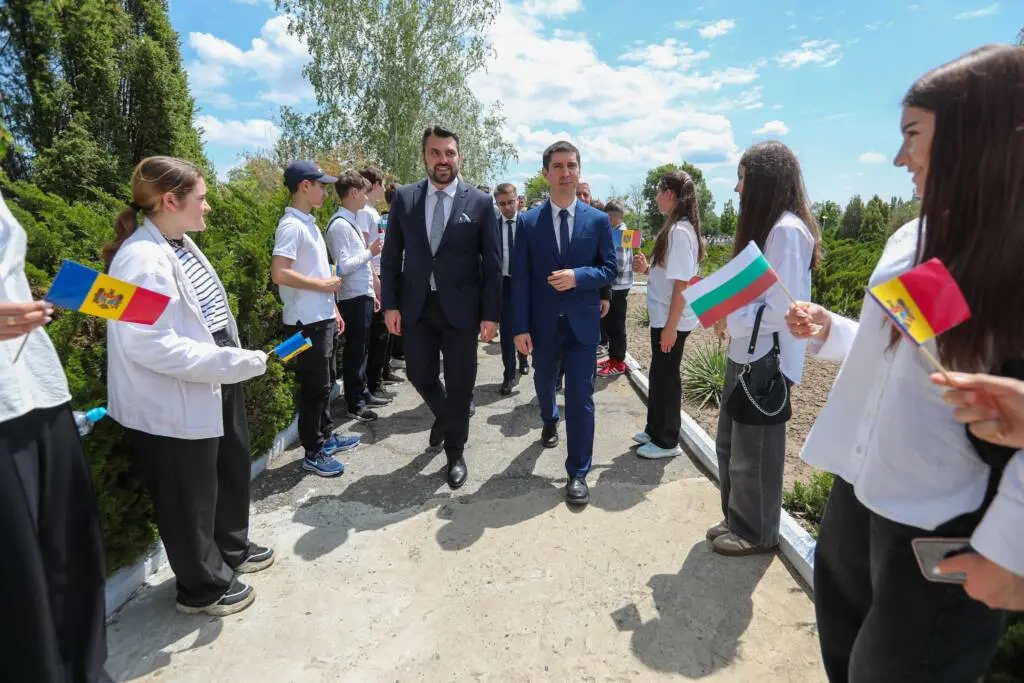
Bulgaria’s Foreign Minister Georg Georgiev and his Moldovan counterpart Mihai Popșoi at the inauguration of the Bulgarian university in Taraclia (May 2025). Photo: Ministry of Foreign Affairs of Bulgaria
Cultural influence, political influence
Yet while the Moldovan government has managed to pull Taraclia culturally away from Russia’s sphere of influence, it has failed to do so politically. The victory of Iacobceac and the Socialists is a warning of how pro-European candidates are falling short, even as pro-Russian parties struggle. Andrei Lambru, the mayoral candidate of the governing PAS party, took half as many votes as Iacobceac and Borimecicov and did not make it through to the run-off. This is yet another sign that, even though Moldova’s pro-European parties perform well at national level, they struggle to produce local administrators who win voters’ trust. Perhaps the new Bulgarian university in Taraclia needs more time to shift the region’s political consciousness — or perhaps the long-hoped-for geopolitical reorientation will never come.
This article is part of the collaborative project PULSE Europe and was produced following a press trip to Chișinău organised by the EUNEIGHBOURS EAST programme, funded by the European Union.
Found an error in this article? Please contact our editorial team at redazione@balcanicaucaso.org.

This article was produced in collaboration with the Hungarian web portal EUrologus as part of PULSE, a European initiative coordinated by OBCT that supports transnational journalistic collaborations.
Tag: Minorities | PULSE
Featured articles
 Montenegro Pride 2026
 Political deadlock