Remote working in South-Eastern Europe: Bansko leads the way in Bulgaria
In south-eastern Europe, too, remote working in rural areas is attracting an ever-increasing number of workers seeking a better balance between personal and professional development. Despite ongoing challenges, this trend is now seen as a potential solution to the depopulation of marginalised areas. Our report
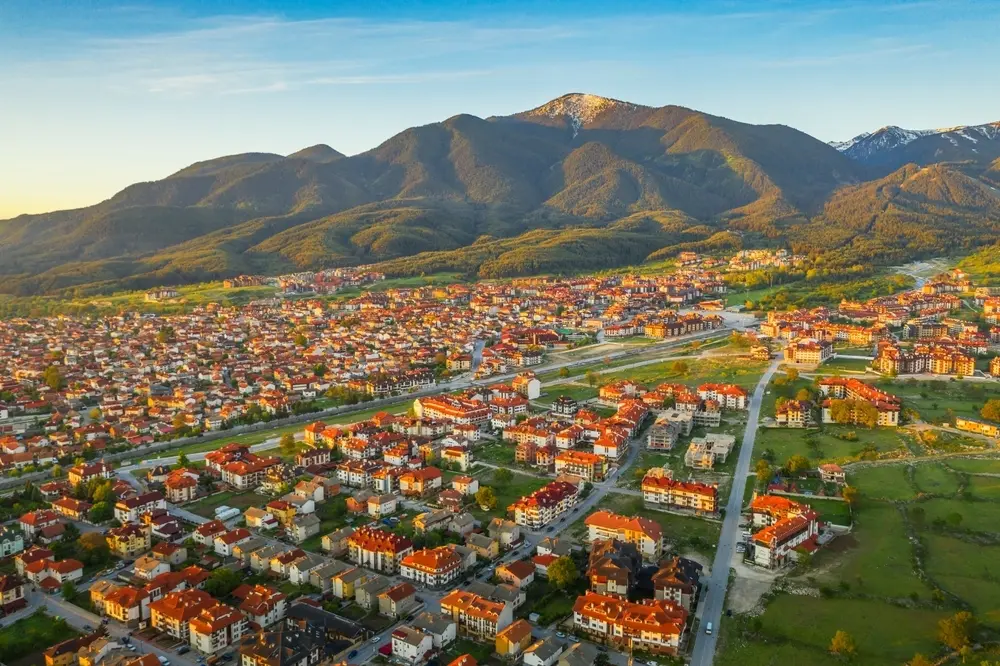
Bansko © Robert Harding Video/Shutterstock
Bansko © Robert Harding Video/Shutterstock
“Moving to Bansko started almost as a joke. In 2023, my boyfriend and I had to leave our flat in Sofia. Finding a new place in the city proved difficult – especially with a dog and a cat, as many landlords do not allow pets. Eventually, we thought: let us give it a try! Today we are not even thinking about going back”.
Teodora Hristova, 30, optimises online customer services for a major international company. We chat over coffee on a warm summer afternoon. The small, family-run café we have chosen is located in one of the newest areas of the city – a renowned ski and mountain resort in southwestern Bulgaria. Just a few hundred meters away, a dense forest stretches across the slopes of the Pirin mountain range.
“When COVID hit in 2020, I switched to smart working. The company allowed me to continue working remotely even after things returned to normal. It was a turning point. Office environments stress me out, and I am much more productive working from home. Of course, I still have to meet tight deadlines and attend back-to-back meetings. But having nature just a stone’s throw from home helps me manage stress and balance work and private life. I have zero interest in returning to an office”.
Remote work beyond the city
Teodora’s story reflects a broader trend gaining traction across Southeastern Europe: professionals are abandoning large urban centers – long attracting young talent – to settle in rural areas.
While precise figures are hard to pinpoint, remote work is clearly on the rise in the region, even if it lags behind leading European countries like the Netherlands or Finland.
Still, interest is growing. It attracts not only freelancers and employees, but also forward-thinking companies. Local and European institutions are also closely monitoring the phenomenon, seeing remote work as a potential fix for one of the region’s greatest challenges: rural depopulation.
Initiatives like the Interreg Danube4Rural.com project, launched in April 2025, reflect this shift. The project brings together partners across Southeastern Europe to build a framework helping rural communities attract remote workers and businesses.
Danube4Rural.com
The Interreg Danube4Rural.com project addresses the challenge of rural depopulation in the Danube region by harnessing the emerging potential of remote working. Co-funded by the European Union through the Cohesion Fund and supported by 12 project partners and 11 strategic partners in 11 different countries, Danube4Rural.com aims to develop a transnational governance model to help rural communities attract remote workers and employers’ organisations.
“Directing young, skilled workers to rural areas could help reverse the decline of marginalised regions”, says Manca Rajh of the Slovenian municipality of Moravske Toplice, coordinator of Danube4Rural.com.
“People want to live closer to nature, at a more sustainable pace, and within a true community. But there are real challenges. Our goal is to make these areas attractive for the long haul”.
Tracking the trends
Katharina Aufhauser and Flavia Enengl, researchers at L&R Social Research in Austria and co-authors of the project’s preliminary report (published in March 2026), offer insight into how the trend is unfolding.
Drawing on extensive interviews and a transnational survey conducted in the Danube region, the research explores the motivations of remote workers and the infrastructure needed in rural areas to attract them.
“The remote work landscape here is complex, with widely varying needs”, explains Enengl. “Currently, most people use remote work as a hybrid option rather than fully remote. This is partly because they do not want to lose access to city services, and partly because companies are still hesitant”.
“Uncertainty about legal frameworks in different countries also creates hurdles”, adds Aufhauser. “This even holds back companies that recognise the benefits of remote work, such as lower costs and increased productivity. Many employers still prefer traditional in-office oversight. Changing this mindset will take time”.
Bansko’s digital nomad hub
Despite these hurdles, local workers are not the only ones answering the call of the countryside.
In recent years, Bansko has emerged as a major hub for international digital nomads. Many choose the city as their home base either year-round or seasonally during the peak summer and winter months.
“Bansko’s digital nomad community began to take shape around 2015 and has grown rapidly since”, says Holger Mette, co-owner and director of the Bansko Nomad Fest, the region’s largest event dedicated to remote workers. “Today, hundreds of international nomads live and network here, alongside a growing group of local remote workers”.
Mette, an Australian native and avid traveler, abbandoned his career in law to become a freelance photographer and videographer. After living across the globe, he visited Bulgaria in 2020 to attend the very first Nomad Fest.
After attending a few editions, Mette teamed up with friends to run the festival. Today, he runs a business in Bulgaria and spends most of the year in Bansko, while still traveling frequently.
Infrastructure and red tape
“For foreigners – especially non-Schengen citizens – bureaucracy is a major obstscle. Navigating residence permits and taxes takes work”, notes Mette . “Things are improving thanks to specific digital nomad visas, but there is still a long way to go”.
Local and foreign remote workers face a common obstacle: poor infrastructure in rural areas.
“It is not just about fast internet and reliable transport”, says researcher Flavia Enengl. “Social infrastructure is often lacking. Access to healthcare and good schools is crucial for anyone considering long-term relocation, especially families”.
“Many people we interviewed like the idea of small-town life, but are not ready to take the leap without bacis services in place”, adds Katharina Aufhauser. “Some plan to make the move later in life, once their children have left home.”
Preventing isolation
Another issue raised in the Danube4Rural.com report is the risk of social and professional isolation. While small towns offer strong local communities, working in isolation, far from colleagues, can lead to burnout and a sense of disconnection.
Bansko offers a model worth keeping an eye on. The city boasts numerous coworking spaces where remote workers can network, alongside a wide range of outdoor sports available year-round that facilitate socialising.
“Bansko is currently an exception, but it shows what works”, reflects Mette. “The places most likely to be successful in attracting remote workers are those that already have a tourism base, adequate infrastructure, and available housing”.
“Bansko has reached the critical mass needed to sustain itself”, adds Mette. “A stable population of remote workers with strong purchasing power drives demand for new businesses and services. This creates a positive snowball effect”.
However, replicating Bansko’s genuine success will not be easy. Most rural centers in Southeastern Europe will need significant support from local and EU institutions to generate the same momentum.
Furthermore, rapid growth brings with it a series of challenges. “We came here seeking peace and nature, but Bansko risks becoming a victim of its own success”, reflects Teodora Hristova.
“With an ever-increasing influx of people bringing urban habits with them, the city’s atmosphere is changing. This calls into question the very reasons we moved here in the first place.”.
The real estate market highlights this tension: house prices in Bansko have more than doubled in the last five years alone.
“We are still hoping to build a home and stay here long-term”, says Hristova. “But with prices rising at this rate... we will see”.
Found an error in this article? Please contact our editorial team at redazione@balcanicaucaso.org.
This article was produced as part of the EuSEE project, co-funded by the European Union. However, the views and opinions expressed are solely those of the author(s) and do not necessarily reflect those of the granting authority, and the European Union cannot be held responsible for them.
Featured articles
 Montenegro Pride 2026
 Political deadlock