North Macedonia, 25 years after Ohrid
The Ohrid Framework Agreement ended the armed conflict in North Macedonia in 2001 and expanded the political, linguistic and cultural rights of the Albanian community. Twenty-five years later, the real challenge is to transform a system designed to prevent conflict into a functional and inclusive society
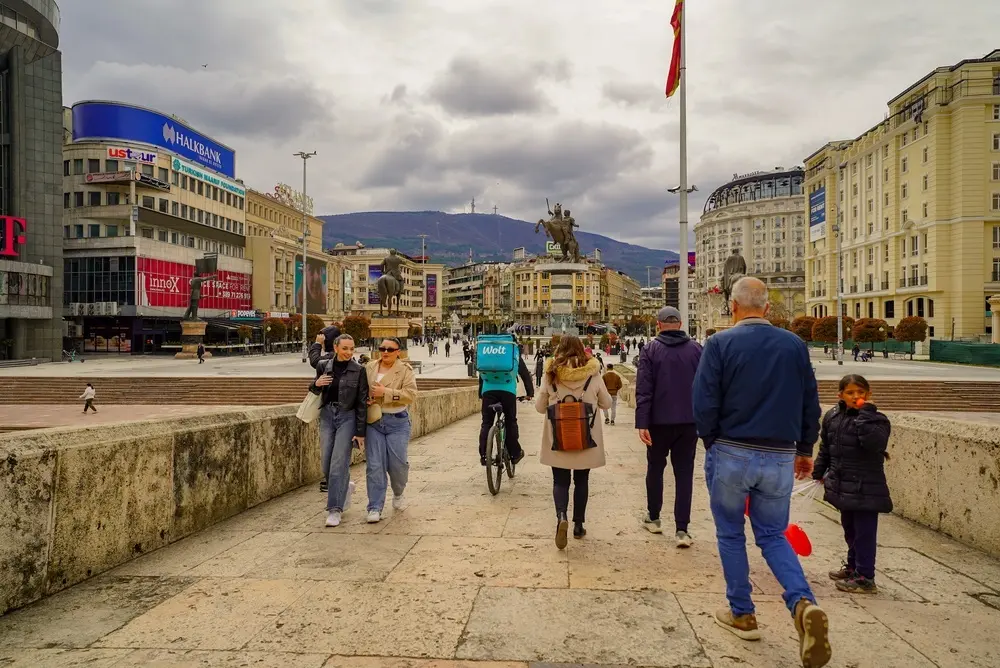
Skopje, North Macedonia ©EricBery/Shutterstock
Skopje, North Macedonia ©EricBery/Shutterstock
“We are not asking for preferential treatment. We are simply asking for equality before the law”. For Zijahudin Elezi, one of the leading voices of the protests by Albanian students at the Faculty of Law in Tetovo, the issue is straightforward: students who have studied in Albanian want to be able to take the state examination in the same language.
After five months of protests, they were offered the possibility of taking the theoretical part in Albanian, while the practical part would remain in Macedonian. The students rejected the proposal. “For us, this is not a solution because it does not respect the Law on the Use of Languages and the spirit of the Ohrid Agreement”, says Elezi.
For the protesting students, the issue goes beyond a simple exam. “If we cannot obtain a professional licence in our own language, this also affects the representation of Albanians in public institutions and their job opportunities”.
Twenty-five years after the signing of the Ohrid Framework Agreement, their protest is confronting a new generation with an old question: What does Ohrid represent today?
The agreement that stopped the conflict
The Ohrid Framework Agreement was signed on 13 August 2001, after months of armed conflict between Macedonian security forces and the National Liberation Army (NLA). Its immediate achievement was fundamental: the fighting stopped.
But the agreement did more than end the conflict. It rejected territorial solutions to ethnic issues and preserved the unitary character of the state, while opening the way for constitutional and legislative changes that substantially expanded the rights of the Albanian community and other non-majority groups.
The official use of Albanian was expanded, the principle of equitable representation was introduced, decentralisation was strengthened, and the so-called Badinter principle became an important safeguard for legislation directly affecting ethnic communities.
The Badinter principle
Named after the French constitutional scholar Robert Badinter, the Badinter principle is a double-majority voting system embedded in North Macedonia’s legislative framework following the Ohrid Agreement. It mandates that any law affecting culture, language, education, local self-government or national symbols requires a dual consensus to pass. Specifically, a bill must garner the support of a majority of the total votes cast by attending MPs and a majority of votes from MPs belonging to non-majority ethnic communities.
The changes over the following quarter-century were substantial. Albanians became considerably more represented in public administration, the police, the army and state institutions. Albanian parties became a regular part of governing coalitions. Ethnic Albanian politicians held some of the highest offices in the country.
Meanwhile, North Macedonia moved from armed conflict to NATO membership and, despite numerous obstacles, continues its path towards the European Union.
For journalist and analyst Dželal Neziri, the starting point for any assessment of the agreement should be its original purpose. “The Ohrid Framework Agreement is a peace agreement which stopped the conflict in 2001. Furthermore, it laid the foundation for resolving all oustanding interethnic issues, clearly stating that there are no territorial solutions to ethnic problems and consolidating the unitary character of the state”.
According to Neziri, the agreement was designed so as not to provide a definitive answer to future disputes. “That is why it is called a framework agreement”.
Between international security and domestic politics
From a diplomatic perspective, the Ohrid Agreement today has a significantly different meaning than it did in the years immediately following the conflict. Deputy Foreign Minister Zoran Dimitrovski says that during his two years in office, “the implementation of the Ohrid Framework Agreement has hardly ever been discussed in my conversations and contacts with foreigners”. During diplomatic meetings, points out Dimitrovski, “we often emphasise that the government has traditionally been composed of political representatives of Macedonians and Albanians, and that it firmly protects the rights of ethnic communities, thus sending a message both to the citizens and to the international community about the stability of interethnic relations in the country”.
Thus, from the government’s foreign-policy perspective, Ohrid is no longer an unresolved international issue.
The unkept promises
However, not everyone considers the implementation debate to be over. According to researcher and publicist Bekim Adili, the student protests are part of a much longer disagreement over the agreement’s interpretation and implementation.
Adili argues that part of the Macedonian political establishment and the citizens accepted the agreement in the extraordinary circumstances of an armed conflict and that the expansion of Albanian rights was sometimes perceived as a loss for the Macedonian majority. “There was a perception that Albanians had ‘taken the Macedonian state away from Macedonians’. This duality has accompanied the country for the last 25 years”, says the researcher.
For Adili, this helps explain why disputes over the implementation of some provisions have persisted. He refers in particular to the Law on the Use of Languages, whose interpretation has remained politically and legally contested, and argues that practical inconsistencies can still occur in some institutions and municipalities.
He also cites road signs in Struga and other Albanian-majority areas as examples of how, in his opinion, the Albanian language is not always used in accordance with existing legal guarantees.
Adili links the language issue to broader questions of representation and public employment. He believes that in recent years the principle of proportional representation has not always been applied in a way that meets the expectations of the Albanian community. “There have been years when it produced positive effects, and there have been years of stagnation. Overall, there has been progress, but not to the extent that there should have been”
While acknowledging the substantial transformation of the status of Albanians since 2001, Neziri believes that the question of implementation cannot be separated from a much broader weakness of Macedonian institutions. “We have many laws that have been adopted but are not implemented, and we have laws that are implemented but are not producing the expected results”.
Neziri argues that the problem goes well beyond Ohrid-related legislation. “We generally have a problem with the rule of law, which implies the non-selective and consistent implementation of laws”.
Beyond ethnicity
Twenty-five years after the conflict, some of North Macedonia’s most serious problems increasingly transcend ethnic divisions.
Young Macedonians and Albanians are leaving the country. Corruption affects both communities. So do weak institutions, clientelism, political patronage, economic and professional insecurity.
What matters, especially for young people, is not so much the ethnicity of a public employee as the efficiency of the institutions.
Neziri argues that North Macedonia did not use the political momentum after 2001 to create “a new political community, or more precisely a civic-territorial nation”. Such a concept, in his view, would not eliminate Macedonian, Albanian or other identities, but provide an inclusive political umbrella for all.
Parallel lives
Macedonians and Albanians often follow different media, support different political parties and interpret phases of the country’s recent history through different narratives. Dimitrovski describes the situation succinctly. “Albanians and Macedonians live divided, although in mutual cohabitation”. However, he notes that overt hatred is generally not manifested and interethnic incidents are rare.
In other words, the coexistence built after 2001 has proved resilient. The question is whether this coexistence is sufficient.
“The problem is that even today the Ohrid Framework Agreement does not enjoy broad support among ethnic Macedonians”, explains Neziri. “The agreement was not promoted as a compromise between the great expectations of both sides and as an opportunity to build a common, progressive and cohesive state”.
These dynamics have contributed to differing perceptions of the agreement among Macedonians, as well as Albanians. However, Neziri believes that some of the old divisions may gradually fade.
Language barriers, for example, are changing as technology and real-time translation make media and information across communities more accessible. However, the deeper challenge is political rather than technological: creating institutions and a public sphere where citizens can perceive the state as a truly shared good.
A shared anniversary, divided memories
Twenty-five years after its signing, a universally shared interpretation of the Ohrid Agreement has yet to be reached. For many Albanians, with the adoption of the agreement, demands for greater linguistic rights, representation and political inclusion have been consolidated into the constitutional order.
For many Macedonians, however, it remains inseparable from the trauma of an armed conflict and constitutional changes made under exceptional circumstances.
Dželal Neziri is skeptical that the twenty-fifth anniversary of Ohrid will help overcome these differences. “The Ohrid Framework Agreement is not seen by the parties involved as an important historical document, but as significant political capital that can still bring votes. Therefore, I do not expect a joint celebration, nor an in-depth analysis of the agreement’s implementation and results twenty-five years after its signing”, concludes the journalist.
This publication has been produced within the Collaborative and Investigative Journalism Initiative (CIJI ), a project co-funded by the European Commission. The contents of this publication are the sole responsibility of Osservatorio Balcani Caucaso Transeuropa and do not reflect the views of the European Union. Go to the project page
Found an error in this article? Please contact our editorial team at redazione@balcanicaucaso.org.
Tag: CIJI
Featured articles
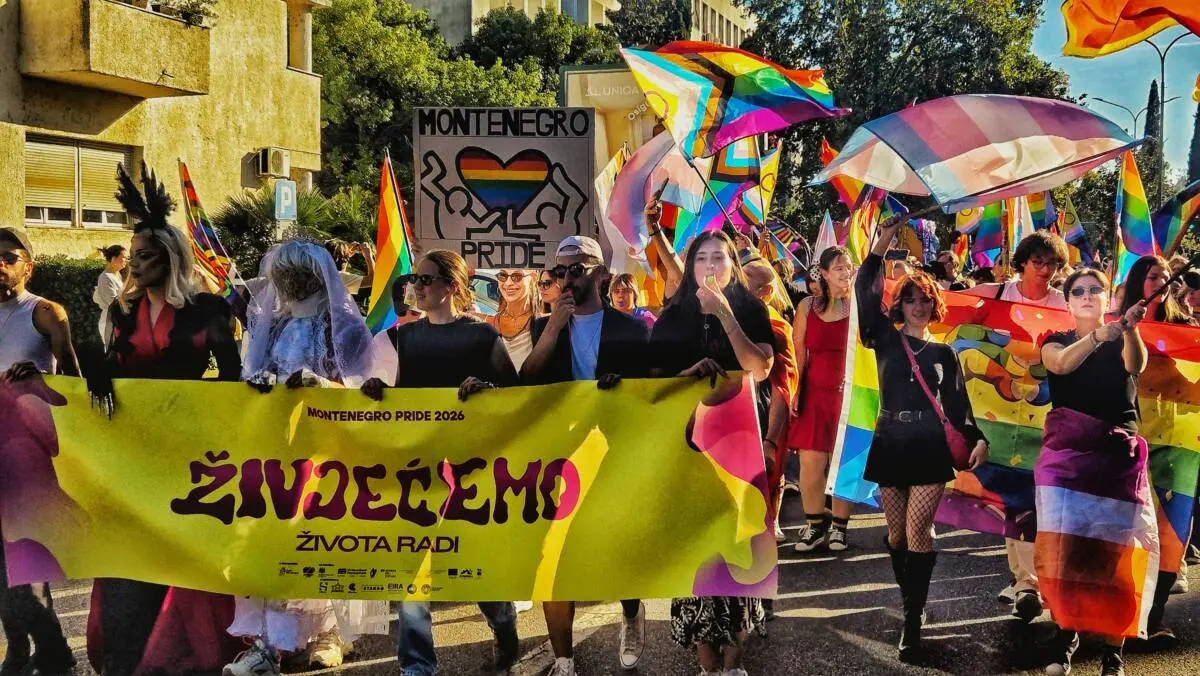 Montenegro Pride 2026
 Political deadlock