
Moldova: agriculture faces the great challenge of EU integration
On 15 June, Moldova opened accession negotiations with the European Union. In a country where agri-food products account for 45% of exports and where the agricultural sector employs 21% of the workforce, farming is set to undergo a radical transformation in just a few years. Chișinău’s goal is to join the EU by 2030
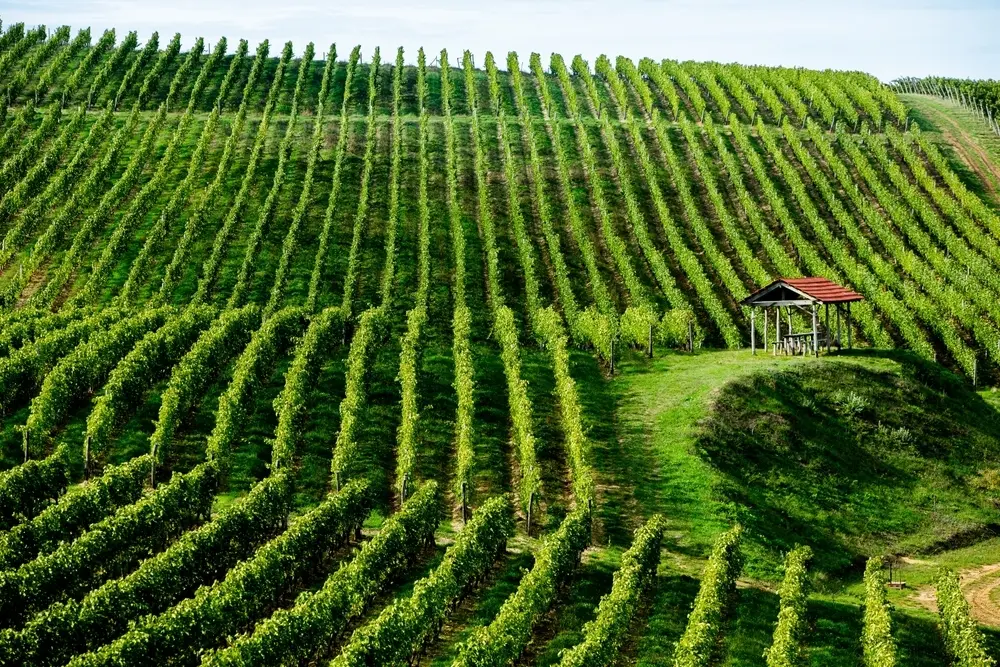
Vineyards in Moldova
Vineyards in Moldova © Nomad Pixel/Shutterstock
In May 2025, the Government of the Republic of Moldova approved the National Programme for EU Accession 2025–2029 ( Programul Național de Aderare, PNA), the main strategic document guiding the country in the process of European integration. The programme establishes a plan to align Moldovan legislation with EU standards, indicating priorities, reforms and timelines for the accession process.
The Moldovan government considers 2030 as a possible year for accession to the Union, although the goal appears very ambitious given the numerous reforms still to be implemented and the complexity of the negotiations, the goal appears very ambitious.
The NAP is divided into six negotiating clusters, which group together the main areas of reform and alignment with EU standards. The first cluster was opened on 15 June 15th. Cluster 5 is of particular relevance to Moldova and it0 which covers agriculture, rural development, food security, fisheries, and regional policies. This is a crucial area for a country where the agricultural sector continues to play a significant role in the national economy and exports.
The role of agriculture in the country’s economy
Despite the profound economic transformations of recent decades, the agricultural sector remains one of the pillars of the Moldovan economy and one of the areas most affected by the process of harmonisation with the EU acquis.
According to data from the Moldovan public agency that promotes investments in the country, the agricultural sector represents approximately 12% of GDP on average in recent years, employing over 21% of the workforce. Agri-food represents approximately 45% of exports. Its growth and rapprochement with the European market were favored by the entry into force of the Deep and Comprehensive Free Trade Agreement (DCFTA) in 2016, which facilitated access for Moldovan products to the European single market. The main agri-food exports include fruits, cereals, vegetables and processed products such as sunflower oil and wine.
Despite growing exports to the EU, the agri-food sector continues to face numerous challenges. The war in Ukraine and Iran have contributed to rising energy, fuel and fertilizer prices, driving up production costs.
Furthermore, significant differences persist between larger companies, already integrated into international markets, and small family-run businesses, which struggle to adapt to costly European standards. The sector is also charactersed by weak aggregation among producers and by tax policies and public support systems considered insufficient by the producers themselves.
The main changes underway in the institutions
The main objectives of the European integration process include aligning phytosanitary and veterinary regulations with EU standards, strengthening food safety and product traceability, supporting rural areas nd increasing the competitiveness of Moldovan products on European markets.
A key element of this process is the establishment of an administrative and control system similar to that of EU member states. To support this process, Moldova is developing the Integrated Administration and Control System, which is still in the initial stages of implementation.
The system includes several tools, including a digital farmers’ register, the identification of agricultural parcels, and the strengthening of the national animal register, with the aim of improving production traceability, management of support programs and transparency in the use of public funds.
Furthermore, the agricultural accounting system is being updated and a data network on farm sustainability is being created. Further work involves not only monitoring but also data transparency in agricultural markets.
To this end, the Agricultural Market Information System will be created, a platform that will collect information on prices, production, inventories, and trade, improving institutions’ ability to analyse the sector.
Examples of harmonisation
Moldova’s two traditional supply chains, dairy and fruit and vegetable, represent significant examples of progressive adaptation to the required EU standards.
For the milk and dairy products sector, the regulatory system defines clear criteria relating to quality, food safety, labeling, packaging, and transportation, applicable to both domestic production and imports. Monitoring is entrusted to the National Food Safety Authority.
Overall, the regulatory framework is already largely aligned with European and international practices, especially regarding product classification, the management of dairy products, and hygiene and health requirements throughout the supply chain.
A similar approach also characterises products based on vegetable and animal fats (such as margarine and butter) intended for human consumption and the food industry, with particular attention to transparent labelling.
In the fresh fruit and vegetable sector, the control system focuses on compliance with marketing criteria throughout all stages of the supply chain: from production to selection to sale. Common standards are defined regarding quality classification, external appearance, sizing, absence of defects, and traceability.
This approach helps reduce the heterogeneity of supply on the domestic market and facilitates access to foreign markets. At the same time, a growing role is being played by agricultural producer organisations, which through associative forms seek to strengthen their bargaining power and improve supply coordination.
However, this process is still in the consolidation phase and represents one of the main issues in the fruit and vegetable sector.
Finally, the geographical indication system in Moldova is also closely linked to the EU quality policy process. To obtain registration, products must comply with detailed technical specifications approved by the competent authority, which define geographical origin, quality characteristics, production methods and control systems.
This model takes up the European approach based on traceability, ties to the territory and uniform quality standards.
Alongside the designations of origin, several Protected Geographical Indications (PGIs) have been registered, encompassing a wider range of agri-food products, including traditional sweets, wine, honey, processed nuts, spices and meat products. These designations highlight not only the quality of the product but also the Moldovan geographical, environmental and cultural context.
A differentiated integration
Overall, the Moldovan agricultural sector is undergoing a profound transformation. The reforms not only concern the adaptation of regulations to EU standards, but also involve the entire agricultural governance system, from production to data management, to oversight mechanisms and public support.
There is progressive alignment with the EU acquis in areas such as quality policy, including geographical indications and organic certification, agricultural market regulation, food safety, and the digitalisation of administrative systems.
However, the process is proceeding at different speeds. Some sectors, such as quality certification and organic production, are more advanced, while others, including producer organizations, information systems integration, and data collection, are still in the process of consolidation.
The success of the reforms will depend on their effective implementation on the ground. It will therefore be essential to support small and medium-sized farms, which constitute a large part of the national productive fabric but often have limited resources.
At the same time, investments will be needed to adapt to climate change, particularly in strengthening irrigation systems in regions most exposed to drought.
Training new generations of farmers and technicians also plays an important role, through strengthening agricultural institutes and specialised universities. At the same time, combating rural depopulation will require more competitive wages, stable employment, and adequate public services.
Found an error in this article? Please contact our editorial team at redazione@balcanicaucaso.org.
This article is written as part of the project “InteGraLe – Western Balkans vi-à-vis the Trio: single market, cohesion and regional policy for gradual integration into the EU”. The project is supported by the Analysis, Programming, Statistics, and Historical Documentation Unit – Directorate General for Political Affairs and International Security of the Ministry of Foreign Affairs and International Cooperation, pursuant to Article 23-bis of Presidential Decree 18/1967. The opinions expressed in this publication are those of the authors and do not necessarily represent the views of the Ministry of Foreign Affairs and International Cooperation.
The work was also supported by a Marie Curie Staff Exchange under the EU Horizon Europe programme (project acronym: ORCA, grant no. 101182752).
Featured articles
 Investigation
 students' protest
 Montenegro Pride 2026