Montenegro: the unusual protest of a photojournalist under threat
Dismayed by a court decision to reduce a sentence — already considered lenient — handed down to someone who had threatened his life, Boris Pejović, a photojournalist for the Podgorica-based newspaper Vijesti, took an action that caught many by surprise: he turned himself in to the authorities, intending to sound the alarm about the inadequate protection afforded to media professionals
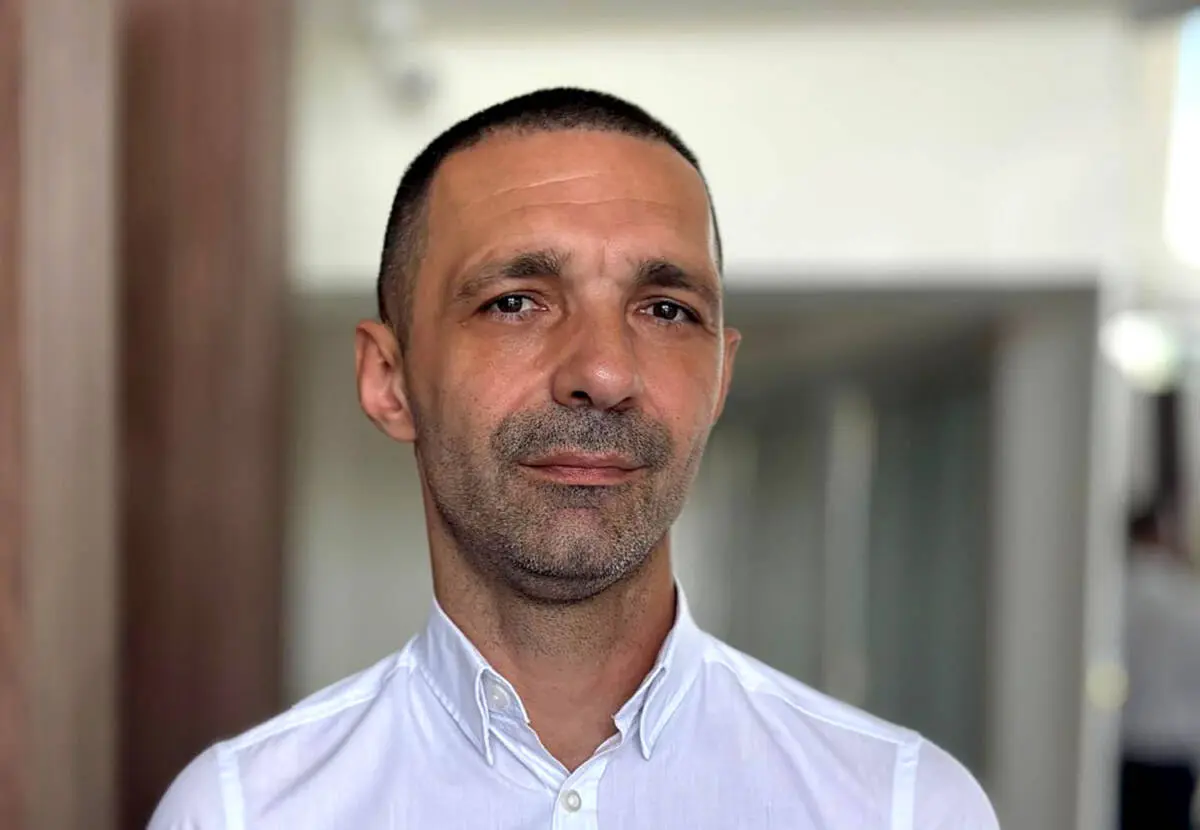
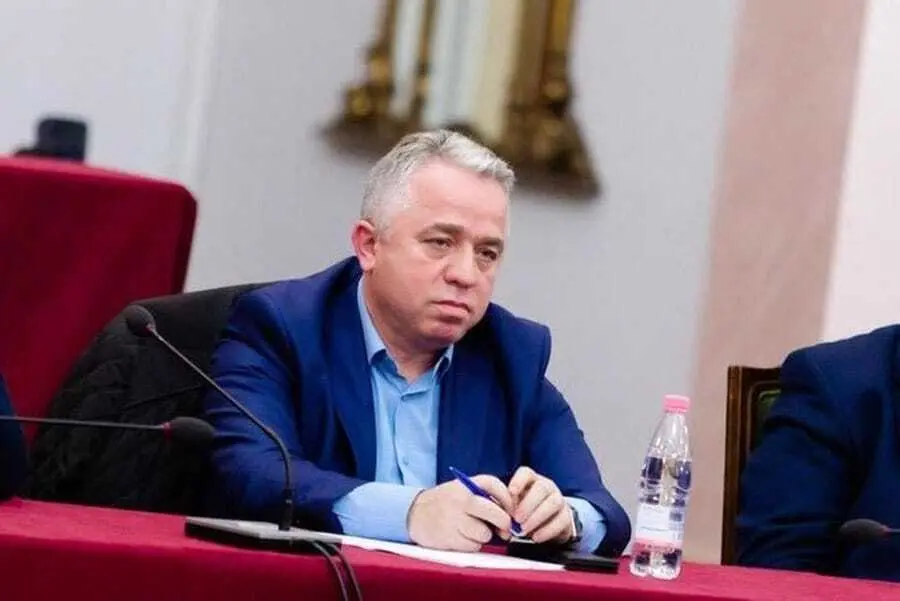
Boris Pejović (foto archivio privato)
Boris Pejović (private archive)
Filip Cikić, 19, originally from Berane, Montenegro, has been ordered to pay an administrative fine of 300 euros for issuing death threats against photojournalist Boris Pejović and reporter Balša Rudović, both of the newspaper *Vijesti*. The threats were made on August 8 of last year, during the removal of an illegally erected monument to the Chetnik leader and war criminal Pavle Đurišić in Gornje Zaostro, near Berane.
“We should have killed you; we could have killed you — you should have lost your lives,” Cikić said, threatening Pejović and Rudović.
Judge Ahmet Međedović, of the Misdemeanor Court in Bijelo Polje, ruled that Cikić had disturbed public peace and order by instilling fear in the two journalists and threatening them with death. According to the judge’s ruling, if Cikić pays half of the fine within thirty days of the final judgment, he will be exempted from paying the remainder.
Taken aback by the verdict, Boris Pejović decided to take an unusual step: he turned himself in to the authorities. “I hereby issue public threats against the President of Montenegro, Jakov Milatović; former President Milo Đukanović; Prime Minister Milojko Spajić; Minister of Justice Bojan Božović; Deputy Prime Minister in charge of security, Aleksa Bečić; President of the Supreme Court Valentina Pavličić; Supreme State Prosecutor Milorad Marković; Chief Special Prosecutor Vladimir Novović; Speaker of the Parliament Andrija Mandić; as well as all members of the Montenegrin Parliament. On this occasion, I publicly utter the following threatening words: ‘We should have killed you, we could have killed you, you should have lost your lives.’ I also wish to call them ‘Ustaše and traitors.’ These are the very same threats that were directed at me in Gornje Zaostro, near Berane, by Filip Cikić — who also restricted my movement and physically assaulted me. I expect to receive a penalty equal to the one he received for these threats — namely, a fine of 150 euros — in accordance with Article 8 of the Law on Public Order and Peace. After all, the Constitution establishes that we are all equal before the laws of this country,” stated Pejović.
As might have been expected, the prosecutor in charge at the Podgorica Public Prosecutor’s Office has decided that Pejović will not be held liable in any way for the threats made against the highest state officials.
“My action is a form of protest, a provocation directed at the system, and an attempt to place — if only for a moment — those who create the laws, enforce them, and determine their consequences, into the same position that we, as journalists and photojournalists, have found ourselves in for years,” explains Boris Pejović to OBCT.
The Gornje Zaostro case
What concerns the Vijesti photojournalist is not so much the outcome of his self-reported “offense” as it is the Gornje Zaostro incident.
“Dozens of people attacked us while we were documenting an event of significant public interest,” recounts Pejović. “During the event, attended by numerous high-ranking clergy and members of the faithful, a monument was erected to Pavle Đurišić, a collaborator of Adolf Hitler. We were subjected to threats, had our equipment confiscated, saw our photographs deleted, and faced attempts to prevent us from doing our jobs. My colleague, Stevo Vasiljević, was physically assaulted, and his equipment was damaged. All of this took place right in front of plainclothes police officers, who did not intervene in any way. There were no repercussions for such unprofessional conduct.”
Pejović argues that it is fair to ask what kind of message is being sent to society when death threats are met with fines that are equal to — or even lower than — those imposed for certain traffic violations.
“When someone is fined 300 euros for threatening journalists, and is then only required to pay half that amount, we have to ask ourselves: does such a penalty truly deter violence, or does it send a message to potential aggressors that intimidating journalists doesn’t actually cost very much?” Pejović remarks.
The photojournalist states that if his act of self-reporting manages to prompt even a portion of the public and policymakers to reflect on this issue, then the gesture will have achieved its purpose. “However, substantial change will not come about through a single self-reported incident; it will only happen when institutions protect journalists consistently and effectively, when every attack is thoroughly investigated, and when those who threaten media workers face sanctions commensurate with the severity of the offense committed,” Pejović emphasizes.
Threats and assaults experienced in the past
Throughout his career, the Vijesti photojournalist has faced various forms of pressure and assault. In 2002, during a protest against the construction of a building, businessman Veselin Barović snatched the camera from his hands. A police officer present at the scene did not deem it necessary to intervene.
In 2006, while photographing a health center building, a doctor prevented him from moving about and subsequently blocked him from leaving the facility — an incident that forced him to call the police. Two years later, Pejović was arrested while photographing a protest by company workers, though he was later acquitted by the High Court.
In August 2009, Mihailo Jovović, editor-in-chief of Vijesti, and Pejović were physically assaulted while photographing a vehicle that had been illegally parked by the then-mayor of Podgorica, Miomir Mugoša.
“Reflecting on these events, it is hard not to wonder why the same things keep happening, and why it is so difficult to establish accountability. In some cases, there was no reaction from the institutions; in others, proceedings dragged on for years; and in still others, the sentences handed down were inadequate,” Pejović points out.
According to the photojournalist, Montenegro has made some progress, but it has yet to reach the level of institutional protection that should be the standard.
“We need more efficient investigations and faster, more consistent procedures — ranging from establishing the accountability of all parties involved and investigating institutional shortcomings, to providing concrete financial support and implementing preventive measures. Because if we tell a journalist to report freely, yet — when they are attacked for their work — we leave them to fight alone for years in pursuit of justice (which is often never even granted), then we have failed to provide them with any real protection,” concludes Boris Pejović.
Found an error in this article? Please contact our editorial team at redazione@balcanicaucaso.org.
 This article was produced as part of the Media Freedom Rapid Response (MFRR) project, a Europe-wide mechanism that tracks, monitors, and responds to violations of press and media freedom in EU member states and candidate countries
Featured articles
 the students' voices
 Investigation
 students' protest