Albania, are early elections the only way out?
Albania needs a broader political agreement that goes beyond the question of who governs, addressing democratic accountability, electoral competition, EU integration, and political parties’ reform. An interview with political expert Afrim Krasniqi
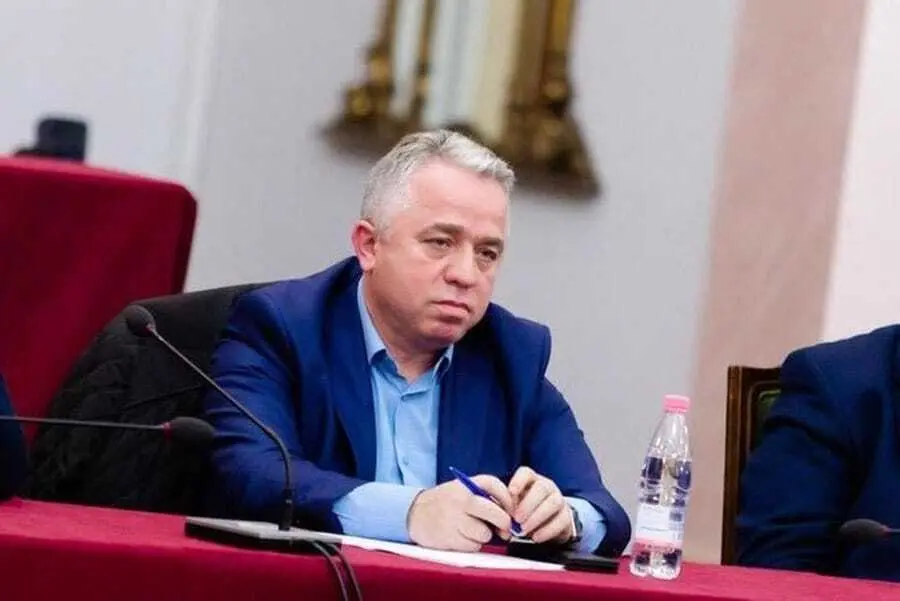
Afrim Krasniqi – photo private archive
Afrim Krasniqi - photo private archive
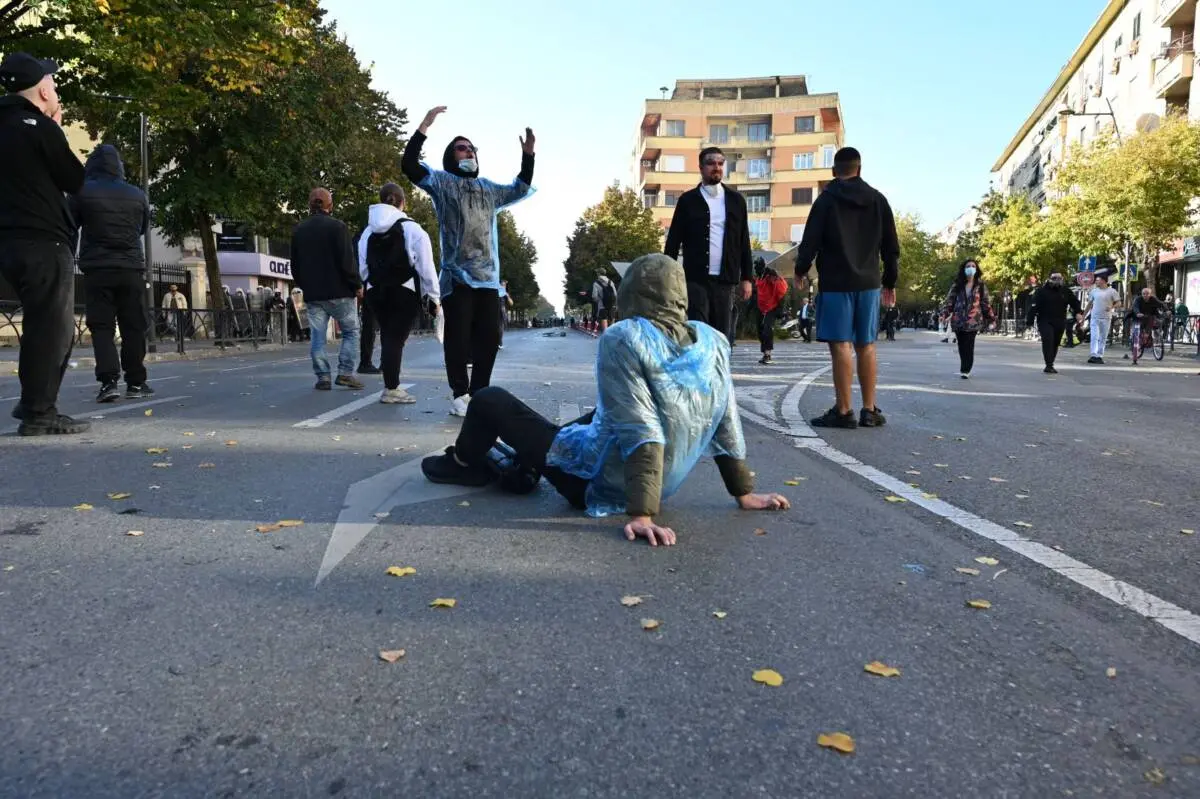
Albania’s political crisis has deepened amid months of protests, growing public discontent and renewed clashes between demonstrators and police. What began as a largely peaceful civic movement, has evolved into a more confrontational standoff, exposing the widening gap between citizens and the political establishment.
In an interview for OBCT, political expert Afrim Krasniqi analyzes the protests, prospects for early elections and structural weaknesses of Albania’s political system. He argues that the authorities missed an opportunity to engage seriously with the protesters’ demands, allowing frustration to grow and the movement to radicalise.
For several months, Albania has been experiencing civic protests, which evolved in the recent students’ uprising. Recurring demands are Edi Rama’s resignation, a transitional government, and early parliamentary elections. What political conditions would be necessary for the protesters’ demands to translate into a new electoral process?
The protests offered Albania an ideal opportunity to reflect on the mistakes made over the past decade. They were mass, peaceful, civic protests, carrying an exceptionally direct and collective message, free from the influence of any political interest. It would be surprising if the political establishment were to waste such an opportunity instead of addressing, respecting, or at least listening to young people.
Unfortunately, politicians showed greater enthusiasm for denigrating and accusing them than for addressing their demands. Had those demands been taken seriously, many of the scenes witnessed in recent days and the protests’ radicalisation could have been avoided.
The prolongation of the peaceful protests, the lack of an institutional response, their gradual descent into monotony, and the decline in their intensity created a different situation. Radicalisation and police interventions, particularly the initial clashes, turned the protests into a bitter confrontation that produced acts of violence and negative perceptions, pushing the country towards an entirely different situation.
Anyone familiar with politics understands that we have reached a point where things can no longer continue as they are. Reform is needed, improvements are needed, and reflection is necessary. The political system needs a fresh start, with more space for young people, greater democracy and rule of law. Individuals and groups with the potential to represent this need for change have already emerged.
If this movement were to lead to the creation of new political parties, what would be the main challenges in turning civic mobilisation into institutional representation?
I believe there will be several attempts to establish new political entities. I am also aware of some concrete initiatives. However, I think that creating a party is only the first step.
If we want to change Albania, it is not enough to establish a separate party. We need to create a political formation that brings a new spirit, individuals with integrity, ideas and practices that differ from those of traditional parties. It must offer citizens something they have not had before in our political system.
This is the main challenge facing young people who want to establish parties, and new parties in general. I am not sure whether they have fully grasped and understood this message.
If they succeed in creating such a political formation, they could achieve success, as we have seen with new movements in Croatia, Spain or Greece, including recent developments in Serbia and North Macedonia. A regional example is the experience of Vetëvendosje in Kosovo.
Looking back at the 2017 agreement on the establishment of a technical government, signed by Rama and the then-leader of the Democratic Party, Lulzim Basha, which followed the opposition’s 90-day protest – how do you assess the impact of that practice on subsequent developments in Albania?
The 2017 agreement was a political pact intended to resolve a specific crisis, but it did not establish a sustainable mechanism to guarantee trust in elections. It enabled the opposition to participate in the elections, but it did not resolve the structural problems of the political and electoral system.
I believe Albania could consider other models, particularly given the deep mistrust between the political sides. North Macedonia had a technical government model in place for years before elections, while Bulgaria has a caretaker government mechanism enshrined in its Constitution. Personally, I consider the Bulgarian model more reasonable and worthy of examination, because the interim prime minister is selected among senior institutional officials and is not necessarily by two party leaders.
Perhaps Albania, given the current level of mistrust, needs a similar mechanism. This is all the more relevant given that international election-monitoring reports continue to highlight the difficulty of clearly separating the state from the party in power.
Would Albanian politicians readily accept such a solution? I do not think so. There would be considerable resistance. Is the international community prepared to impose it? Again, I do not think so, because Albania is neither a major geopolitical actor nor a priority that would justify imposing such an intervention.
Ultimately, the solution remains the responsibility of domestic political actors. The problem is that, under the current circumstances, I do not yet see the political will to move towards a technical government or a new agreement. This is particularly true given that Edi Rama’s personal political career is also at stake.
The current Electoral Code applies a system of mixed lists, in which some candidates are included in closed lists, while others are subject to preferential voting. How does this system work in practice? Does this model favor party leaders over the composition of Parliament?
I do not believe the current formula is a good one. We have a parliament in which the majority of MPs are determined through mechanisms that continue to give political party leaders considerable influence. The partial opening of the lists has not changed the fundamental nature of the system.
There is another problem. Even when candidates are elected through preferential votes, that does not necessarily mean the best candidates have been chosen. Voters’ attitudes differ from one area to another. In urban centres, people may vote for public figures with strong profiles and integrity, such as Jorida Tabaku or similar figures. In other areas, particularly on the outskirts, voters often favour individuals with wealth, strong informal connections, or considerable capacity to mobilise voters.
We have a mixed situation that needs to be analysed on a case-by-case basis. But as a model, I do not believe it works. Neither the appointment-based model nor preferential voting has brought us a higher-quality parliament. In fact, I do not see the current parliament as being qualitatively better than previous ones.
This is also one of the greatest disappointments for the younger generation. We see young people in parliament who, despite their age, represent a political mentality that is far removed from that of today’s generations. They are often politically and professionally unprepared to offer new ideas.
The problem, therefore, is not simply the age of politicians, but their mentality and the quality of political representation.
Does the current electoral formula affect the representation of smaller or new parties in Parliament? In the last elections, new political parties secured parliamentary representation, but with a number of seats that was not proportional to their nationwide support…
There is undoubtedly a disadvantage for new parties. However, I also believe that Mundësia, Lëvizja Bashkë, and Shqipëria Bëhet made mistakes in their strategic approach.
A newly established party cannot contest elections across the entire country in its first election as though it had the organisational structures and resources of the traditional parties. A strategic approach is necessary. For example, one party could focus on Tirana, another on Vlora, while supporting one another. There are agreements and coalitions; this is what politics is about.
Politics is not simply about confronting others directly with ideas. You also need the political intuition to understand how to maximise your representation and create mechanisms that ensure your ideas have a chance of succeeding.
I believe these parties also failed because of the excessive prominence of their leaders. As a result, their parliamentary representation is more limited than their electoral support would have allowed. At the same time, the collected votes demonstrate the disproportionate nature of the system. Winning one parliamentary seat can require a new party to obtain far more votes than the Socialist Party or the Democratic Party, which is disproportionate and unfair.
We should not forget that the rules of the game have been established by the parties that dominate Parliament, to protect their political interests, often at the expense of new parties.
New parties must find formulas for cooperation that minimise the loss of votes caused by the electoral system. This is one of the main lessons to be learned from the last elections.
Compared to major parties, with established structures and resources, what obstacles would a new civic movement seeking to contest elections face?
The main problem is not how parties use the public funds, but informal funding, suspicious or criminal sources of money and undeclared donations.
We need stronger legislation and effective mechanisms to identify and sanction parties that benefit from criminal or informal financing, measures to address links with individuals with criminal records, and regulation of new forms of political financing and advertising, including online media and digital platforms.
This should have been one of the main priorities of electoral reform, but we still do not have a comprehensive solution.
Smaller parties are naturally at a disadvantage. They have fewer financial resources, weaker organisational structures, less access to the media, and fewer opportunities to reach citizens. They often have good ideas and capable people, but they have not yet managed to convey their message to the public in a way that allows citizens to understand what they stand for and what impact they could have.
How realistic is it for Albania to move towards early elections?
Albania’s political history has shown that whenever we have held new elections and experienced a change of government, we have also seen reforms. During their first term, both left or right wing governments have been more reform-oriented.
Whenever those in power have chosen simply to remain in office without making substantial changes, the consequences have been very negative for the country, for the political party in question, and for political life as a whole. I believe this is precisely the situation we are experiencing now.
I do not believe reaching a political agreement will be easy. For Rama, leaving power is directly linked to the future of his political career. Under the current circumstances, Rama’s departure could be irreversible.
Nevertheless, I do not rule out early elections and perhaps they are the only way out of the political crisis. This would require political will and an agreement implemented through constitutional mechanisms. But simply changing the government would not be enough. A broader national pact is needed on the European integration process, key reforms, and the need for a fresh start for representative democracy in Albania.
Found an error in this article? Please contact our editorial team at redazione@balcanicaucaso.org.
Featured articles
 the students' voices
 Investigation
 students' protest