Albania protests: Tirana turned into a battlefield
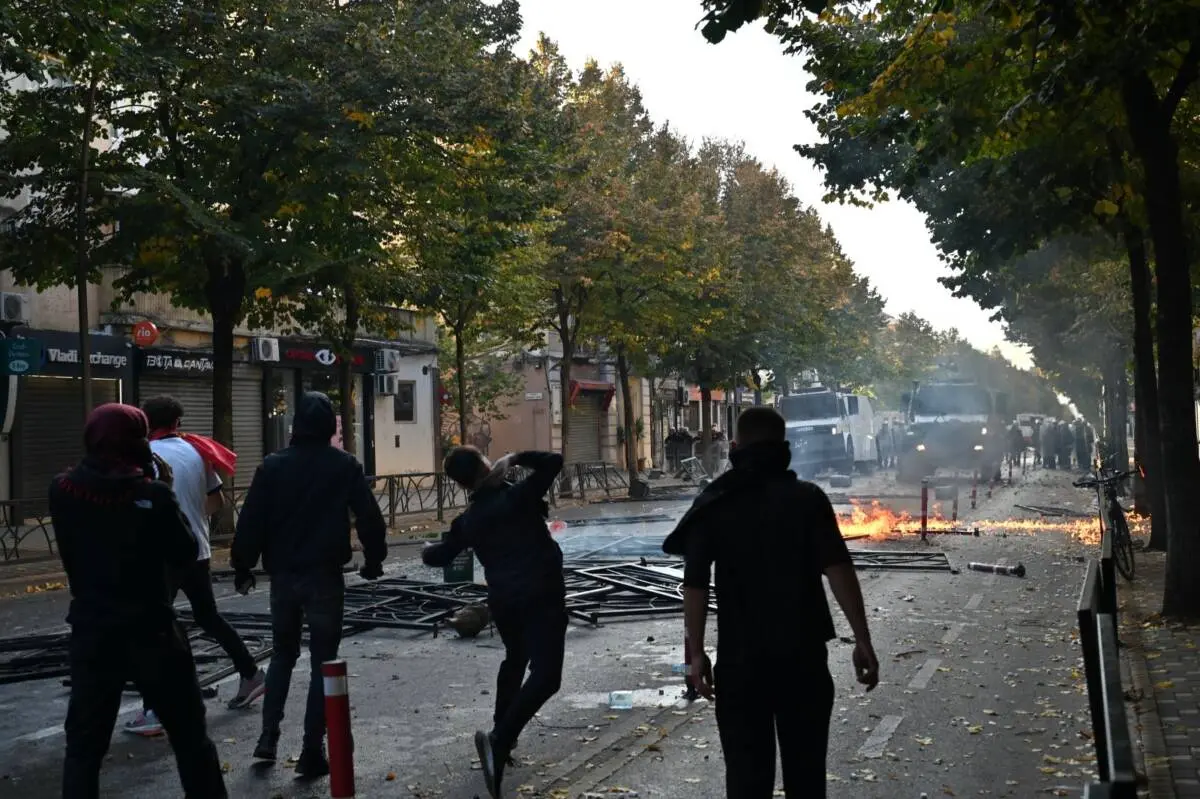
Last weekend downtown Tirana turned into a scene of violent clashes between protesters and police. Molotov cocktails, stones, tear gas, water cannons, and rubber bullets were used during the unrest, as riot police confronted groups of demonstrators
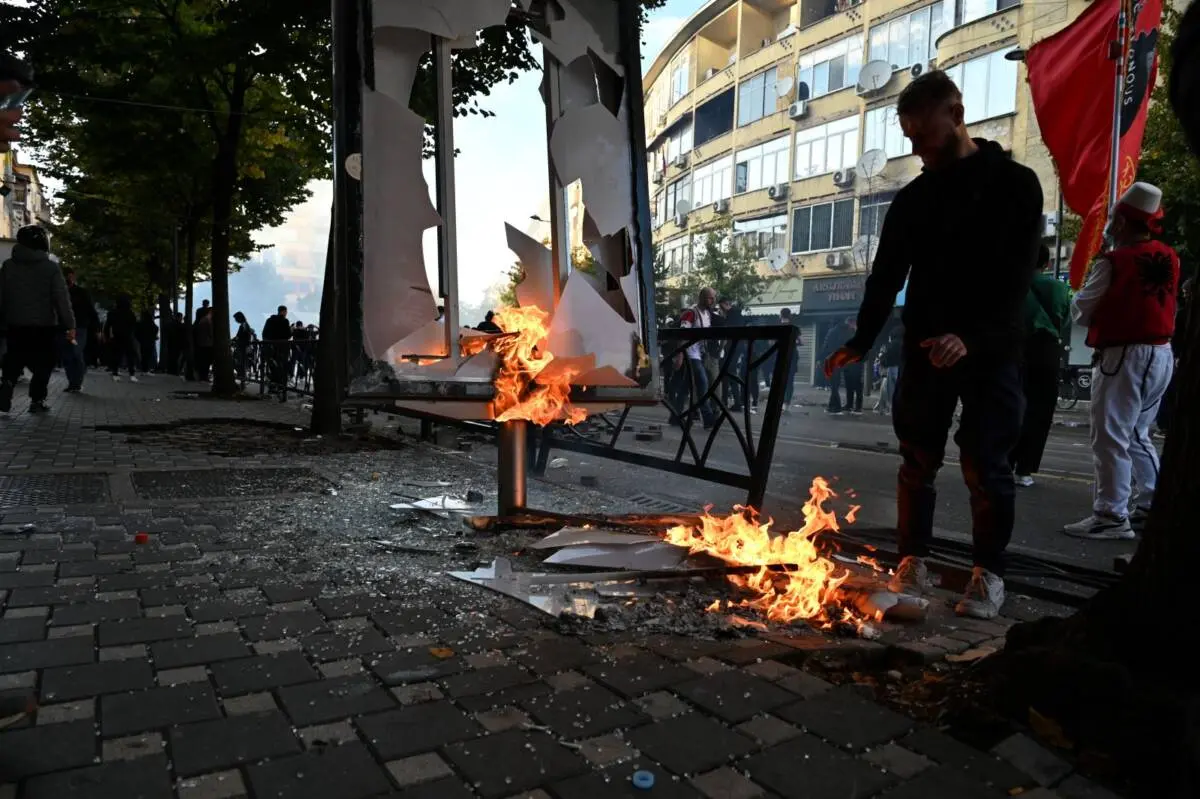
Protests in Tirana – foto Erisa Kryeziu
Protests in Tirana - foto Erisa Kryeziu
On Saturday, 17 October, the protest started with symbolic actions outside the Ministry of Education, but the situation quickly escalated. Protesters threw stones, paving slabs, fireworks, and Molotov cocktails at police, who responded with tear gas, water cannons, and physical force.
For the first time since the protests began, police fired rubber bullets toward the crowds, injuring hundreds of protesters, including journalists. Several police officers were also rushed to the Trauma Hospital after being struck by protesters with Molotov cocktails, stones, and other objects.
Police conduct was criticized by security experts. An analysis by BIRN concluded that the police had failed to manage the situation effectively and had demonstrated a lack of professionalism.
Clashes spread along “Dëshmorët e Kombit” Boulevard and into areas surrounding key government institutions. Rubbish bins and vehicles were set on fire, while fires were reported in institutional buildings.
Among the damaged buildings was the Supreme Court, while fires and damage were also reported near the Ministry of Interior and the Prime Minister’s Office. On the ground, the situation resembled a war zone, with smoke-filled streets, makeshift barricades, and repeated confrontations between protesters and security forces.
On Sunday, during the unrest, a police station was set on fire and the entrance to the Ministry of Interior was damaged.
Protesters also attacked the headquarters of the Socialist Party, which was guarded by several armed civilians. The civilians later clashed with protesters, while police did not intervene. The individuals were armed and masked. According to the Ministry of Health, 28 people were injured during Sunday’s protests, including 19 police officers.
The scale of the violence over the weekend pushed the protests beyond a student boycott, turning them into a direct confrontation with state institutions. While some protesters used violence and attacked public and private property, police conduct and the use of force against demonstrators also came under scrutiny from journalists’ organizations and human rights monitoring institutions.
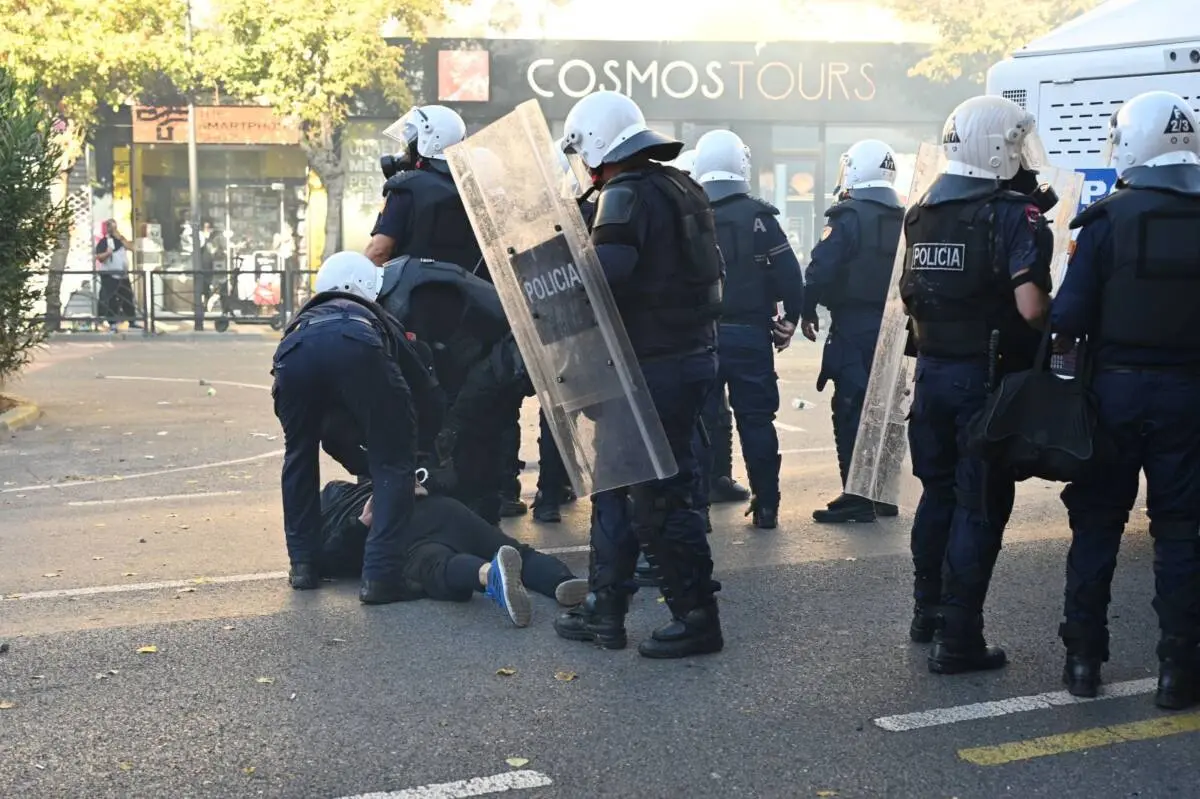
Protests in Tirana – foto Erisa Kryeziu
Arrests, injuries, and violence against journalists
The toll of the protests grew heavier by the day. According to the State Police, by Saturday, 167 people had been arrested, while 132 police officers had been injured during five days of clashes. The police chief also announced the suspension of seven officers who would face disciplinary investigations over the alleged excessive use of force.
The figures published by the authorities include people with injuries of varying severity, from minor wounds to cases requiring hospital treatment. Protesters, police officers, bystanders, and minors have all been injured during the demonstrations.
One of the most serious cases reported during the protests was that of 21-year-old Muhamet Skana, who was admitted to the Trauma Hospital with fractures to his skull and spine after being struck by a police officer near the Ministry of Education on 16 October.
His case is one of 32 alleged incidents of police violence documented between October 13 and 17 in an open letter addressed to the State Police. The cases listed include protesters dragged along the ground and kicked while lying down, a young man beaten with rubber batons by several officers until he lost consciousness, a bloodied student handcuffed to the railings outside the Ministry of Education, and minors allegedly beaten in Tirana, Lezha and Kamëz.
Journalists and media workers were also subjected to violence and obstruction while covering the protests. The Association of Journalists of Albania (AGSH) documented at least 17 incidents involving journalists and media workers during the five days of protests, from October 13 to 17.
According to the organization, the incidents included physical assaults, injuries, threats, obstruction of reporting and damage to work equipment. Most involved alleged actions by police, while two cases concerned attacks by protesters on journalists and media crews.
On Sunday, Elira Kadriu, our correspondent, was also struck by a stone while covering the protests. She is currently hospitalized and, due to complications, is expected to remain under medical observation for a week.
AGSH called for independent investigations and identification of those responsible, stressing that journalists are not parties to the clashes between police and protesters, but witnesses to events and representatives of the public interest. The association warned that obstructing their work undermines the public’s right to information.
Rama refuses to resign
The protests began on October 13 as a student boycott over problems in higher education, but quickly expanded into a broader mobilization against corruption, the cost of living, the lack of prospects for young people and the government’s record. Students and high school pupils were joined by other citizens, continuing the wave of demonstrations associated with the so-called Flamingo Revolution.
Alongside concerns about study conditions and financial support, protesters raised political demands, including the prime minister’s resignation. Chants such as “Rama in prison,” “Berisha in prison” and “The future belongs to us” expressed anger at the government and a broader lack of trust in the political establishment.
In conversations with protesters, many said they were disappointed with the government’s record and could not see a future for themselves in Albania. They said they wanted to build their lives in their own country rather than be forced to emigrate. This concern has also been expressed through graffiti on the walls of the capital. Protests and school boycotts have spread to other cities, including Lezha and Kruja.
Facing growing calls for his departure, Prime Minister Edi Rama declared that he would not resign. He said he supported the right of students and citizens to protest, but warned that those responsible for attacks on police and damage to property would face the law.
On Monday, during a meeting with police officers, Rama threatened students and pupils with consequences when they returned to school if they had taken part in the protests.
“There will be no free fares or bonuses for those students who go there,” Rama said, implying that students participating in the demonstrations could face punitive measures.
He also announced a €2,500 bonus for police officers confronting protesters.
Rama and Socialist Party representatives portrayed the clashes as an attempt by the opposition to destabilize the country and obstruct Albania’s path toward EU membership. On Sunday, the prime minister argued that the protests threatened Albania’s EU integration rather than his government, reiterating that he would not resign.
Meanwhile, opposition leader Sali Berisha called on his supporters to stand in solidarity with the students and join the mobilization against the government. President Bajram Begaj urged calm and respect for the law, while the European Union condemned the violence and reaffirmed the right to peaceful protest.
On Monday, protesters gathered again outside the Ministry of Education to continue the demonstrations.
Found an error in this article? Please contact our editorial team at redazione@balcanicaucaso.org.
Featured articles
 Investigation
 students' protest
 Montenegro Pride 2026