Enlargement and the future of European agriculture: lessons from Moldova
With the accession of Ukraine and Moldova, the European Union will increase its arable land by 28%. The impact on agriculture will therefore be considerable, both within the EU and in the candidate countries. Moldova, which since 2016 has been exporting its agricultural produce to the EU duty-free, has much to teach us about the challenges and the opportunities for development ahead
shutterstock_2656979333
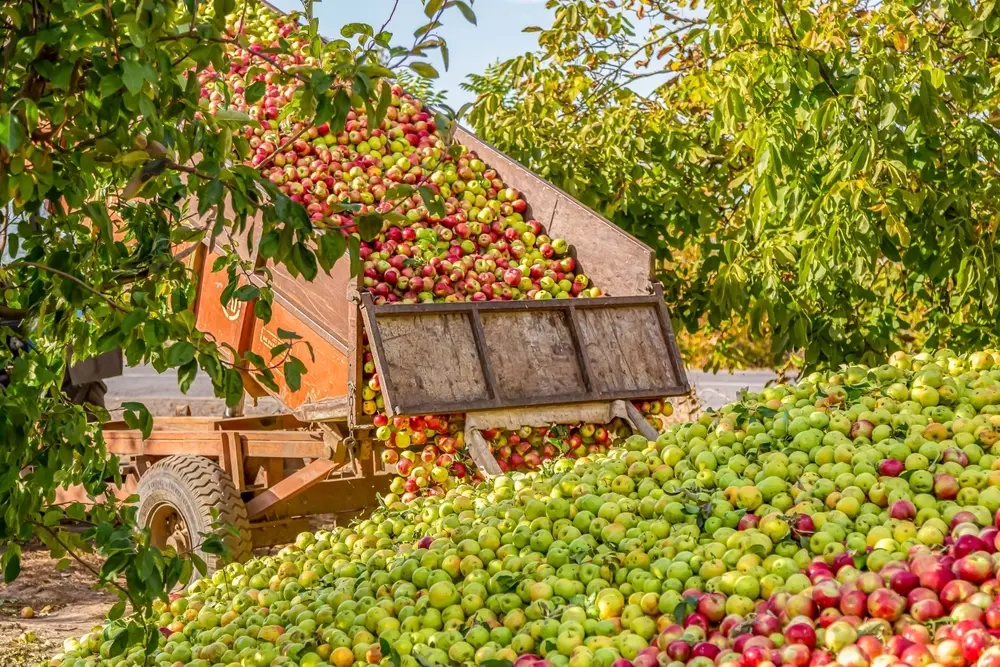
Apple harvest in Soroca, Moldova (© Alla Naumenco/Shutterstock)
(This article was originally published by the Spanish media El Confidencial in collaboration with the Romanian media HotNews.)
The agricultural chapter “is considered among the most difficult in the EU accession process” of Ukraine and Moldova, argues Sciences Po researcher Elsa Regnier, both because of the centrality of agriculture in the EU budget and of the general vulnerability of farming systems.
Ukraine has twice the amount of arable land than France and three times more than Spain and Poland, and Ukrainian soil is among the richest in the world. “The humus layer can reach up to one metre in thickness, which is extraordinary,” says Mykhailo Mulenko, researcher at the Khortytsia National Reserve.
Ukraine’s entry in the EU could have a destabilizing effect on many agricultural regions and entrepreneurs within the EU. It would become the EU’s leading producer of cereals and oilseeds. In addition, Ukraine comes with “strong human capital, as well as resilience in its logistics, trade and processing chains,” says Yves Le Morvan from the French think tank Agrillées.
EU measures to support Ukrainian agricultural exports in the wake of the large-scale invasion by Russia have already sparked tensions. Hungary, Poland and Slovakia even went as far as imposing bans on Ukrainian imports.
EU enlargement to Ukraine, Moldova and the Western Balkans would represent a 28% increase in the EU’s agricultural land area. Major adjustments to the EU’s Common Agricultural Policy would be needed: the EU could either significantly increase its budget; reduce the allocation received by the various member states; or propose a decoupled scheme for Ukraine based on its huge agricultural area and exceptional state.
The case of Moldova
Compared to Ukraine’s 32 million hectares of agricultural land, Moldova looks little more than an appendage (1.9 million). However, its case is interesting because Moldova has already covered part of the path for the integration of its agricultural sector with the EU’s.
Since 2016, both Moldova and Ukraine entered a so-called ‘Deep and Comprehensive Free Trade Area’ (DCFTA) with the EU, designed to gradually integrate their economies into the EU single market. While the EU-Ukraine agreement comes with a series of limitations, the agreement with Moldova eliminated EU tariffs on almost any agricultural product, with only a handful of exceptions.
The DCFTA includes the reduction or elimination of customs tariffs on a wide range of goods, simpler border procedures, and a more stable and predictable trade framework. Export opportunities for Moldovan agricultural producers greatly increased as a result – but the DCFTA also forces small Moldovan farmers to adapt their production to far more demanding EU phytosanitary and traceability standards.
“We’re producing according to EU rules, from technology to fertilisers and pesticides. But we do it without receiving the support that EU farmers enjoy,” laments Daniel Leahu, a farmer from northern Moldova exporting wheat, barley, peas, rapeseed, sunflower and sorghum.
“EU environmental standards are extremely strict and increase production costs,” confirms Alexandru Slusari, former executive director of the Farmers’ Force Association. Farmers stress that many small and medium-sized producers cannot absorb the additional costs of meeting EU standards by themselves, and for sure they cannot do it overnight. Like in Ukraine, the agricultural economy in Moldova is highly undercapitalised, due to small size and successive economic crises.
Farmers interviewed by HotNews call for transition periods and programmes for gradual adaptation and sector protection. “The European market is very tough,” laments Dinu Todos. Ion Tulei, a farmer producing fruits, is more positive: “The European market demands quality. We have good soil, we have people who know how to work. The rest depends on how we choose to play in a large market,” he says.
Following the embargo that Russia imposed on Moldovan agricultural products in 2014, Tulei started exporting to Germany. From there followed quality classification, competitive packaging, proper storage, international certifications… “When you enter this system, you understand it is no longer just about selling. It is about process, traceability, responsibility,” he explains.
According to Tulei, “We are practically already in the European Union. I don’t think much will change for us [with accession, ed.] – perhaps only that some bureaucratic procedures will disappear.” Benefits are expected to include clearer rules, more stability, and financial incentives.
Serghei Ivanov, head of the Agriculture Committee of the Moldovan Parliament and a farmer by profession, explains that farmers see integration “as a double-edged sword”. Access to projects and funding is welcome, but the EU market is highly competitive, and “We are afraid of entering a market where we cannot compete.” Yet unfair competition is also what farmers in France, Spain or Poland are afraid of, worried about a possible large influx of cheaper agricultural products from Ukraine and Moldova, where production costs are generally lower.
One of the biggest fears in Moldova concerns agricultural land, as it is currently among the cheapest in Europe. “We can’t allow a farmer from Germany, where land costs €30,000 per hectare, to come and buy land en masse in Moldova. We need a protection period until our farmers become economically viable,” Ivanov points out.
At the same time, Alexandru Slusari sees European integration as the only real opportunity for agricultural modernisation in Moldova. “Eastern European countries modernised massively during the pre-accession period. If Moldova negotiates intelligently and prioritises small and medium farmers, in five years we can reach the level of Romania or Slovakia,” he argues.
Found an error in this article? Please contact our editorial team at redazione@balcanicaucaso.org.
This article was produced as part of the “EU Neighbours East” project, in which OBCT participates alongside eleven other European media organisations.
Tag: Agriculture | Economy
Featured articles
 the students' voices
 Investigation
 students' protest