“I am infinitely grateful to my students.” Mirjana Nikolić and the new Serbia
Following the victory of the Student List in the October 25 elections, the Rector of the University of Arts in Belgrade, Mirjana Nikolić, has entered Parliament. Speaking to OBCT, she outlines the priorities of this new direction: transparency regarding Novi Sad, the protection of the university, and the rule of law
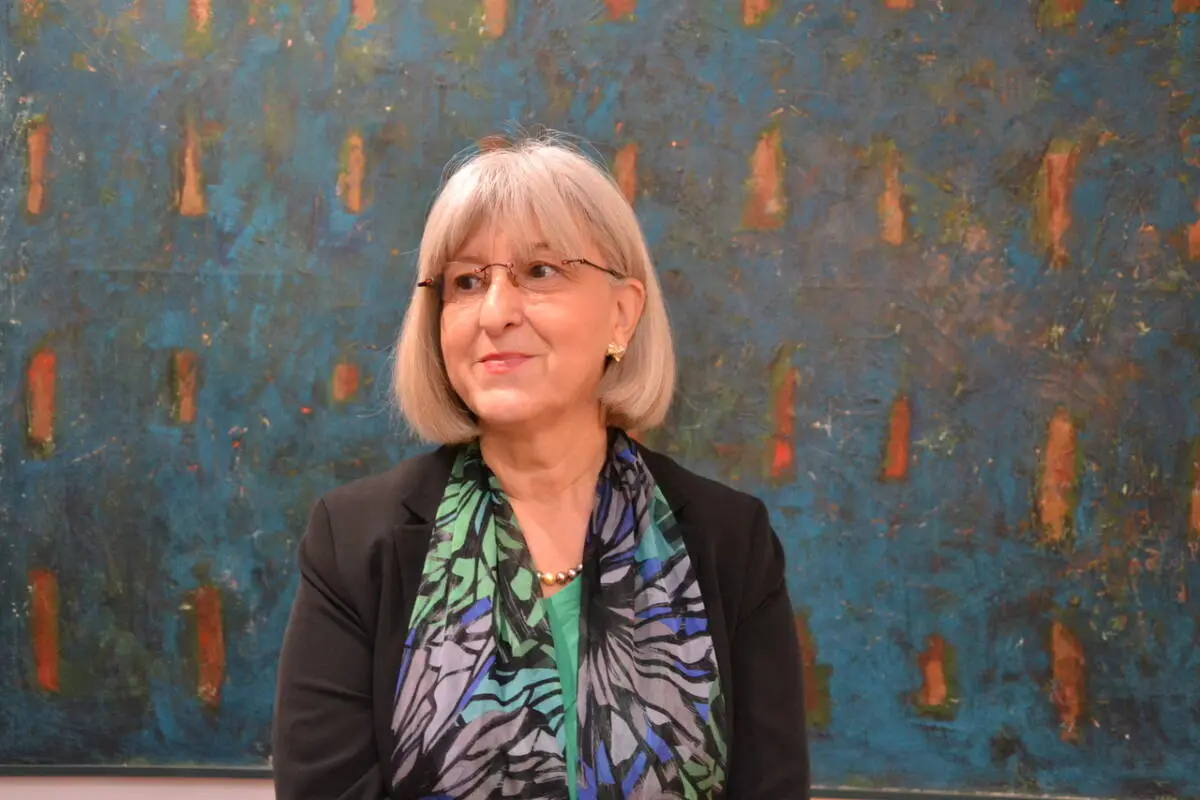
Mirjana Nikolić a Belgrado. Foto: Federico Baccini
Mirjana Nikolic in Belgrade. Photo: Federico Baccini
For the first time, the triumph of the Students’ List in the Serbian elections on October 25th has brought a substantial group of experts and professionals from all sectors of society into Parliament — individuals now tasked with drastically changing the course of a country that has long been gripped by corruption and clientelism.
Among them are figures who are well-known throughout the country, or who gained prominence over the past two years of protests for their unwavering support of the student movement.
Mirjana Nikolić, Rector of the University of the Arts in Belgrade, was elected to Parliament as part of the Students’ List.
“I am extremely happy. This moment marks the end of a two-year struggle against the regime, and I am infinitely grateful to my students — to all the students of Serbia — for their tremendous energy and for this excellent electoral result,” Nikolić told OBCT on the evening of October 25th, shortly after the initial results were announced at the students’ headquarters.
Fighting back tears of joy, the Rector of the University of the Arts in Belgrade emphasized that “this is a change that has involved the entire country — young people, professors, and citizens alike — and it marks the beginning of a new era in the history of Serbia.”
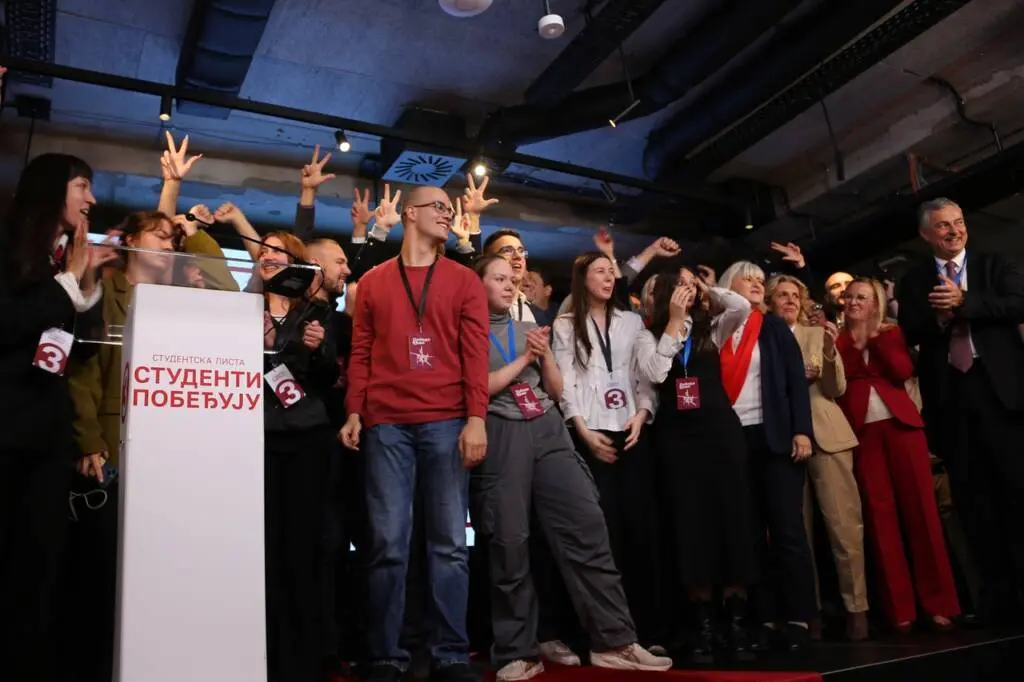
At the Student List headquarters in Belgrade, October 25, 2026. Photo – Federico Baccini
What concrete measures will be prioritized in Parliament, and how can it be ensured that the students’ original demands are not diluted following the elections?
One of the core demands of the student protest has consistently been full transparency regarding the documentation for the renovation of the Novi Sad railway station, as well as the criminal prosecution of those responsible for the corruption involved.
This demand has never been met, and there are indications that, toward the end of his presidential term, Vučić may have granted pardons to those responsible.
Our immediate priority must be to secure full access to all documents signed by the previous administration and to examine them thoroughly.
This will be an extensive, quasi-forensic undertaking. We must assess the extent to which these contracts are harmful and tainted by corruption — a highly challenging task that will require us to act swiftly while simultaneously developing strategies to mitigate the damage.
An essential part of this process will be holding accountable all those whose actions or omissions have caused harm to this country.
This will be a crucial process, as the citizens expect truth and justice from us. The time must finally come when those whose incompetence has damaged the public interest are held fully accountable.
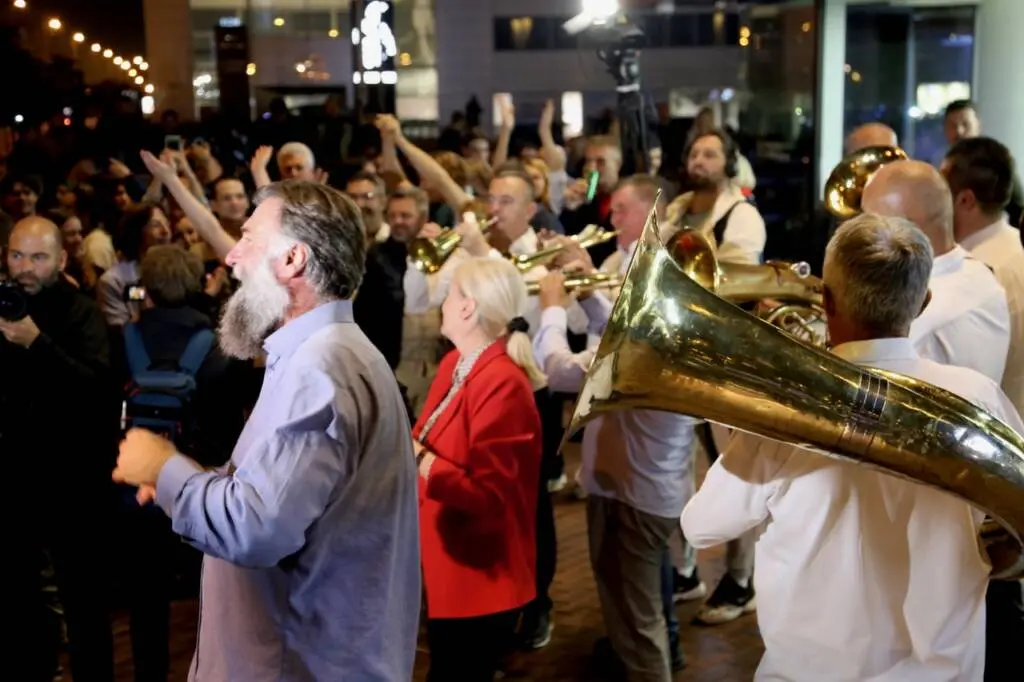
At the Student List headquarters in Belgrade, October 25, 2026. Photo – Federico Baccini
How will those elected from the “Students’ List” coordinate their parliamentary work, given that they lack a formal political structure behind them?
At this moment, due to its authentic nature, the movement behind the “Students’ List” has no direct precedents or established models to draw inspiration from.
Nevertheless, I am confident that key figures will soon emerge — for instance, a candidate for the Presidency of the Republic, followed by the selection of a candidate for Prime Minister — while the rest of the institutional structure will take shape in due course.
The “Students’ List” includes candidates with deep expertise, knowledge, and experience across all the sectors necessary to form a government. It comprises university professors alongside long-standing activists from the environmental, labor, and cultural spheres — individuals who possess a profound understanding of their respective fields.
Each of them has a thorough grasp of their own sector, knows how to establish robust systemic frameworks, and — crucially — possesses a strong team-oriented mindset.
This collaborative spirit will be a vital asset, as we all recognize the value of seeking advice and relying on specialized expertise whenever necessary.
I believe that a new government formed by members of the “Students’ List” has the potential to be the most experienced and competent in the recent history of this country.
As Rector of the University of the Arts in Belgrade, you experienced the protests from within the academic community. What have you observed regarding the relationship between the university and the State over these past few years?
Even before the student protests began in November 2024, the Ministry of Education had initiated a revision of the Law on Higher Education, introducing provisions that would allow foreign universities to enter the Serbian educational system. In itself, this would not have been problematic had the national universities — both public and private — been consulted.
However, the proposed measures were a source of deep concern, as they granted accreditation to these foreign institutions without following standard procedures and guaranteed them funding directly from the state budget.
Although this legislative proposal was withdrawn following strong pressure from the academic community, the regime’s ambition to reform higher education only intensified once the protests began.
In addition to the pressure exerted on university leadership — particularly rectors — during a series of meetings with government and ministry representatives who demanded a crackdown on student protests, public universities faced substantial cuts to their operating budgets.
At the same time, an ordinance was passed under highly questionable legal circumstances, altering the ratio of funding allocated to research versus teaching; this created a pretext for reducing salaries by approximately 80%.
Another concerning development was the signing of a memorandum between the government and the head of the Serbian Orthodox Church, expressing a mutual intention to establish a new institution: the University of Saint Sava.
This institution would essentially serve as an alternative to Serbia’s oldest and most prestigious higher education institution, the University of Belgrade.
Given that Serbia is constitutionally a secular state, the introduction of a potential “ecclesiastical” university into an already overburdened higher education system is highly unusual. Instead of fostering a collaborative relationship, the State has positioned itself as an arbitrary authority over higher education — one capable of penalizing or even dismantling faculties without any oversight, arresting students, initiating misdemeanor or criminal proceedings against deans and rectors, and broadly discrediting public universities.
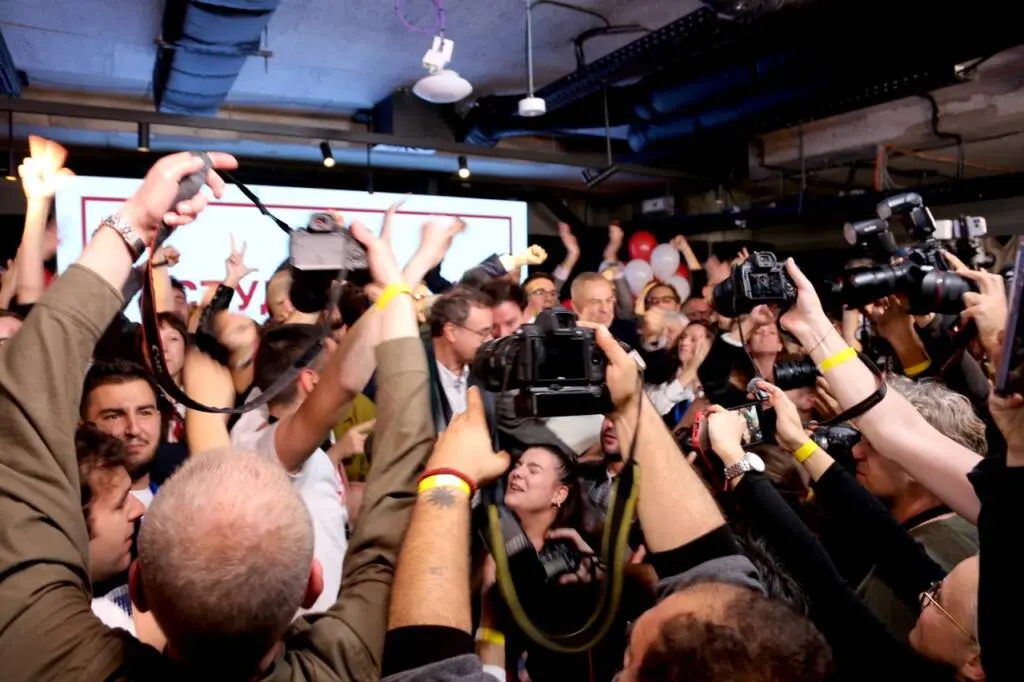
At the Student List headquarters in Belgrade, October 25, 2026. Photo – Federico Baccini
As an elected member of Parliament, what institutional changes will you push for to safeguard education and academia?
We will commit to ensuring the consistent application of our country’s Constitution and all applicable laws.
We will implement the most effective provisions, while amending those that prove to be inadequate.
Our core vision is that the student must remain at the center of the educational process — not only regarding academic and teaching quality, but also in terms of protecting their socio-economic well-being, ensuring free education, and guaranteeing equal opportunities.
We will place particular emphasis on the depoliticization of student organizations, which in the past have been exploited to manipulate the functioning of governance bodies and structures within faculties and universities.
Serbia remains a candidate country for EU accession, yet there are questions regarding the direction of its national foreign policy. What will a government supported by the Student List do to promote European integration?
The fundamental priorities within the Student List’s platform are not designed merely to meet the external requirements for EU accession; rather, they are principles that represent universal values to which any civil society naturally aspires.
A democratic orientation, a modern society rooted in dialogue and diversity, and the rule of law are essential civilizational achievements that have suffered severe degradation in our country.
In this context, I would like to emphasize that the Student List is deeply committed to upholding the Constitution of the Republic of Serbia.
And as Article 1 establishes, “the Republic of Serbia is the state of the Serbian people and of all citizens who reside within it, founded upon the rule of law and social justice, the principles of civil democracy, human and minority rights and freedoms, and adherence to European principles and values.”
All that is required boils down, quite simply, to respect for the supreme legal norm of our country.
Found an error in this article? Please contact our editorial team at redazione@balcanicaucaso.org.
Featured articles
 the students' voices
 Investigation
 students' protest