From plenums to ballot boxes: What Serbian students can teach Europe
After two years of protests, the student-led list triumphed in Serbia’s elections. Popular assemblies without leaders, candidates chosen from experts and civil society representatives, a country traveled on foot and by bike: an experiment that intertwines participation, deliberation and representation, also addressing a Europe grappling with authoritarianism. A comment by OBCT director Luisa Chiodi
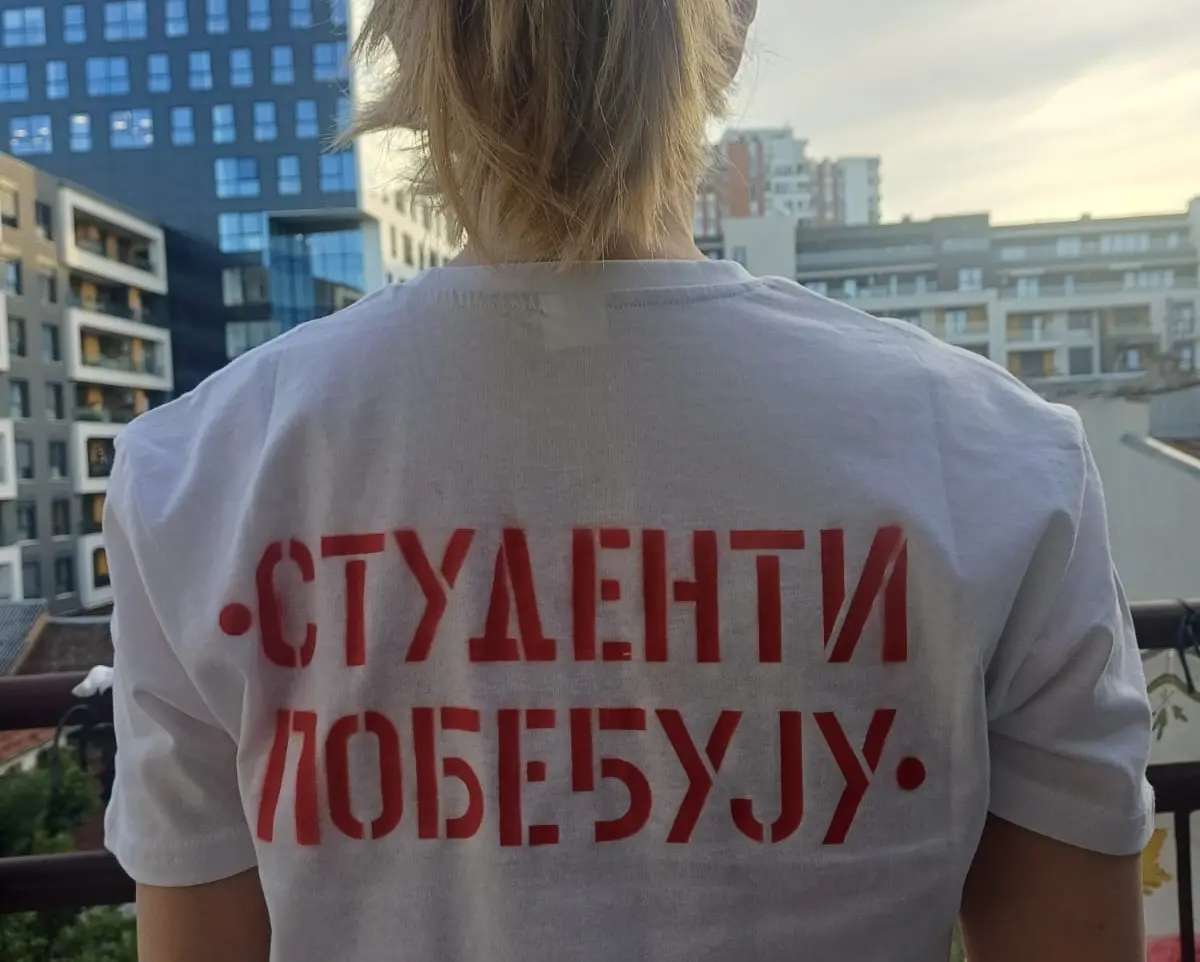
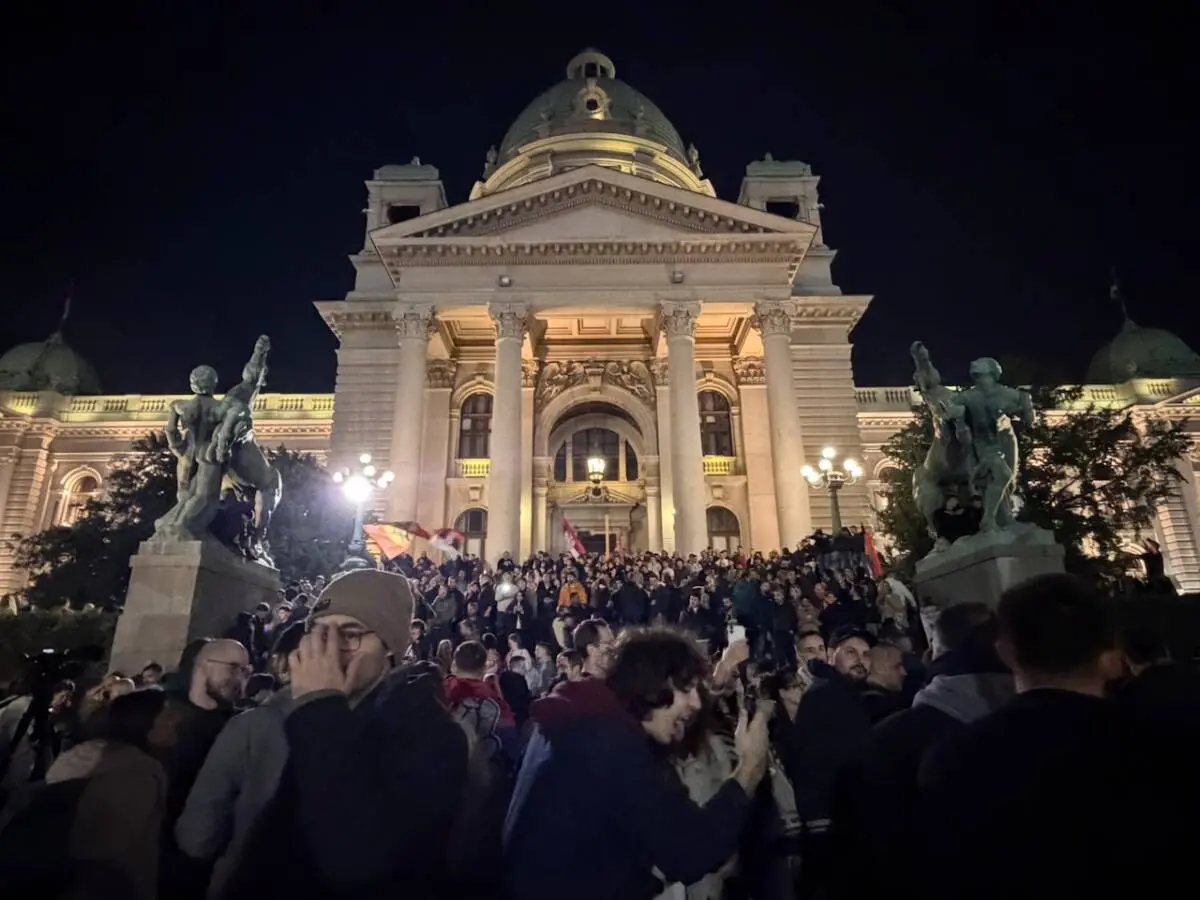
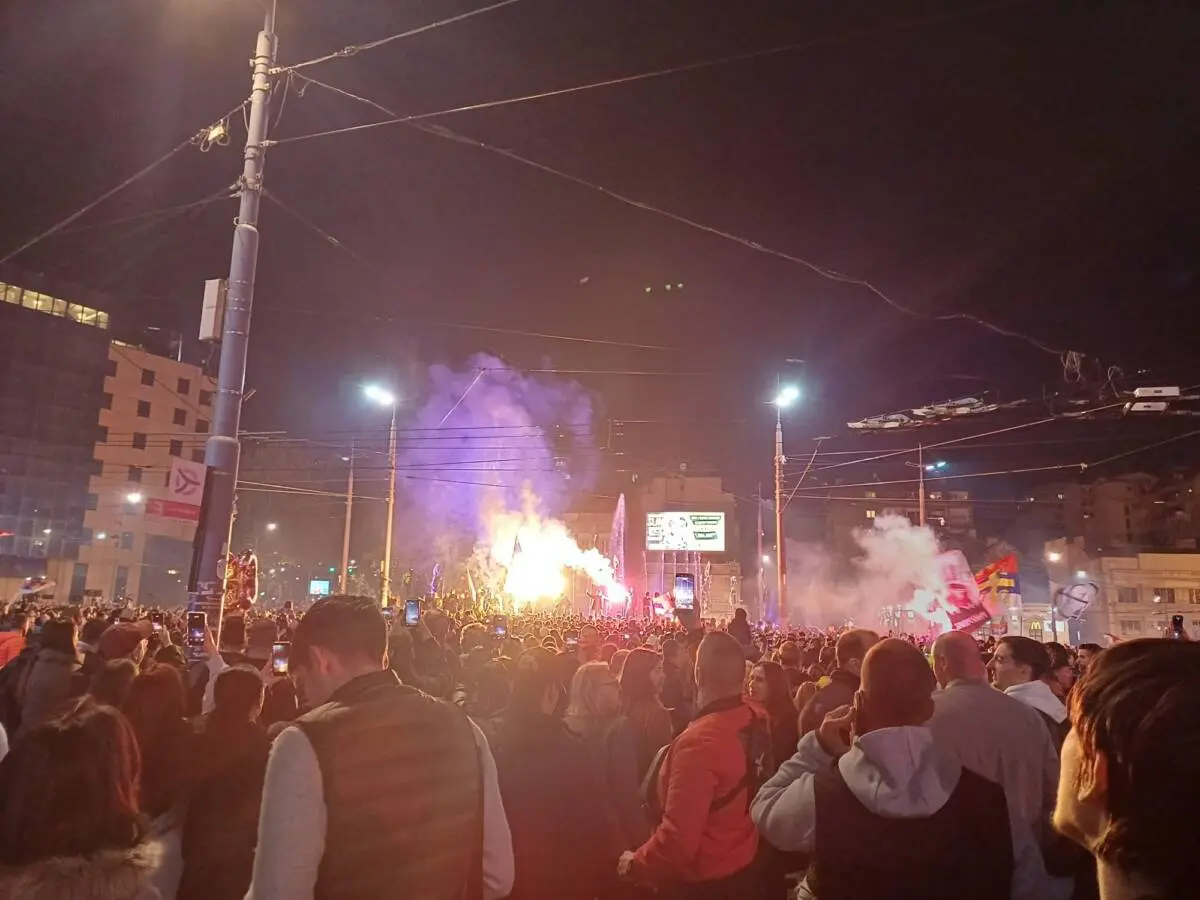
“Students Win” – Photo by D. Nenadić
“Students Win” - Photo by D. Nenadić
The Balkans have always gone against the grain: while in the 1990s Europe was celebrating peace, democracy and the continent’s reunification after decades of the Cold War, the Balkan region was sinking into the abyss of the Yugoslav wars. Today, while democracy in Europe is being targeted by legions of critics of all political stripes, Serbia is celebrating the epiphany of representation, after two years of protests, but also a long journey toward deliberative democracy.
In Serbia, after several rounds of protests in the thirty years since the dissolution of Yugoslavia, a generation that grew up far from military mobilisation and experienced a context of relative economic growth, demanded more than a semblance of democracy, was outraged by corruption and fought tenaciously for the rule of law to bring justice where a vile elite’s greed for wealth had cost the lives of sixteen people in Novi Sad.
For two years, students at universities across Serbia have been organising an extraordinary campaign of political participation, which last Sunday resulted in the Student List’s electoral victory.
It should be noted, however, that this List is not composed of young people enrolled in the country’s universities. Instead, the students gathered in assemblies and selected, through a complex process, representatives of civil society, experts, professors and public figures who had exposed themselves over the past two years to support the student cause. Rather than nominate the most ambitious among themselves, the young people preferred to be represented by competent and courageous figures.
Over the past two years, Serbian students have drawn on the political repertoire of socialist Yugoslavia, namely the assembly instrument of workers’ councils, forming plenums to act politically from below.
Read also: “I am infinitely grateful to my students.” Mirjana Nikolić and the new Serbia
Other similar experiments in the area in the past had not developed the same political vision as that of Serbian students. There have been several instances of mobilisation over the past thirty years in the post-Yugoslav space, but only a few have fought to revive representative democracy.
In Bosnia and Herzegovina, for example, an extraordinary political experiment through plenums occurred in 2014. The popular assemblies, born in the wake of a wave of protests that began in Tuzla and then spread to Sarajevo, Mostar, and Zenica, channeled social discontent regardless of the ethnic affiliations that dominated the country’s politics. However, the Bosnian plenums, while developing concrete political demands, did not aspire to enter directly into the electoral contest. For this reason, once the participatory process was exhausted, the country, unfortunately, remained hostage to nationalist forces.
In recent years, the political scene in Europe has been dominated by populists and their strong anti-elitist vision. The student movement in Serbia has also taken on an anti-establishment dimension, which is why candidates who were not professional politicians were selected. However, amid the legacies of real socialism, the student movement has highlighted the still widespread appreciation of expert knowledge and, consequently, of the people and professions that embody it: hence the decision to build an electoral list composed of people without political experience but with proven intellectual and moral capital.
Serbian students have experimented creatively with politics in many other ways. Among the most interesting choices is their refusal to identify with any particular leader, primarily to protect themselves from the attacks they would have faced. Yet they have managed to build a huge popular movement without recognizable faces. In an era of grotesque political protagonism, Serbian students have demonstrated the power of collective effort.
Another radical choice was to systematically filter the relationship with the media, which the movement had distrusted from the beginning. A sort of press office managed relations with journalists to guide the narrative that was developing around the student mobilisation. The price of this choice was perhaps less international media coverage over the past two years, but at the same time, the movement ensured less exposure to manipulation by malicious actors.
For two years, Serbian students traveled the length and breadth of the country, on foot and by bicycle, to raise awareness of their cause throughout the population. They did not confine themselves to the virtual world of social media, nor even to the capital, Belgrade. They did not just speak to their peers. They sought to engage smaller towns, the countryside and minority groups. The platform with which the Student List presented itself to the electorate, promising to change the country, focused on restoring the rule of law, fighting corruption and bringing those responsible for the Novi Sad deaths to justice.
This effort to unite the country’s many souls and free it from an oppressive and corrupt system of power could prove to be a limitation after the election victory. The process of governing will be extremely complex, as potentially irreparable rifts could arise between economic liberals and supporters of the welfare state, between staunch nationalists and those willing to come to terms with the past, to name just a few. And many will be betting on the failure of this political experiment.
But the results achieved so far are truly remarkable and unexpected: before rushing to point out the limitations of the political process, which has cost two years of struggle against a backdrop of increasing political repression, we should ensure that we have grasped the potential of the Serbian student movement for all of us.
From Serbia’s experience, we could learn first and foremost how to build some form of intergenerational solidarity, which is clearly needed. But above all, we should take inspiration to combine democratic participation, deliberative processes, and representation in a new way to ensure we stem the authoritarian drift advancing at home too.
Found an error in this article? Please contact our editorial team at redazione@balcanicaucaso.org.
Featured articles
 the students' voices
 Investigation
 students' protest