Albania is ready for the EU, but the government not yet
A delegation of Members of the European Parliament joined the Flamingo Revolution currently taking place in Tirana, calling on the Albanian government to provide greater protection for nature, tackle corruption, and ensure greater transparency and democracy
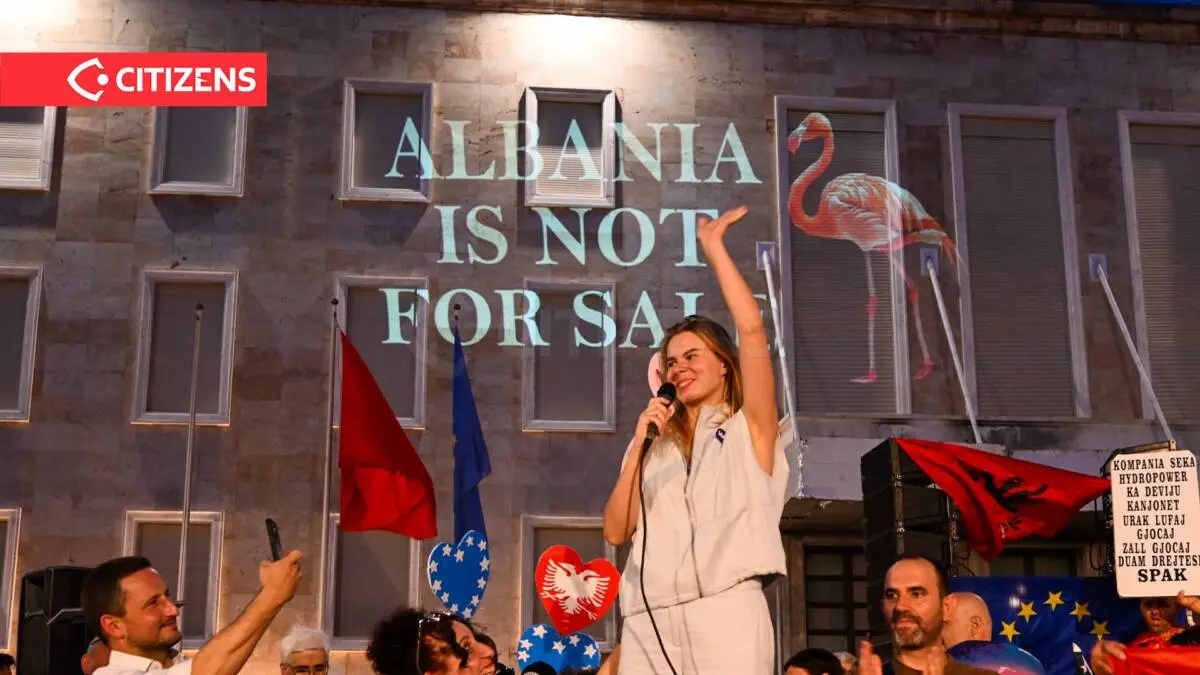
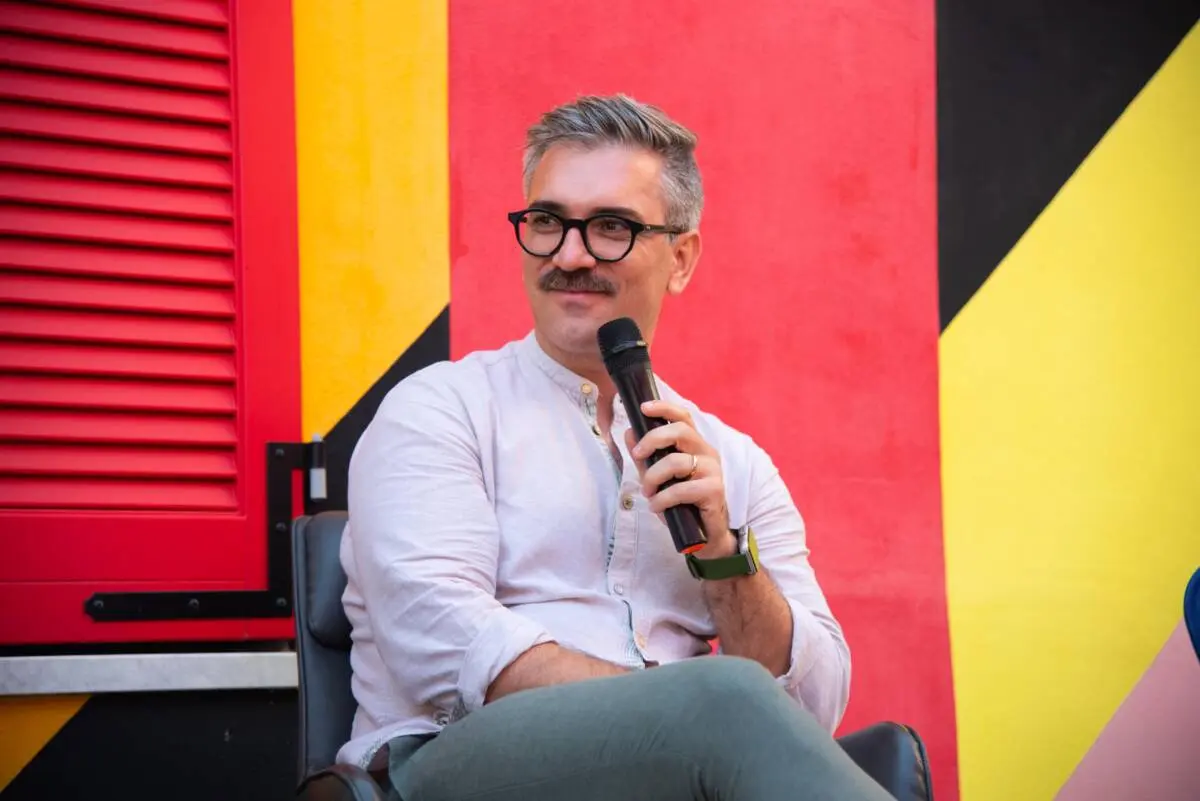
Mep Anna Strolenberg
Mep Anna Strolenberg © Citizens.al
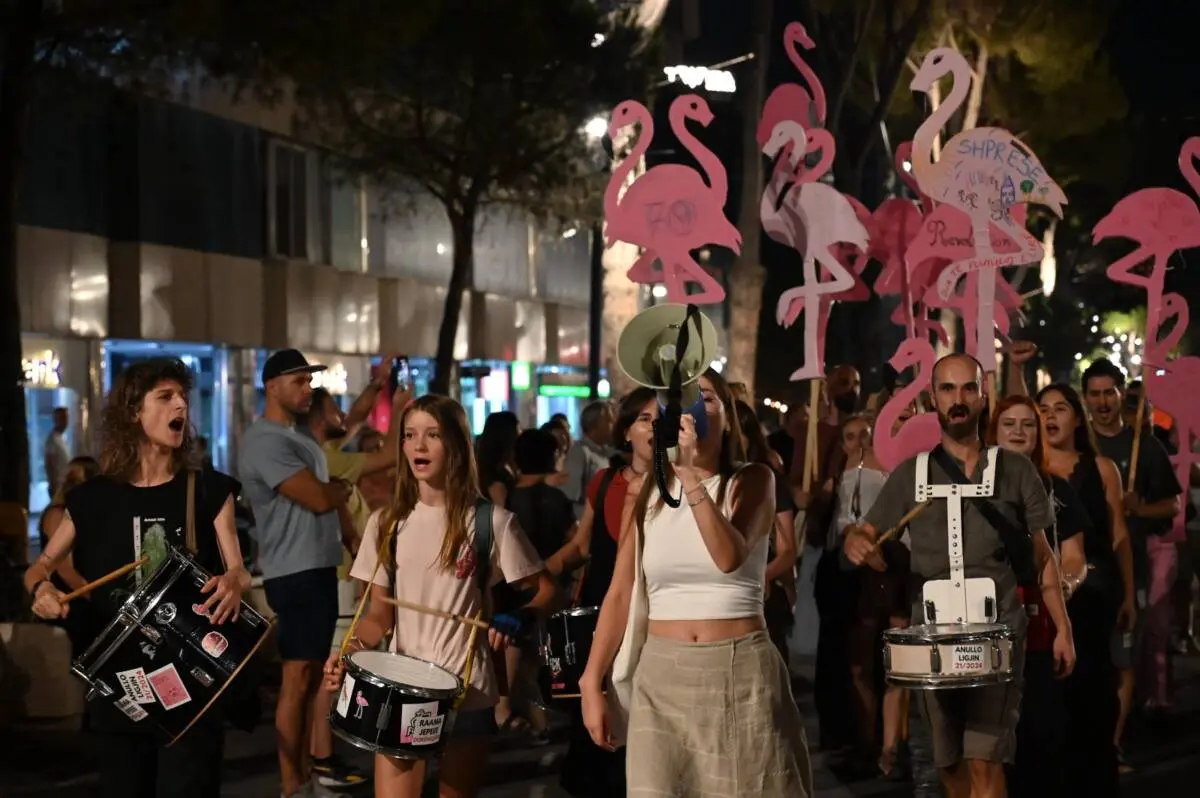
When thousands of protesters gathered for the 30th consecutive evening in front of the Prime Minister’s Office in Tirana, the crowd was not expecting only the usual speeches from activists and citizens. For the first time since the protests against constructions in the protected area of Pishë Poro–Narta began, members of the European Parliament (MEPs) stepped onto the improvised stage.
The participation of the European delegation in the Flamingo protests was a public act of solidarity and came just days after the European Parliament adopted the resolution on the Commission’s 2025 Report on Albania on June 17.
The resolution expressed deep concern over recent developments in the Pishë Poro–Narta protected landscape. The MEPs called on Albanian authorities to abolish the 2024 amendments to the law on protected areas, which allow large-scale tourism infrastructure development within these territories and weaken environmental protection mechanisms.
The resolution also called for “an immediate moratorium on new permit procedures, construction works, and development interventions within protected areas, until the incompatible provisions of the amended law on protected areas are repealed and full compliance with EU nature protection standards is guaranteed.”
The European Parliament delegation to Tirana was led by Tineke Strik and included Jutta Paulus, Cristina Guarda, Anna Strolenberg, Nicolae Ștefănuță, and Daniel Freund. The delegation was also joined by Boris Mijatović, member of the German Bundestag; Jelena Miloš, member of the Croatian Parliament; Finnish municipal councillor Hanna Partanen; and Vula Tsetsi, co-chair of the European Green Party.
“The Albanian people are ready for Europe, but the government is not”
Addressing thousands of protesters, the head of the delegation, Dutch MEP Tineke Strik, said that the civic mobilization to protect nature was a sign that Albanian society shares European values.
“We are very impressed that so many people are saying they do not accept the destruction of this precious part of nature because of wealthy foreign investors,” she declared.
According to Strik, the work of investigative journalists has shown that the issue is not only about a tourism project, but also raises questions about corruption, money laundering, and organized crime.
“The fact that the Albanian people do not accept this is a great sign of hope, a sign and a fact that Albania belongs in the European Union. I will take this message to Brussels: the Albanian people are ready for the European Union. But the country’s government is not ready yet,” said MEP Strik.
She recalled that the European Parliament has already adopted the amendment calling for a moratorium on construction in protected areas.
“We will continue fighting in Brussels and we will ask the European Commission to make it clear that the Albanian government must listen to its citizens, not wealthy investors,” Strik concluded.
MEP Anna Strolenberg also described the protest as a defense of the very values on which the European Union was built.
“What you are protesting for is Europe: the protection of nature, the fight against corruption, transparency, and democracy,” Strolenberg said.
She stressed that Albania should become part of the EU, but that these environmental interventions could directly affect the country’s accession negotiations.
“If these standards are not respected, any EU member state can veto the accession process,” Strolenberg said.
German MEP Jutta Paulus declared that Albanian nature is extremely beautiful and “is not for sale.” She also recalled receiving an e-mail from the Albanian government asking her not to support amendments 4 and 17 of the resolution, which refer specifically to protected areas and tourism project in Zvërnec.
“We voted in favor of that amendment because European law is not for sale. Continue your fight; we will do our best to support your struggle in Brussels. Albanians deserve more than their government,” declared MEP Paulus.
Italian MEP Cristina Guarda told citizens that their protests had taught them to protect the land, human rights, and not to be consumed by corrupt politics.
She also thanked the Albanian diaspora in Italy for their mobilization, delivering a message to Prime Minister Rama.
“Thank you to the diaspora across Europe that is protesting for you. I have an image of the prime minister bowing before my prime minister. You do not enter Europe by bowing down, by serving anyone; you enter with your head held high, knowing that you deserve it,” Guarda stated during the protest.
Meanwhile, Vice President of the European Parliament Nicolae Ștefănuță compared the Flamingo Revolution with the protests in Romania against the mining project in Roșia Montană, which began as an environmental protest and transformed into a national movement against corruption.
“It is no longer only a protest for the environment. It has become a national issue. It is about the soul of our country, about the soul of Europe,” declared Vice President of the European Parliament Nicolae Ștefănuță.
He told protesters that the real power lies with the people.
“They are lost when the people are awake. So I ask you: why are we Europeans here, while Edi Rama is not here? Why is he not here? Because he is afraid. But remember this: if he is afraid, you must have courage. You must not be afraid. Remember, the road may be long, but you are on the right side of history,” Ștefănuță declared.
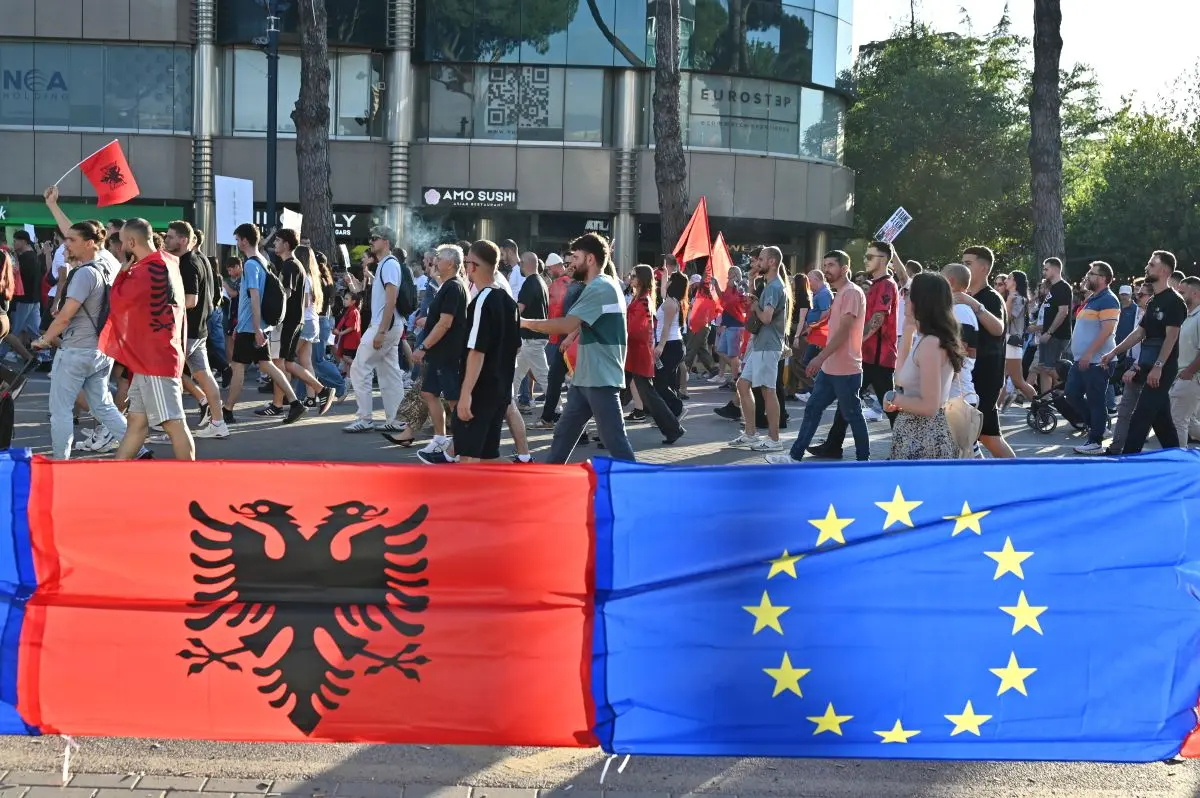
Protests in Tirana © E. Kryeziu
From the protest to Zvërnec
One day later, on June 30, the delegation traveled to Zvërnec to see firsthand the consequences of the works that began two months earlier in the area where the resort project is planned.
Following the visit, in a press statement on Wednesday (1 July), MEP Tineke Strik stated that the damage observed on the ground is concerning.
“It is truly sad to see how much damage has already been done, with a road stretching for several kilometers, trees cut down, the connection between the sea and the lagoon narrowed and consequently blocked. Drainage of the wetlands was already underway,” said MEP Tineke Strik.
For the Dutch MEP, these interventions are not only a local issue.
“Therefore, the plans and the damage already caused are an open violation of the EU Birds and Habitats Directives. This is why I understand why so many citizens continue to take to the streets,” Strik declared.
Meeting with the minister, no guarantees on suspending the works
On the same Wednesday morning, the European Parliament delegation met with Minister of Environment Sofjan Jaupaj to seek clarifications on the status of the project and the procedures being followed by Albanian authorities.
After the meeting, the MEPs told the media that their concerns remained unchanged.
Tineke Strik said that the minister had explained that, so far, no final project had been submitted and that, if it is presented, it will undergo an environmental impact assessment, a 20-day public consultation process, and then institutional decision-making.
“How can you assess whether it is legal to build by building beforehand? In this regard, we did not agree,” MEP Strik said.
However, according to Strik, the delegation’s main question remained unanswered.
“We wanted to know whether the works would be halted until these procedures are completed. We did not receive such a guarantee,” Tineke Strik declared.
According to Strik, there is a risk that while administrative procedures are ongoing, interventions on the ground could continue, creating irreversible situations.
“He did not take our concerns into account, and I am still concerned that there is an intention to continue within this framework and then create facts on the ground before this element of Chapter 27 is negotiated.”
The MEP announced that, upon returning to Brussels, she would inform the Commissioner for Enlargement Marta Kos about the mission’s findings.
“The European Parliament has been very clear. We have called for a moratorium on all activities in protected areas. Now we must monitor whether this is being respected. It is not enough to have trust; we need to see what is actually happening on the ground,” Strik said in her statement.
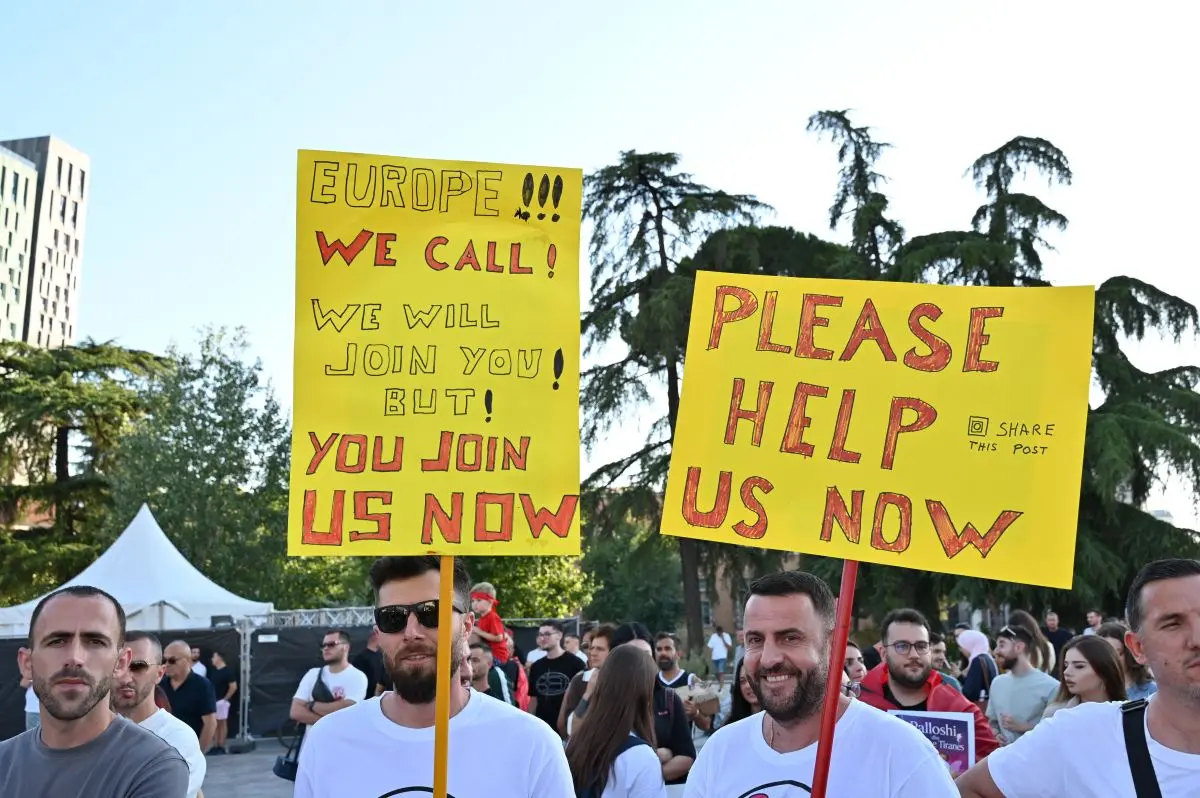
Protests in Tirana © E. Kryeziu
One month of the Flamingo Revolution
What began as a civic reaction against interventions and construction projects in Pishë Poro–Narta and Zvërnec last 31 May, has now transformed into one of the longest civic movements in Albania since the 1990s.
The citizens’ demands, voiced from the first day of the revolution, constitute today concrete legitimate and non-negotiable proposals elaborated by the protest organizing group.
The key request is the resignation of Prime Minister Rama. Protesters are calling for the creation of a transitional, technical, and non-partisan government following the prime minister’s resignation.
Among other demands, they are calling for constitutional changes to ensure that all Albanian citizens are equal before the law, as well as for these changes to be approved through a popular referendum.
The proposed modifications also include amendments to the electoral code, modifications to the law on political party financing, and limiting the prime minister’s mandate to no more than two terms.
The fourth request and key issue that initially brought citizens to the streets is the abrogation of the amendments to the law on protected areas, the cancellation of the modifications to the law on cultural heritage, the abrogation of the mountain package of laws, and the abolition of the status and legal framework for strategic investments.
In addition, protesters have called for a new social contract between citizens and the state, drafted through consultations with intellectuals, technical experts, and non-partisan citizens proposed by the protest movement.
On 30 June, dozens of protesters moved in front of the Parliament building while a plenary session was taking place. They faced police violence, and six of them were detained.
Since the start of the protest on 31 May, the State Police has referred nearly 150 protesters to the Prosecutor’s Office, despite their participation in peaceful demonstrations.
Meanwhile, Prime Minister Rama has responded to the protests with attacks on his social media accounts. He has personally targeted individual protesters, publishing their photos accompanied by ironic messages and describing participants and activists with terms suggesting extremism, manipulation, or lack of representation.
In other posts, the Prime Minister has mocked the protest through memes and satirical comments, calling it the “imaginary revolution of flamingos,” while frequently portraying activists opposing tourism projects in protected areas through dismissive and derogatory narratives.
Found an error in this article? Please contact our editorial team at redazione@balcanicaucaso.org.