Albania, when flamingos fly
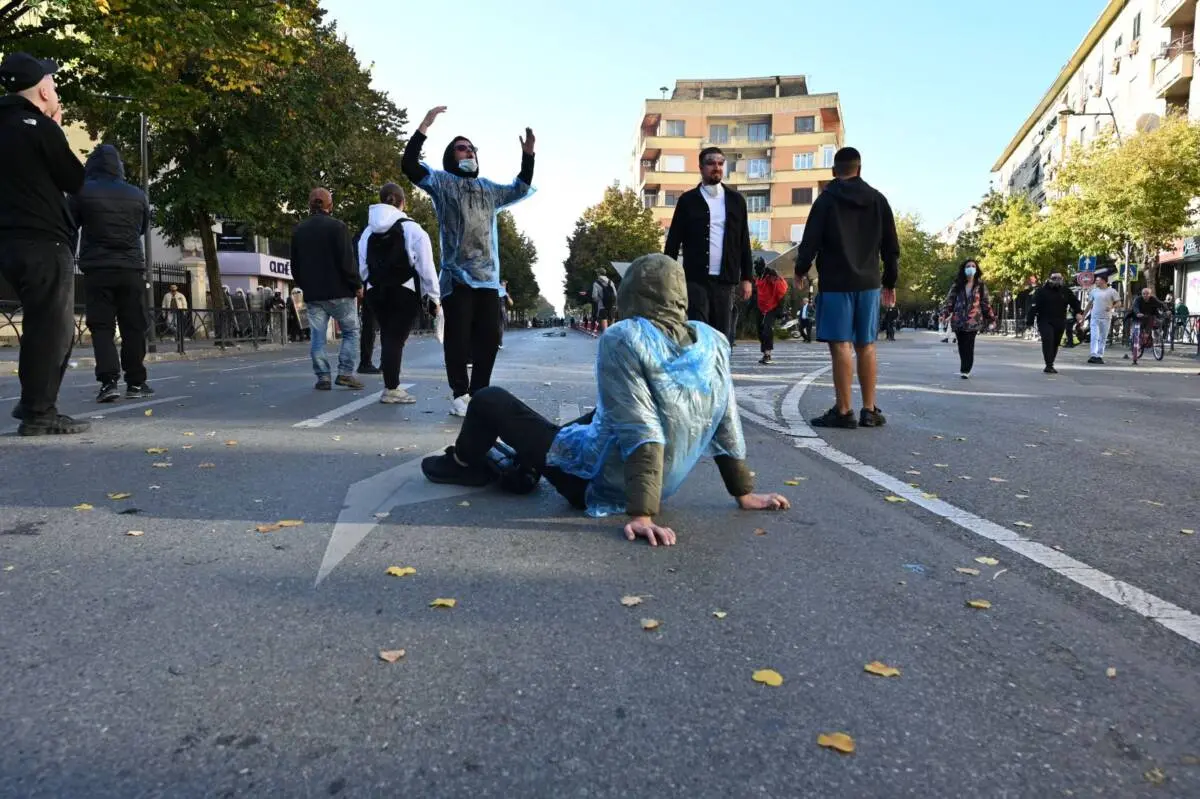
Since the fall of communism, Albanians have taken to the streets for many reasons. Never before for a flamingo. An op-ed on the ongoing protests in Albania
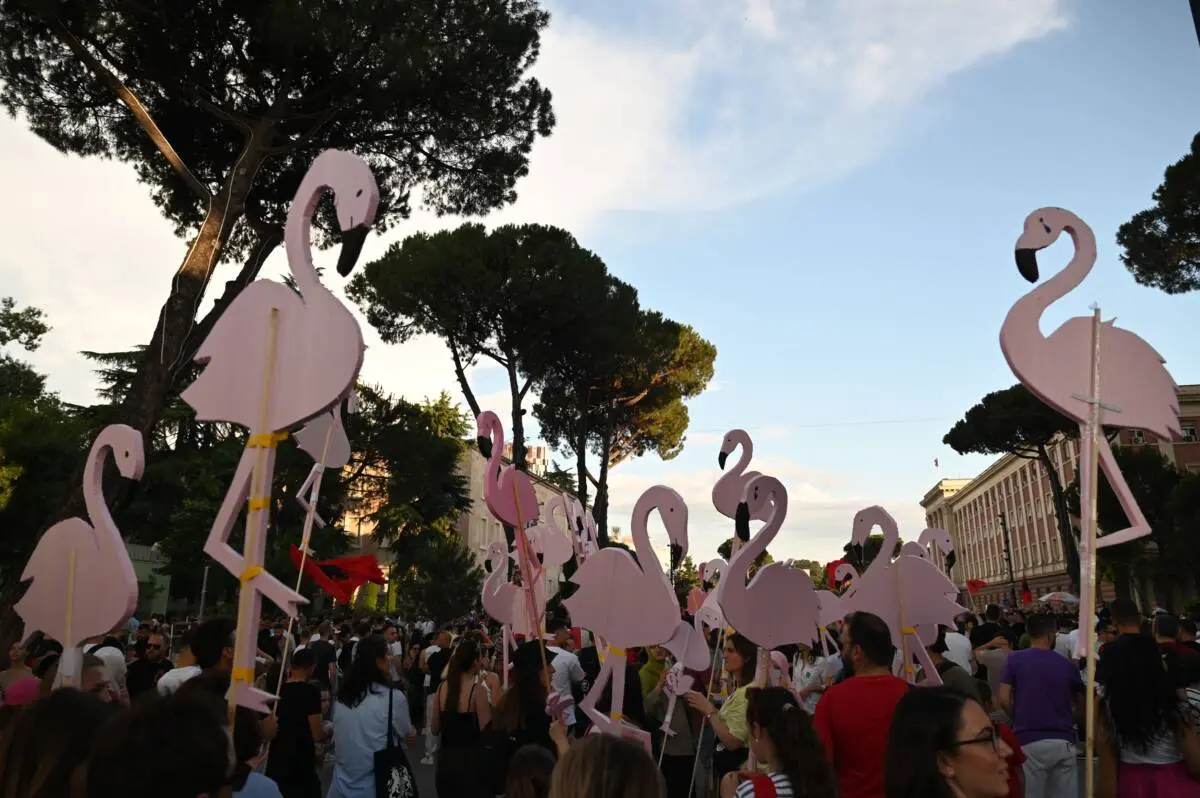
The Flamingo Revolution in Albania – Photo by Erisa Kryeziu
The Flamingo Revolution in Albania - Photo by Erisa Kryeziu
The spark was two luxury Kushner-Trump developments along the southern coast – one on a former military island and one in protected wetland that shelters migrating birds. The combination of a Marie Antoinette-like interview by Ivanka Trump and the beating of a local protester pushed people over the edge.
But the kindling has been gathering over many years as Albanians see the country’s natural beauty get devoured in opaque deals that typically benefit a small business and political elite.
“We’re not just defending the environment,” one protest organizer said. “We’re defending our democratic processes.”
The Kushner-Trump development is not the problem in itself, she and other protesters explained. Rather it is the murky manner in which this and other projects typically advance: without transparency, consultation or public debate.
The economic benefits that Prime Minister Edi Rama promises would be welcome if Albanians felt that they were included or would see the rewards, rather than luxury resorts next to villages where fresh water still runs only a few times per week.
That is why so many Albanians, especially young people, have decided to leave the country – by official numbers up to 30,000 people every year. They see dim prospects to develop careers, build families, and make ends meet.
Even the Trump adminstration has spoken openly about Albania’s corruption and organized crime. The State Department’s 2024 Investment Climate report stated bluntly that investors complain of “corruption, including in the public sector, the judiciary, public procurements, unfair and distorted competition, large informal economy, money laundering, frequent changes to fiscal legislation, and weak enforcement of contracts.”
None of that stopped Kushner, Trump and their Qatari-based partners from pursuing beach-front property near the Narta lagoon and on Sazan Island, which Ivanka pronounced “Cézanne.”
Instead of effectively addressing corruption and organized crime to promote investment, Rama struck a deal with the Trump family, which has a long record of blurring, if not erasing, the line between politics and personal profit.
In parallel, he has attacked the protesters, calling them part of a “hybrid war” and collaborators with the “enemies of Albania.” The smears evoke the communist-era propaganda that Rama, as a young activist, once boldly condemned.
As an Albanian friend remarked, long-time dictator Enver Hoxha built thousands of concrete bunkers to defend against imaginary foes. Rama’s answer is luxury resorts and gleaming skyscrapers by star international architects with apartments that few Albanians can afford.
Now in his fourth term, Rama has enjoyed high degrees of tolerance because many Albanians see the main opposition leader and former prime minister, Sali Berisha – under investigation for corruption – as something worse. But a new generation has come of age that distrusts both men.
“All my life, these are the only faces I see,” said one activist who was born in 1999 – the year before Rama became mayor of Tirana and started painting the facades of the city’s crumbling apartment blocks.
That image-making has become his trademark skill: constructing tall buildings that look grand from abroad and cast long shadows at home.
The flamingo protesters are succeeding to narrow that gap, boosted by the international attention that the Trump name draws. They are spurred by two resort projects but are driven by the well-oiled and well funded system that it represents.
For European governments, the protests offer a chance to re-calibrate their approach. Since the fall of communism, they have largely prioritized stability over democracy in Albania, which means individuals over institutions, and turning a blind eye to autocracy, corruption and organized crime.
That ended very badly in 1997 with the crash of massive pyramid schemes, which led to the looting of arms depots and weapons flowing across the border into Kosovo, sparking a full-scale war.
The current economic system in Albania might actually be worse, given the apparent influx of money from smuggling, trafficking and money laundering, which has helped the lek climb consistently against the euro over the past ten years in ways that tourism and remittances cannot explain.
Eminent architects flood to Albania to enjoy what they openly call Rama’s avant-garde vision and the freedom from regulation. Protesting Albanians call their structures “concrete banks” or “giant washing machines.”
The European Union is eager to keep its enlargement project alive, and Albania is scheduled to join the EU by 2030. That offers leverage to encourage independent institutions and the rule of law, rather than murky deals and personality-driven politics.
That approach would not punish Albania, but help it meet the democratic standards that the EU claims to represent — and that Albanian citizens now demand.
Fred Abrahams is the author of Modern Albania: from Dictatorship to Democracy (NYU Press).
Found an error in this article? Please contact our editorial team at redazione@balcanicaucaso.org.
Featured articles
 Investigation
 students' protest
 Montenegro Pride 2026