

Romania faces a year of intense political campaigning as the country organises European and local elections in June, presidential elections in September and parliamentary elections in December. Against this backdrop, the MFRR partners conducted an online fact-finding mission in Romania to assess the state of media freedom in the country. Meetings with Romania-based journalists, regulators, civil society groups, and lawyers were held in January 2024, with a follow-up mission planned for June in Bucharest.
This report summarises the findings of the first mission.
By: International Press Institute (IPI), Osservatorio Balcani e Caucaso Transeuropa (OBCT), Free Press Unlimited (FPU)
Language: English
This study investigates the capacity of Italian civil society to participate in the political process at the European level by analysing the main strengths and weaknesses of some of the participatory tools offered by the European Union. It also examines the experience of some Italian civic activist organisations that have been active at the European level and made use of these tools.The study brings to light the advantages of a more extensive ac tion at European and transnational level and aims at fostering a deeper understanding of European participation channels in order to stimulate a more significant and impactful involvement of Italian civil society.
By: Luisa Chiodi e Serena Epis
Language: English
This policy paper sheds light on the transnational political mobilisations that take place in the European Union’s (EU) complex multilevel polity by exploring the opportunities and limits that Italian civil society organisations (CSOs) have encountered in the last decades. These are presented as a relevant case study for the transformation of CSOs’ political activism in a time dominated by populist politics and the reduction of the civic space. In the same period of time in which the relationship between civil society and political parties was changing at domestic level, the EU political and legal space has seen a notable consolidation opening new avenues for the mobilisation of CSOs at European level. The examples analysed include legal actions, legislative proposals, advocacy, and monitoring actions carried out by CSOs operating mainly in the field of protection of the fundamental rights of migrants and LGBT+ people, gender, and environmental issues.
Although there are considerable organisational and political obstacles to successfully using the transnational arena, the case of the Italian CSOs shows how the European multilevel system offers important opportunities to contrast populism. Our findings indicate that national civil society organisations are increasingly including transnational action into their toolkit. The transnational commitment of CSOs in a "vertical" sense is the most common one, but in order to address common challenges the “horizontal” dynamics should be actively fostered. The final part of the paper is devoted to recommendations addressed to the EU institutions and civil society to strengthen European participatory democracy.
By: Luisa Chiodi & Fazıla Mat, OBC Transeuropa
Language: English and Italian
The Istituto Affari Internazionali (IAI) and the Osservatorio Balcani e Caucaso Transeuropa (OBCT), with the assistance and sponsorship of the Italian Ministry of Foreign Affairs and International Cooperation and under strategic partnership with the Compagnia di San Paolo Foundation, organised the high-level closed-door conference “New Visions for the Western Balkans: EU Accession and Regional Security”, held on 3 and 4 April 2023 at the Farnesina. The proceedings were opened by Antonio Tajani, Italian Deputy Prime Minister and Foreign Minister, and Tobias Billström, Minister of Foreign Affairs of Sweden, which holds the Presidency of the Council of the European Union. Speeches followed from the foreign ministers of the six Balkan countries, who provided insights for the debates and interventions by leading experts from international organisations, institutions and civil societies. Contributions ranged from the prospects for future integration of the region into the EU, to the progress of the regional integration process, and the security challenges of the region in the current geopolitical context.
Report of the conference “New Visions for the Western Balkans: EU Accession and Regional Security”, organised in Rome on 3-4 April 2023
Curated by: Matteo Bonomi, Luisa Chiodi e Irene Rusconi
Language: English
OBCT and CeSPI completed a study financed by the Italian Ministry of Foreign Affairs and International Cooperation with the objective to examine how innovative companies and innovation hubs/innovation incubators in the Western Balkans can positively contribute to local social-economic development and ultimately reduce the brain drain of skilled youth. The starting hypothesis is that reinforced conditions of entrepreneurial-innovative development in the Western Balkans can contribute to increasing employment opportunities and retaining youth talents and innovative ideas.
The methodology includes a desk literature and a qualitative mapping, realized with 14 interviews with different players in Serbia, Albania and Kosovo. This pilot study presents limitations due to the difficulty to engage for-profit operators and the limited number of case studies involved. Moreover, addressing “Innovation and Brain Drain” in the Western Balkans obviously depends on the specificities of each country, economy, sector and existing clusters/districts.
Curated by: Anna Ferro, Francesco Martino, Serena Epis
Language: Italian
Organised by OBCT, the Italy Mission of the MFRR, Media Freedom Rapid Response, was an intense 3-day visit from 4 to 6 April 2022: meetings with the Constitutional Court, with Members of Parliament, of the Antimafia commission, of a working inter-group, with the Police and several journalists, helped the delegation dive deep into two main topics, defamation and safety of journalists. The findings and the recommendations are collected in this report curated by OBCT. The publication is available also in Italian.
2022
Curated by: Paola Rosà
Language: English
As member of the Media Freedom Rapid Response , OBC Transeuropa conducted a research on the needs of women and local journalists and the gaps in the existing support mechanisms. Building on the findings of Interviewing Journalism , this report moves towards a targeted analysis with the development of four case studies: Bulgaria, Ireland, Italy and Sweden.
2022
Author: Maria Francesca Rita
Language: English
Authors: Luisa Chiodi, Serena Epis e Anna Ferro
Language: Italian
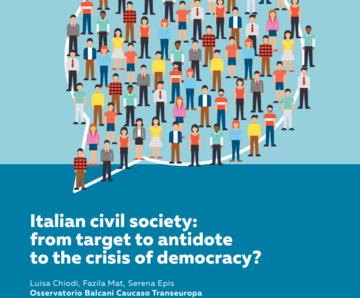
The research explores the responsiveness of Italian civil society to what is internationally referred to as the "shrinking” or “narrowing” of spaces for civic action. In particular, it questions the capacity of civil society to participate in the political process, exploring possible strengths and weaknesses that affect or may affect the possibility of civic action.
This research is part of the Winning the Narrative project funded by Civitates - A philanthropic initiative for democracy and solidarity in Europe and carried out in collaboration with CILD.
Authors: Luisa Chiodi, Fazila Mat, Serena Epis
Language: English
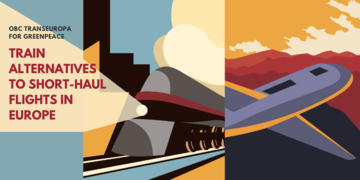
If short-haul flights which have a reasonable train alternative were banned, Europe's CO2 emissions would decrease. This report, which we produced for Greenpeace, looks at the extent to which train alternatives exist to short-haul flights in Europe. Based on a list of the most popular flight routes, we have gathered data on travel time by train on the same routes, both in 2021 and before the outbreak of the Covid-19 pandemic in 2019. We also collected data on the routes that train follow, on the number of transfers required, and on the distances travelled by train. These analyses look at the 250 busiest short-haul flight routes in Europe, at the 150 intra-EU short-haul flight routes, and at the most popular flight routes for a few individual European countries.
Authors: Lorenzo Ferrari and Gianluca De Feo
Language: English
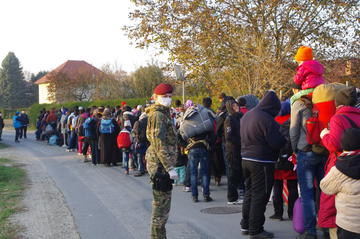
La pandemia COVID-19 non ha ridotto il numero di migranti in ingresso nei Balcani occidentali: al contrario, le misure di sicurezza sanitaria e la chiusura delle frontiere hanno generato situazioni di emergenza umanitaria in alcune località, in modo particolare nei pressi dei principali valichi di frontiera. Lo studio ha analizzato la situazione sulla cosiddetta “rotta balcanica” in maniera multiprospettica, approfondendo in particolare, da un lato, l’evoluzione nel contesto mediorientale da cui origina il nuovo consistente flusso migratorio; dall’altro, la situazione nei paesi più coinvolti nella gestione degli arrivi e nelle frontiere maggiormente esposte (Turchia/Grecia; Bosnia Erzegovina/Croazia), cercando di individuare prospettive di governo multilivello del fenomeno.
2021
Authors: Luisa Chiodi (OBCT) and Raffaella Coletti (CeSPI)
Language: Italian
Western Balkans amid multipolarity and the European integration process, emergencies and territories
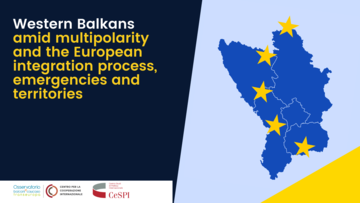
The European Union’s enlargement path to the Western Balkans provides a frame and background to the bilateral and multilateral relations that take place between Member States and acceding countries. The emergencies that have characterised the last few months, from the pandemic to the rekindling of migratory flows through the so-called "Balkan Route", raise questions of great political importance, which may also affect the integration process into the European Union for the countries of the region.
The first two sections of this document focus on the challenges arising from these emergencies, highlighting the critical issues, but also the potential for a growing integration of the Western Balkans. Indeed, the importance of sharing on a transnational scale and the urgency to grasp the potential in place constitute the grounds for the third section, which focuses on the opportunities provided by the EUSAIR macro-regional strategy.
With its participation on an equal footing of EU Member States and acceding countries, and with its inclusive approach towards the various territorial stakeholders, the strategy could offer a specific contribution to enlargement and more generally to the shared management and enhancement of the Adriatic-Ionian region. Finally, a greater involvement of national parliaments in the strategy could make a crucial contribution to this aim.
Position paper prepared for the Interparliamentary Conference Western Balkans: amid multipolarity and the European integration process Organized by the Foreign Affairs Committee House of Deputies April 26, 2021
By: OBCT and CeSPI
Language: English
OBC Transeuropa -as member of the Media Freedom Rapid Response consortium- conducted a research on the needs of European journalists and the gaps in support mechanisms. From verbal harassment against media operators to groundless legal charges, what can be done to tackle these issues
2021
Authors: Maria Francesca Rita, Sofia Verza, Luisa Chiodi
Language: English

© bepsy/Shutterstock
Il terzo lavoro della serie “Riprendersi gli spazi. Costruire nuove narrazioni” analizza il caso dell'accoglienza a Trieste esplorando il dibattito locale e le posizioni dei principali attori in campo nel corso del 2019. Dal 2015-16 la direttrice di transito dei migranti attraverso i Balcani ha investito in modo significativo il capoluogo giuliano, mentre in città cresceva l'ostilità della politica nei confronti dell'accoglienza. L'analisi quantitativa della stampa locale è a cura di Ornaldo Gjergji del data team OBCT/EDJNET.
2020
Autrice: Rossella Vignola
Lingua: italiano
© Dmytro Surkov/Shutterstock
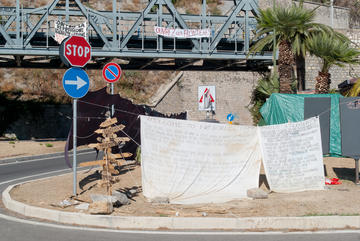
Il secondo lavoro della serie “Riprendersi gli spazi. Costruire nuove narrazioni” analizza il caso dell'accoglienza a Ventimiglia esplorando il dibattito locale e le posizioni dei principali attori in campo negli ultimi anni. La città, l'ultima italiana prima del confine con la Francia salita agli onori della cronaca per via del transito dei migranti diretti in Francia e in altri paesi europei, è stata interessata da una dinamica di criminalizzazione e restringimento dello spazio di azione civica per gli attori della società civile impegnati in azioni di solidarietà e accoglienza.
2020
Autori: Ornaldo Gjergji e Rossella Vignola
Lingua: italiano
© 4H4 Photography/Shutterstock
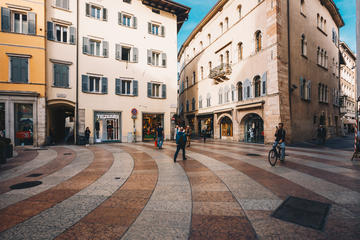
Il primo lavoro della serie “Riprendersi gli spazi. Costruire nuove narrazioni” analizza il caso della cooperazioni internazionale nel caso trentino analizzando il dibattito locale e le posizioni dei principali attori in campo nel corso del 2019, quando il settore ha subito importanti tagli. Lo studio vuole individuare nuovi spunti narrativi per contrastare le sempre più diffuse narrazioni contrarie alle politiche di solidarietà e di accoglienza.
2020
Autrice: Rossella Vignola
Con il contributo di: Francesca Vanoni e Luisa Chiodi
Lingua: italiano
The abuse of law as a tool to silence dissent, influence freedom of expression and capture media freedom. The 9th of a series of thematic itineraries to explore the Resource Centre on Media Freedom through a curated aggregation of contents.
This dossier has been developed within the ECPMF project.
December 2019
Authors: Claudia Pierobon and Paola Rosà
Languages: English - Italian
In Alina Mungiu-Pippidi’s definition, media capture is a situation in which the media are controlled “either directly by governments or by vested interests” which seek political influence rather than profit. The result is the creation of a hybrid regime, halfway between democracy and totalitarian state.
The 8th of a series of thematic itineraries to explore the Resource Centre on Media Freedom through a curated aggregation of contents. This dossier has been developed within the ECPMF project.
December 2019
Authors: Ilcho Cvetanoski and Matteo Trevisan
Language: English - Italian

In Italy the abolition of direct public funding to parties gave a greater role to private financing, increasing the risk of undue influence on the democratic process. A dossier as a part of the ESVEI project.
November 2019
Authors: Fazıla Mat, Niccolò Caranti
Language: English - Italian
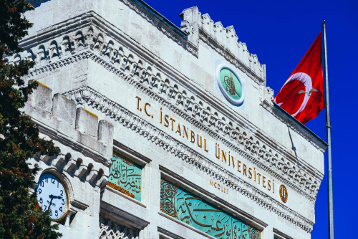
Negli ultimi anni la Turchia ha assistito ad una massiccia riduzione della libertà di espressione che ha avuto un notevole impatto anche sulla libertà accademica. Secondo le stime del network Scholars at Risk (SAR, 2018) tra il gennaio 2016 e il gennaio 2018, sono state licenziate 8.535 persone impiegate nelle università.
Un caso particolare è rappresentato dagli “Accademici per la pace” (Barış İçin Akademisyenler-BAK), un gruppo di oltre 2000 universitari che sta scontando gravi conseguenze per aver sottoscritto una petizione a favore della pace. Il loro caso rappresenta anche un esempio di solidarietà collettiva che si traduce nell’ideare pratiche quotidiane per continuare la loro attività di ricerca e di condivisione della conoscenza.
Giugno 2019
Autrice: Fazıla Mat
Lingua: italiano
The attempted coup of July 2016 represented an unprecedented turning point for Turkey's media albeit an already problematic background. The special dossier "Media Freedom In Turkey" explores the dire situation created after the coup, presenting both the difficulties as well as the efforts to pursue quality journalism and solidarity actions.The dossier "Media Freedom in Turkey" is the seventh of a series of thematic itineraries that illustrate the most compelling issues related to media freedom in Europe through a selection of the Resource Centre on Media Freedom contents.
January 2019
Language: English - Italian
Authors: Fazıla Mat and Valentina Vivona

"Fake news" or disinformation is one of the most pressing issues of our times. Building on the materials of the Resource Centre on Press and Media Freedom in Europe, OBCT devoted its latest special dossier to this topic
January 2019
Language: English - Italian
Authors: Fazıla Mat and Niccolò Caranti
Tools and facilities to protect journalists in Europe. An interactive special dossier that aims to be a handy reference for journalists in need
Langage: English - Italian
The fourth of a series of thematic itineraries to explore the Resource Centre on Media Freedom through a curated aggregation of contents. The text has been kindly proof-read by Dr. Lada Price from Sheffield Hallam University - CFOM and AEJ - Bulgaria
A special dossier curated by Osservatorio Balcani Caucaso Transeuropa for the Resource Centre on Press and Media Freedom
April 2018
Language: English - Italian
Authors: Nicola Pedrazzi, Fazıla Mat, Valentina Vivona
As hate speech is being debated more and more both online and offline, we decided to devote a special dossier to it, building on the materials of the Resource Centre on Press and Media Freedom in Europe.
The third of a series of thematic itineraries to explore the Resource Centre on Media Freedom through a curated aggregation of contents.
A special dossier curated by Osservatorio Balcani Caucaso Transeuropa for the Resource Centre on Press and Media Freedom
January 2018
Language: English - Italian
Authors: Marzia Bona, Irene Dioli, Lorenzo Ferrari, Fazıla Mat, Nicola Pedrazzi, Rossella Vignola , Valentina Vivona
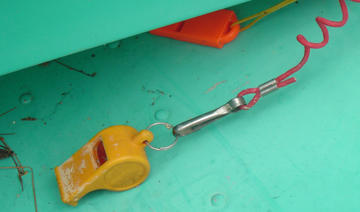
On October 24th, 2017, the European Parliament voted an important - although not binding - resolution on the need for a EU framework for the protection of whistleblowers. An overview of the process that lead to the formulation and adoption of the document.
The second of a series of three thematic itineraries to explore the Resource Centre on Media Freedom through a curated aggregation of contents
October 2017
Language: English - Italian
La scena dei media in Montenegro è profondamente divisa e polarizzata lungo linee di frattura politiche tra i media che sostengono il governo e quelli che sostengono l’opposizione. Limiti al pluralismo dell’informazione sono riscontrati dalle principali organizzazioni che monitorano il panorama mediatico. Organizzazioni internazionali e centri studi registrano pressioni politiche ed economiche, assenza di professionalità, scarsa trasparenza nell’assegnazione dei fondi e della pubblicità in un contesto in cui attacchi fisici e verbali contro i giornalisti e impunità sono all’ordine del giorno.
Il dossier speciale “La libertà dei media in Montenegro. Una rassegna di pubblicazioni sulla libertà di informazione” è il primo di una serie di itinerari tematici che illustrano le problematiche più attuali legate alla libertà di stampa in Europa attraverso una selezione di risorse tratte dal Resource Centre per la libertà di stampa .
Lingua: Italiano
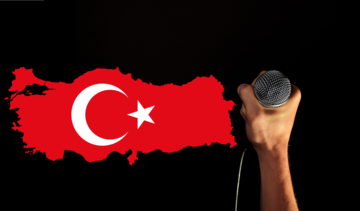
In Turkey most media owners are operating in a wide range of business sectors. Despite the presence of national laws intended to increase transparency, getting access to information related to companies that own media is extremely difficult. Moreover, journalists who publish data that the government does not want to be spread, do it at their own risk. The paper offers an outlook of media ownership structures in Turkey, including practical research attempts.
Author: Gülseren Adaklı
Language: Italian
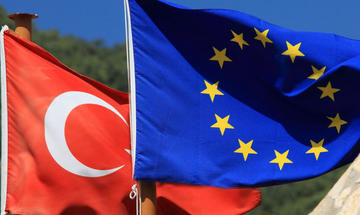
Il contestato accordo UE-Turchia non ha comportato solo la limitazione della migrazione sulla rotta balcanica, ha avuto conseguenze anche sull’accoglienza dei richiedenti asilo nel paese. In un contesto di autoritarismo crescente, i siriani “sotto protezione temporanea” in Turchia oggi hanno maggiori opportunità di ottenere permessi di lavoro, accesso alla sanità e scolarizzazione. In Turchia, oggi risiede la maggiore popolazione di richiedenti asilo al mondo e oltre ai nodi problematici dell’accordo, vanno considerate le difficoltà oggettive nell’integrazione di questa popolazione nel tessuto sociale locale.
Il Working Paper è stato realizzato grazie al sostegno dell’Unità Analisi, Programmazione e Documentazione storico-diplomatica del Ministero degli Affari Esteri e della Cooperazione Internazionale (contributo straordinario ex articolo 2 della legge 948/82), nel quadro del progetto di ricerca “La governance internazionale dei flussi misti tra Europa e Africa. Tendenze recenti, ostacoli e opportunità di sviluppo” condotto da OBC Transeuropa, FIERI e CeSPI.
Autrice: Fazıla Mat
Lingua: Italiano
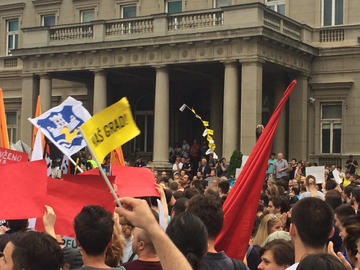
In the past couple of years we have witnessed the rise of new initiatives in the post-Yugoslav space. From the workers uprising, students mobilization to protests for defense of common goods, these initiatives seem to speak to the emergence of a civil society that is critical of neoliberal capitalism and the dominant model of post-socialist transition.
This paper examines one such ongoing initiative, dubbed ’We won’t let Belgrade d(r)own’, against a big construction project on the river banks in Serbia’s capital, analyzing its discourse and some elements of its practice, such as networking, forms of action, knowledge production and funding.
While this mobilization appears as an attempt to move away from the liberal NGO model and to introduce structural and class issues as notions around which political action can be waged, it emerges that at the same time it relies on, and draws from, the liberal civil society practice and dominant transitional discourses.
A contribute to better understand the ‘new wave’ of mobilizations and their emancipatory potential.
Author: Tijana Morača
Language: English
Di fronte alla crisi dei migranti l'UE ha elaborato soluzioni parziali e tardive oscillando tra emergenza nelle risposte legislative e diritti umani (un po' tutelandoli e un po' delegandone la violazione). Ma sarebbe sbagliato sostenere che non ha fatto nulla. L'UE infatti è strutturata per comporre interessi contraddittori di svariati attori diversi tra loro, per elaborare compromessi e non soluzioni. Ciò detto, nella gestione degli ingressi come dell'integrazione dei migranti la risposta in Europa fino ad oggi è stata emergenziale. La sfida è quella di porsi le domande giuste prima di dare le risposte. Prima tra tutte come fare sì che le nostre società imparino a gestire la diversità come fattore strutturale e non eccezionale.
Autore: Francesco Palermo
Lingua: Italiano
Il 31 marzo 2016, Vojislav Šešelj, leader del Partito radicale serbo, accusato di crimini di guerra e contro l’umanità, è stato assolto in primo grado dal Tribunale Penale Internazionale per l’ex Jugoslavia. La sentenza, promulgata ad una settimana di distanza dalla condanna di Radovan Karadžić presso lo stesso Tribunale, ha colto di sorpresa parte dell’opinione pubblica internazionale e nei Balcani, perché contraria alle attese. Infatti, Šešelj era già stato ritenuto colpevole di aver preso parte ad una “impresa criminale congiunta” in precedenti sentenze, dunque l’assoluzione dell’imputato risulta incongruente rispetto alla giurisprudenza del Tribunale stesso. Nel paper, dopo alcuni cenni alla biografia politica di Šešelj, vengono esaminati alcuni passaggi controversi della sentenza. Il lavoro si conclude con una disamina delle possibili ragioni che hanno condotto all’assoluzione, e delle reazioni nello spazio post-jugoslavo.
Autore: Christian Costamagna
Lingua: Italiano
The executive summary and policy recommendations here presented are part of the study “The Adriatic-Ionian macroregion: a hurdle process. The start of the Adriatic-Ionian Regional Strategy in the perspective of Italian foreign policy and the European integration of the Western Balkans”, supported by the Unit for analysis and planning of the Italian Ministry of Foreign Affairs and International Cooperation.
The study comprises the executive summary plus one chapter dedicated to the governance issue of EUSAIR taking sparks from the Baltic macro-region, elaborated by CeSPI, and a second chapter with a case study focused on EUSAIR in the Croatian Media, conducted by OBC.
The analysis was carried out by Almona Tani and Andrea Stocchiero (CeSPI) and Marzia Bona (Osservatorio Balcani Caucaso - OBC), with the scientific supervision of Luisa Chiodi and the contribution of Caterina Ghobert. The project was coordinated by Andrea Stocchiero. (download the paper)
Author: OBC and CeSpi
Language: English
The EU has consistently recognised media freedom and pluralism as fundamental pillars of democratic systems, enshrining these principles in EU binding documents. As far as Enlargement countries are concerned, Commissioner Hahn recently stated that media freedom is an “imperative” and that “without freedom of the media, a country can not be part of the EU".
Despite this, both in Member states and in the countries aspiring to join the EU, media independence and the safety of journalists are often under pressure by means of direct and indirect threats.
Taking a closer look at the situation in EU member states, Freedom House warns that Europe registered the world’s second-largest net decline in media freedom since 2004, a deterioration which is second only to Eurasia. Such deterioration can be attributed to the incremental erosion of the legal and economic environments - the product of several trends including the digital evolution as well as negative factors such as the economic crisis and the securitarian turn, that further facilitate the interferences with the ability of journalists to cover the news in person.
(... read more)
Author: OBC (The position paper presented at the TransEuropa conference has been complemented with the comments collected in the course of the seminar)
Language: English
A quarter-century after the fall of the Berlin wall, Europe is confronted by the construction of the new walls which are built to stop migrants and refugees. The reaction to the ongoing humanitarian crisis in the Balkans, and the challenge of terrorism, should not lead us to surrender values such as solidarity, equality and freedom of movement.
Author: OBC (The position paper presented at the TransEuropa conference has been complemented with the comments collected in the course of the seminar)
Language: Italian
From Turkey's instability to the war in Ukraine. Lessons learnt and the intervention of the European Union
In 1995, the Dayton Peace Agreement stopped the war in Bosnia Herzegovina. In the last 20 years the global order, as well as the European Union and the Western Balkans, underwent significant changes. Adopting a European perspective, this position paper reconsiders the changes intervened and the capacity of the European Union to act in the international sphere, keeping in mind that the multiplication of conflicts in the regions bordering the EU poses critical challenges also at the domestic level, as epitomized by jihadist terrorism.
Author: OBC (The position paper presented at the TransEuropa conference has been complemented with the comments collected in the course of the seminar)
Language: Italian
Da oltre vent'anni il Tribunale Penale Internazionale per l'ex Jugoslavia (ICTY) e le Corti locali perseguono i responsabili per i crimini di guerra e contro l'umanità commessi in Bosnia Erzegovina nel periodo 1992-1995. Il ritmo dei processi, tuttavia, è talmente lento che difficilmente le vittime, i familiari e le società sconvolte dalle violenze dei nazionalisti potranno mai ritenersi soddisfatte per il lavoro svolto dalla giustizia tradizionale
Autore: Andrea Oskari Rossini
Lingua: italiano
Position Paper for the Consiglio Italiano del Movimento Europeo (CIME)
Author: OBC
Language: Italian
Position Paper for the Consiglio Italiano del Movimento Europeo (CIME)
Author: OBC
Language: Italian
Letter to President of the International Criminal Tribunal for the former Yugoslavia (ICTY).
From 20th February to 5th March, the Italian media and think tank Osservatorio Balcani e Caucaso (OBC), conducted an online debate on the ICTY and the reconciliation process in former Yugoslavia. A synthesis of what emerged from tens of comments that were posted by practitioners, scholars as well as ordinary citizens residing in Western Europe and in the Balkans.
Author: OBC
Language: English
The organisation of youth camps financed by the government has emerged as one of the most visible and best publicised elements of present youth policies in Russia. This paper refers in particular to Mašuk 2010, a camp supported by the Russian government and dedicated entirely to young people from territories of the federal district of the northern Caucasus and from territories of the de facto independent republics of Abkhazia and South Ossetia, internationally recognised as part of Georgia. The research is based on participated observation at the Mašuk camp in the summer of 2010 and on interviews with those responsible for youth policies in Russia and the Caucasus.
The research found that youth policies currently supported by the Russian government take their example explicitly from the Soviet experience. In the Caucasus, youth policy and camps such as Mašuk have the aim of promoting entrepreneurship and the importance of individual success, improving inter-ethnic relations among young people of the region, creating a positive image of the State (frequently identified with corruption, bad government, and repressive measures), strengthening policies of patriotic education in order to reinforce the sense of belonging to the “great motherland” - the Russian Federation - and also to “small motherlands”, like the region of origin and, for the first time, the northern Caucasus in its entirety.
Author: Giorgio Comai
Language: Italian
A partire dal 1999 la comunità albanese del Kosovo ha attraversato un processo di radicale trasformazione, affrontando per la prima volta la pluralizzazione della vita pubblica. Il paper esplora queste dinamiche che sono state trascurate, sia a livello locale sia internazionale, a causa della questione dello status politico del Paese che ha monopolizzato la sfera pubblica.
Prestando particolare attenzione alle conseguenze del decennio di segregazione etnica degli anni Novanta, il paper analizza lo sviluppo della società civile, dei media, dei partiti politici così come il fenomeno di rapida urbanizzazione e i cambiamenti nelle relazioni familiari. L'analisi sottolinea quanto la comunità albanese sia ostaggio di aspettative irrealistiche rispetto allo sviluppo politico, economico e sociale che dovrebbe seguire all'ottenimento dell'indipendenza. In questo contesto, il processo di democratizzazione è indebolito dall'appello all'unità di fronte a 'nemici' esterni e in particolare alla minoranza serba e all'amministrazione internazionale.
Autori: Luisa Chiodi - Francesco Martino - Francesca Vanoni
Lingua: inglese
