Regional economic cooperation has turned into the headline of EU-Balkans relations in the last months. But what’s the situation today in the Balkans? An interview with Nenad Đurđević, advisor to the President of the Serbian Chamber of Commerce and Industry and Head of the Regional Council for Strategic and Policy Initiatives
The defence of rivers and water: a highly symbolic struggle which in recent years has successfully mobilised very different layers of the societies of south-eastern Europe, bringing to light both potential and contradictions. An interview
The EU has invested considerable efforts in stimulating regional cooperation in the Balkans over the last decades, yet the results are questionable. Which are the reasons behind such slow progress and where does Bosnia and Herzegovina stand? We talked about it with Adnan Ćerimagić analyst at ESI
An Interreg cross-border cooperation project to reduce CO2 emissions at all levels, from aircraft engines to plastic consumption on the ground, has produced a practical handbook. We interviewed two of the main managers, Anita Maurodinoia and Vito Antonio Antonacci
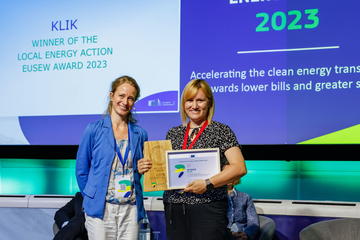
A women's cooperative that serves as an information point for energy and climate issues: in 2023, KLIK received the European Commission's European Sustainable Energy award for developing an energy community in Croatia "that brings clean energy to citizens"
Dealing with organised crime and risking your life, needing police protection just to be able to do your job and live your everyday life. Jelena Jovanović, journalist from the Montenegrin newspaper Vijesti, explains what it is like to live under police protection
In addition to EU structural and investment funds, from 2021 Romania also has access to money from the Just Transition Programme. What does this programme mean, how much money can Romania actually receive and what is it earmarked for?
For citizens of border areas, accessing quality healthcare services can be difficult. Cross-border cooperation, also thanks to EU cohesion policy, can be effective in guaranteeing the right to health for all. An interview
A journalist and a photographer from Romania have been living in a van for ten years to be able to write their investigations on how life is in Romania and how expatriate Romanians live. They are Elena Stancu and Cosmin Bumbut: we met them
Investigative tech reporter Omer Benjakob, member of the desk behind the publication of the cybersecurity focused newsletter NatSec+ for the newspaper Haaretz, speaks to OBCT/MFRR about the challenges of covering the surveillance tech industry in Israel, one of the countries that has developed this industry the most
Nikola was just a few months old when, in August 1995, his family – together with the other 200,000 people of Serbian nationality, left Croatia in a hurry. After living in Serbia for fifteen years, he returned to Croatia where he attended high school and where he still lives and works. We met him
As part of the surveillance series, we interviewed Evita Papakiriakidou, criminal lawyer from the Athens Lawyers law firm, who represents Thanasis Koukakis, a Greek journalist who was the illegitimate target of spyware surveillance
While the European Parliament's Commission enquires on the various states where surveillance technologies have been commercialised despite the bans, the emphasis remains on civil society and digital security. Interview with Lorenzo Bagnoli of IrpiMedia
Synthesise and integrate two "failed", seemingly antithetical political thoughts, the Marxist and the Islamic one. This is what EKP-dominated Turkey needs according to Recep İhsan Eliaçık, Turkish thinker and activist, animator of the first collective of "anti-capitalist Muslims”
“I don't know who wrote this bill, but I suspect that the main intention was to divide the Croatian media, creating havoc in the sector”, said Hrvoje Zovko, the president of the Association of Croatian Journalists (HND). We met him in Zagreb
Among the effects of climate change are so-called extreme wildfires. In Croatia, large fires in open spaces present a particular problem. We met with the Croatian Association of Firefighters to find out how they are facing up to new challenges
David Pejić, born in 1990, won the European Commission award for "Best European organic farmer" last September. David is at the helm of the oldest organic farm in Croatia and his is a very unusual story that crosses agriculture and philosophy
In Serbia, local media play a central role in shaping the narrative of the Russian invasion of Ukraine. We talked about it with Aleksandra Godfroid, journalist of the N1 TV network
During the elections that have just ended in Türkiye, the candidates used a discriminating and aggressive discourse. We talked about it with Yasemin Korkmaz, coordinator of the hate speech monitoring campaign in Türkiye at the Hrant Dink Foundation
The start of the Russian invasion of Ukraine, paradoxically, may have avoided a new open confrontation in Bosnia and Herzegovina. This is one of the reflections by Edina Bećirević, a professor at the University of Sarajevo and an expert on Russian influence in the Western Balkans. An interview
Since the beginning of the year, the European consortium Media Freedom Rapid Response has recorded 34 cases of violation of press freedom in Italy, including assaults, verbal attacks, and strategic lawsuits. We talked about it with Rossella Puccio, an independent journalist who was the victim of attacks and intimidation
The documentary “The Killing of a Journalist” (2022), by the American director Matt Sarnecki, covers the murder of Slovak investigative journalist Ján Kuciak and his girlfriend Martina Kušnírová and its aftermath, unveiling the political corruption in Slovakia
Investigative journalists, in addition to the risks of the trade, often incur libel lawsuits, SLAPPs, etc.. Especially if, like Sara Manisera, they deal with sensitive issues such as organised crime. We interviewed her
As in other areas of the Croatian coast, also in Baška, a municipality on the southern tip of the island of Krk, the local administration is facing depopulation in the winter months and saturation in the summer ones. We talked about it with its mayor, Toni Juranić
Serbia and Ukraine used to have close geopolitical positions, but such friendship has been jeopardised by the Russian invasion of Ukraine. A study tries to take stock of the bilateral relations between Kyiv and Belgrade. We interviewed author Kateryna Shymkevych
The instrumental use of EU data protection threatens press freedom in Greece. The case of journalist Stavroula Poulimeni and the independent media outlet Alterthess, sentenced in the first instance to pay compensation of 3,000 euros to Efstathios Lialos, executive of the Hellas Gold gold mine
Since the Russian invasion of Ukraine, Serbia has navigated a delicate and increasingly uncomfortable balance between West and East. However, according to analyst Vuk Vuksanovic (Belgrade Centre for Security Policy), Serbian elites are mainly driven by their opportunism
The Bolzano Salto.bz web portal has received a claim for damages for 150,000 Euros from the South Tyrol publishing giant Athesia. According to defence attorney Nicola Canestrini, it is a clear case of SLAPP, a gag complaint
Investigative journalist and university lecturer Emilia Sercan is at the centre of a new smear campaign after revealing that the Interior minister had plagiarised his doctoral thesis. We met her