
The future of cohesion policy held hostage by EU governments
The co-legislators of Parliament and the Council are ready to negotiate the structure of the new common budget, with simpler rules and still separate programs within a revolutionized architecture. But the clash between two opposing fronts of member states over the amount of resources to be allocated threatens to stall the entire process
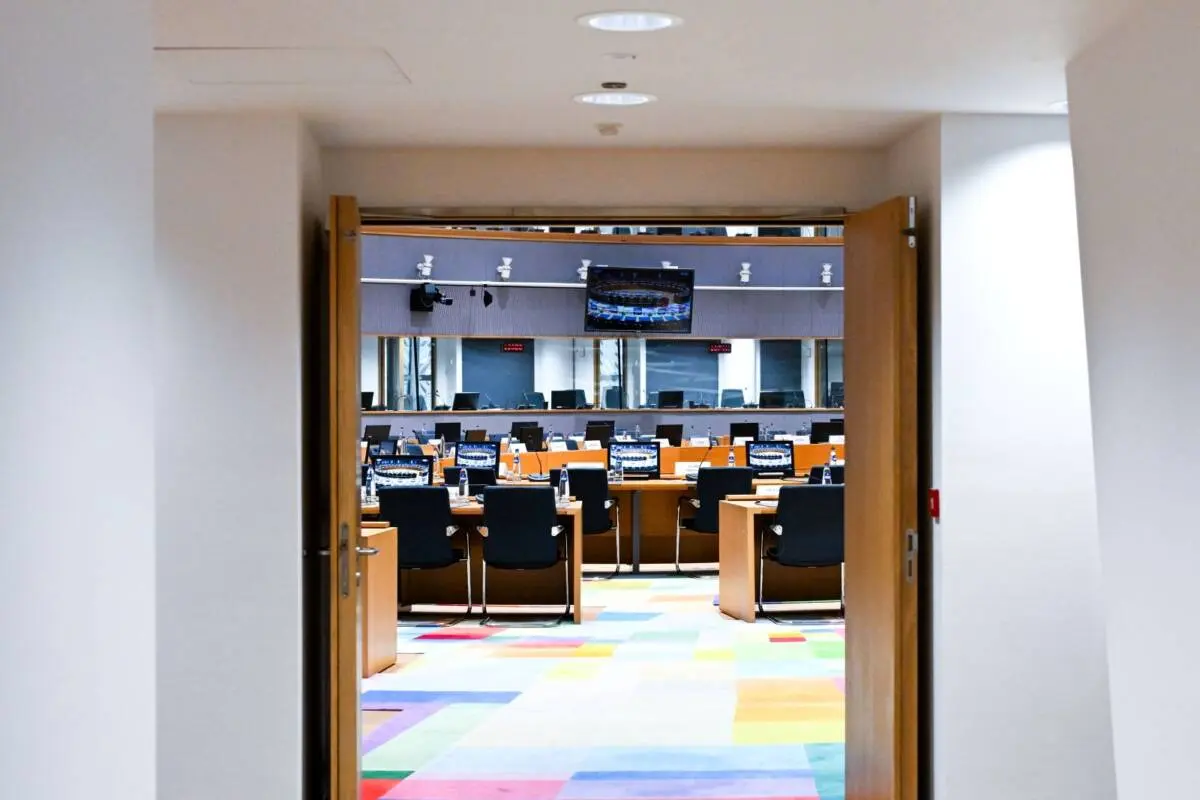
Sala del consiglio ue © Consiglio dell’UE
© Consiglio dell'UE
There is just over a year to go until the end of the European Union’s current seven-year financial cycle, yet the future of the common budget and its founding pillars – cohesion policy and the common agricultural policy (CAP), in particular – is still far from clear.
Following the Commission’s proposal a year ago and the tense confrontation between EU institutions that began thereafter, the process has continued with the definition of the negotiating positions of the European Parliament and the Council of the European Union, the body that brings together the 27 governments.
Although the details of the architecture that should be applied for the 2028-2034 period are slowly emerging – even though interinstitutional negotiations have yet to begin and could hold some surprises – the underlying question that risks derailing the debate is the most worrying one: how much funding to allocate in the next Multiannual Financial Framework?
Money is no small matter, especially when it comes to the Union’s overall budget.
But it is precisely on this point that the 27 capitals are divided, even before sitting down at the table with Parliament’s negotiators.
The future of a crucial common policy like European cohesion is thus held hostage by purely national interests (financial and otherwise).
Separate funds and simplification
Let’s start with the positive developments.
Both MEPs and the 27 governments have moved closer to the negotiation phase to define the final architecture of the next Union budget thanks to the adoption of their respective mandates on the overall framework.
The European Parliament adopted its negotiating position at the end of April, rejecting the European Commission’s proposed approach to National and Regional Partnership Plans. Under the new architecture, the current approximately 540 programs from various policies, previously autonomous, will be merged into 27 single plans, while the disbursement of funds will be tied to the achievement of agreed reform objectives.
As Siegfried Mureșan (European People’s Party), co-rapporteur on the 2028-2034 Multiannual Financial Framework, had anticipated to OBCT, MEPs sought to mitigate the risks of renationalizing European policies by calling for “separate, adequate, and clearly earmarked funds” for the CAP, the Common Fisheries Policy, cohesion policy, and the European Social Fund, “in order to strengthen long-term territorial resilience, social cohesion, and trust in the European project, as well as upward convergence.”
As stated in the report adopted in the plenary session, the criticism of the “one plan for each Member State” model is linked to the risk that it “could weaken EU policies, reduce transparency, and create competition among beneficiaries,” warn MEPs.
If the creation of these 27 national and regional plans is now taken for granted, the work of “softening” the revolution in the architecture of the European budget is therefore based on providing specific allocations and clear rules for each policy.
A sort of hybrid between the current approach and the one proposed by the Commission, which could nevertheless protect beneficiaries of cohesion policy, for example, from those of the CAP.
“Cohesion policy is a Union priority legally enshrined in the Treaties,” MEPs make clear, reiterating its role as “a cornerstone of the EU’s growth model, based on multilevel governance and the effective involvement of regional and local authorities” in the process of “preparing, implementing, monitoring, and evaluating national plans” and tailoring investments “to their needs.”
The approach adopted by Member States is not significantly different, and it is precisely for this reason that, at least in theory, negotiations to define the overall framework of the 2028-2034 Multiannual Financial Framework should not be overly complex.
By agreeing on their negotiating positions on the rules governing the main funds earmarked for regional development at the end of June, the 27 EU governments have opened the discussion phase with the European Parliament, which will take up much of the autumn/winter of 2026.
The Council also decided to maintain the national and regional partnership plans as a single strategic framework, but reintroducing autonomous regulations and funds for cohesion – namely the European Regional Development Fund (ERDF), the Cohesion Fund, and Interreg.
One of the Council’s main objectives is to make cohesion policy easier to apply in the future, reducing administrative complexity and providing both central and regional governments with a clearer regulatory framework to facilitate project planning and implementation.
Simplified procedures should allow national, regional, and local administrations to better focus resources on investments, thus reducing the bureaucratic burdens that slow down the use of European funding.
A specific focus is placed on the program that finances joint projects between regions from different countries – namely, Interreg – as cross-border territorial cooperation has specific characteristics that require dedicated rules and a separate framework.
Unlike Parliament, however, the general agreement among European governments only establishes how the funds should be organized and managed, but does not yet address the amount of resources available.
And this is where the problems begin.
The thorniest issue
The future of cohesion policy, as well as the entire next multiannual budget of the European Union starting in 2028, is currently held hostage by tensions between the 27 governments. Or rather, between two opposing camps: those who want more resources and those who do not want to contribute more to the common budget.
Parliament has already outlined its financial demands, all of which are increases compared to the Commission’s proposal.
More specifically, the MEPs’ negotiating position is to allocate a total of €274.34 billion (at 2025 prices) for the structural and cohesion investment funds, as a “distinct policy, with a specific and solid allocation” within an overall budget of €2 trillion.
This would consist of €222 billion for the European Regional Development Fund (ERDF), €42 billion for the Cohesion Fund, and €10.34 billion for Interreg.
“Allocating this amount to cohesion policy is a necessary condition not only to ensure the financing of long-term cohesion objectives and promote convergence, but also to finance the new objectives and priorities within that policy,” the report states.
While the starting point of the Parliament’s co-legislators is ambitious (and the final budget is unlikely to come close to what is requested), the Council has not yet even reached a position on the matter.
This is because, despite the shared objective in Brussels of reaching an agreement on the next budget by the end of 2026 – so as to approve the overall framework and all programs in 2027 and ensure continuity of funding starting in January 2028 – the stalemate that emerged at the last summit of EU leaders highlighted that the amount of funds to be allocated remains the thorniest issue, difficult to resolve with the force of official declarations alone.
The division between the two blocs of countries remains the same.
On one side are the “frugal” countries – Germany, the Netherlands, Denmark, Finland, Sweden, and Austria – who refuse to accept the increase in funding proposed by the Commission and are countering with the imperative of cutting hundreds of billions from the common budget.
German Chancellor Friedrich Merz has made it clear that the starting figure “is clearly too high and must be reduced, because we cannot avoid contracting further debt for the European Union.”
Opposition to the increase in funding was also confirmed during a meeting of the six ‘frugal’ heads of state on 27 August. “The current proposals, which would entail increases of up to 60 per cent, are unsustainable at a time of fiscal consolidation,” the group made clear, unanimously calling for cuts totalling several hundred billion euros across all sectors.
On the other side are the so-called “friends of Cohesion,” a large group of countries that want to loosen the net of public spending, particularly on cohesion and agriculture.
This group, coordinated by Rome and Madrid, includes 16 of the 27 EU members: Italy, Bulgaria, Croatia, Estonia, Greece, Latvia, Lithuania, Malta, Poland, Portugal, the Czech Republic, Romania, Slovakia, Slovenia, Spain, and Hungary.
Polish Prime Minister Donald Tusk took up the challenge to the “frugal” side: “They always use the same argument, that it’s better to reduce the EU budget. But this, especially today, is unfounded,” attacked the former President of the European Council.
“Our alliance is very strong,” is the challenge Tusk launched to the main net contributors, namely the EU countries that put more money into the common budget than they receive.
To try to find a solution before the end of its six-month rotating presidency of the Council of the EU on June 30, Cyprus proposed a 2% reduction in the budget (approximately €32.8 billion) compared to the Commission’s starting point.
However, the compromise solution fell flat, failing to find consensus on either side. For some, there was too little money left, for others, there was still too much to be paid into the common coffers.
Now it’s up to Ireland – closer to the “Friends of Cohesion” than the “Frugal” – to take up the challenge and seek a new compromise solution. The goal is to reach an agreement by the end of the year and end the stalemate that is also holding up the future of European cohesion policy.
Found an error in this article? Please contact our editorial team at redazione@balcanicaucaso.org.
This article was produced as part of the EuSEE project, co-funded by the European Union. However, the views and opinions expressed are solely those of the author(s) and do not necessarily reflect those of the granting authority, and the European Union cannot be held responsible for them.
Tag: EuSEE
Featured articles
 Investigation
 students' protest
 Montenegro Pride 2026