Albania, students’ protest escalates into violence
The rally held in Tirana on October 13 in front of the Ministry of Education turned into clashes between protesters and police forces. The students are demanding quality public education, better conditions and resignation of premier Rama. Albanian Helsinki Committee and the Association of Albanian Journalists condemn the violence and raise concerns about journalists’ safety
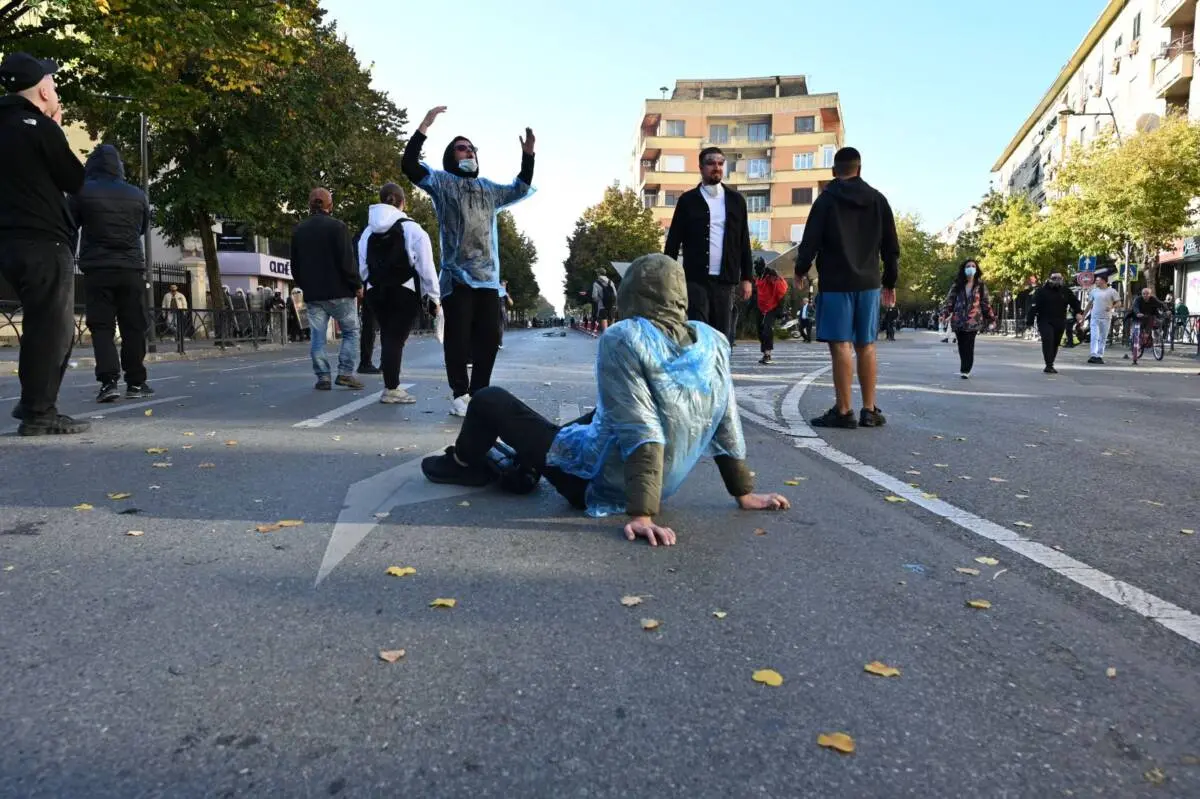
Tirana, Albania, 13 ottobre 2026 – Foto, E. Kryeziu
Tirana, Albania, 13 ottobre 2026 - Foto, E. Kryeziu
Stones, metal railings torn from the pavement, broken windows, violence, tear gas and clashes between protesters and police. This is how the student protest on Tuesday, 13 October, in front of the Ministry of Education in Tirana unfolded, beginning with demands for changes to the education system and ending in a violent situation.
Dozens of young people gathered to protest against conditions at universities and student dormitories, the cost of studying and the lack of prospects for young people in Albania.
Activists and citizens who have been involved for months in the movement known as the “Flamingo Revolution” also took part in the protest. The movement began in late May in opposition to development projects in the Zvërnec area and expanded to include broader political and social demands.
At first, protesters held banners and chanted against the government. “We are here for knowledge, not government nonsense.” But after around an hour, the situation escalated: some protesters tore metal railings and pavement slabs from the ground and used them to strike the ministry building. Stones and other objects were also thrown at the building, damaging its windows and perimeter fence. Some protesters managed to enter the ministry’s courtyard.
Police intervened to disperse the crowd, using tear gas and high-pressure water. Clashes continued even after protesters left the area around the ministry, while tensions spread to the streets of Tirana in the evening.
Injuries were reported among protesters, police officers and journalists covering the events. The head of emergency at the ‘Trauma Hospital’ declared that one young man of 19 y.o. was hospitalized with a broken leg due to police violence, and an Austrian diplomatic representative had received medical treatment due to head injuries.
According to official data from the State Police, 49 citizens have been escorted to police stations so far. Five police officers have been suspended and investigations have been launched by the Police Supervision Agency, in cooperation with the Prosecutor’s Office.
The escalation marked a departure from previous rallies held by the movement, which had remained largely peaceful for months. Nevertheless, protesters argued that the violence could not be separated from the accumulated anger over the lack of institutional responses and the overall state of the country.
“I was a protester in 2018, and today, in 2026, I am here to support the students and carry forward what they left behind,” said Megi Marku, referring to the student protests of December 2018, which were marked by mass mobilisation against university fees and conditions.
According to her, education has not been a priority for Albanian governments over the past decades. “Together with the students, we believe that young people are the future, and there needs to be more investment in young people, more priority given to them,” she said.
Marku added that young people should have the opportunity to choose Albania as the country where they live and build their future.
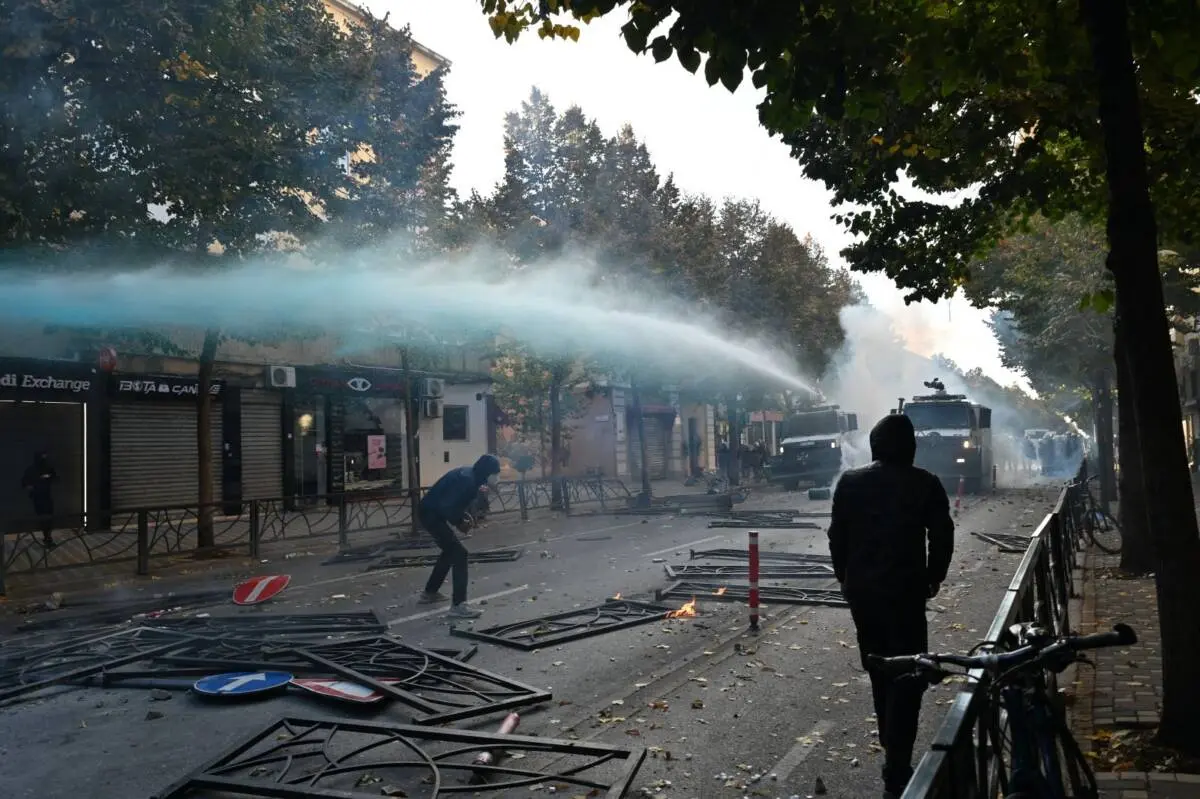
Tirana, Albania, 13 october 2026 – Foto, E. Kryeziu
From dissatisfaction with education to demands for Rama’s resignation
For students, the problems are not limited to university infrastructure. They also include economic inequality, difficulties financing their studies and a lack of employment opportunities after graduation.
“The dormitories are appalling, there are no proper conditions, there is no kind of educational service that can guarantee us a future, whether tomorrow or the day after. The degrees we receive from universities are nothing more than passports for emigration,” said student Redjan Shkëmbi.
He linked the student protest to the broader movement of recent months, arguing that young people should be at the forefront of demands for change.
“We are here to show that young people do not back down, we are here to show that young people do not remain silent, and above all, we are here to show that we are the future and that we are the ones who decide here, and nobody else,” Shkëmbi said.
Laura Kërtalli, an architecture student, said protesters were demanding better conditions in lecture halls and dormitories, as well as a more meritocratic system in which academic results translate into concrete study and employment opportunities.
She stressed that this protest differs from the one in 2018 because students do not want to enter negotiations with the government. According to her, demands must be accompanied by real changes rather than just promises.
Dissatisfaction with the government was also expressed through demands for Prime Minister Edi Rama’s resignation. Protesters linked young people’s departure from the country to the lack of economic and social prospects.
“The main reason why we are here today with the students at the Ministry of Education is that we are demanding Edi Rama’s resignation, because he is responsible for the mass departure of young people from the country, emptying university halls and failing to give people and young people the opportunity to make a living in their own country,” said protester Albina Ruko.
Another issue raised during the protest was the cost of higher education. Megi Mustafaraj, who has completed a second master’s degree in Albania, opposed the higher fees that, according to her, students must pay when pursuing further studies after completing their first master’s degree.
“The Higher Education Law adopted in 2015 treats me as a client, not as a student,” she said, calling for “quality, free public education.”
Mustafaraj described the 13 October protest as another stage in the mobilisation that has been taking place in Tirana for months. According to her, the movement has used different forms of protest, including petitions and initiatives opposing strategic investment projects.
Martina Selami, a multimedia graduate who currently teaches painting, also said she had joined the protest not only as a former student but also as a citizen seeking change in the way the education system operates.
She raised concerns about inappropriate behaviour by some teachers towards students and the economic conditions that force young people to work long hours to make ends meet.
“I have realised that our voices really are not being heard,” Selami said, adding: “You cannot silence us, you really cannot silence us.”
In the evening, the situation escalated further, turning parts of Tirana into scenes of fires and clashes. Protesters set fires in the streets, particularly in the area of Durrës Street, while tensions and clashes with the police continued for several hours after the rally began outside the Ministry of Education. Several private businesses along the streets where the clashes took place were also damaged in the unrest. Fire was also set at the entrance hall of the Municipality of Tirana building.
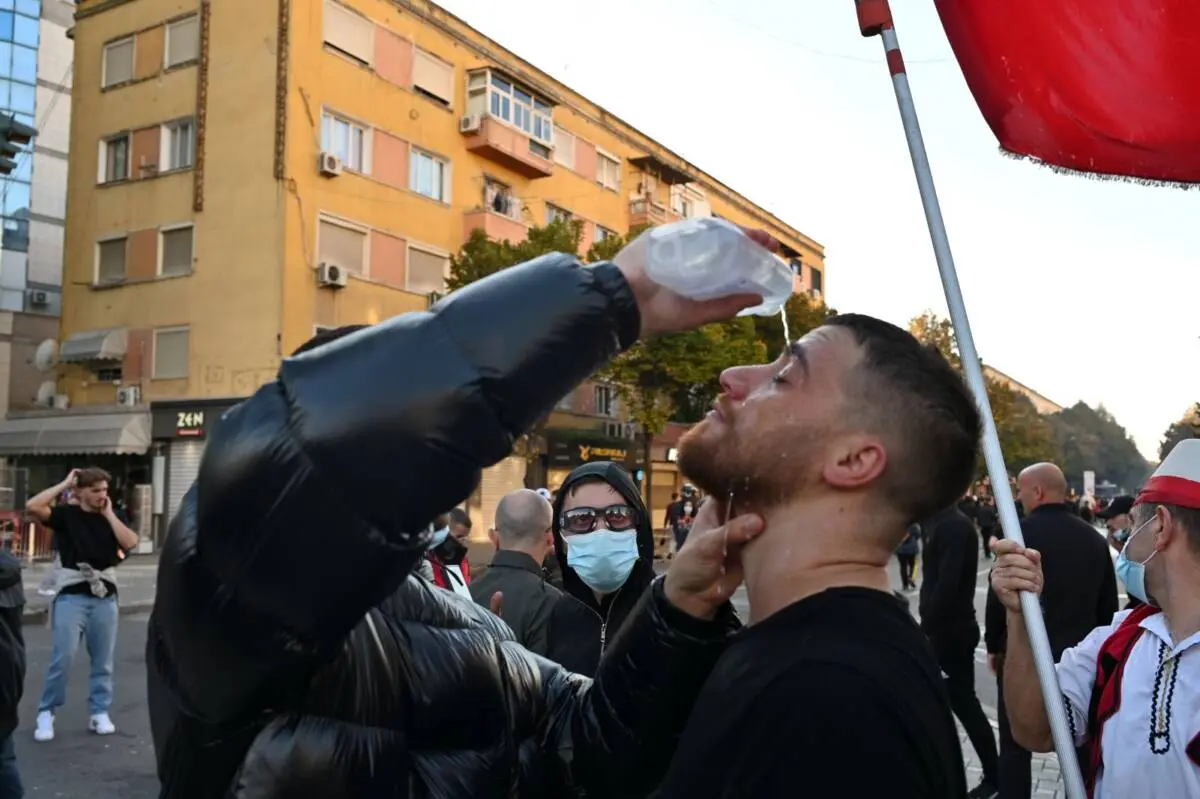
Tirana, Albania, 13 october 2026 – Foto, E. Kryeziu
Organisations condemn the violence
The clashes during the protest prompted reactions from organisations monitoring human rights and media freedom.
The Albanian Helsinki Committee (AHC) expressed deep concern over the violence and clashes, which, according to information reported and observations made by its monitors on the ground, resulted in injuries to police officers, protesters and journalists.
The Committee condemned all acts of violence, regardless of who committed them, and called on all parties to exercise restraint to prevent the situation from escalating further.
In its statement, the AHC stressed that the right to peaceful assembly and freedom of expression are fundamental rights guaranteed by the Albanian Constitution and the European Convention on Human Rights.
The Committee also emphasised that acts of violence committed by certain individuals cannot be used to justify treating all protesters as violent. At the same time, the right to protest does not legitimise violence against police officers, journalists or other people.
Regarding police intervention, the organisation recalled that any use of force must comply with the principles of legality, necessity and proportionality. It also called for the documentation and impartial investigation of the incidents, including any allegations of excessive use of force and any acts of violence against police officers or citizens.
Reports of journalists being injured and obstructed while carrying out their duties caused particular concern.
The Association of Albanian Journalists (AGSH) condemned the violence and the obstruction of journalists by officers of the State Police. According to the Association, Fatime Halmusa, a journalist with Fax News, was physically assaulted by police officers, while the A2 CNN team was forcibly prevented from reporting from the protest. The Association of Albanian Journalists also denounced the violence against Izmir Akulli, editor-in-chief of Dosja.al, who, according to a public statement by the media outlet’s director, was assaulted by several State Police officers near the Bank of Albania while filming with his phone the violence against a student. Citizens.al journalist Vjolanda Peca was also injured.
Found an error in this article? Please contact our editorial team at redazione@balcanicaucaso.org.
Tag:
Featured articles
 Montenegro Pride 2026
 Political deadlock