EU budget: A first look at the numbers, but sides remain divided
On 18 and 19 June, the European Council summit took place in Brussels, bringing together the 27 European leaders to discuss a wide range of topics, including the complex dossier on the multiannual budget for 2028–2034.
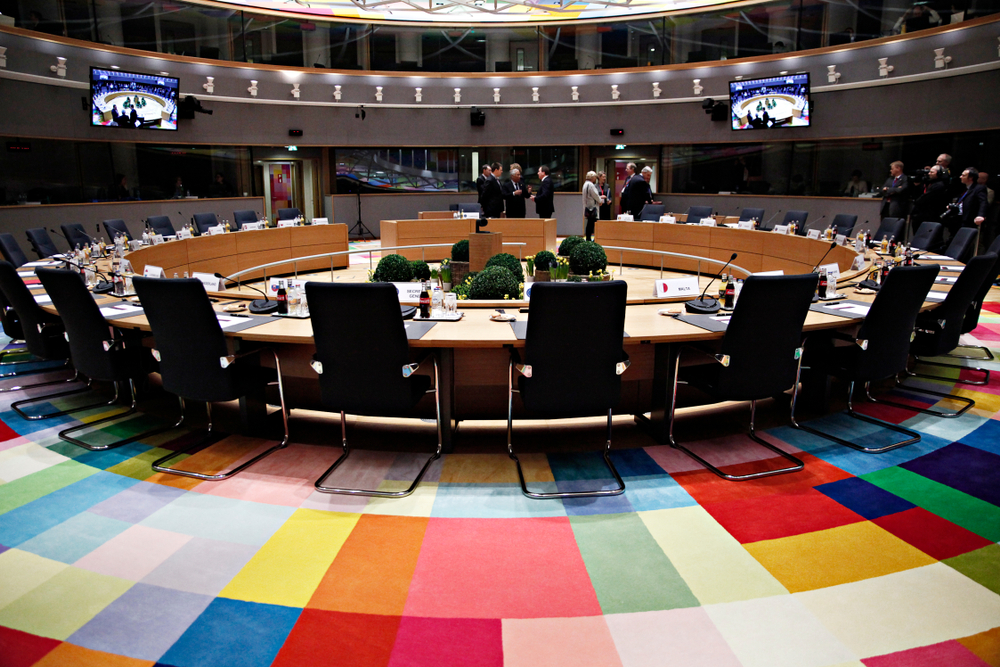
European council, Brussels
European council, Brussels © Alexandros Michailidis/Shutterstock
The proposal presented on 11 June by the Cypriot presidency kicked-off the debate, in an attempt to find a compromise between the frugal countries, which are pushing for drastic spending cuts, and the “Friends of Cohesion” group, which instead calls for greater spending.
The proposed plan by the Cypriot presidency provides for a reduction of 2% of the budget – namely 32.8 billion of euros, bringing the overall amount to about 1,730 billion of euros -, accompanied however by a slight strengthening of allocations for the common agricultural policy and cohesion policy.
Nevertheless, criticism came from the majority of Member States, either for excessive generosity or insufficient ambition, depending on the political alignment. In particular, Spanish Prime Minister Sánchez, backed by Italian Prime Minister Giorgia Meloni and the “Friends of Cohesion”, while acknowledging the figures proposed for agriculture and cohesion positively, denounced the general insufficiency of funds and the lack of ambition.
On the institutional side, The President of the Commission Ursula von der Leyen welcomed the Cypriot attempt as a positive development in the negotiations: for the first time, the 27 leaders discussed on concrete figures (albeit still entirely provisional), and signs of convergence were recorded on the simplified budget structure, with agreed negotiating positions on National and Regional Partnership Plans, the Competitiveness Fund, and Global Europe, dedicated to Union’s international role.
However, budget financing remains the unresolved issue par excellence. The discussions on Union’s “own resources” [customs duties, contributions based on value added tax (VAT) collected by Member States and direct contributions from EU countries], and on how to distribute the burden among Member States have proven to be the real political obstacle. Numerous proposals have been put forward by both the Commission and the European Parliament, ranging from taxes on online gambling to financial contributions from larger companies, but net contributor countries are mounting transversal resistance to any increase in spending, regardless of the figures involved.
The summit thus was concluded essentially unresolved, with the handover of the Council of the EU presidency from Cyprus to Ireland for the next six months. Ireland is tasked with presenting by October that offers an “ambitious and balanced” solution for the management of Union’s “own resources”. The goal remains to reach a political agreement by the end of 2026, a necessary condition to ensure continuity of funding from 1 January 2028.
Found an error in this article? Please contact our editorial team at redazione@balcanicaucaso.org.
This article was produced as part of the EuSEE project, co-funded by the European Union. However, the views and opinions expressed are solely those of the author(s) and do not necessarily reflect those of the granting authority, and the European Union cannot be held responsible for them.
Tag: EuSEE
Featured articles
 the students' voices
 Investigation
 students' protest