The Death of Ratko Mladić: A Divided Serbia
It is a divided Serbia that yesterday received Ratko Mladić’s coffin and is preparing to lay him to rest. The division is not only between those who believe him to be innocent and those who believe him to be guilty, but also between government supporters and its opponents, in light of the election campaign that has already effectively begun ahead of the general election scheduled for next October
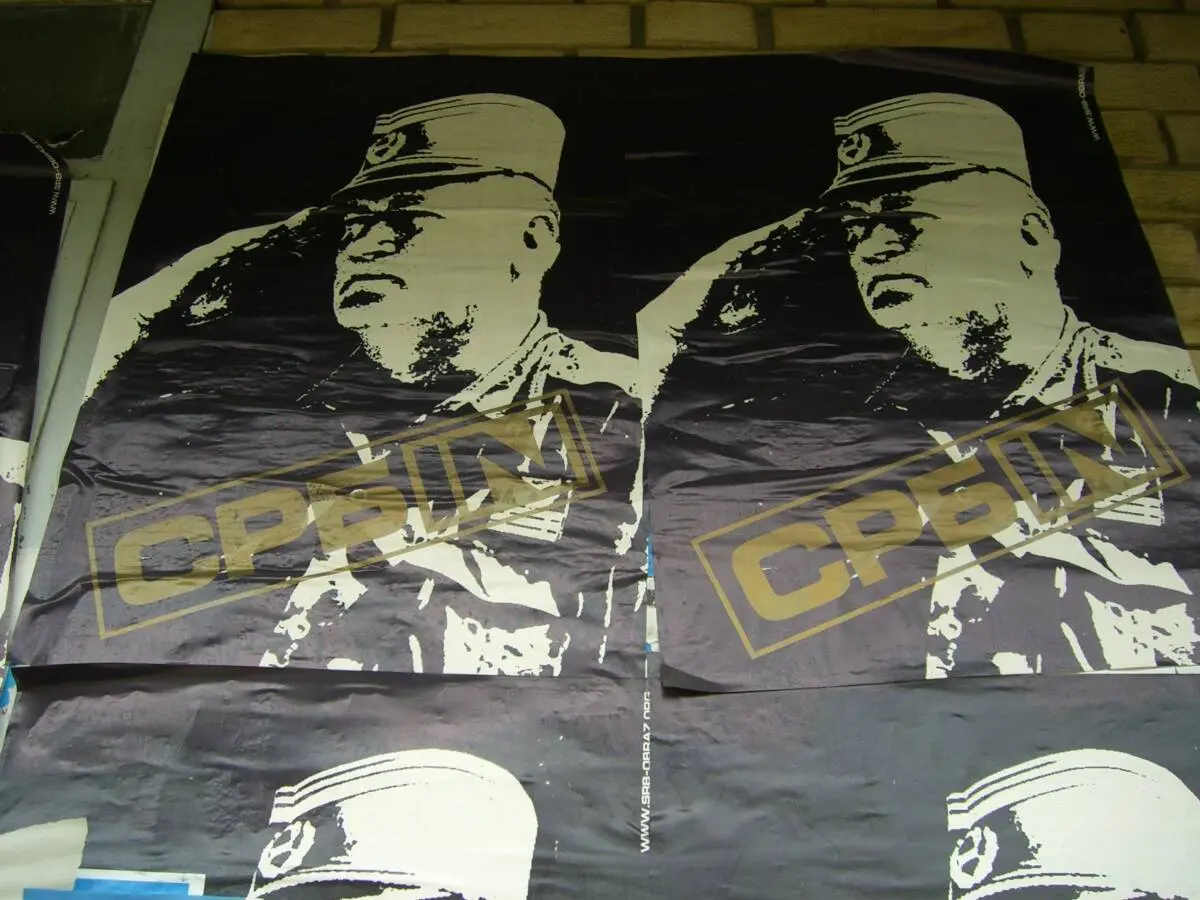
Posters glorifying Ratko Mladić, the ‘Serb’ – Wikimedia Commons
Posters glorifying Ratko Mladić, the ‘Serb’ – Wikimedia Commons
The remains of Ratko Mladić, the former military commander of the Bosnian Serbs, who died in prison at the age of 84 after being convicted of war crimes by the Hague Tribunal, were transported to Serbia yesterday on a state flight. A military memorial service will be held tomorrow in Belgrade, whilst the funeral is expected to take place on Monday.
Serbian President Aleksandar Vučić, who has repeatedly criticised the tribunal for rejecting the Serbian government’s requests to allow Mladić – who had been ill for some time – to spend his final hours in Serbia, has stated that tens of thousands of people are expected to attend the funeral ceremony, to the extent that ensuring the safety of those present is likely to pose a challenge for the country’s authorities.
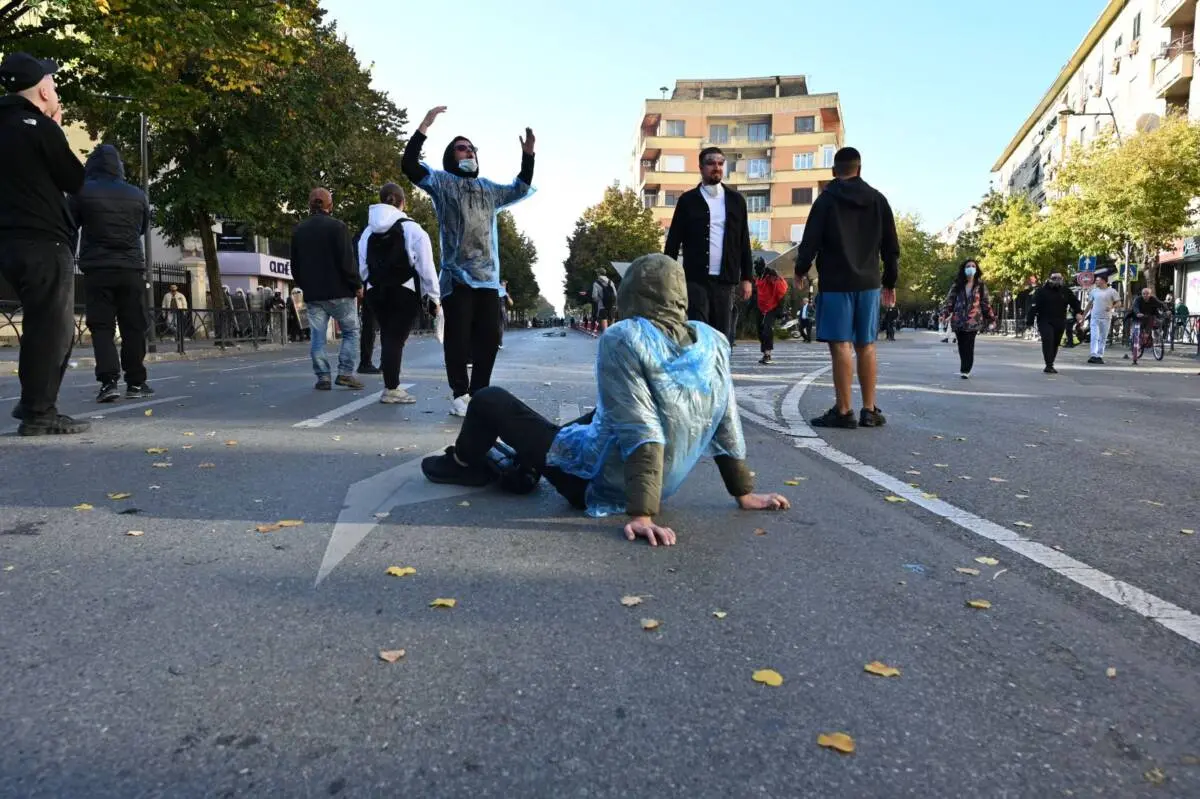
Mladić’s death and forthcoming funeral come at a time when Serbia is a divided nation, having been plagued for years by deep social and political rifts. New parliamentary elections will be held shortly: a few weeks ago, President Vučić already announced they would take place on 18 or 25 October. The elections come almost two years after the collapse of the canopy at Novi Sad railway station, a collapse that triggered the massive protests of 2025, led by the student movement.
The students’ protests crystallized into a call for early elections, already put forward in May 2025. The upcoming elections are dividing the country and increasingly resemble a referendum on the record of the SNS and President Vučić.
In this context, almost every event in Serbia is currently being interpreted in light of the upcoming electoral contest, including Mladić’s death. Just a few days before his death, Serbia had asked the International Residual Mechanism for Criminal Tribunals to allow Mladić to return to Serbia so he could spend his final days with his family, offering a state flight, announcing that Mladić would be treated at the Military Medical Academy, and pledging to comply with all the Mechanism’s requirements.
Such requests, when convicted persons have shown genuine remorse, have sometimes been granted by the Residual Mechanism, mainly on humanitarian grounds. In this case, however, the request was refused.
On the day of Mladić’s death itself, few official voices were heard. Belgrade’s mayor, Aleksandar Šapić, of the SNS, wished him “eternal glory” and thanked Mladić in a tweet. Former Prime Minister Vulin, known for his closeness to the Kremlin, pointed out that, like Gavrilo Princip, Serbia’s best sons are always killed while in prison, adding that Serbia should grant Mladić the honors of a state funeral.
Vojislav Šešelj too — a war criminal convicted of crimes against humanity — revived the theory that Mladić had been killed in prison because he had been denied the necessary medical care.
If such statements were in some sense to be expected, the news that truly caused a stir was Minister Vujić’s interview, given to the local Serb-Bosnian broadcaster ATV the day after the death. On that occasion Vujić said that Mladić would be buried with the highest state honors, since the protocols in such cases are clear, though the final decision would in any case rest with the family.
The statement caused deep shock and was quickly picked up by the foreign press, since it made unmistakably clear what Serbia’s official position was regarding the crimes committed in the Bosnian war, and in particular the Srebrenica genocide.
That evening, President Vučić partially backtracked: while criticizing the Residual Mechanism, saying “there was a wish that Mladić die behind bars,” he also specified that the funeral arrangements would depend solely on the family’s wishes, and appealed for an end to the speculation.
That same evening, the European Commission, in an interview with Radio Free Europe, stated clearly that while it is for the Serbian authorities to decide what role they will play in Mladić’s funeral, the glorification of war criminals runs counter to the fundamental values of the European Union, and that there is no room for such glorification among candidate countries.
While the ruling party remained silent, as is often the case, it was the pro-government tabloids that used the most inflammatory rhetoric, reviving the theory that Mladić had been murdered. The tabloid Informer, through its editor-in-chief Vučićević, wrote that “the real news is not that Ratko Mladić has died, but that he was killed by the Hague tribunal.
This is a terrorist organization, whose purpose is to condemn Serbs for genocide, and it has now killed the general.” If Informer was the most explicit, other pro-government media aligned themselves with similar positions, albeit in a somewhat more moderate tone. The tabloids, as well as state television, have routinely presented Mladić as a Serbian general, without any reference to his conviction.
In Serbia’s media landscape, such positions taken by the tabloids have by now become a fixed reality. The tabloids also seized the opportunity to try to discredit the student movement, reporting claims that the “blokaderi” — as last year’s protest-occupation sympathizers are called — had celebrated Mladić’s death.
The Reactions of Some NGOs and Part of the Opposition
Some opposition parties did take a stance, however. The Zeleno Levi Front (Green-Left Front) and the Pokret Slobodnih Gradjana (Movement of Free Citizens) were the most explicit in their condemnation, specifically mentioning the crimes committed by Mladić, including the Srebrenica “genocide” — a word that remains taboo for many in Serbia.
Also condemnatory, though in more measured terms, were the positions of the Stranka za Slobode i Pravde (Party of Freedom and Justice) and the Demokratska Stranka (Democratic Party), which stressed that Mladić should not serve as a model for future generations, and that in any case the death of an individual does not change the facts established by an international tribunal.
The non-governmental organizations that most closely follow war-crimes issues, such as the Fond za Humanitarno Pravo (Humanitarian Law Center), pointed out that in recent years Serbia has not only failed to distance itself from the crimes committed in Bosnia and Herzegovina, but has pursued a policy aimed at celebrating and defending those crimes.
Unequivocal condemnation also came from the Evropski Pokret Srbija (European Movement in Serbia), which condemned outright the idea of state funeral honors. The Žene u crnom (Women in Black) movement took a similar position, stating that a funeral with state honors amounts to a form of endorsement of the crimes committed.
The student movement did not issue an official statement. Some of its representatives commented on social media that “a war criminal, guilty of genocide, has died,” a remark that was enough to trigger criticism from the tabloids. Similarly, criticism of the government’s conduct came from the citizens’ assembly of Novi Pazar, a town with a Bosniak majority, which said it was unacceptable to glorify a war criminal.
People Are Not Taking to the Streets
Public demonstrations, however, have been notably absent. With the exception of Red Star supporters, who held a torchlit gathering on Brankov Most the same evening, unfurling a large banner at the Belgrade stadium, and some similar episodes in Novi Sad, people did not take to the streets for Mladić; there were no shows of support comparable to those seen in Republika Srpska, the Serb-majority entity of Bosnia and Herzegovina. Nor did posters in support of the general appear, as they regularly do every 11 July to mark the Srebrenica genocide anniversary.
In this sense, the only public “appearance” of Mladić’s supporters took place in Užice on Saturday, 29 August. A rally of the Serbian Progressive Party was scheduled for that day, attended by President Vučić himself.
Before the rally there were disturbances: the center of Užice had been closed off for the event, and the trouble began when SNS security and order personnel tried to clear out the cafés in the center to make way for the meeting. In one of the videos, a group of people can be seen chasing and beating a man violently as he tries to flee on all fours among overturned café tables.
Police intervened and put an end to the incident, which could have had dramatic consequences. Among the attackers, two people can be clearly seen wearing the same jacket, evidently issued to SNS supporters: on the back of the jacket, a photograph of Ratko Mladić is clearly visible. Once again, violence and politics are linked to the figure of Mladić.
Found an error in this article? Please contact our editorial team at redazione@balcanicaucaso.org.
Tag:
Featured articles
 Investigation
 students' protest
 Montenegro Pride 2026