Slovenia versus Croatia, no winner in the dispute for Teran
The ability to feature a prestigious appellation on the label can make a difference in wine sales. In the dispute between Slovenia and Croatia over the exclusive right to use the term ‘Teran’, the denomination has become the subject of political conflict
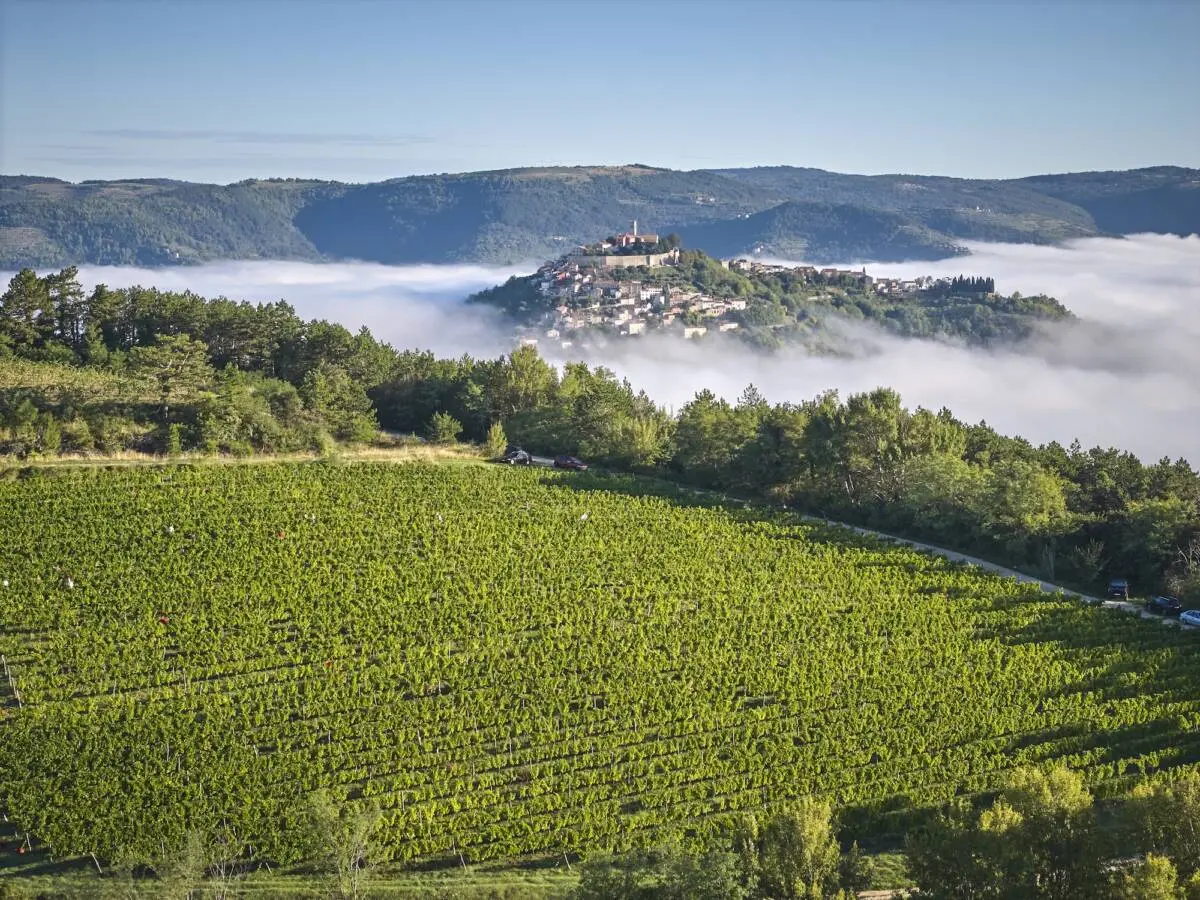
Vineyards around Motovun, Croatia ©Vinistra Association
Vineyards around Motovun, Croatia ©Vinistra Association
Countries have argued over many things, but rarely over wine. Yet when Slovenia entered the EU in 2004, it moved to safeguard the name ‘Teran’ which was also used in neighbouring Croatia. Even if you subscribe to the idea that “a rose by any other name would smell as sweet”, names and labels matter. They are a source of value. In the dispute over Teran, however, the ramifications were not as intended.
Sašo Dravinec, a Slovenian journalist who has followed the case closely, explains that wine has historically been a local agricultural product. “Only wines from certain regions travelled long distances to reach consumers”, says Sašo, “and these wines were often named after the region they came from – Bordeaux, Porto, Madeira, Tokaj, Vipavec – or after a recognizable local name that did not necessarily designate a grape variety”.
As international trade grew, however, common names created confusion among less informed consumers. This is where the EU played a fundamental role. “Upon Hungary’s accession to the EU, Tokaj became an exclusive name for wine from the region of the same name”, explains Dravinec, “the designations used in Italy, Slovenia and Alsace were suspended”. “The wines lost their established identity under the new names, and the historical link was broken. Now if you brought a wine with Tokaj on the label, it definitely came from Hungary”.
It was not only confusion that Slovenia’s winemakers were keen to avoid. “Historically, Slovenians were very skilled at winemaking”, says Ivica Matošević, one of Istria’s premier winemakers. “With Teran from the Karst region, they were producing much better wines than we were in Istria at the time”. As the years passed, however, Istria began producing high-quality wine of its own. “Our neighbors noticed this and began to worry about prestige”, recalls Matošević.
When Croatia joined the EU in 2013, Slovenia’s Protected Designation of Origin (PDO) for “Teran” became a point of contention. After bilateral negotiations failed to find a compromise, the European Commission granted Croatian winemakers an exception that allowed them to continue using the name “Teran”, but under typically European specifications. The name Teran in Croatia can be now used only within the PDO ‘Hrvatska Istra’ (Croatian Istria), whilst ‘Teran’ must be printed next to this designation and in a smaller font size. As Matošević recalls, it was “seven long years of tension until the EC finally brought this regulation – so much wasted time!”.
Despite common sense appearing to have prevailed, the Slovenian government sued the EU, arguing that the EC’s decision to grant an exemption was unlawful. In September 2020, the General Court of the European Union ruled that the European Commission’s derogation allowing Croatian wine producers to use the ‘Teran’ designation was valid, dismissing the lawsuit. Slovenia had lost its case and ultimately announced that it would not appeal the decision.
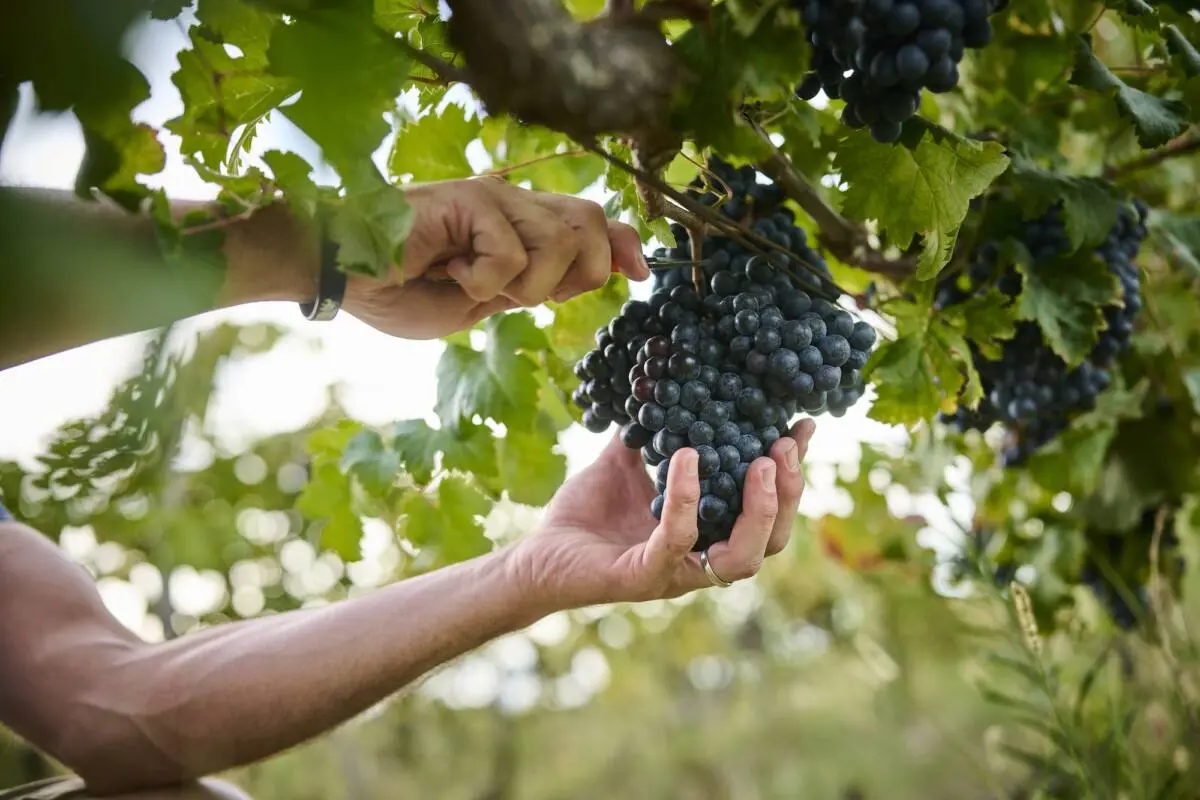
©Vinistra Association
For Marijan Bubola, a professor at the Institute of Agriculture and Tourism in Poreč, Istria, the case of Teran became prominent because “it involved not only a technical question of wine labelling, but also issues of historical tradition, regional identity and market recognition”.
“The name ‘Teran’ has been used for centuries in Istria, both as the name of a grapevine variety and as the name of the wine produced from it”, explains Bubola, “covering a very large share of Istrian vineyards in the 19th century”. Given the importance of Teran, prohibition on the use of the name in Croatia was, in his words, “impossible to accept”.
During the Austro-Hungarian period, more than 80% of Istria’s 45,000 hectares of vineyards were Teran. “This is our identity – it is in our DNA”, says Matošević. “It has been part of everyday life here for centuries, even more so than Malvazija”.
Whilst Istria is today famous for both, historically only red wine was considered “real” wine (whites were often referred to as Bilitza, a pejorative term). “The origin of Teran goes back 700 years, long before modern Croatia, Slovenia or Italy existed”, insists the winemaker. “Claiming it is only Slovenian and not Croatian is nonsensical”.
The dispute was, for Marian Bubola, only “partly justified”.
“It is understandable that Slovenia wanted to protect the PDO Teran from the Kras region, especially because this wine has a strong local identity and tradition”, says the professor. “However, this protection should not have excluded the legitimate historical use of the name Teran in Croatian Istria”.
“The Croatian use of the name was not a recent marketing invention”, he emphasises, “but was based on a long viticultural and cultural tradition”. The compromise balanced the Slovenian PDO and the historical rights of Istrian producers.
“It was a tragedy for us because we took it emotionally”, recalls Matošević. “We were on such good terms with our neighbors, and then a few people started this drama”. Several politicians, including the then Minister of Agriculture, Dejan Židan, exploited the issue for “populist point scoring”. And yet, they still did not believe that it was “actually going to happen”.
“At the time, 90% to 95% of Slovenian winemakers told us: ‘these guys are crazy, just let it pass’”, says Matošević. Whilst many knew it was a mistake, it became a fundamental issue for some from the Kras/Karst region who felt threatened. Dravinec regrets that wine became “an object of political struggle and that some wine associations from the Karst became involved”.
One of the first victims was the relationships between winemakers forged over decades. “We had been working together every day, like family”, recounts Matošević. As Bubola observed, many winemakers from the Kras region “seemed to firmly hold their position, their own narrative, and were generally not very open to hearing the other side of the story”. For Dravinec, one consequence is “less cooperation than there could have been”, especially when it comes to jointly telling the unique story of Teran. Paradoxically, as Matošević recalls, at the same time they were working together with the Association of Winegrowers of Slovenian Istria (Društvo vinogradnikov slovenske Istre, DVSI) to jointly promote Malvazija.
Istrian winemakers exploited the dispute to raise their own profile. “Owing to the strong media exposure of the case, Teran became much more visible”, reflects Bubola, “strengthening the recognition and market identity of Teran, especially in Istria”. This coincided with pronounced quality improvements, which Bubola attributes to improved vineyard management, grape selection and winemaking techniques. Teran wines from Istria claimed regular gold and platinum medals at the Decanter World Wine Awards. “Today, for many, the first synonym for Teran is not Kras – it is Istria”, says Matošević. “The Slovenians essentially shot themselves in the foot – it was completely stupid”.
Sašo Dravinec believes Teran could have been “one of the major stories of the northern Adriatic wine world, with connected producers from Slovenia, Croatia and Italy”. Instead, momentum was lost and energy wasted. Relations between Istrian and Kras winemakers remain relatively weak. Paradoxically, as he notes, “some of the most internationally successful wines made from Refošk from the Slovenian Karst do not carry the name Teran”. They are simply high‑quality red wines, and their winemakers do not have “to explain these differences” when marketing their wines internationally.
Some of the damage has been mended. “Today, things are very good again”, says Matošević. “I do not have much contact with the specific ‘problematic’ individuals from Kras, but we are on great terms with everyone else in Slovenia”.
The new generations face common challenges that demand stronger connections, especially in what Dravinec calls the “cross-border wine areas” of the Karst, Istria and Brda.
Found an error in this article? Please contact our editorial team at redazione@balcanicaucaso.org.
Tag: Agriculture | Cibo | Vino e viticoltura | wine
Featured articles
 History and politics
 Montenegro Pride 2026