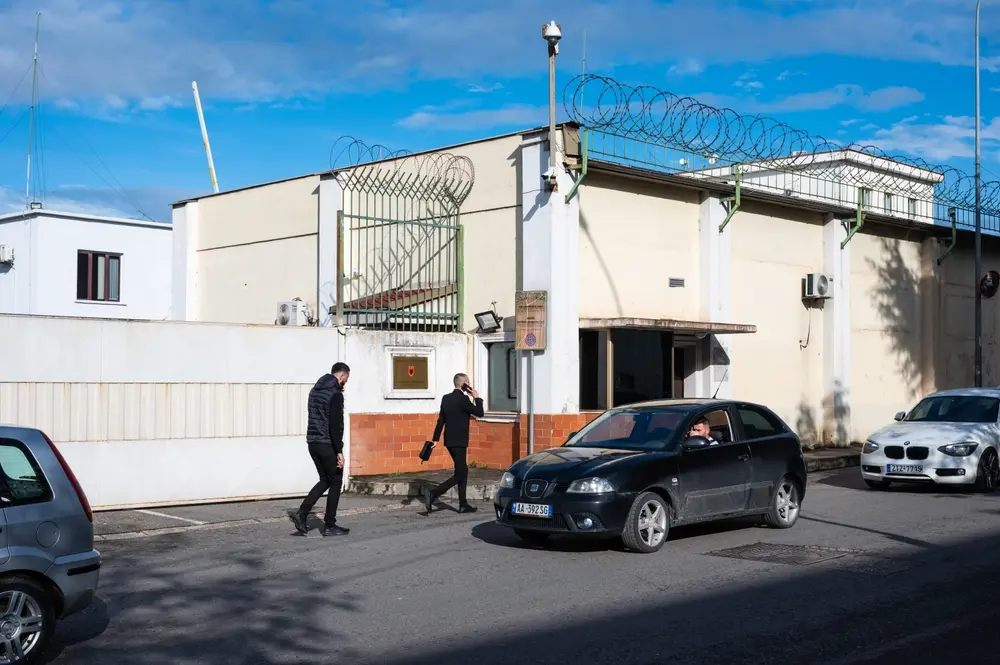
Serbia: a year of troubles for independent press
Serbia’s independent media are currently experiencing a new turbulent phase, following yet another change of ownership. Is this another attempt by the Serbian government to silence the non-aligned press? A recap of what has happened over the last year
Belgrado, Serbia © Roman023_photography/Shutterstock
Belgrade, Serbia © Roman023_photography/Shutterstock
In late August 2025, a secretly recorded conversation between United Group General Manager Sten Miller and Telekom Srbija Director Vladimir Lučić raised concerns that the Serbian government, through Telekom Srbija, was moving to take control of the country’s few remaining independent media outlets.
At the time, United Group held a majority stake in United Media, which in turn owned the television stations N1 and Nova S. During that conversation, Miller stated that he could not intervene with N1 and Nova S and that he would first have to downsize the group and then remove its executive director, Aleksandra Subotić.
Those were the months of street protests, and every evening N1 and Nova S reporters covered the protests, student marches, and clashes, which had become quite frequent, especially during the summer months. The conversation raised alarm bells regarding media freedom in Serbia, a critical sector of Serbian society.
Key milestones
Late August 2025 — The recorded conversation between Sten Miller (United Group) and Vladimir Lučić (Telekom Srbija) is leaked: the first warning about the future of N1 and Nova S, while the two TV stations cover the street protests every evening.
February 2026 — United Group creates Adria News Network (ANN) and transfers N1, Nova S, Danas, Radar, and nine other regional media outlets into it. Brent Sadler leads the new group, removing United Media’s executive director Aleksandra Subotić.
May 2026 — ANN is acquired by ALPAC Capital, a Portuguese financial group led by Pedro Vargas David. However, ALIA, the Luxembourg regulator, has not yet authorized the transaction.
August 17, 2026 — ALPAC suddenly replaces all managers of the five ANN companies, including Sadler and N1 BiH founder Amir Zukić. Concern of NUNS, EFJ and seventeen Serbian NGOs.
August 20, 2026 — Information Minister Boris Bratina sends an open letter to the new owners, urging them to register N1 in Serbia with REM and accusing ALIA of acting as a “steel umbrella.”
August 25, 2026 — Vargas David issues a reassuring statement on the independence of the editorial staff and reinstates Zukić as head of news at N1 BiH.
Months of uncertainty
The following months sent mixed signals, but confirmed what was stated during that conversation.
While N1 and Nova S continued with their programming, without changes to their editorial line, in February 2026, United Group created a new group, Adria News Network (ANN): Nova S and N1, along with the daily Danas, the periodical Radar, and nine other media outlets in Slovenia, Croatia, Montenegro, and Bosnia and Herzegovina, were transferred under the control of the new group.
Brent Sadler, a veteran journalist, was appointed to lead ANN, while United Media’s executive director, Aleksandra Subotić, was removed.
Concerned by these developments, N1 journalists attempted to form a consortium to acquire N1, but the offer was rejected. A few weeks later, N1’s financial and editorial director, Igor Božić, who had been involved in the takeover attempt, was also removed, and his contract was mutually terminated. However, with the new news director, Branislav Šovljanski, the editorial line remained unchanged.
In May 2026, another change in ownership caused concern: Adria News Network (ANN) was acquired by ALPAC Capital, a Portuguese financial group that had previously been close to Viktor Orbán and is one of the owners of Euronews Europa. Alpac Capital’s CEO is Pedro Vargas David, whose father, Mario David, had been called “a friend” by Serbian President Vučić and has been a longtime supporter of Serbia’s accession to the EU.
After the purchase, nothing happened for several months, until last week, when ALPAC suddenly replaced all the managers of the five companies that make up Adria News Network, including Brent Sadler.
The changes didn’t just affect Serbia: Amir Zukić, the founding editor of N1 Bosnia and Herzegovina, was also replaced, and the managers of the outlets registered in Slovenia and Croatia were also removed. N1 explained that the changes are merely a continuation of previously announced plans. Pedro Vargas David, the executive director of ALPAC, was appointed to replace all the directors.
The move came completely unexpectedly in Serbia and also created bureaucratic problems, as Pedro Vargas David was not in Serbia and had not authorized anyone to sign on his behalf. But what raised the most suspicions was the fact that the ALIA (Autorité luxembourgeoise indépendante de l’audiovisuel, Luxembourg’s independent audiovisual regulator), where Adria News is headquartered, had not yet approved the acquisition of the company. The acquisition itself is currently being reviewed to prevent a concentration of media outlets in Serbia.
The replacement of the editors raised alarm, and NUNS, the Association of Independent Journalists of Serbia, promptly expressed concern about the potential repercussions on editorial independence and the fact that Adria News’ approximately 1,000 journalists were demanding guarantees regarding their future.
Minister Bratina’s invitation
The news of the editors’ removal prompted a rather unusual reaction from Serbia’s Minister of Information and Telecommunications, Boris Bratina, who, on August 20, sent an open letter to the new owners and urged the new management to register N1 in Serbia with the Serbian regulator, the notorious REM, which resumed operations a few weeks ago, albeit with reduced staff, and which has often been criticized in the past for its bias.
Minister Bratina also accused ALIA of needlessly obstructing approval of the ownership transfer and criticized the regulator for acting as a “steel umbrella,” shielding N1 and Nova S from Serbian authorities. The minister’s letter alleges that the two outlets’ actions have essentially been to spread hatred and raise tensions. According to the letter, the two television stations recently contributed to the creation of a “media structure” outside of reality, corresponding to the “student list.”
The European Federation of Journalists (EFJ) has been very vocal, and through its president, Maja Sever, described Bratina’s letter as surreal. Sever explained that an action is underway “to silence the last free media in Serbia,” as implied by President Vučić himself, and fears that the European Union’s response will not be adequate.
Seventeen Serbian non-governmental organizations have expressed their concern about this transfer and have called on the relevant bodies, including the European Union and ALIA, to closely monitor developments.
The European Union has already begun to closely monitor the case through an ad hoc expert group operating within the EFJ.
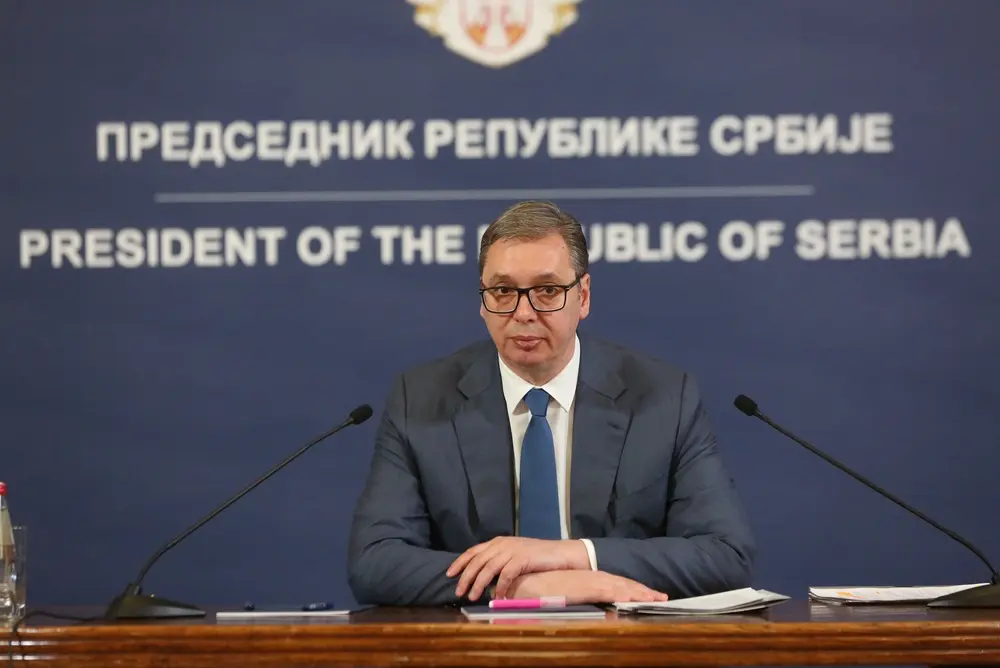
Aleksandar Vučić © photoibo/Shutterstock
Crucial days
The news of the replacement of all directors came the very week President Vučić announced that parliamentary elections would be held on October 18 or 25, leading many to speculate that there might be a connection between the two events, something that is difficult to establish.
President Vučić has been visiting numerous locations in Serbia these days, as if it were a sort of pre-election campaign, given that it seems certain that Vučić himself will run for prime minister.
Commenting on the incident, on August 21, Vučić said he did not know the new owner of the television stations, but only knew his father, and only superficially. Vučić, however, explained that the media situation has changed; the new owner still wants to make a profit and therefore will have to reach out to the majority of the Serbian audience.
Vučić later declared himself completely uninvolved in the operation: “I had nothing to do with any of this! I neither sold, nor took commissions, nor received a single dinar from any of this.”
There remains much uncertainty in the media sector, and it is unclear whether this is a further attempt to silence independent media or the result of the buyout. Certainly, the work of journalists and editorial staff is not easy in this climate that has now lasted for over a year, and this could easily have repercussions on their work, detrimental to freedom of information.
It will be interesting to see how the new management will behave.
Initial statements appear to be intended to reassure the public and allay fears raised by the sudden change in management: on the afternoon of August 25, regarding ALPAC Capital’s operations in Bosnia and Herzegovina, the new management released a very reassuring statement, emphasizing the need to protect journalists’ work from any form of interference and pressure and the importance of editorial independence, which will be “actively promoted.”
The words were followed by action: Vargas David announced that he had appointed journalist Amir Zukić, who had been removed from his position as editor-in-chief, as head of N1 Bosnia and Herzegovina’s news program.
The following day, Vargas David politely declined Bratina’s “invitation” to register N1 with REM in Serbia, emphasizing the importance of having a functional and independent REM, thus echoing the European Union’s position on the matter. At the same time, he reiterated that no attempt to influence or pressure journalists will ever be successful.
Found an error in this article? Please contact our editorial team at redazione@balcanicaucaso.org.
Tag: Libertà di stampa