Romania, the entrepreneur who swapped EU fund consulting for furniture design
After nearly ten years working as a consultant for European fund projects, entrepreneur Ovidiu Ișan decided it was time for a radical change: he gave up drafting projects for others and set out to build his own.
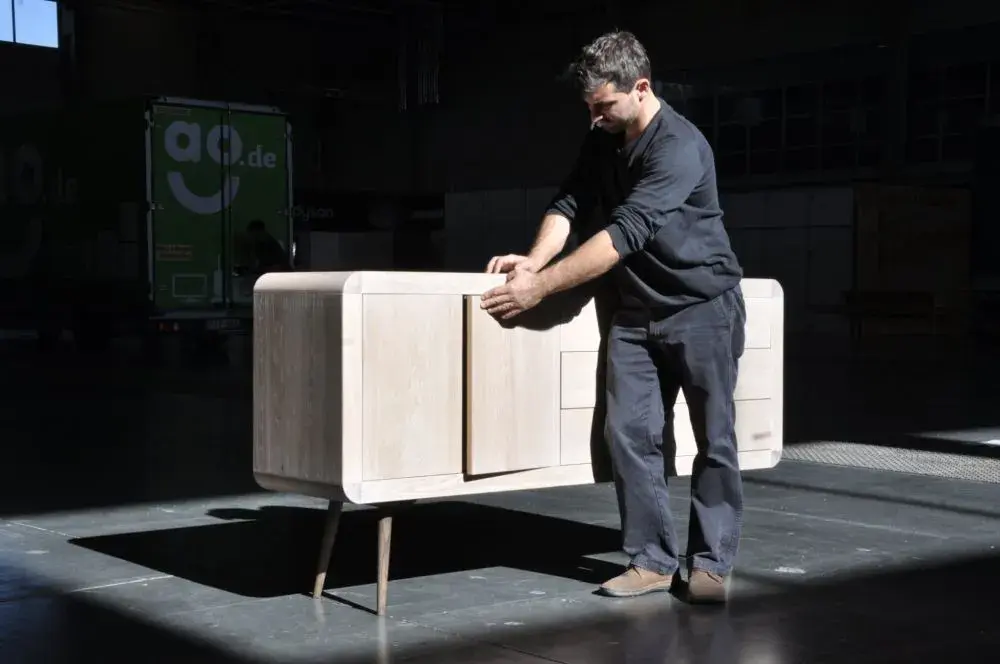
Premium solid wood furniture
Premium solid wood furniture. Photo Mobilia
(Originally published by our project partner EuSEE Hotnews)
Today Ișan runs Biomobila, a premium solid-wood furniture design and production studio, where every piece is custom-made and clients are directly involved in the creative process.
The decision to shift careers didn’t happen overnight. It was the result of a long process in which his passion for wood and design grew stronger and stronger.
From basement workshop to his own business
Back when he was in consultancy, Ovidiu Ișan used to spend his free time in a small makeshift workshop. “In Bucharest, I had a basement that I turned into a small workshop. That’s where I made various home objects and experimented with wood,” the entrepreneur recalls. Meanwhile, his background in consultancy gave him another key asset: the ability to structure and manage complex projects, from idea to implementation.
In 2013, he even developed an innovative furniture concept, which he tested together with professors at the Faculty of Design and Woodworking in Brașov. He planned to apply for innovative prototype funding, but the project didn’t take shape at that time.
Biomobila, launched with a European grant
The opportunity to start the business came in 2014, when Ovidiu Ișan secured EU funding to set up a social enterprise. The €200,000 grant was awarded through the former POSDRU 2007-2013 program — Axis 6.1, aimed at developing social entrepreneurship initiatives. The funds were provided by the European Social Fund, part of the EU’s Cohesion Policy.
“Biomobila was founded as a social enterprise,” Ișan explains. “It was a tough beginning, because the first two years were dedicated to meeting the sustainability indicators set out in the project.”
In addition to the grant, the entrepreneur also invested his personal savings to keep the business running in its early years. The program required hiring people from vulnerable groups, such as the unemployed or individuals facing difficult social situations. To build his team, Ișan even turned to local authorities for support.
“I hired people who were registered with the local municipality, but I also had the chance to work with some highly skilled furniture makers who were retirees — I learned a great deal from them.”
Early mistakes
Looking back, the entrepreneur says that one of the biggest mistakes was choosing a wrong space for the workshop. “I rented an unsuitable space and invested heavily in it. On top of that, I didn’t negotiate the rent properly, and it turned into a financial burden.”
In the beginning, the company also lacked a clear niche. The workshop produced almost any type of furniture or interior design elements. “We did everything: doors, stairs, indoor and outdoor furniture. Only later did I understand that we need to focus on a niche.”
Premium furniture, co-created with the client
Today, Biomobila operates as a design and production studio for premium solid wood furniture, focused on premium products. Each process begins with a detailed conversation with the client about functionality and style. “The client tells me what they want, and I begin sketching and refining the design until we reach a version that works both aesthetically and technically.”
The pieces are crafted from solid hardwoods such as walnut or oak, designed for a very long lifespan. Over time, the company has also taken part in design competitions organized at BIFE-SIM trade fair, earning awards for some of its creations.
In the medium term, the entrepreneur aims to expand Biomobila’s concept toward signature furniture produced in limited editions. The goal is to collaborate with architects and designers and develop distinctive pieces that combine artistic value with long-last craftsmanship. “The idea is for these objects to have a story and, in time, to become collector’s items.”
Advice for future entrepreneurs
For those looking to enter the furniture industry, Ovidiu Ișan offers straightforward advice: get hands-on experience. “The best thing you can do is spend some time working in a furniture factory. That’s where you’ll learn every process and truly understand how the industry works.”
Although profits in manufacturing don’t always come quickly, he believes that the reward of creating durable, original pieces makes it worthwhile. “Because we work with wood, a finite resource, we should transform it into pieces worth keeping for the long term,” he says.
Found an error in this article? Please contact our editorial team at redazione@balcanicaucaso.org.
This article was produced as part of the EuSEE project, co-funded by the European Union. However, the views and opinions expressed are solely those of the author(s) and do not necessarily reflect those of the granting authority, and the European Union cannot be held responsible for them.
Tag: Coesione UE | EuSEE
Featured articles
 Montenegro Pride 2026
 Political deadlock