North Macedonia, the language issue continues to divide
Since April, ethnic Albanian law students have been protesting in North Macedonia, demanding to be able to take the bar exam in their native language. The demonstrations have reignited the country’s sensitive debate on the language issue
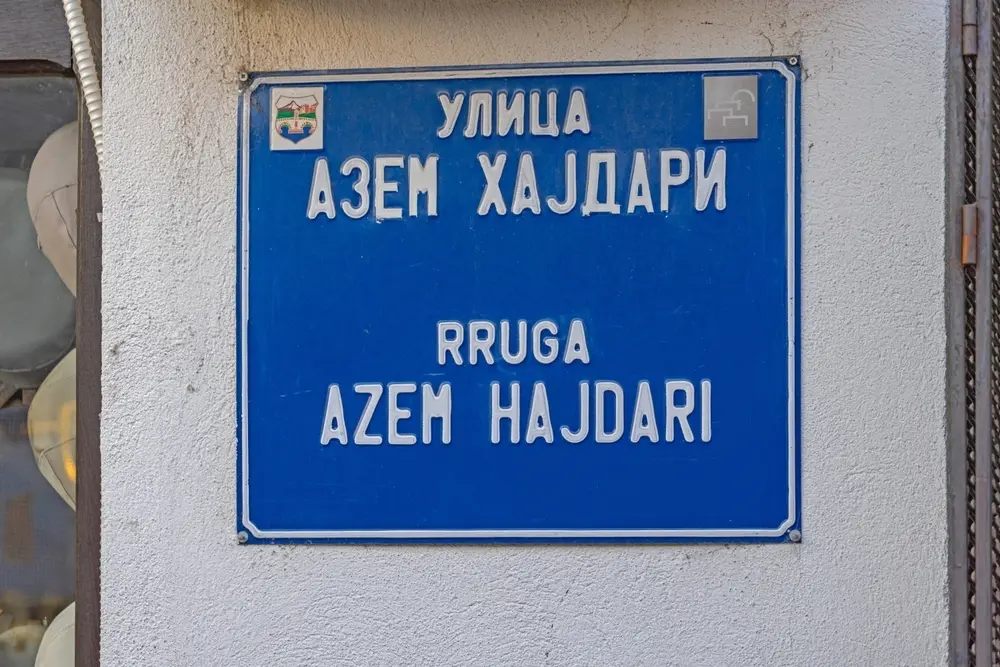
Bilingual signs in Macedonian and Albanian © Baloncici/Shutterstock
Bilingual signs in Macedonian and Albanian © Baloncici/Shutterstock
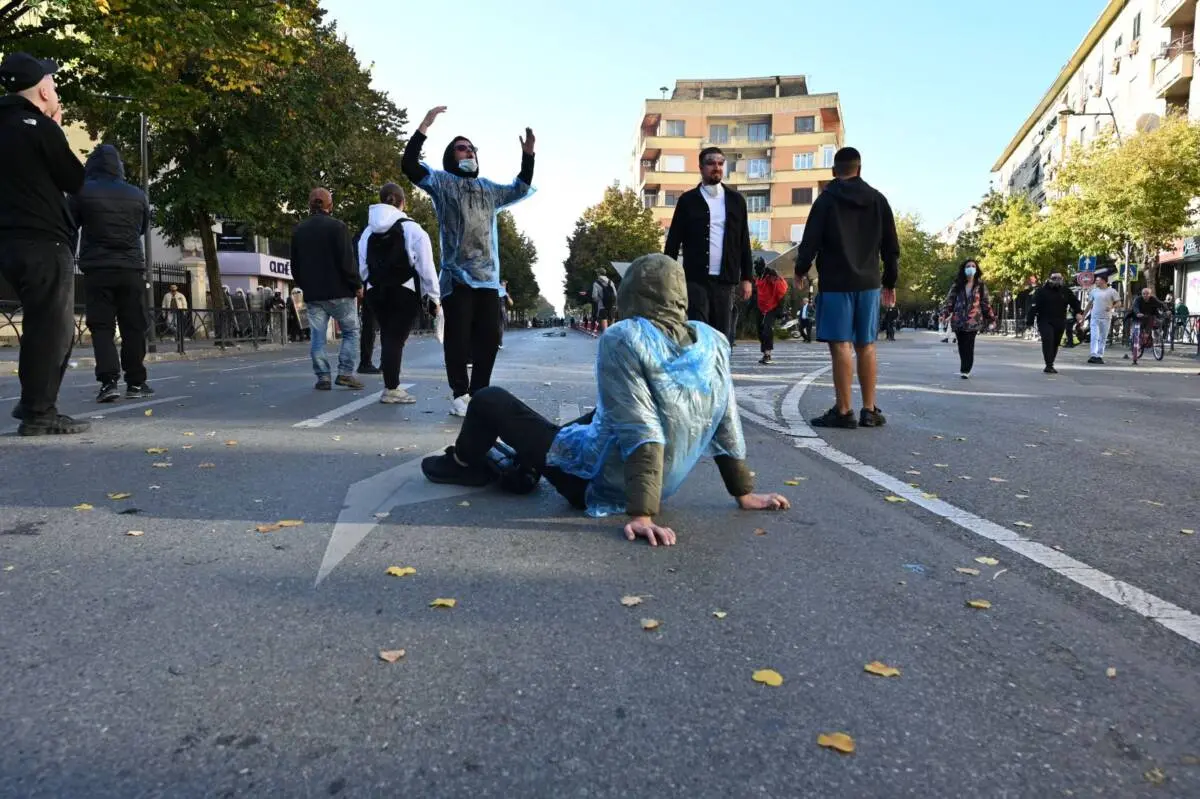
In April and May 2026 protests by students of Albanian nationality took place in Skopje, demanding that the bar exam be taken in Albanian.
In North Macedonia, studying is possible in Albanian language at several state and private universities. On the other hand, the Law on the Bar Exam stipulates that it must be taken exclusively in Macedonian language and its Cyrillic script as a professional exam, as well as the legal obligation of active knowledge of the Macedonian language as a fundamental constitutional requirement for all court officials.
In order to become a judge, prosecutor, lawyer and to perform other professions related to the law, one must actively know the Macedonian language.
The organizers of the protests say in statements to the media that the demands are legitimate and are based on the current Law on the Use of Languages, and they demand that this be implemented with political will.
Since 2019 the status of the Albanian language is officialized: in practice, this means that citizens have the right to communicate with state offices (ministries, courts, public enterprises) in Albanian language, with the institutions being obliged to provide translation and bilingual forms and documents.
After the first protest, the Albanian students submitted a written request to the Ministry of Justice. The ministry responded that the exam is taken according to the primacy of the Law on the Bar Examination (Lex Specialis), that is, the exam is not taken directly according to the Law on Languages, but according to the special Law on the Bar Examination.
“According to the legal rule ‘Lex specialis derogat legi generali’ (the special law negates the general), until this specific law is changed, the Ministry of Justice has no legal basis to organize an exam in another language [than Macedonian] If it does so, the exam itself could be declared legally invalid”, reads the official explanation of the Ministry
The students’ demand opened a new political front. The opposition Albanian party, DUI, reacted by saying that the right to use the language is already constitutionally guaranteed by the Law on the Use of Languages.
In response, the Albanian ruling party “Vredi” accused the opposition DUI of hypocrisy, pointing out that “there have been five ministers of justice in the past two decades” and that the Law on the Bar Exam was passed in 2019 when the Speaker of the Parliament was their official Talat Xhaferi.
Prime Minister Hristijan Mickoski stated that the Government is preparing a systemic, “permanent solution” that will be sent to the Venice Commission for legal confirmation. He recalled that the Venice Commission (officially: European Commission for Democracy through Law) as an advisory body of the Council of Europe, composed of independent experts in the field of constitutional law, has already expressed serious objections to the Law on the Use of Languages in the judiciary.
This commission says that the overly broad and radical application of bilingualism in the judicial sector can seriously slow down the efficiency of the legal system and paralyze the functioning of institutions due to a lack of resources for constant translation.
“Students should remain patient, the solution must be in accordance with the recommendations of the Venice Commission and international standards”, Mickoski emphasized.
The student protests have been accompanied by several controversial elements. Their banners and statements indicated statements that the use of the Albanian language was being banned, which is not the case.
At the same time, some of the messages went beyond the student context by displaying only flags of the Republic of Albania as well as chants for the “UÇK” ( the ethnic Albanian militia, closely linked to its Kosovo counterpart, who clashed with the police and the Army of the Republic of Macedonia in 2001, and was later disbanded after the Ohrid Agrement). Because of this, questions about security and ethnic relations were raised in the public.
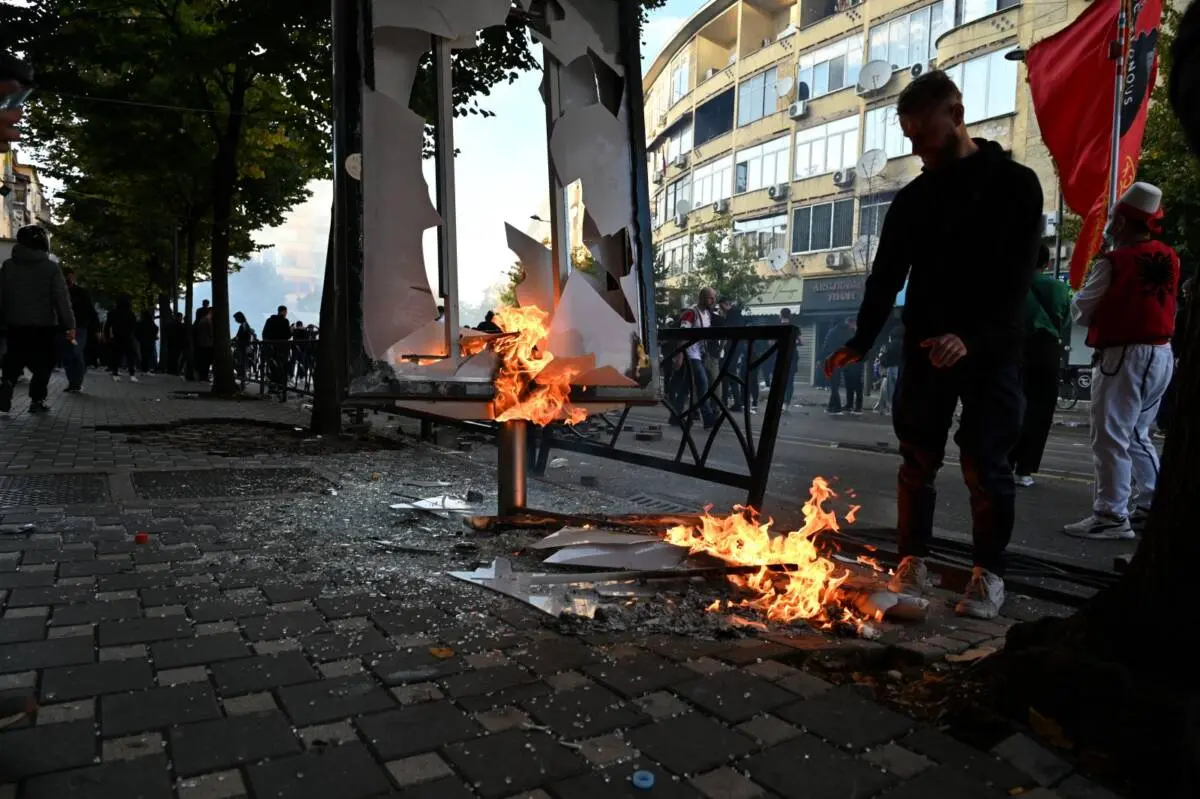
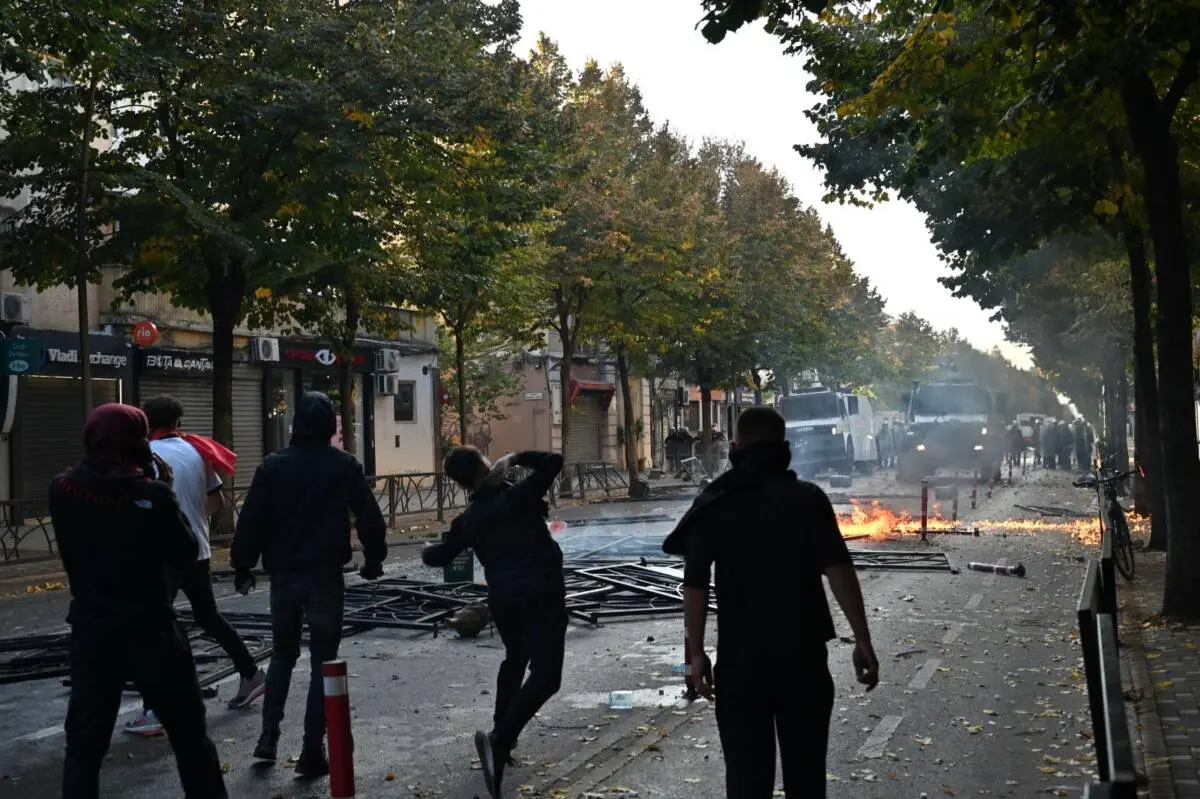
During the second protest in front of the Ministry of Justice, there was a physical confrontation, after which three participants were detained. The protests were attended also by citizens of Kosovo and Albania, as well as members of the opposition party DUI.
Albania’s Ambassador Extraordinary and Plenipotentiary to the country, Denjon Mejdani, was summoned to the Ministry of Foreign Affairs (MFA) where he was handed an oral demarche due to his public interference in the internal affairs of the state, namely the support he gave to the students’ protests.
The authorities announced a three-month deadline in which working groups will have to harmonize the legislation. The government promises that, in addition to the bar exam, all professional exams and licenses will be available in the mother tongue, while students warn that if the promise is not fulfilled in practice, Skopje will face a new wave of even more massive protests.
Found an error in this article? Please contact our editorial team at redazione@balcanicaucaso.org.
Tag: Languages
Featured articles
 the students' voices
 Investigation
 students' protest