Montenegro, how to save a primary forest
A field expedition with EuroNatur to Zeletin, a corner of intact forest at risk of disappearing, just as Montenegro negotiates its entry into the European Union
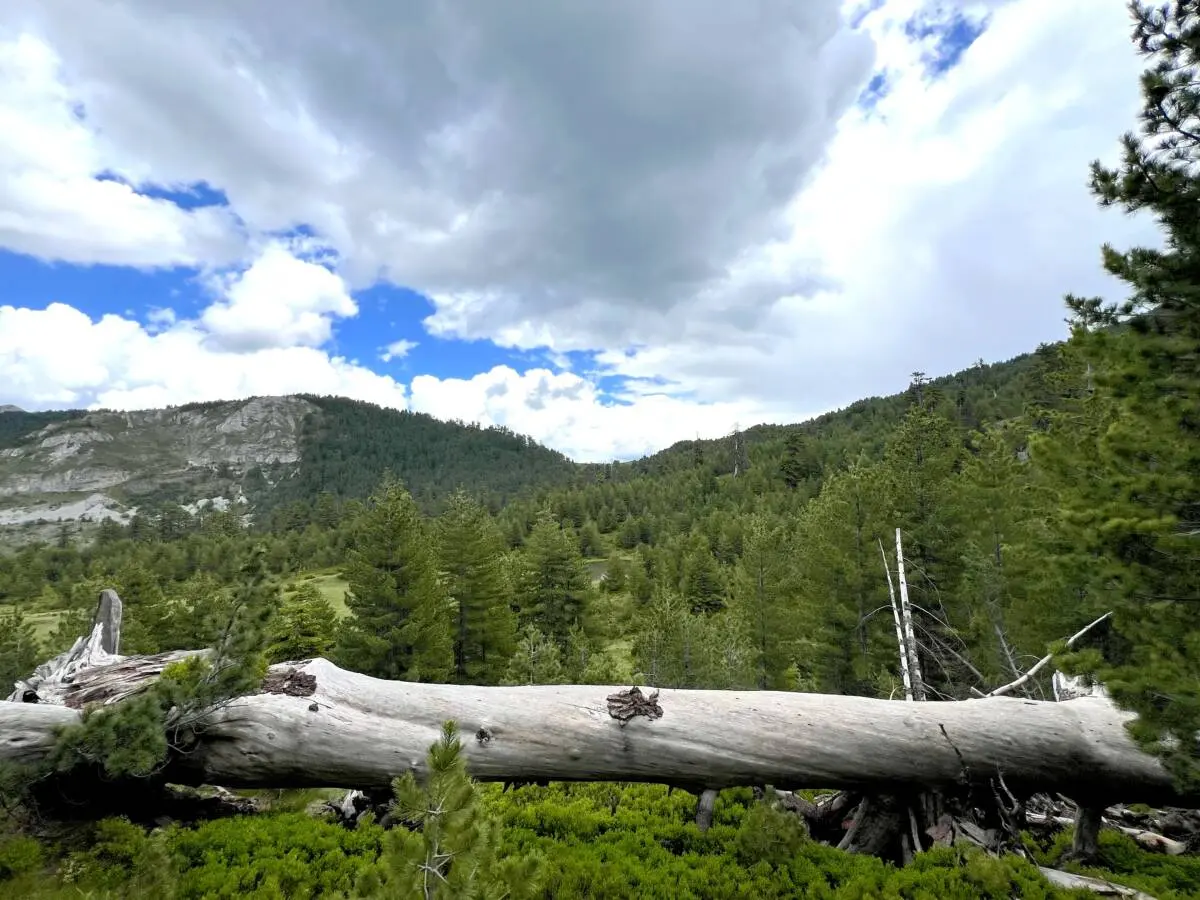
La foresta primaria dello Zeletin in Montenegro. Foto: Marta Abbà
The Zeletin primary forest in Montenegro. Photo: Marta Abbà
“People don’t know what kind of wealth we have. Even in the most beautiful places, on the first day you find yourself facing a new road, and then… the highway.” Bojan Zeković, a researcher at CZIP (Centre for Protection and Research of Birds of Montenegro), says this before even entering the forest.
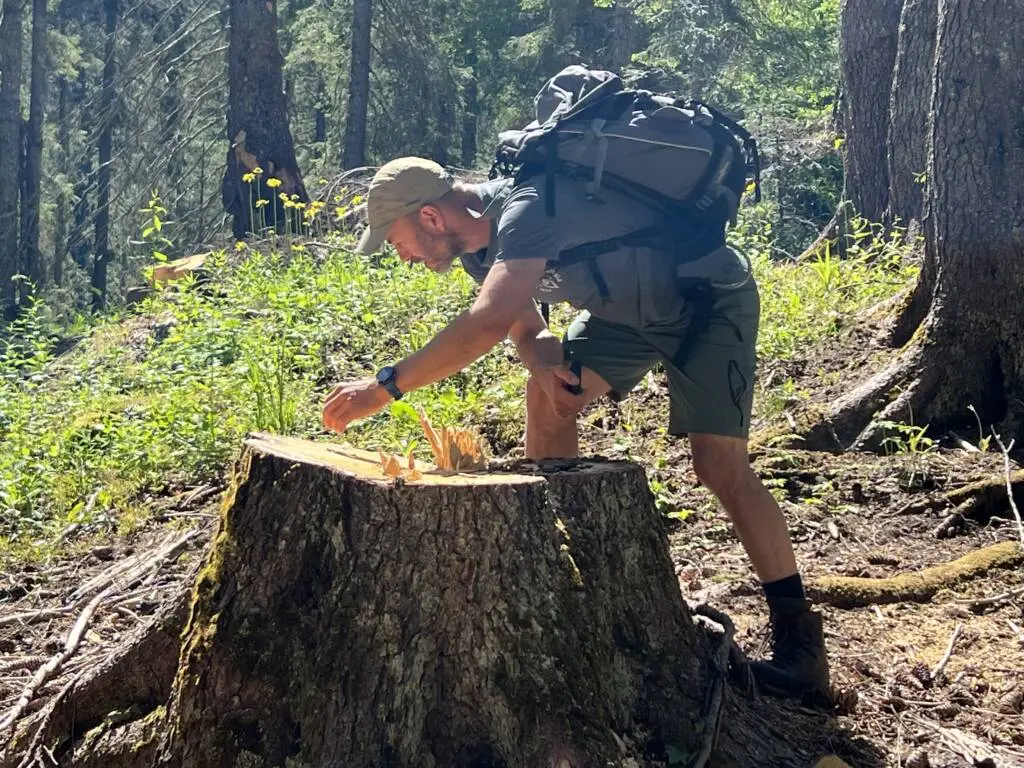
It’s morning in Zeletin, a wooded plateau in the north-central part of the country, not far from Biogradska Gora National Park. A freshly cleared trail opens up before our group, dug into the ground by vehicles. On either side, fresh stumps. Trees recently felled in an area that no official document recognizes as protected and which, precisely for this reason, can be entered and exploited at will.
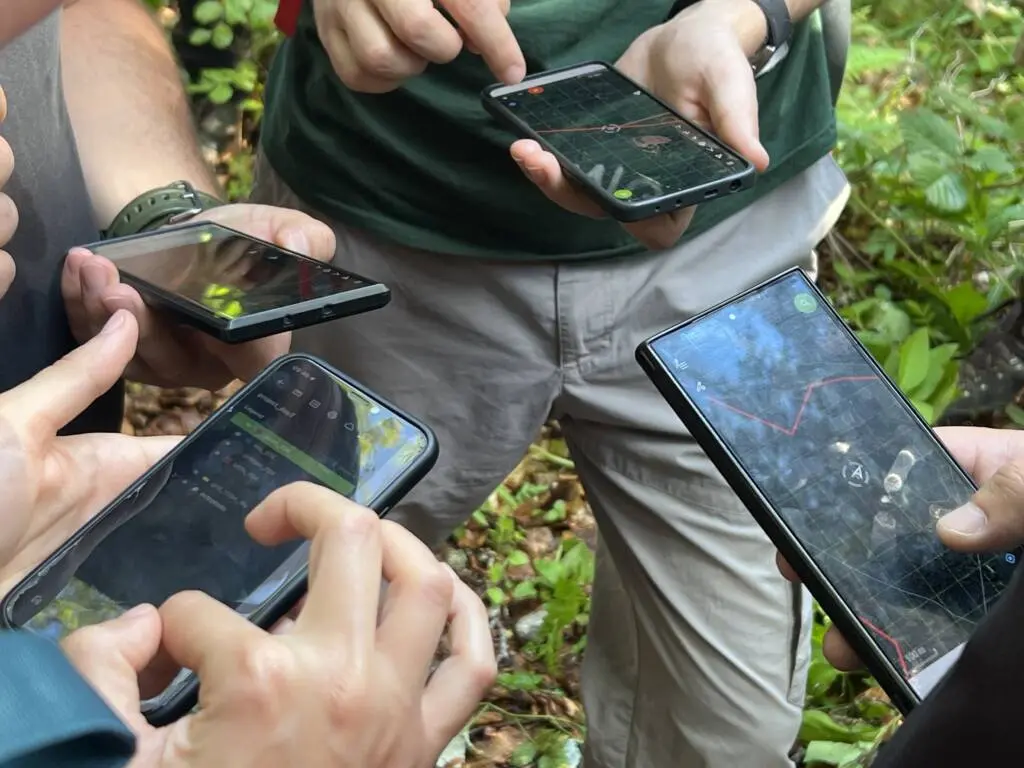
Bojan Zeković is surrounded by about fifteen people from Albania, Bosnia and Herzegovina, Croatia, and Montenegro, with notebooks and GPS in hand. They are there as part of the Forest Beyond Borders project, led by the German NGO EuroNatur. They came to map what that road is already going through.
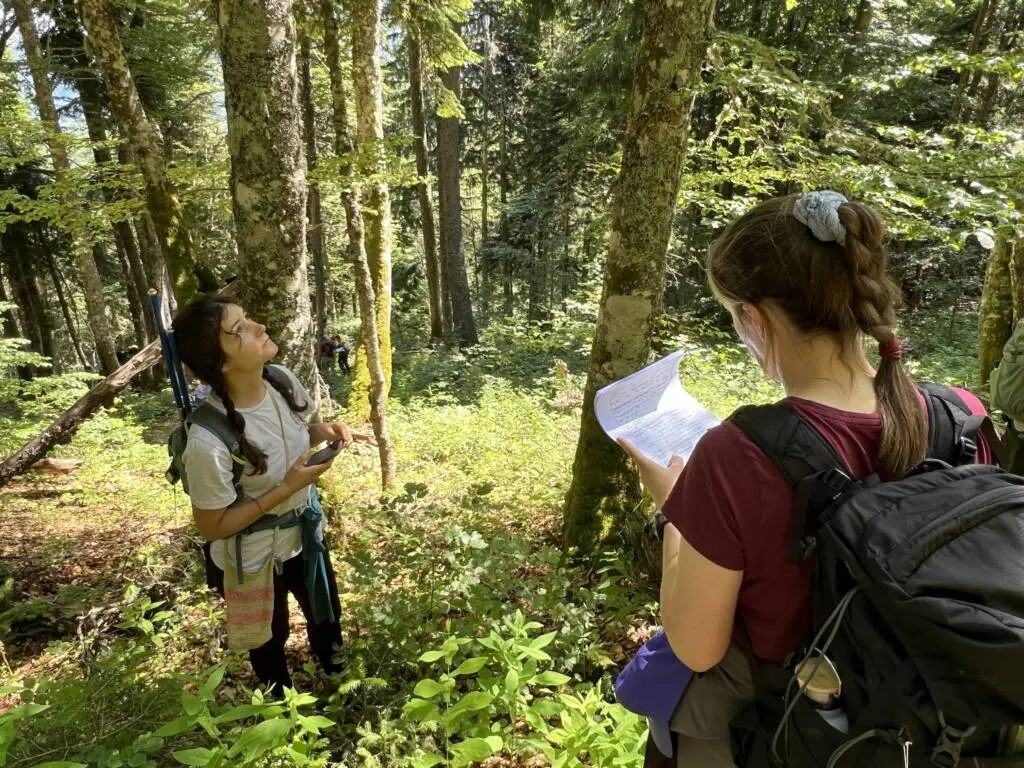
Participants in the Forest Beyond Borders project. Photo: Marta Abbà
A primary forest
Zeletin does not appear on any official map of protected forests. It has no statute, no legal perimeter. Yet what it hosts has a specific name: primary forest.
According to the European Commission’s 2023 guidelines, a primary forest is a naturally regenerating ecosystem, composed of native tree species, where there are no visible signs of human activity and ecological processes are undisturbed. It is not simply an old or dense forest. It is a system that has developed for centuries without felling or replanting: trees are born, grow, fall, and rot according to their own dynamics. Dead wood accumulates over decades. Cavities in the oldest trunks become habitats for insects, birds, mushrooms, and small mammals. None of this can be recreated.
According to the EU Joint Research Centre, these ecosystems make up less than 3% of Europe’s forest area. In Central Europe, primary forests have been systematically removed over the last three centuries, replaced by forests geared toward timber production. The Western Balkans are among the few places where significant fragments of forests survive, but most have never been studied, measured, or even protected. Zeletin is one of these, and it’s one of the first at risk of disappearing.
Mapping before it’s too late
Siegmund Missall, head of EuroNatur’s forest program, has hiked in Zeletin, on the Croatian Velebit, and in Bosnia and Herzegovina. “The ecological quality still preserved here is superior to any national park we have in Germany,” he says, before adding: “These are the most valuable forests in Europe.”
The problem is that this quality is irreversibly lost. “Once the felling begins, the complex structure, the species that live only here, everything is lost. A degraded forest doesn’t return to its former glory. Or at least not on human timescales,” Siegmund Missall continues.
The tools to protect forests, however, exist. With the 2030 Biodiversity Strategy, the European Commission has committed to mapping and rigorously protecting all remaining primary and old-growth forests in the EU. Any forest that meets the criteria must be included in the Natura 2000 network — the system of protected natural areas covering over 18% of the EU’s territory — with strict protection: no logging, no extraction.
Participants in the Forest Beyond Borders project. Photo: Marta Abbà
But many countries have not completed the mapping yet. The Western Balkans, which are not yet in the EU but are aspiring to join, are in a delicate position: the guidelines do not formally bind them, but they become a powerful argument in accession negotiations. In the case of Montenegro, the pressure is real: the country aims to conclude “Chapter 27” of the negotiations, which deals with the environment, by the summer. Zeletin had been included as a candidate site in the Emerald network — the system of protected areas established by the Berne Convention for countries not yet in the EU — but a new territorial plan from the Montenegrin government has excluded it from the list. The risk now is that the country will join the Union without Zeletin ever being designated as a Natura 2000 site.
“We must map it before it is degraded,” says Siegmund Missall of EuroNatur, “because once it becomes a managed forest, you can no longer use the Commission’s rules to save it. We are in a race against the loggers.”
Three days in the forest
The Forest Beyond Borders project brought together researchers and experts from four countries in Zeletin for a week of field training, led by Martin Mikoláš and Rhiannon Gloor of the Czech University of Life Sciences in Prague, one of the European institutions with the longest experience monitoring primary forests.
The challenge is both technical and philosophical. “Usually, we scientists complicate everything,” jokes Martin Mikoláš. “Here, our role is the opposite: we have to keep things simple.” His team monitors approximately 1,200 permanent study plots in European primary forests, with measurements that require an average of five or six people and four hours for an area of 0.15 hectares. Zeletin needs methods that allow two people to cover 50–100 hectares per day.
“We need to map the forest before it’s degraded. We’re in a race against the loggers.”
Siegmund Missall, EuroNatur
For three days, between June 15 and 19, 2026, the Forest Beyond Borders group walked through the forest, stopping whenever a tree posed a question. The Commission’s guidelines list the indicators to be measured: large and old trees, standing and ground deadwood, microhabitats such as trunk cavities, loose bark, lignicolous fungi, and branches in various stages of decomposition. But they don’t set precise numerical thresholds, as they vary depending on the local ecology. How many cubic meters of deadwood per hectare? What is the minimum diameter to define a “large” tree? What is the right indicator species for this latitude?
These are not questions that can be resolved in a classroom. They are resolved standing in front of a fallen beech tree, discussing whether its decomposition is advanced enough, whether the fungus covering it is the right one, and whether the cavity in the nearby trunk is large enough to accommodate a woodpecker. The group — with diverse backgrounds, ranging from ornithology to forest biology, from park management to academic research — looked at each tree from different angles. A Slovakian expert focused on lichens that have been absent from his country’s forests for twenty years. An Albanian researcher asked how to distinguish natural regeneration from that facilitated by humans. Some took photographs, others measured, and yet another searched for the answer in tables on their phones.
The exchange produces something that goes beyond technique. “They stop in front of indicator species that no longer exist in their area and say, ‘This is wonderful!'” says Bojan Zeković of CZIP. The loss thus becomes concrete, visible, almost personal.
The method emerging from these days is not a rigid procedure imposed from above, but a framework that local knowledge must fill. “We provide scientific support,” explains Martin Mikoláš, “but the local partners are the experts on the ground. They’re the ones who know where there’s a road that doesn’t appear on the maps, or who know the history of that slope. In the end, they decide.” Each partner NGO will return to its own country with a protocol to adapt and implement independently.
Participants in the Forest Beyond Borders project. Photo: Marta Abbà
A race against time
Ornithologist Bojan Zeković has been familiar with the Zeletin plateau since 2016. He knows where new roads cut through the landscape, where the tree trunks are freshest, and where cars drove up last winter. The forest is classified in Montenegrin administrative plans as an economic forest, and is therefore subject to exploitation. Local protests in 2016-2017 temporarily halted logging, but the administration simply moved operations to another slope. As long as Zeletin remains without legal status, any change to the forest plan could open up new areas for logging.
The data collected from the mapping will now be published in an international scientific journal — to prevent governments from treating them as activist opinions — and will be used as an argument in accession negotiations. If the Zeletin primary forest meets European criteria, it will be difficult for Brussels to accept Montenegro’s closing of Chapter 27 without including it in the Natura 2000 network.
The total budget for the Forest Beyond Borders project — for three years and five countries — is €580,000. The research teams have months of fieldwork ahead of them, covering 17,200 hectares on foot. “We have to be quick,” says Bojan Zeković, “also because some companies are faster than us and already have the infrastructure in place.”
Martin Mikoláš gazes at the forest and doesn’t hide the ambivalence of someone who has been working this way for many years: “Sometimes you return to a place after five years and see that the forest has disappeared before your eyes.” That’s why, he says, they want to get there first.
Found an error in this article? Please contact our editorial team at redazione@balcanicaucaso.org.
Tag: Forests
Featured articles
 Montenegro Pride 2026
 Political deadlock