Is Kosovo ready to address femicide as a national emergency?
Last October, the killing of Arlinda Zekajda by a family member brought the tragedy of femicide to the forefront of public debate in Kosovo. Civil society is calling for a response from the institutions, which are all too often indifferent or unable to protect women in danger
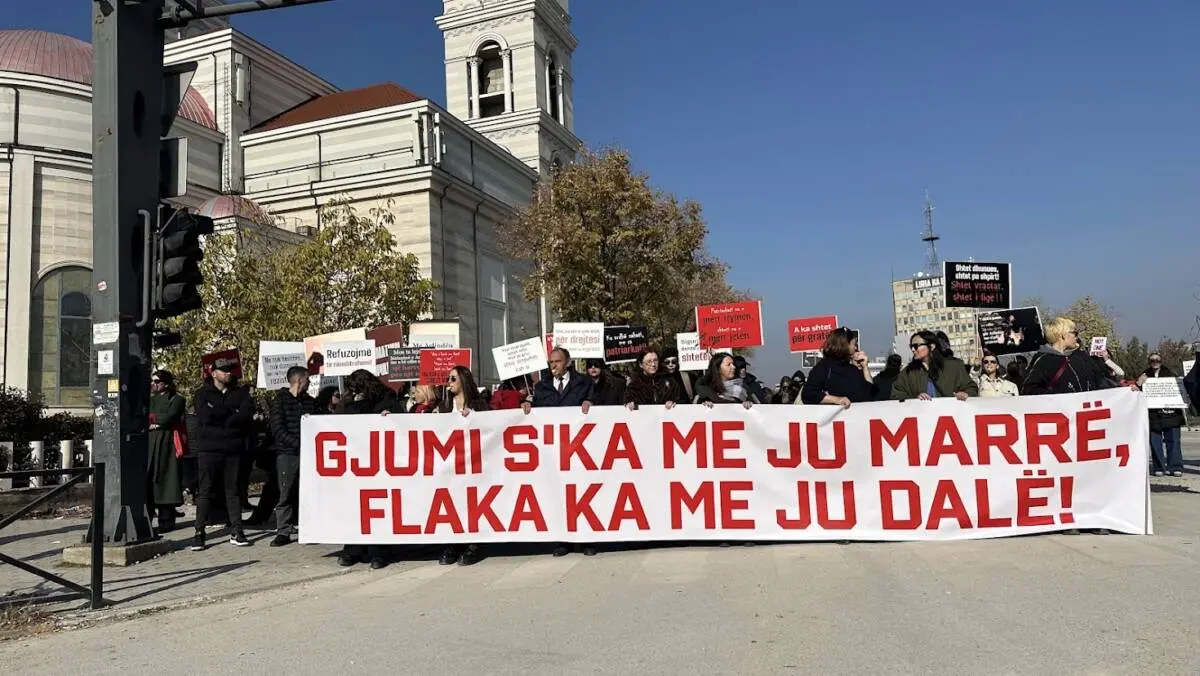
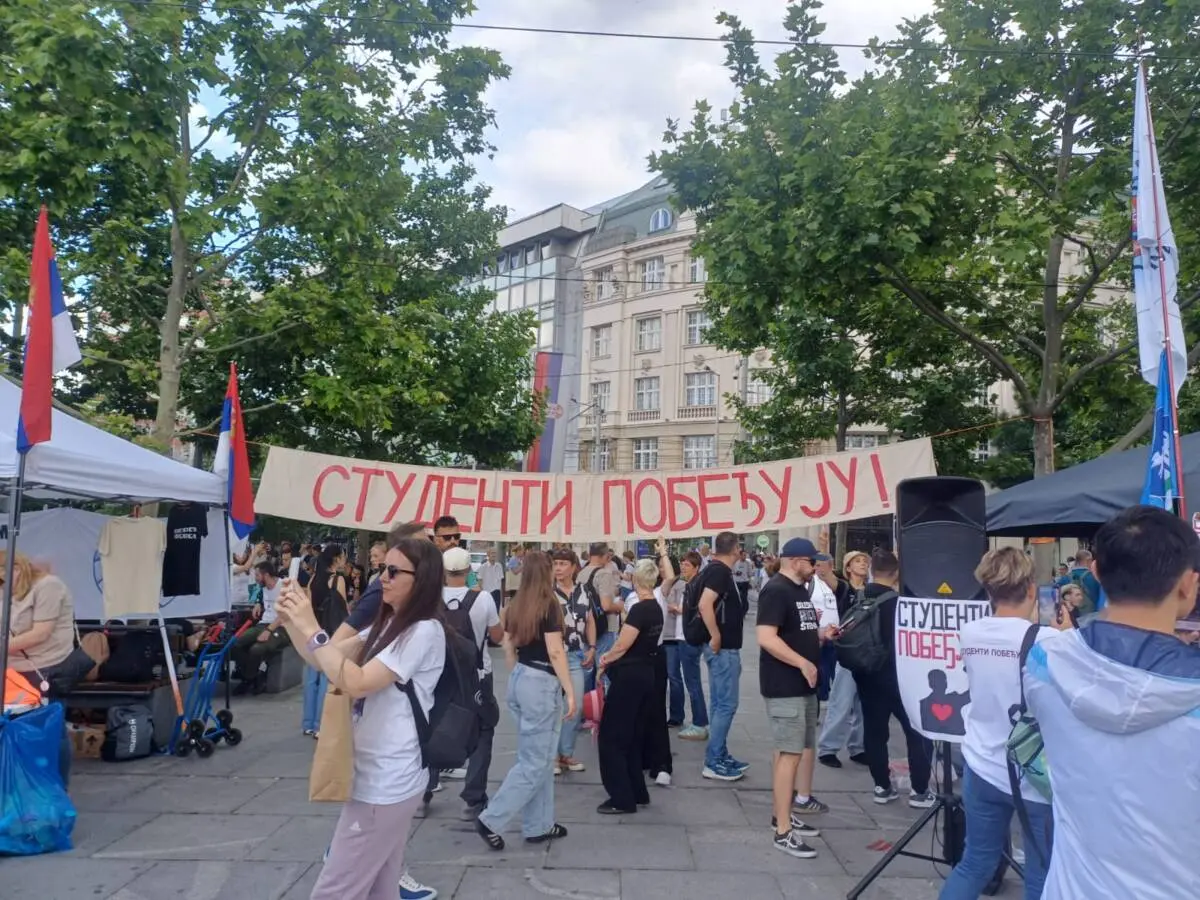
Proteste a Pristina contro i femminicidi – foto A. Berisha
Proteste a Pristina contro i femminicidi - foto A. Berisha
“I do not feel safe, but I will not give up my son and my property. The state has an obligation to remove the occupiers from my house”, Arlinda Zekaj said to the police officer on the day she was killed by her brother-in-law with an ax.
Zekaj, 49, was killed on October 25th in Vitomirice, a village in the Peja municipality. Since then, citizens have been protesting against the institutions for not taking her seriously, despite her reporting threats by her partner and his relatives during a months-long custody battle. Protesters are also asking for the resignation of Minister of Justice Donika Gervalla and Minister of Interior Xhelal Svecla.
A neglected case
Participants in the protest urged institutions to hold accountable the prosecutors, municipal officials and police officers of the Peja region for neglecting the case. Indeed, three days before being killed, Arlinda had sent a letter to the prosecutor’s office in Peja about the mishandling of her case.
“I hope the day does not come when you and the responsible institutions are held accountable after my life has been taken,” Zekaj wrote in the letter, which was published after her murder.
“After my murder, I do not expect you to respond, but I expect you to be unable to sleep,” writes another placard.
A recording of her conversation with a police officer who blatantly ignores her is also being played over a speaker by activists in the streets.
Asking for justice
At the protest were present see civil society activists, journalists, young parents with their kids, and adults with their older parents, but no politicians.
Arbresha Januzi, an economist from Gjilan, walked alongside her father, while Bleona Krasniqi from Prishtina, 25, accompanied her mother. Both articulated the desperate need for women to live freely and for the state to take action.
“Laws should be stricter in cases of domestic violence. Education, the way we raise our children, is very important. I came here today because everyone should live freely, free to make their own choices,” Januzi told OBCT.
“We have never received what we wanted from the state, but I hope that after this case we will. So far there has been no response. We will continue protesting,” said Bleona.
“The murder of Arlinda Zekaj and the state’s response have plunged our society into a state of insecurity, which we can overcome only through state accountability and guarantees that women’s lives are taken seriously,” reads a statement by the Feminist Collective for Action and Thought, the organizer of the protests.
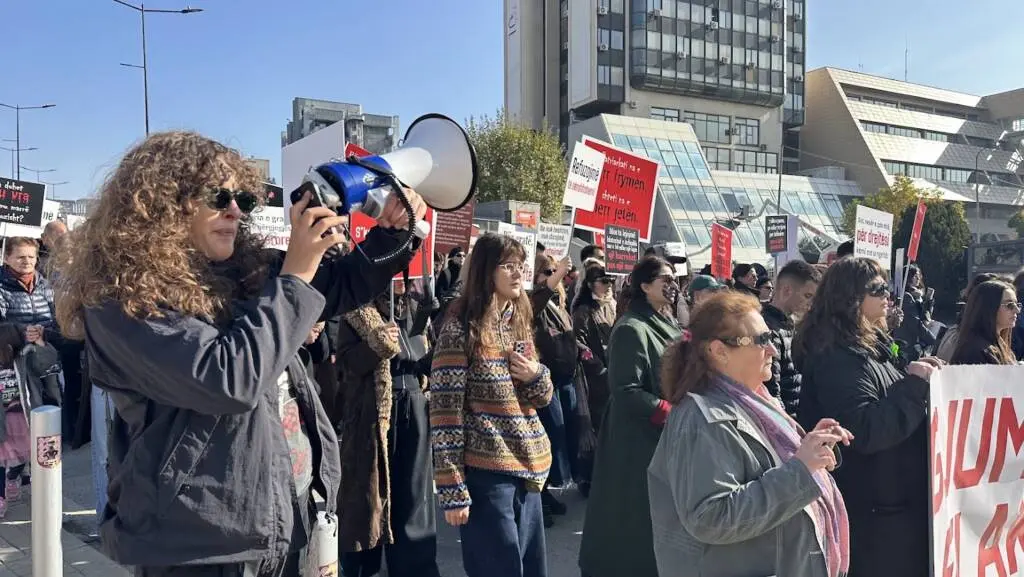
Pristina – photo A. Berisha
What are the institutions doing?
According to the Ministry of Justice, Arlinda Zekaj had reported violence and threats since July 10, 2026, had requested a protection order, and had warned that her life was at risk. She had also documented how her case had been handled.
Police arrested Albert Sylaj two days after the murder. On October 29th, 11 police officers and two prosecutors from the Peja region were suspended because of failures identified in the handling of Arlinda Zekaj’s case. Among them were Faruk Muqolli, chief of police investigations in the Peja region (the officer of the recorded conversation), and Lumturije Vuçetaj and Arlinda Nallbani-Gacaferri, both prosecutors in charge of the case.
In addition, General Director of the Kosovo Police Gazmend Hoxha resigned. A resolution has been adopted in parliament, and a parliamentary commission has been created to investigate the issue further, so far without results.
However, according to civil society activists, this is not enough. OBCT talked to Maria Berishaj, a member of the Kosovo Women’s Network, who recently met with Kosovo President Justina Shiroka Pula to address the matter and request that femicide be included in the Criminal Code.
“Those prosecutors and police officers should lose their jobs for good, but they should also face criminal prosecution, because a woman has lost her life due to their negligence,” Berishaj told OBCT.
“We have seen that femicide is an issue that must be treated as a national emergency. We have also seen the need to strengthen the Criminal Code through amendments that would allow femicide to be recognized,” she further said.
In Kosovo, the Criminal Code does not define femicide as a separate criminal offence. However, if the murderer is a family member or the murder is motivated by gender, the offence may be classified as aggravated murder under Article 173 of the Criminal Code.
As Berishaj explains, addressing femicide at the institutional level can be done easily; however, we need to educate prosecutors and judges and train the police to handle cases of gender-based violence more effectively.
She is also in favor of creating a Femicide Watch in the region, as the Kosovo Police reports dozens of threats, arrests and similar cases of domestic violence in their daily reports.
“This is a mechanism that is also being developed in countries across the region and allows for greater coordination between institutions, as well as a stronger commitment from all institutions to addressing gender-based violence. Another very important issue is intensive work on public education,” Berishaj told OBCT.
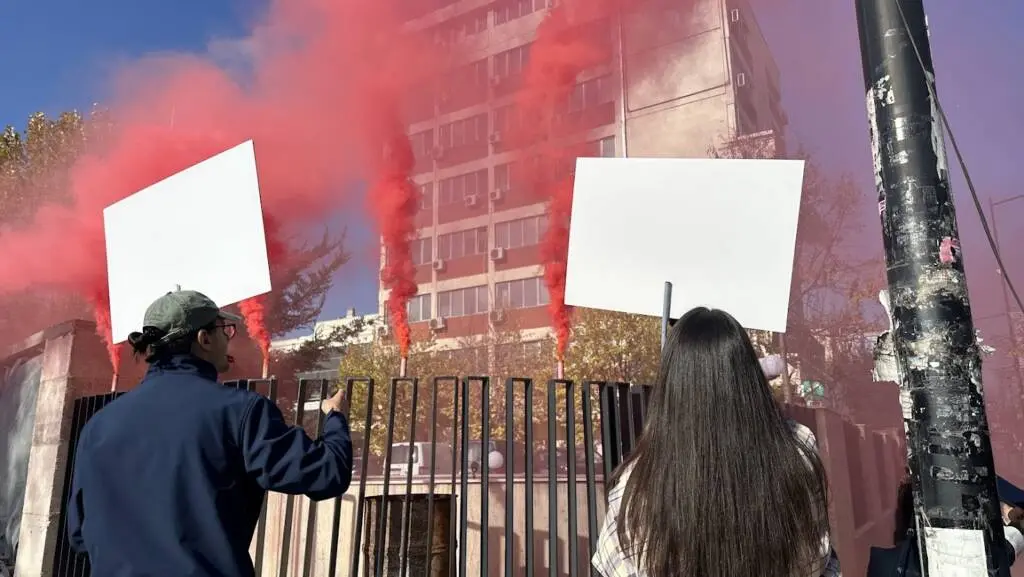
Protestors in front of the prosecution office in Pristina – photo A. Berisha
Where are the institutions failing?
Domestic violence is addressed by a range of institutions including the Kosovo Police, the Office for Protection and Help to Victims, prosecution offices, courts and Centers for Social Work, which provide different services at different stages.
Kosovo’s National Audit Office examined this issue in a report covering the period 2020–2022, finding shortcomings related to the engagement of primary investigators, the involvement of victims’ advocates, the timely examination of cases by justice institutions, and the recording of reported cases.
In addition, victims lack social support. The Centre for social work should provide social and family support, but the report states that it often fails due under-staffing and increasing workload.
The report specifically covers the Peja region. According to the report, until the end of 2020, only one social worker was assigned exclusively to domestic violence cases. In 2021–2022, domestic violence cases were handled by four rotating officials, and only one psychologist-sociologist, who was also serving in a managerial role.
In the case of Arlinda Zekaj, after a three-month custody battle, the Centre for social work in Peja decided that her son should stay with his mother, but also recommended psychological preparation to the transition as, according to the authorities, the minor had preferred to remain with his father and his family during that period.
Found an error in this article? Please contact our editorial team at redazione@balcanicaucaso.org.
Tag: