Trieste teeters between acceptance and rejection
Trieste is a city of borders and contradictions, of encounters and trade, of famous writers. At the same time, it was also a city of frontier fascism and violence against the Slavs. The issue that has come to the fore in recent days is the unease surrounding the lack of welcome for refugees and migrants arriving in the city along the Balkan Route
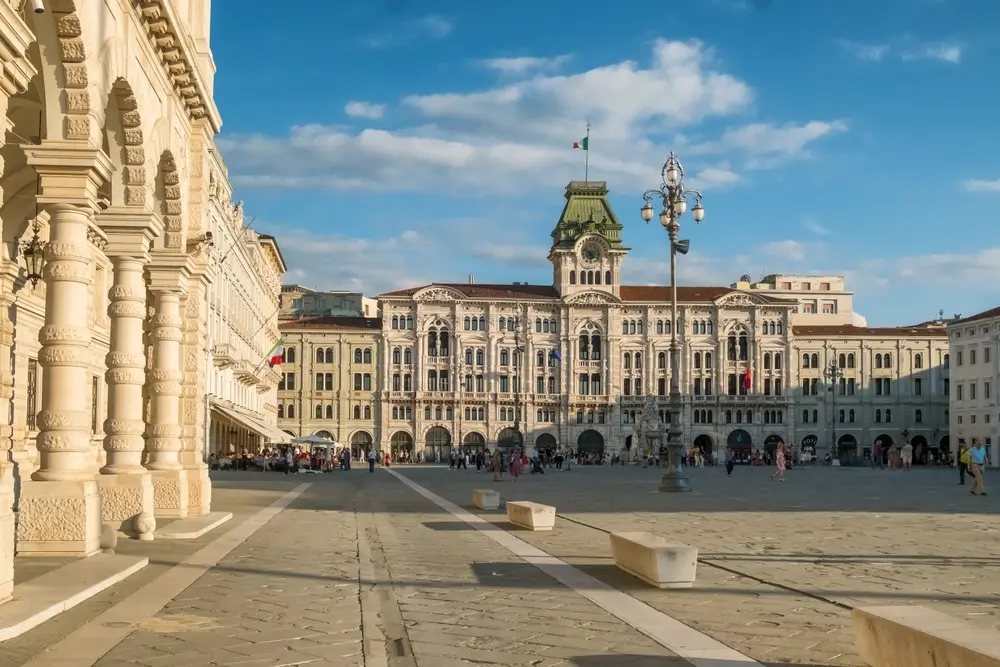
Piazza Unità, Trieste © Mazur Travel / Shutterstock
Piazza Unità, Trieste © Mazur Travel / Shutterstock
Trieste has always been a border city, a city of contradictions and heated conflicts, but also a place of encounters, of traders, travelers and sailors. Central Europe’s largest Mediterranean port has always attracted people from all over, drawn by business but also by the cultural and artistic richness that distinguishes multi-identity communities.
The city of Umberto Saba and Italo Svevo, the latter an Italian-German writer of Jewish origin, who welcomed the Irishman James Joyce as a brother, was also the city of frontier fascism, of anti-Slavic violence, of the announcement of the anti-Jewish laws in 1938, and of the Risiera di San Sabba, the only extermination camp on present-day Italian soil.
Trieste is therefore suspended between two dense and contradictory pasts, and its citizens are constantly searching for their own identity. What do we want to be – the people of Trieste seem to continually ask themselves: a land of life and welcome or a place of exclusion and death?
For the past twenty-five years, the city has almost always been governed by a coalition of right-wing parties, currently led by Roberto Dipiazza, known for his aggressive and sexist outbursts. The latest was about ten days ago, when the mayor threatened to “shoot in the head” anti-government protesters.
The recent tensions are part of a context of unease stemming from the failure to welcome migrants arriving in the city. This is not an emergency: for more than ten years, Trieste has been a mandatory transit point for migrants and refugees, mainly from Asia and the Maghreb, making their way to Northern Europe along the so-called Balkan Route.
These are individuals who have been traveling for years, economic migrants and people fleeing war or climate change. They are men and women, sometimes minors, victims of all sorts of abuse and violence committed by police forces throughout the Balkans and of unlawful detention in various countries.
Those who arrive in the city represent a tiny percentage of those who set out on the journey: those who reach the city made it, thanks to a stroke of luck, unscrupulous traffickers or police corruption.
But they arrive in the city desperate, their feet worn out from walking and often with wounds inflicted by the border police. Despite having committed no crime, they are accused of “illegal entry and stay”, a crime that should not even exist, as it violates the most basic human rights laws and the sacrosanct freedom of movement.
Faced with this reality, the city administration has chosen to deny any type of reception, creating a disruption that would not exist if the issue were addressed with the normal tools of prevention and integration. Furthermore, a campaign of criminalisation is being waged against migrants and those who help them.
In recent months, the municipality has made existing reception facilities inaccessible, leading, among other things, to the deaths of two young people in an accident inside a dilapidated building in the Old Port. Protests ensued, harshly repressed by the police, with arrests, assaults and complaints filed against those who demanded the reopening of a potential reception facility.
The latest political move, particularly cynical and ruthless, was the one directed against the Linea d’ombra association, which for years, every evening, has been present in Piazza della Libertà, in front of the station, to bring aid to people in transit, often weak and defenseless individuals, with wounded bodies and souls.
The Police Headquarters has prohibited assistance to the needy over the weekend “so as not to disrupt the leisure activities” of wealthy Trieste residents, and has limited the presence of volunteers in Piazza Libertà to just two hours a day from Monday to Friday. A few days ago, Lorena Fornasir, founder of Linea d’ombra, was also fined for offering help to migrants at time and place declared unlawful.
Today, Trieste and its citizens face a crossroads. Which of their cumbersome pasts do they wish to draw inspiration from? What model do the residents dream of for their city? Should Trieste return to being a meeting place, a place of art and culture, rich in complex identities, or should it withdraw into itself, cradling its sense of superiority and selfish well-being?
The choices being made today by those governing the city are no different, in logic and perspective, from those made a hundred years ago by local fascist leaders. The root cause is the same: hatred of those who are different, the weak, and the needy. This is what Trieste wants again? The city is torn between humanity and cynicism, between well-being for all and luxury for a few, between solidarity and injustice.
As has happened in the past, Trieste is a symbol, a laboratory, a model, for better or worse, for the rest of Italy and Europe. Because what is happening in Trieste is also seen in many other European cities: the clash between opposing political and human perspectives is the same. Therefore, everywhere we can ask ourselves the same question about the world we dream of, and the future of the entire continent will depend on our answers.
Found an error in this article? Please contact our editorial team at redazione@balcanicaucaso.org.
Tag: Western Balkan route