Albania: a development model based on money laundering?
In recent years, Albania has experienced rapid and turbulent construction growth, particularly in the capital, Tirana, and along the Ionian coast. Recently, however, increasing doubts have been raised about the source of the capital funding this development: recent investigations point the finger at organised crime
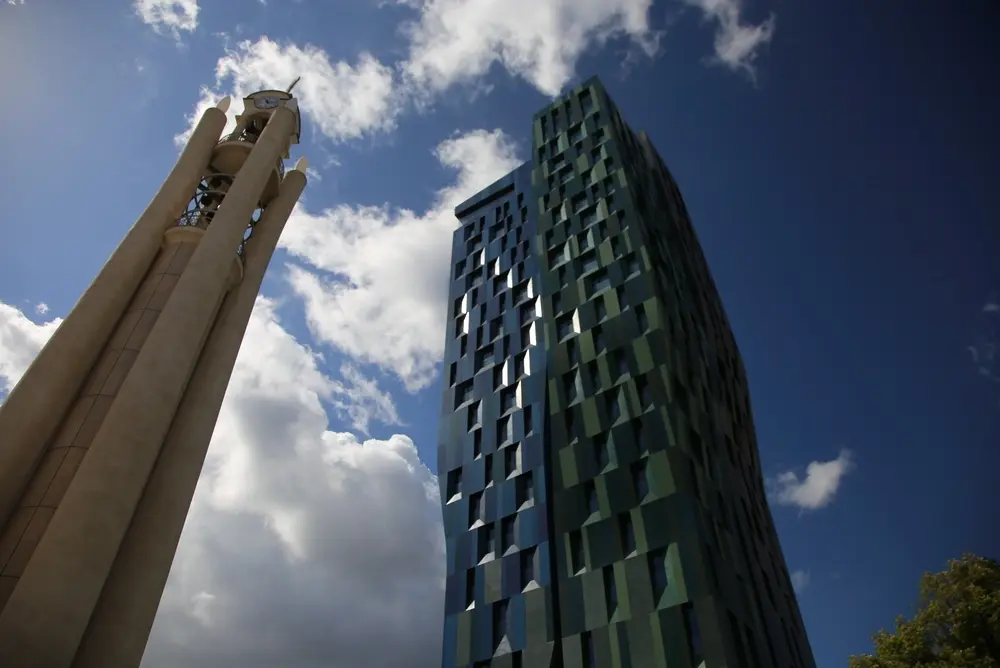
Tirana © Steph Couvrette/Shutterstock
Tirana © Steph Couvrette/Shutterstock
High-rise towers designed by world-renowned architects, large-scale resorts on the Ionian coast, and hundreds of construction permits issued in recent years have become the symbol of the development model that the Albanian government promotes as a national economic success story.
Tirana has undergone a radical transformation of its urban landscape, while the Albanian Riviera is being positioned as one of the Mediterranean’s rising luxury tourism destinations. But is this the full picture?
For the government, these developments incentivize economic growth and Albania’s ability to attract international investors. Well-known architectural names, such as Italy’s Stefano Boeri, have designed major projects in the capital, while large-scale investments, including those linked to Jared Kushner, son-in-law of U.S. President Donald Trump, in Sazan Island and the Zvërnec area, have been presented as evidence of international confidence in Albania’s economy.
However, this narrative has long coexisted with a more sceptical one. Economists, civil society organisations, and investigative media have repeatedly raised questions about the origin of the capital driving this construction boom. Suspicions that the construction and real estate sectors may be used for money laundering are not new. They have been discussed in international reports, economic analyses, and numerous investigations, but have rarely been substantiated through concrete criminal proceedings.
Recently, however, some of these long-standing suspicions have begun to enter the realm of formal investigations.
In recent months, Albania’s Special Anti-Corruption Structure (SPAK) has launched operations targeting suspected organised crime networks, including asset seizures worth significant sums. According to materials referenced in media reports, these investigations examine how proceeds from criminal activities may have been channelled into real estate, construction, and tourism investments in Albania.
Although the proceedings are still ongoing and criminal responsibility has yet to be established in court, these cases represent the first instances in which long-standing suspicions about the construction sector are being examined through concrete investigative files.
Meanwhile, Tirana has become a city defined by towers. In just a few years, dozens of high-rise buildings have dramatically reshaped the capital’s skyline. Unlike many European capitals, where tall buildings are concentrated in designated business districts, in Tirana they are dispersed across almost all key urban zones: around Skanderbeg Square, near the Artificial Lake, in the former Blloku area, along the main boulevard, and within established residential neighbourhoods.
A key dimension of Tirana’s transformation lies not only in the projects themselves, but in the institutional mechanism behind their approval. According to my analysis for Citizens.al, the National Council of Territory and Water (KKTU) has played a central role in reshaping the capital’s skyline, approving at least 139 tower projects over the last decade. The council, chaired by the Prime Minister, has been repeatedly criticised for concentrating extraordinary decision-making power in a single body, often allowing developments that deviate from or exceed the parameters of the city’s official urban plans.
The investigation also highlights a lack of transparency around many of these decisions, with a significant number of permits either unpublished or delayed in their disclosure. As a result, major parts of Tirana’s rapid vertical expansion have unfolded through a process that remains only partially visible to the public.
The debate is not limited to aesthetics. Urban planners and civil society organisations have long criticised the reduction of public space, increasing density, and deviations from approved urban plans. In some cases, concerns have been raised that certain developments exceed the parameters defined in official planning documents, raising broader questions about regulatory enforcement.
An investigation, conducted by MCN television two years ago, analysed electricity consumption in several newly built towers in Tirana and found out that a significant number of apartments appeared largely unoccupied. While there is no evidence of illegal practices, the findings raised questions about the real function of parts of the real estate market, where property investment may serve financial rather than residential purposes.
Development, land and strategic investments in the southern coast
A similar dynamic is unfolding along Albania’s coastline. The Ionian Riviera has become the main laboratory for luxury tourism projects, while the government presents this transformation as a key driver of economic development. However, these projects have also triggered strong opposition from local communities and environmental organisations, particularly in protected areas.
An investigation conducted by Citizens.al in 2023 found out that, through the Strategic Investment Law, the Albanian state has allocated around 5.8 million square metres of land for various coastal projects. Although the law was designed to attract foreign investments, a significant share of approved projects belongs to domestic companies, some of which have raised questions regarding their links to political and economic power structures and the acquisition of public land.
This landscape also includes major tourism developments such as Green Coast in Palasë, along with other large-scale projects in southern Albania and island areas. These developments have become central to a broader debate on how public land and protected areas are being managed, and who ultimately benefits from this model of growth.
At the core of this discussion lies a key question: whether Albania’s current development model represents sustainable economic growth or a concentration of capital in large-scale projects with limited transparency regarding ownership and financing sources.
From money laundering to construction?
Alongside this public debate, investigations conducted by SPAK have opened another dimension, the potential link between international drug trafficking networks and investments in construction, real estate, and tourism.
One of the most significant cases is the so-called “Aruba Corporation” investigation, reported by Reporter.al and other outlets, in which SPAK has issued arrest warrants and seized assets in connection with a major international cocaine trafficking and money laundering network. According to investigative materials cited in media reporting, a structured criminal network discussed investment opportunities in Albania, including urban development and real estate projects.
The investigation outlines a recurring model: proceeds from drug trafficking are allegedly introduced into the formal economy through land acquisition, construction investments, and tourism projects, gradually transforming illicit funds into seemingly legitimate assets.
In another line reported by Citizens.al, SPAK has imposed precautionary measures on several businessmen operating in the construction and real estate sectors, including Ilir Shtufi, in connection with suspected links between drug trafficking networks and investment flows. According to these reports, Shtufi is associated with large-scale tower developments in Tirana, including major urban projects in central areas and companies active in the construction market.
The investigation focuses on how these projects are financed, how ownership is structured through interconnected corporate entities, and how capital flows through multiple transactions from initial investment to construction and property sales.
Another key element in the case files is the inclusion of coastal developments in the broader financial analysis, including projects such as Green Coast and other investments in southern Albania. These projects are not presented as subjects of accusation themselves, but are included in a wider examination of how land, construction, and tourism investments may be used as vehicles for integrating capital of uncertain origin into the formal economy.
According to SPAK’s investigative framework, the model under scrutiny often follows a repeated logic: acquisition or control of land in high-value areas, fragmentation of ownership through layered corporate structures, and eventual development into large-scale projects that significantly increase asset value.
A development model under scrutiny
These investigations do not yet provide definitive conclusions about the nature of urban development in Albania. They remain ongoing, and any criminal responsibility must be proven in court.
However, they are reshaping the way Albania’s urban transformation is interpreted. Construction is no longer viewed solely as a symbol of economic growth and modernisation, but also as a sector where financial transparency, ownership structures, and capital origins are under increasing scrutiny.
In this sense, the key question is no longer only how much Albania is building, but who is financing this transformation, and through which financial pathways this capital flows.
Found an error in this article? Please contact our editorial team at redazione@balcanicaucaso.org.
Tag: Architettura | Città | Tirana
Featured articles
 Investigation
 students' protest
 Montenegro Pride 2026