After the elections in Serbia: the new reality and challenges of political transition
The triumph of the Student List in the recent elections, which brought an end to the long-standing political crisis in Serbia, raises questions that go beyond a mere change of government. Will the shift brought about by the students remain confined to the political sphere, or will it pave the way for a deeper institutional and social transformation?
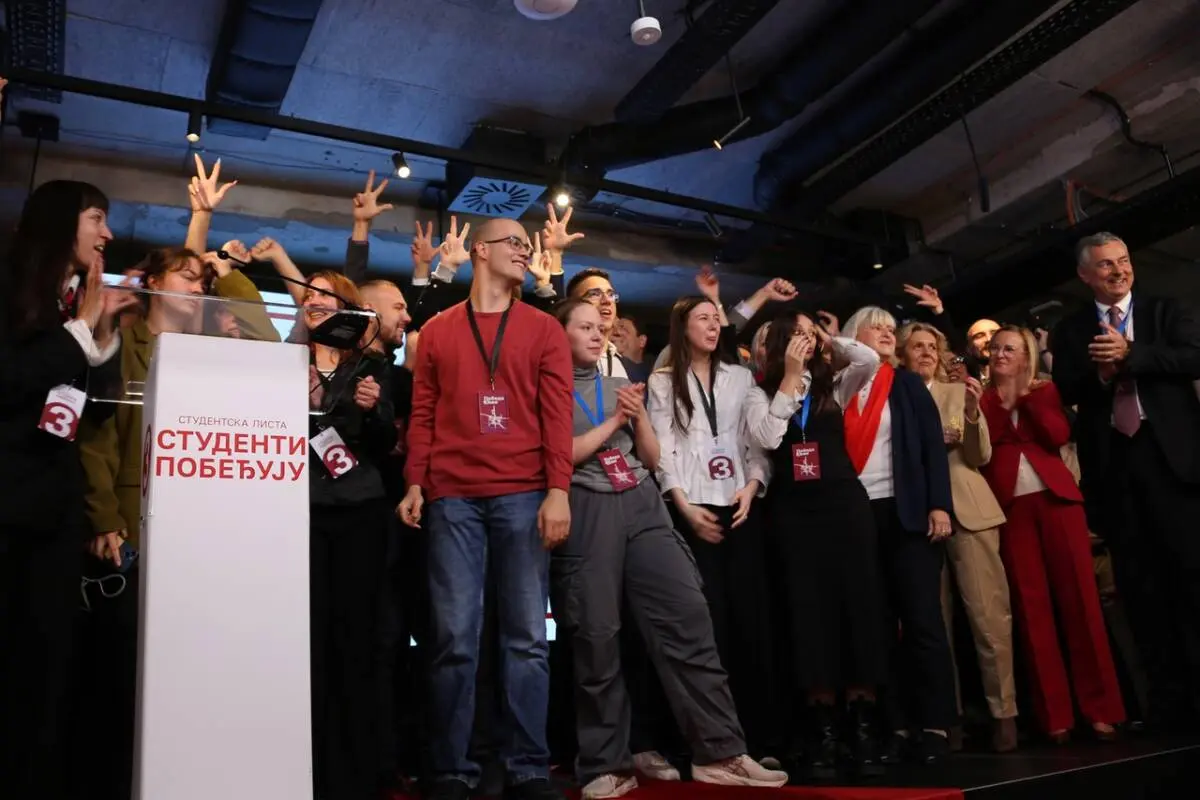
At the Student List headquarters in Belgrade, October 25, 2026. Photo – Federico Baccini
At the Student List headquarters in Belgrade, October 25, 2026. Photo – Federico Baccini
The victory of the Student List in the elections on 25 October – which was marked by a very high turnout and the huge support that the students received from the citizens – changed not only the balance of power in the parliament, but also the very structure of the political scene in Serbia.
The country now faces numerous challenges: a peaceful transition of power, the formation of a new government, the restoration of institutions, determining responsibility for the tragedy in Novi Sad, the fight against corruption and crime, but also the future of traditional political parties, which have shaped the country’s political life for decades.
We talked with political consultant Dušan Milenković about what the electoral triumph of the Student List means, how deep the change brought about by the student victory is, and how the political scene in Serbia could look in the coming period.

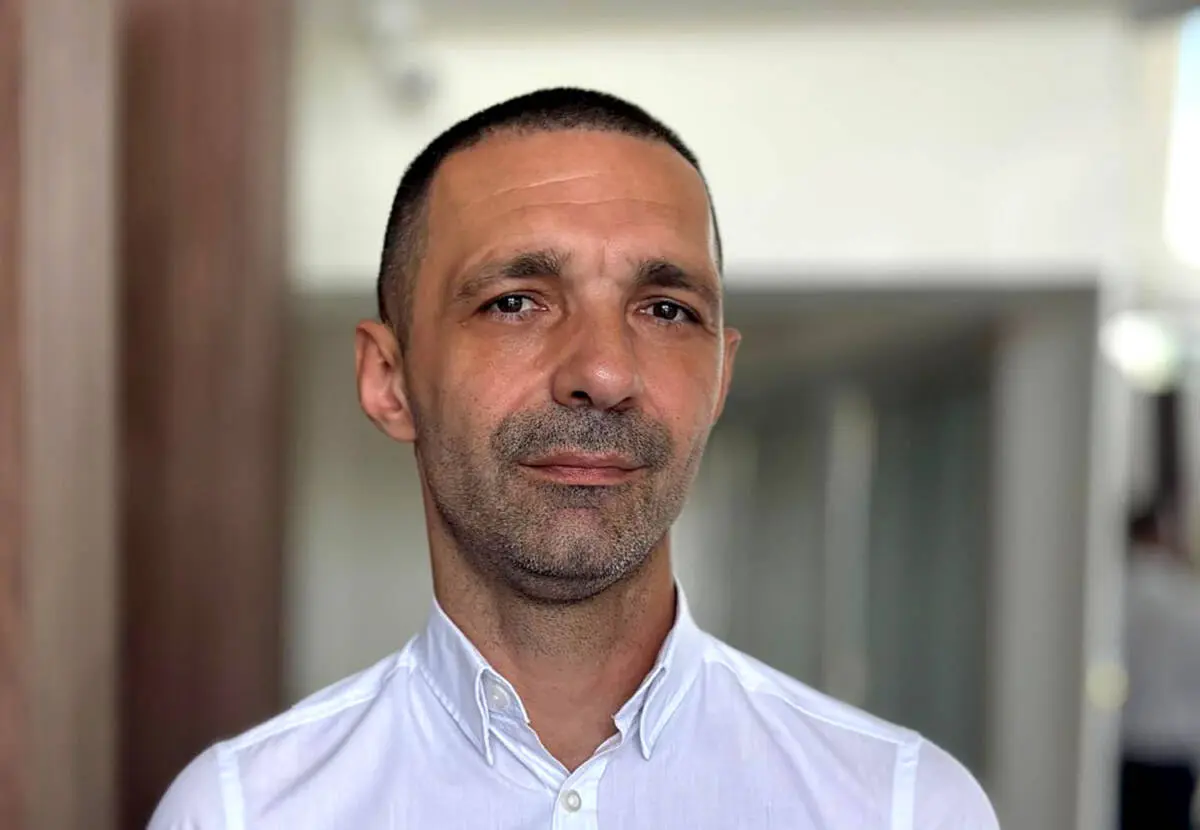
Dušan Milenković (foto provate archive)
How do you comment on the election result and its significance for the future of Serbia?
I think that a deep political crisis in the country started after the 2022 elections. From then until 2024, several elections were held, specifically two parliamentary elections and three municipal elections in Belgrade.
At the same time, society was shaken by great tragedies, from the massacres at the “Vladislav Ribnikar” elementary School, in Orašje and Mala Dubona, to the collapse of a canopy and the death of sixteen people in Novi Sad. Everything indicated that society was very shaken and that changes were taking place.
The tragedy in Novi Sad and the outbreak of the student protest in 2024 led to a radical intensification of the crisis. The student movement essentially brought together dissatisfied citizens and channeled social discontent into the struggle against the regime. Then we witnessed the acceleration of political events, the largest protests in the history of Serbia and the emergence of a movement that demanded elections, which were eventually held. The Student List convincingly won the elections.
I think that the overwhelming victory of the Student List has historical significance. This is the best result of an opposition option in Serbia in this century. The Student List won 140 out of a total of 250 parliamentary mandates, but does not have the two-thirds majority required to change the Constitution. However, when you take into account the entire movement, the number of people who participated in the protests and voted for the Student List, I believe that this momentum takes on a much broader political significance.
The new majority has broad scope to radically change society and the state, starting with the laws and the functioning of institutions.
In addition to the election results, there is also been a lot of discussion in Serbia these days about the importance of high turnout in the recent elections. Why is the record turnout so significant, and what does it teach us?
On 25 October, 4.5 million Serbian citizens cast their ballots, which is an absolute record when it comes to parliamentary elections in Serbia since 2000. It is important to keep in mind the demographic context, namely, the demographic deficit faced by Serbia. The population is decreasing year after year, a trend that has been evident since the beginning of the century.
Given these circumstances, the record-breaking turnout in the last elections shows that casting their vote is important to Serbian citizens. The high turnout indicates that the mobilisation [led by students] was extraordinary and contributed to this result.
In your opinion, how will the transition of power take place? What should be the first moves of the new parliamentary majority and the government?
I hope that the transfer of power will be completely peaceful. The fact that the previous regime immediately acknowledged its defeat is a good sign and I hope that the transfer of power will happen relatively soon. The process is somewhat complicated by the fact that we have an acting president, not a president with a full mandate, and that the presidential elections, which should be held in December, await us.
I expect the presidential elections to be held on schedule and for the Student List candidate to win, thus completing the political turnaround. I do not see any other scenario, unless there are obstructions, which certainly would not lead to anything good.
The Student List already has program frameworks and in accordance with them will set tasks to the parliament and the government, through legislative initiatives and actions of the executive power. The first step is the installation of parliament, followed by the formation of a new government. It is not yet clear whether the Student List intends to choose a person to be given the mandate to form the new government or to appoint each minister individually.
In any case, I expect the candidates that have passed the selection process and were included on the Student List to take responsibility for governing the country. The candidate selection process was long and complicated. The student movement functions horizontally, through the decision-making of the plenum of all faculties, which requires a lot of time and negotiations. The candidates included on the list have gone through various checks and procedures, so I believe it is logical that they become part of the future government and assume responsibility for governing the country.
Unlike the previous elections, when the Serbian Progressive Party (SNS) procrastinated for two or three months before forming a government, I think that society is in a hurry now. I expect the new government to be elected soon after the constitution of the parliament.
The new government will face significant challenges: consolidating the state, restoring order in institutions, stabilising the economy, and approving the first set of laws that have already been prepared.
I believe that the prosecution of all those responsible for the fall of the canopy will begin very soon, because that was the basic demand of the students. I also expect the new government to quickly address media-related issues. Although it has not yet officially taken over the government, the Student List has sent requests to Radio and Television of Serbia (RTS) and the Regulatory Authority for Electronic Media (REM), urging them to operate professionally and in accordance with the law.
We saw a similar situation in Hungary, where Péter Magyar, even before officially taking office as prime minister, had suggested that some public officials and media professionals resign.
How do you see the future of traditional political parties in Serbia, primarily the opposition, but also the Socialist Party of Serbia (SPS), which for the first time since its foundation did not enter the parliament?
I believe the recent elections marked the end of the political trajectory of the old big parties. Perhaps some will try to reform and reorganise, but they will not be able to restore the political potential they once had. The SNS is the only major party from the previous government to remain in parliament, but I expect it to dissolve soon, as its survival depended solely on its ability to remain in power. Given its recent electoral defeat, I believe the SNS is doomed to disappear.
At the same time, I expect the emergence of new political parties. This is exactly what I was talking about before. The Student List is a kind of tsunami that cleans the political scene. A space is being opened in which new political organisations can be established, including the consolidation of existing parties that did not participate in the elections, but supported the Student List. I believe that larger political organisations will begin to emerge because citizens are tired of small parties and an extremely fragmented political scene.
Found an error in this article? Please contact our editorial team at redazione@balcanicaucaso.org.
Featured articles
 the students' voices
 Investigation
 students' protest