Nilay Özer, poetry on the banks of the Bosphorus
Among the most prolific and original voices in Turkish poetry of her generation, Nilay Özer discusses her vision of the creative process, feminism and the role of intellectuals in contemporary Turkey, as well as her poetic influences, such as the fundamental one embodied by Nâzım Hikmet. Our interview
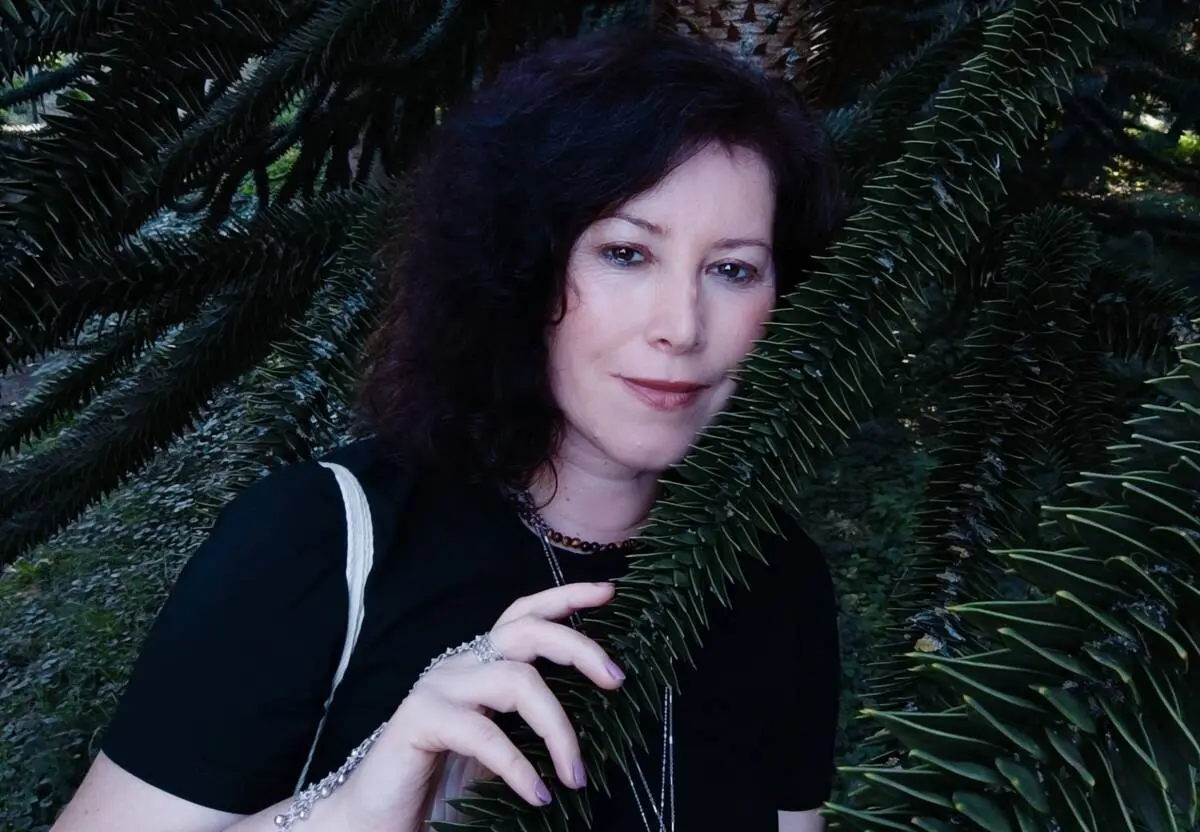
Nilay Özer – personal archive photo
Nilay Özer - personal archive photo
When did you discover that you had a strong sensitivity for poetry?
I realised this very early, before I even started school. I was an extroverted child: I remember loving being around animals, enchanted by flowers and plants, and always having a strong connection with nature. I lived in the world and, at the same time, observed it as a spectator. This distance, inherent in me, this way of translating life to myself, over time led me to express myself through writing. For me, poetry has always been a natural manifestation, a product of the mind.
American linguist Noam Chomsky describes language as a “biological organ”. For me, that is exactly how poetry works: it appears as something innate in the organism, and only later is it shaped by lived experience, the environment around us and the culture we acquire. There is a clear connection to the body: sometimes, before a verse takes shape, I feel a chill, a sense of exhaustion, a sharp drop in energy or a rise of euphoria.
Where does your poetic imagination come from? How would you describe your creative process?
My poetic imagination is closely tied to the Istanbul of the past and to the memories of my childhood. I grew up in Paşabahçe, a working-class neighborhood on the shores of the Bosphorus, in the Beykoz district. When I was eleven, my family moved a little further south, to Çengelköy, not far from Üsküdar. I have always had a vivid photographic memory. For example, when I close my eyes, I recall vivid images of the road leading to school, a narrow corridor of crumbling houses built close together. Or the walnut trees, their green husks cracking as they fell to the ground, releasing a strong odor. And the featherless chicks that sometimes fell lifeless from the roofs.
My creative process does not follow a single trajectory. Some texts emerge suddenly. It would be wonderful to always be able to write with this almost prophetic ease. Certain compositions, however, arise from continuous jottings of thoughts and inspirations. Other times, I am overwhelmed by music charged with meaning, yet still wordless, accompanied by an emotional atmosphere that is not easy to give form to, but I find no peace until I transform it into verse. Perhaps it is not even possible to fully understand how and why a poet manages to make her voice heard: the fact that art retains an aura of mystery is in itself a source of inspiration.
What does it mean to be a woman in a profession and world traditionally dominated by men? Do you believe there is a specifically feminine poetic language?
With the exception of a few countries, we are still far from complete equality between men and women, and Turkey is certainly no exception. I was born in this land and know well what it means to live in a society with precise expectations of women, who continue to be relegated to well-defined roles and forced to repress their sexuality.
In 1791, the writer and political activist Olympe de Gouges, in her “Declaration of the Rights of Woman and of the Female Citizen”, called for complete equality between women and men in the legal, political and social spheres. The following year, Mary Wollstonecraft, in “A Vindication of the Rights of Woman”, urged women to break free from the rigid roles society assigned them and explore new paths. Last century, in “A Room of One’s Own”, Virginia Woolf wrote: “A woman must have money and a room of her own if she is to write fiction”.
In 1949, Simone de Beauvoir’s “The Second Sex”, a foundational text of twentieth-century feminism, was published. Then, in 1970, Kate Millet’s “The Politics of Sex” was published, analysing how the patriarchal social order subjugated women, not only in areas such as the family and institutions, but also in literature.
The above-mentioned books and other key feminist texts were translated into Turkish in the 1980s, largely thanks to the efforts of a writers’ and translators’ cooperative (YAZKO), around which one of the nuclei of the second wave of Turkish feminism was formed, whose central figure was Şirin Tekeli.
The generation of women who, in the 1990s, published their first poetry collections, moved precisely in the space conquered by this movement, expanding their knowledge and awareness. In this way, women managed to transcend the forms of writing and languages codified by male tradition.
Today, the political background from which the verses of Turkish poets arise is in tune with the theory and activism of the new social movements that arose in Western Europe starting in 1968. The seeds sown then continue to bear fruit: the Turkish feminist movement is still lively and dynamic.
So, more than a specifically feminine language, it seems to me that there is a shared sensibility: the gaze behind the verses of Turkish poets is often in dialogue with nature, ecoactivism, ecofeminism and gender studies.

Nilay Özer – personal archive photo
Nilay Özer, born in Istanbul in 1976, graduated from Kandilli Girls’ High School in 1993, then studied biology at Marmara University. After two years of working as an elementary school teacher, she earned a master’s degree and subsequently a PhD in Turkish literature from Bilkent University, with two theses: the first on Turgut Uyar, the second entitled “Images in Nâzım Hikmet’s Human Landscapes from My Country: Society, History, and Cinema”. Since 1995, she has published poems, essays, articles, and occasionally short stories in various magazines. Since 2008, she has taught Turkish language, creative writing and modern Turkish literature at various universities and has held workshops and literary conferences. She is the author of four collections of poems, the most recent published in 2024.
We are currently in Kadıköy, on the Asian side of Istanbul, in the garden of the cultural center dedicated to Nâzım Hikmet, the famous Turkish poet, to whom you dedicated your doctoral thesis. What did Nâzım Hikmet represent for you? What have you learned from studying his work?
My first encounter with Nâzım Hikmet occurred very early, between my last year of elementary school and the beginning of middle school, thanks to a literary competition dedicated to the theme of labor. As I have already mentioned, I grew up in working-class neighborhoods, where union activism, and more generally left-wing activism, was deeply rooted. Some acquaintances gave me books by Nâzım Hikmet, telling me to read and study those poems to draw inspiration for entering that competition.
Years later, when I had to choose the topic of my doctoral thesis, I decided to focus on one of Hikmet’s masterpieces, “Human Landscapes of My Country”. The work has a rhizomatic structure, in the sense of the concept developed by Gilles Deleuze and Félix Guattari. Characters, belonging to different social classes, appear in the text, disappear, and then return repeatedly, each time in a new light, in a web of multiple connections that cannot be traced back to a single source.
Nâzım Hikmet thus constructs a broad representation of Turkey in 1941, a sort of map of the society of the time. In some passages, he experiments with simultaneity, a technique made famous by James Joyce in “Ulysses”.
I would call it a “cine-poetry”. The characters’ stries are interrupted before they conclude, and in their place, other stories take over, whose images analogously evoke those of the previous one. In this process, Nâzım Hikmet takes inspiration from the Soviet film theorist Dziga Vertov. It is a work of the highest artistic quality, which continues to inspire my poetic journey today.
Nâzım Hikmet also distinguished himself as a playwright and played a key role in the development of Turkish cinema, alongside Muhsin Ertuğrul. So, we are talking about an all-around intellectual. He lived a turbulent and dramatic life. I greatly admire his tenacity in the face of adversity and his faith in socialist ideals.
As a poet, he was credited with bringing Turkish poetry to the world. In his work, the meaning that emerges from sound and rhythm – the eda, or poetic expressiveness and timbre – are of fundamental importance.
Nâzım Hikmet came from a family with ancient roots. Considering the poetic style inherited from his grandfather, a member of the Mevlevi Sufi brotherhood, and the sound structure of classical Ottoman poetry, his sense of rhythm becomes even more clear. This rhythm later intertwined with the sounds of modern cities, factories and trains.
In the Soviet Union, where Hikmet went in his early twenties, he met key artists of that era, such as Vladimir Mayakovsky and Vsevolod Meyerhold, immersing himself in the experimental, avant-garde, futurist and constructivist artistic environment of the revolutionary period.
This life experience profoundly influenced his works, which enriched the Turkish language. His experiments are still extraordinarily relevant and continue to influence my own poetic research.
Over a career spanning more than twenty-five years, you have published four collections of poetry: “Zamana Dağılan Nar” [The Fire Dispersed in Time, 1999], “Ol!” [Be!, 2004], “Korkuluklara Giysi Yardımı” [Rescue Clothing for Scarecrows, 2015], and the most recent, “Yüzü Kelebeklerle Örtülü” [Her Face Is Covered with Butterflies, 2024]. Looking back on this journey, how has your poetic style changed over the years?
From the very beginning, two veins coexist in my poetry. The first is lyrical: in my youthful poems, I was very attentive to the sounds the words produced, trying to evoke in the reader the same emotions I felt when listening to my favorite musicians, from Mozart to Nick Cave. In this, I was close to the Turkish poetic tradition, where sound plays a fundamental role.
Ahmet Haşim, a man of letters who lived between the late Ottoman period and the early Republic, argued that poetry is not meant to be understood like prose, but to be perceived. From a metrical perspective, however, I did not stray too far from classical patterns: the second book, for example, contains many quatrains.
Alongside this lyrical vein, a more specifically narrative component has always remained present, consisting of longer poems and dramatic monologues where a character takes the stage, as in a poem I dedicated to my father. The two veins coexist, although, obviously, over time, some aspects have changed: my poetry has become more layered, focusing more on places and senses, and perhaps looking more closely at individual stories.
Can you tell us about the genesis of “Park”, your poem dedicated to the events related to the Gezi protests? How do you explain the reference to Pink Floyd’s famous pig Algie?
In late May 2013, some students began protesting against plans to build a barracks, complete with a shopping mall, on the site of Gezi Park, one of the few green spaces in central Istanbul. Tents were set up, but were later removed and even set on fire in the following days. The more the police attempted to clear out the protesters, the more citizens flocked to join the protests.
The support was transversal: in addition to young and educated people, there were also women in traditional dress who distributed food and offered helva (a sweet typical of religious and commemorative occasions), as happens during the nights of Kandil (five sacred holidays in Turkish-Islamic tradition).
At the time, I was teaching at the university and closely following the protests. I found it absurd that they wanted to cut down trees and deprive the population of a place to breathe. Furthermore, the park had always served as a gathering place in Istanbul, a city at high seismic risk. For me, the Gezi protests were first and foremost an act of environmental activism, of resistance, but certainly not subversive. The only demand was that the park remain a park. It was paradoxical that those who defended a just cause were treated as if they were wrong.
I drafted the first verses during a Roger Waters concert in Turkey that year, where he dedicated his performance to the victims of Gezi, displaying their images. When the famous inflatable pig, covered with messages against violence sent by people from around the world, was released, it absorbed that image and I incorporated it into the poem, identifying, among photographs from other concerts, the slogans that best complemented my poem.
The Turkish state, since its founding, has been anything but lenient toward writers and artists. How have the political events of recent years influenced your style? How has the role of the intellectual in Turkey changed?
Political events in the country where I live undoubtedly influence my writing. The climate of tension that reigns there affects us all, and this is also reflected in my poetry. Turkey, despite boasting a long history, adopted a republican system only a little over a century ago. Since then, there has been a constant succession of coups and military memoranda, institutional and political crises, which have continually undermined the culture of democracy and human rights.
Just think about the condition of women. In Turkey today, it is not easy to march on 8 March, femicides are an everyday occurrence and the government has decided to withdraw from the Istanbul Convention. Furthermore, the support of Turkish men is lacking. There are still too few who join our battles, not just feminists but also environmentalists.
That said, I do not consider myself a politically engaged poet: I am far from any ideology or party, and I do not advocate any particular thesis. Attentive readers, however, may discern, in the background of some of my poems, certain political events that I interpret and convey in my own way.
As for the role of the intellectual, it is harder to fight today than in the past. People read less and more distractedly, and I fear that technological advances have not helped in this regard. The ability to organise into collective movements seems to have been exhausted. The state has also become more adept at discrediting ideas deemed inconvenient and limiting their dissemination.
An Italian edition of an anthology of your poems, translated by Nicola Verderame and published by La Vita Felice in the Adamàs series, edited by Tommaso Di Dio, was recently released. Hoping to soon be able to read your entire oeuvre in Italian, I would like to ask you to tell us a little more about your literary tastes. Staying within the realm of Turkish literature, which female and male authors would you recommend to our readers?
I could really cite so many authors. Turkish literature, both modern and Ottoman, contains authentic treasures.
Among the poets of the twentieth century, I absolutely recommend authors such as Behçet Necatigil, Turgut Uyar, Edip Cansever, Gülten Akın and Lâle Müldür. As regards contemporary poetry, I cannot fail to mention Birhan Keskin, Didem Madak, Küçük İskender, Gökçenur Ç., Gonca Özmen and Betül Dünder. Even fiction, between short stories and novels, offers extraordinarily original and creative voices: from Nobel Prize winner Orhan Pamuk to authors such as Ayfer Tunç, Burhan Sönmez, Gamze Arslan, Murat Çelik and Nazlı Karabıyıkoğlu.
Finally, I would like to express my deepest gratitude to Nicola Verderame and Tommaso Di Dio. The translation and revision work was exciting and stimulating, an unforgettable experience for me.
Found an error in this article? Please contact our editorial team at redazione@balcanicaucaso.org.
Tag: Literature
Featured articles
 the students' voices
 Investigation
 students' protest