The European Commission calls Serbia to account for the expulsion of Massimo Moratti
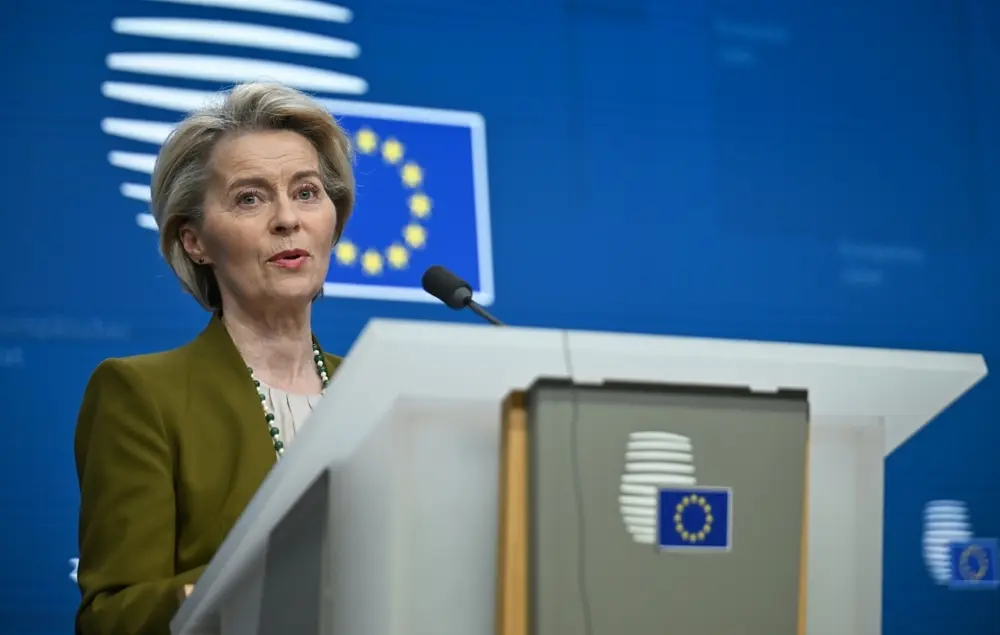
Expressing “concern” about the measure, the European Commission clarified that national security policy “should be implemented in compliance with the Serbian legal framework and in accordance with European standards” in the candidate country. Meanwhile, President von der Leyen postponed her trip to Belgrade
European Commission © HJBC / Shutterstock
European Commission © HJBC / Shutterstock
The European Commission has taken a position on the expulsion from Serbia of our colleague Massimo Moratti, senior research affiliate and Belgrade correspondent for OBCT.
“We express concern that a researcher from an Italian media freedom organisation has had his application for a residence permit rejected, after having legally resided in Serbia since 2022, and has been ordered to leave the country on the grounds of an alleged ‘unacceptable risk to national security’, without any further clarification on the reasons behind this decision.
This is how a spokesperson for Ursula von der Leyen’s cabinet communicated to OBCT the EU executive’s assessment of the situation that emerged on September 18 in Serbia.
Two weeks earlier, Serbian authorities had rejected Moratti’srequest to renew his temporary residence permit, citing “unacceptable risks to national security”, and ordered him to leave the country within 15 days, simultaneously imposing a one-year entry ban. Serbian authorities did not provide further explanations regarding the reasons for the decision. However, they later granted a 15-day extension pending a decision on the appeal submitted to the competent authorities.
An Italian citizen and longtime human rights defender, Moratti has worked in the Balkan region for over twenty years and has resided permanently in Serbia since 2022, when he moved to Belgrade, accompanying his partner who was moved to the country for professional reasons.
“Measures taken in the interests of national security should be implemented in accordance with the Serbian legal framework and in accordance with European and international human rights standards”, without leading to “an undue restriction of the freedoms and human rights of individuals, including foreign journalists and media workers”.
Recalling that “civil society and journalists play a fundamental role in the development of a healthy and democratic society”, the same spokesperson made it clear that these values “are at the heart not only of the European Union, but also of the future of Serbia as a candidate country for accession and of its citizens”.
Pre-election concerns in Serbia
The Commission’s warning to Belgrade comes at a particularly delicate moment for relations with the candidate country.
While Moratti was denied a temporary residence permit, on 9 September, Serbian President Aleksandar Vučić announced the official date for early parliamentary elections. On 25 October, Serbian citizens will vote for the renewal of parliament, but it will be a vote unlike any other.
In a country that has been experiencing a social and institutional crisis for nearly two years – after the collapse of the Novi Sad train station canopy on 1 November 2024, which killed 16 people and sparked ongoing protests led by the student movement – the elections at the end of October will be a showdown of sorts between Vučić, the prime ministerial candidate of his Serbian Progressive Party (SNS), and the Students List, recently launched by the movement challenging the regime.
This is why Commission President Ursula von der Leyen has decided to exclude Serbia (and Bosnia and Herzegovina) from her traditional autumn visit to the Western Balkans, scheduled for 30 September to 2 October. “In light of the upcoming parliamentary and general elections”, the decision to postpone the visit was necessary “to respect the electoral processes”, the Commission spokesperson explained.
The question arose immediately, as soon as Vučić announced the election date.
“In Serbia’s highly polarised political and media environment, there is a real risk that an official visit by the President of the European Commission could be instrumentalised as a message of European support for the incumbent authorities”, reads a letter sent directly to von der Leyen from the Balkans in Europe Policy Advisory Group (BiEPAG). “The political significance of a visit at this level cannot be assessed separately from the circumstances in which it takes place”, considering that it would coincide with the final and “most sensitive” phase of the election campaign.
Recent political developments in Serbia, including “concerns” over the treatment of the media and human rights defenders, have prompted von der Leyen to postpone her visit until after the elections, so as not to provide any pretext or claim of support, particularly for the ruling elite, which in recent years has made it almost impossible to maintain the consolidated relations between Belgrade and Brussels.
Found an error in this article? Please contact our editorial team at redazione@balcanicaucaso.org.
Tag: