Albania, the voices of the Flamingo revolution
While the flamingos have given the Albanian protest its visual identity, drums and chants have given it a voice. In this report, we have collected some of the most well-known voices from the protests which have been going on uninterruptedly for almost three months now
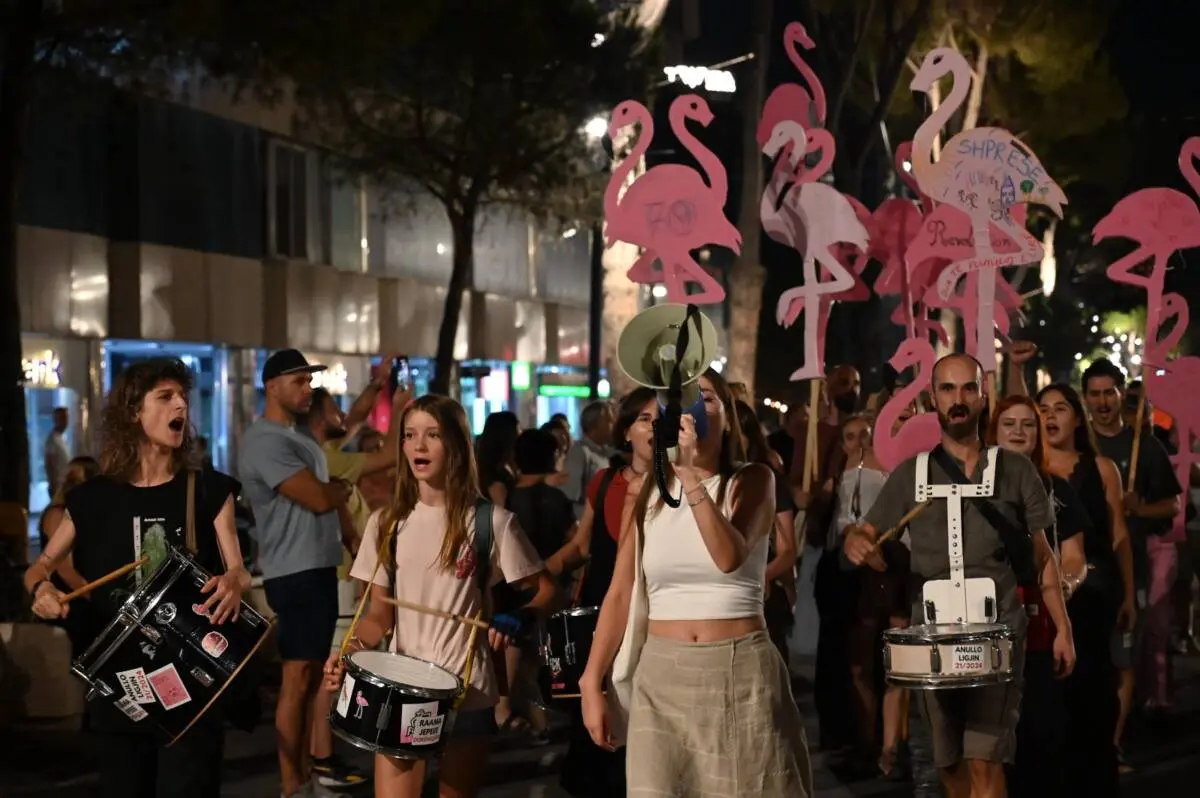
The choir and the drum group, photo Citizens.al
The choir and the drum group, photo Citizens.al
On “Dëshmorët e Kombit” Boulevard, the Flamingo Revolution has found its people and its stories. Some carry flags, others paint, play drums, project videos or bring new messages every day. There is also a children’s corner, where another way of imagining the country is being drawn. Today, the protest is the flags, posters, drums, an inflatable flamingo and young people demanding not to feel like strangers in the country where they were born.
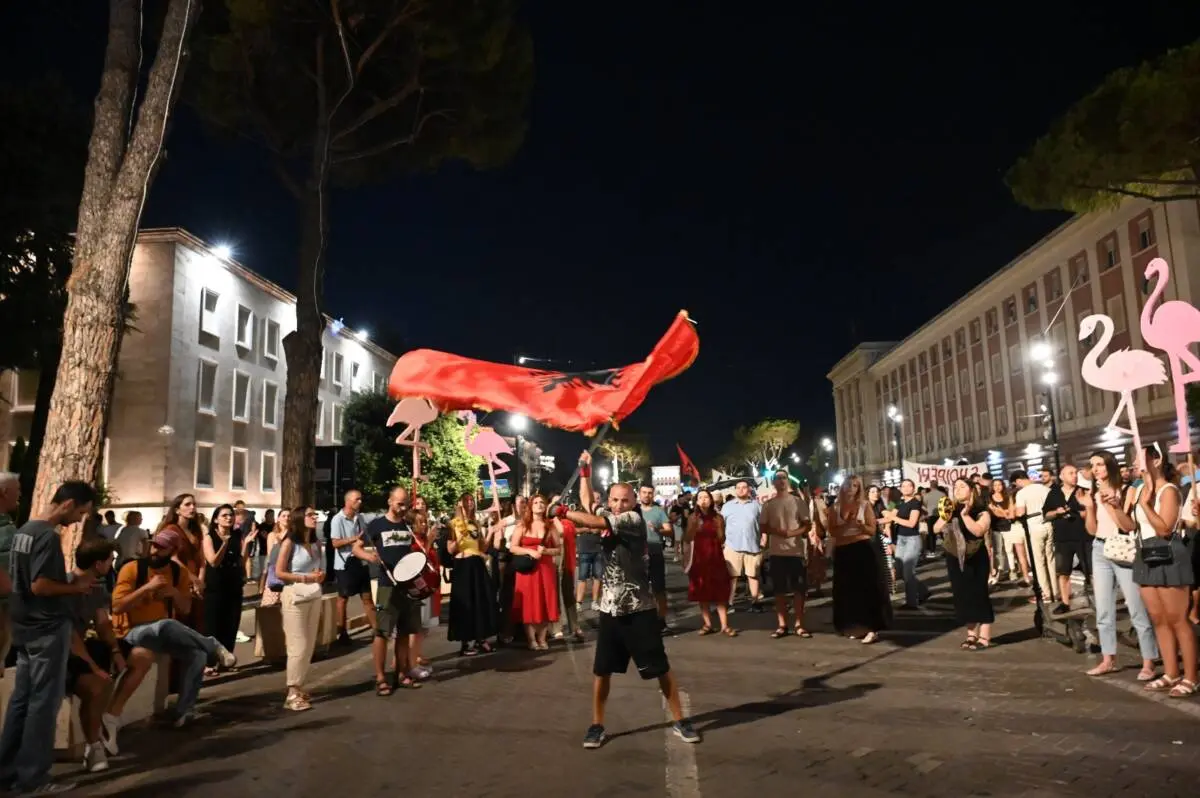
Agron, the ‘flag boy’
Shortly before 19:00, as protesters gather in “Skënderbej” Square, Agron Jemini, 39, leaves his bicycle near the Pyramid and walks toward the Prime Minister’s Office carrying the Albanian flag.
This routine began on the second day of the Flamingo Revolution.
“A boy gave me the flag and I have not parted with it since. As if it stuck to me, it was mine,” Agron tells OBCT.
His job is to distribute drinking water in Tirana, a physical job with flexible hours, which allows him to participate every day. From the first days, he has been known as the ‘flag boy’.
Like many protesters, Agron attends because of concerns affecting his family.
“I came to protest against the arrogance of power and low pensions. My father is a pensioner, he gets 13 thousand lek [140 euros]. If you buy a bottle of oil every day, you don’t make it to the end of the month. Let alone other food. This pushed me even more,” he says.
Behind his smile is a history of personal loss. “Many people tell me that I hide something behind my eyes. I hide a lot of suffering. I have had great losses in my family. I lost my mother when she was 55, my brother when he was 16. And here, as we say, we release our frustration and find strength.”
For him, the greatest achievement is feeling that he is no longer alone. “I live with my father, but now I am no longer alone, I have all Albanians behind me,” he concludes.
Agron Jemini, the flag boy, photo by Citizens.al
Art as a form of resistance
Every day, posters with messages inspired by current events circulate on social media, calling people to join the protest. Behind them are three sisters, Elsa, Natasha and Fatma Paja, known artistically as TRIVET.
“From the moment we found out what was going to happen to Narta, considering that we love nature very much and want to protect it, we have been involved from the beginning,” Fatma Paja explains. “Whether with the sand graffiti we made in February, or with other projects, or with the posters that we now make every day.”
According to Fatma, the flamingo became a symbol because it represents the need to protect our home. “How many Albanians are against the theft of public property, unauthorized and luxurious construction, when we are lacking many other essential services? How many are against corruption? Narta has been the key point that says we cannot go any further,” she says.
For Elsa Paja, the most beautiful part is the boulevard’s creative spaces, particularly the children’s corner. “You see political expressions from children: ‘Don’t sell my country!’ ‘I want nature, I don’t want concrete!’”
For the Paja sisters, art is political and a form of resistance. “You use art to express a different feeling, to create a new situation. Even more so when you act collectively. There it becomes even more political, so in a way we are using art, which our Prime Minister has as his weak point. He has monopolized art in Albania and the square is decolonizing art,” says Elsa.
For the Paja sisters, this protest has brought awareness of the power we have if we come together.
“Every day we are here, communicating with one another, working with one another, organizing ourselves. This is one of the main victories. The revolution may be successful or not, but what is a victory is the revolutionary state in each individual,” Elsa Paja concludes.
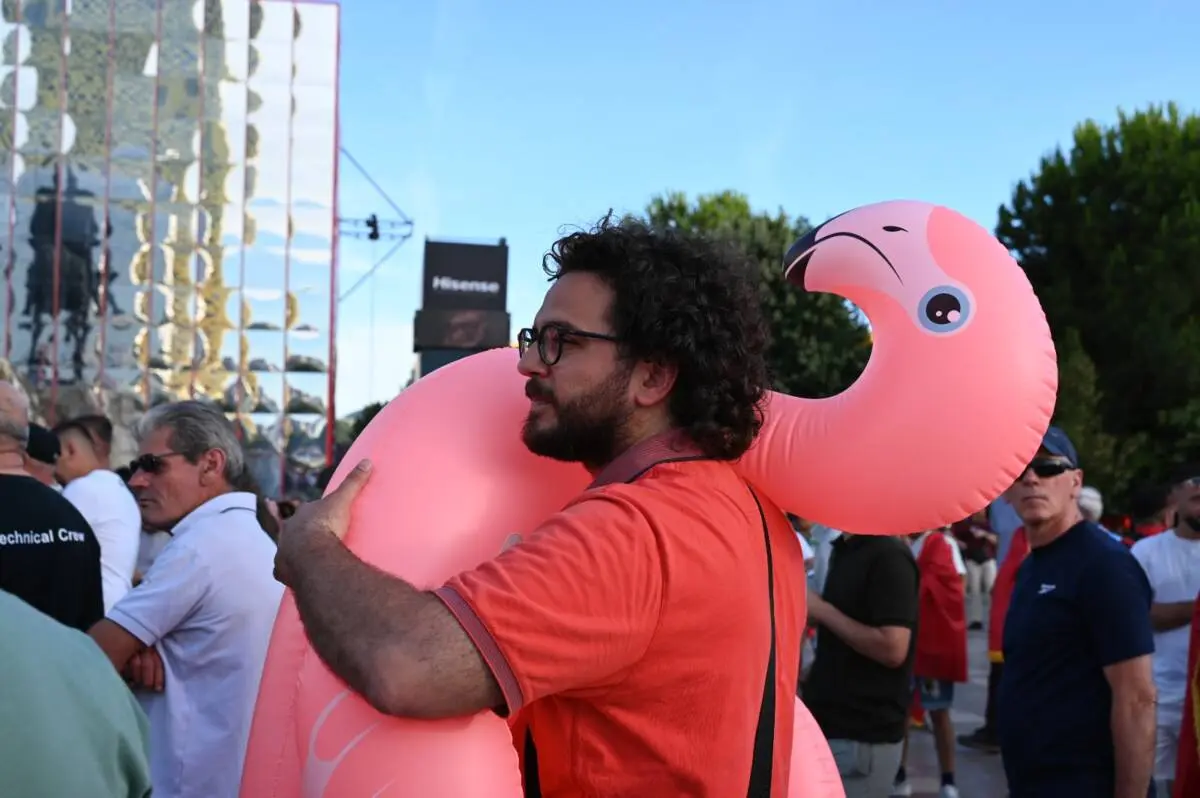
‘The flamingo boy’
Petro Lleshi, a civil engineer, joined the Flamingo Revolution on its first day, after the exerted violence against a protesting citizen by a private security guard at the Zvërnec construction site.
“Zvërnec encompassed all the bad things, because in addition to all that abuse with roads, infrastructure and urban planning, now the only part that remained in relation to nature was also being occupied,” he says.
What encouraged him was seeing architects, lawyers and economists among the protesters. “There I understood that it was the middle class that was participating and that was tired, disappointed and had had enough. There I understood that this protest would be heard.”
He soon became known for bringing an inflatable flamingo, held above the crowd. “On the third day, it occurred to me to do something different, to give this protest an identity, and I thought of the flamingo, since Vjosa-Narta is the only area in Albania where flamingos mate.”
The inflatable became a visual symbol of the protest and of the nature threatened by construction.
Petro Lleshi, the flamingo boy, photo by Citizens.al
“I don’t want to be a stranger in my own country”
Ardesian Binjakaj, originally from Vlora, joined the protest before it moved to Tirana. On 30 May, he was among citizens and environmental activists in Zvërnec, on the other side of the fence.
More than two months later, he is known for bringing new creative ideas against Albania’s political reality.
“The idea of bringing something every day is a reflection of all the mistakes and affairs of those in power. It is not difficult to bring something new every day, especially when those in power make some blunder every day,” he says.
For him, protesting is a civic duty. “I go out as a young person because I don’t want to be a stranger in my own country. I feel very distant and unrepresented. I don’t want pseudo-pluralist policies to drive me or my society out of Albania.”
The flamingos fly toward the Prime Minister’s Office
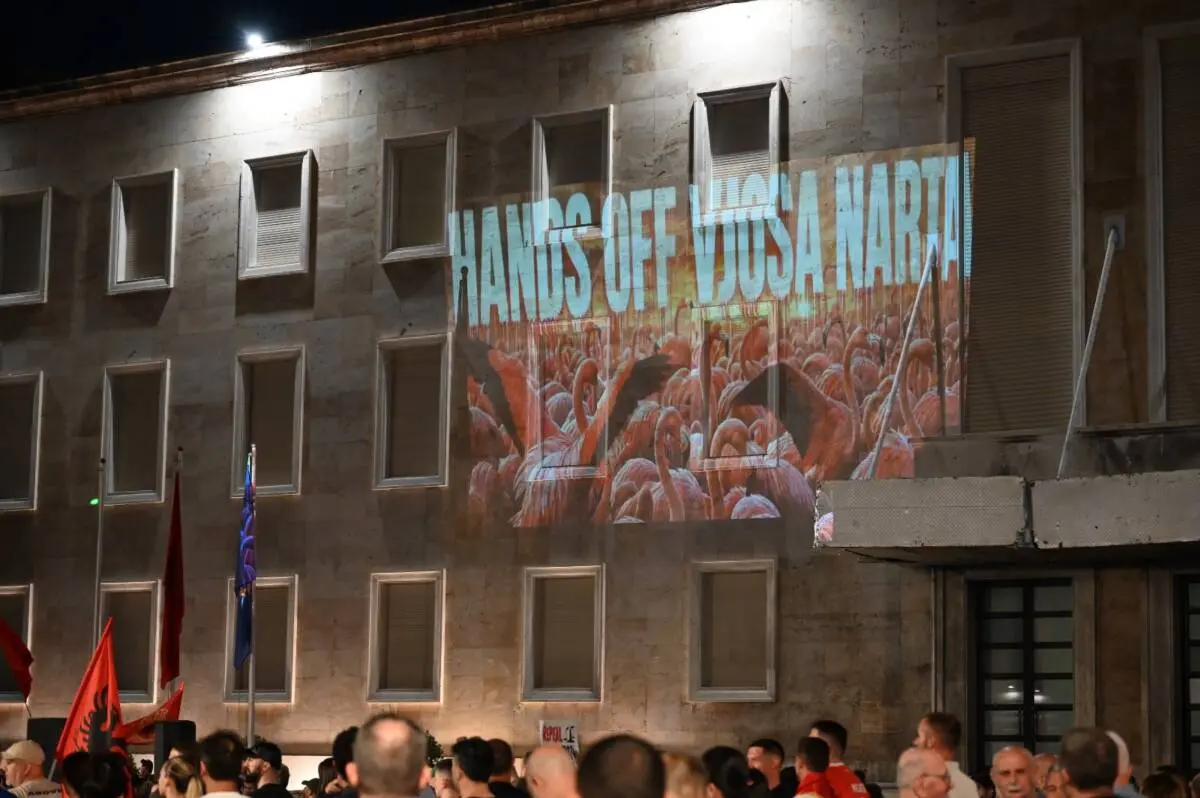
As the evening falls, another march begins, this time on a screen. The façade of the Prime Minister’s Office becomes a space for images and messages about protecting nature.
Besjana Guri, environmental activist and director of the LUMI Center, brings a video projector to the square. Her videos show the beauty of Vjosa-Narta, the damage caused by construction and flamingos flying from the lagoon toward the Prime Minister’s Office. The projections also call for the repeal of the law on protected areas.
“The main messages that the projections convey are a video about the situation in Vjosa-Narta, where we present the beauty of Narta, but also the destruction that had begun with construction. The flamingos fly from Vjosa-Narta toward the Prime Minister’s Office, covering the façade with the message about protecting Vjosa-Narta and repealing the law,” Guri explains.
The projections sometimes become a collective performance, accompanied by music and chants, including the famous “Rama resign”.
For Guri, one of the protest’s biggest achievements is breaking apathy and creating “a new culture of opposing things that the people of this country do not agree with.”
The projection on the wall of the Prime Minister’s building, photo Citizens.al
Students and the protest as a creative space
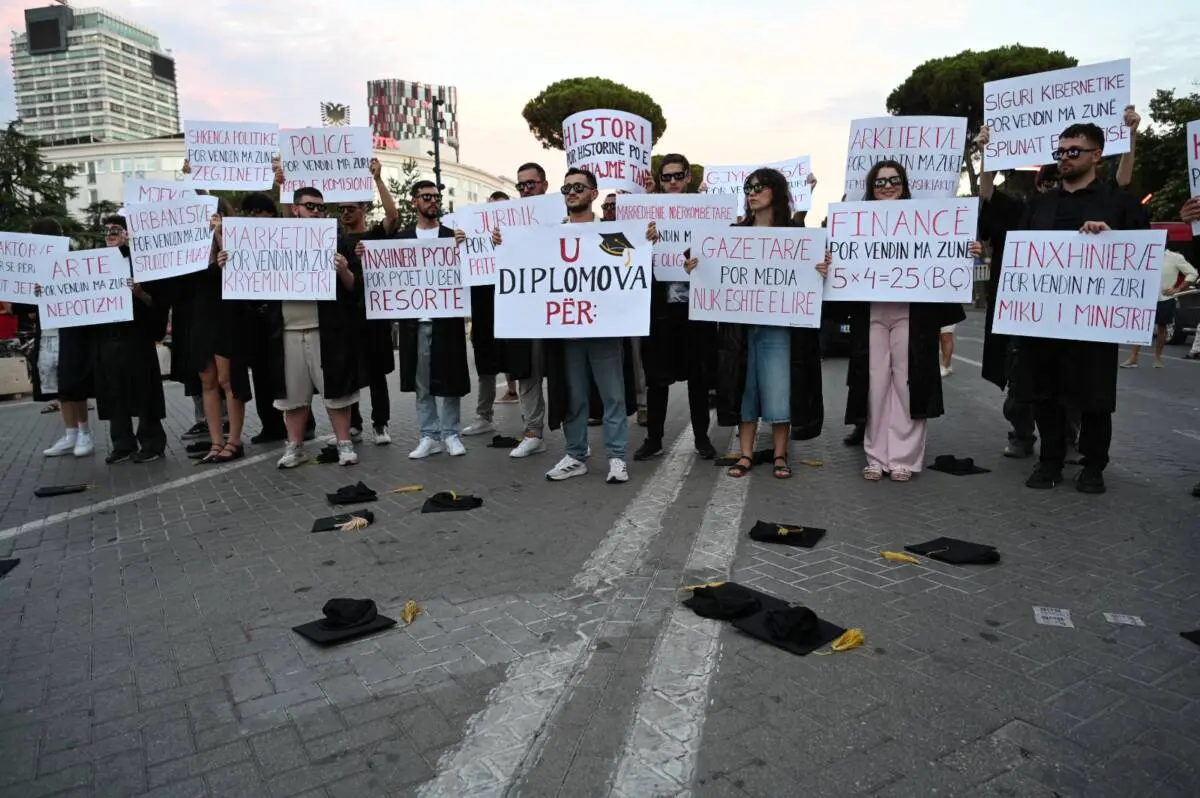
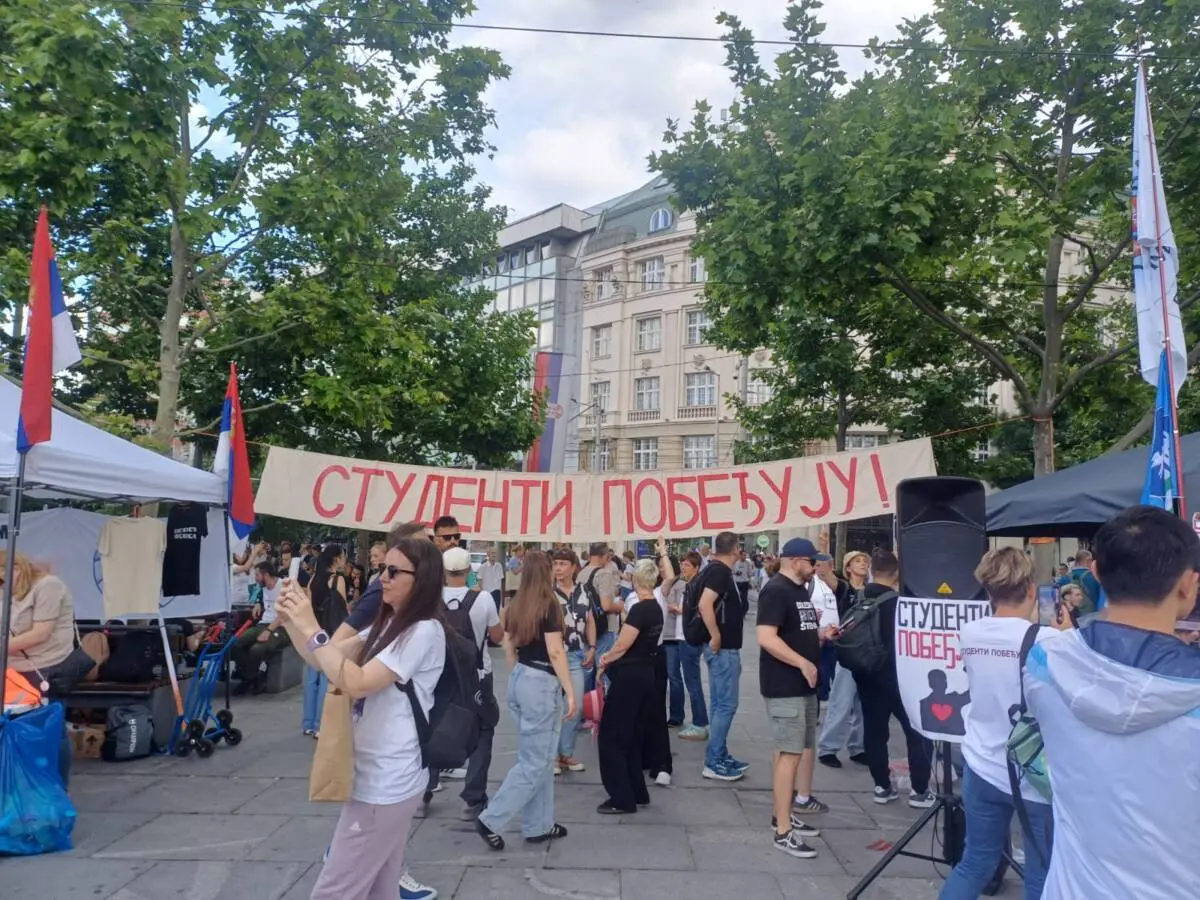
A group of young people who met in the square formed “Students in Protest”, turning the demonstrations into a space for symbolic actions around the future of their generation.
“We want to show the government that students are the energy of this nation and we do not accept this political class continuing in power. I see my future in Albania, which is why I am fighting for a better Albania,” said Emir Leçini, as the students unfurled a banner from the Polytechnic University reading: “Your time is up! Albania is not for sale!”
Later, wearing black graduation gowns, they marched toward the Prime Minister’s Office in a performance called “Diplo(E)mi(gri)mi”, criticizing the transformation of an Albanian university degree into an “emigration passport”.
“We feel as if meritocracy and the value of a degree in Albania have declined. Today, a degree serves more as a passport to the roads of Europe than as a document that proves our ability for the labor market,” said Megi Brahimi, a second-year Electronic Engineering student.
On other days, students brought messages from hospital patients, labeled politicians as “wanted” on the Prime Minister’s Office walls, and used games and symbolic installations to satirize politics, corruption and the distribution of public assets.
Students protesting, photo by Citizens.al
The rhythm of resistance
While the flamingos gave the protest its visual identity, drums and chants gave it a voice.
Arnen Sula, activist and head of “Tek Bunkeri”, says the group first used this form of protest during the March 2023 demonstrations over rising prices.
“Since it gives quite a lot of energy to the protest, it gives it a different voice, we thought we should keep it and continue it in this protest as well,” he says.
Some songs use irony to comment on politics. “We have also used irony, to tell the truth, with the song ‘Ra Faja prej fikut’ [“Faja fell from the fig tree,” Albanian folk song], which was also used by the ‘former Prime Minister’ himself. So we brought it back to speak to him in the same language through which he came to power,” Sula says.
At the end of the evening, the march ends. The flamingos leave, posters are collected, children take their drawings home, drums fall silent and flags are gathered.
But the next day they return.
After so many days, the Flamingo Revolution is no longer simply a protest with one demand or one symbol. It has become a space where people bring what they know how to do best and what they believe in.
Found an error in this article? Please contact our editorial team at redazione@balcanicaucaso.org.
Featured articles
 the students' voices
 Investigation
 students' protest