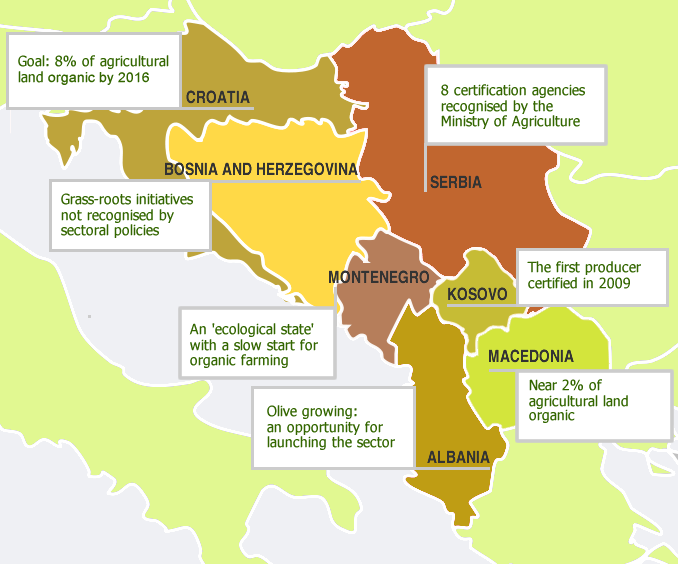
[2011] Still a niche production, but receiving more and more attention by the day. An OBC dossier on organic farming in the Western Balkans: policies, adjustments to European standards, statistics and country by country analyses
Governance
European policies
6 May 2011
The organic sector in Bosnia Herzegovina is based on grass-roots initiatives by civil society and private citizens able to overcome institutional impasses. Our seventh report on organic agriculture in South East Europe
31 August 2010
A growing sector, organic production in Croatia. But it still has to deal with highly fragmented government assistance, scarce transparency of information and soaring prices. The third part of our survey on organic farming in South East Europe
7 April 2011
Not much, but something is moving. In Macedonia organic agriculture is gaining ground. The legislative framework matches European standards and funds are growing. Yet, a lot remains to be done. The sixth part of our investigation into organic agriculture in South East Europe
19 October 2010
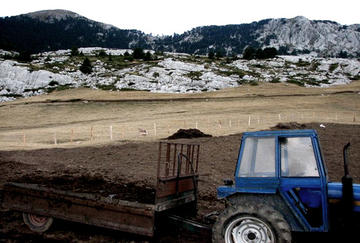
In Kosovo the agricultural sector has recently returned to centre stage in the political debate. But when food safety and very low standards of production are still main worries, is there much sense in thinking organic? There is, however, potential to be exploited: land abandonned for years, untouched by fertilisers and pesticides. Here is the fourth part in our enquiry into organic farming in South East Europe
16 December 2010
Despite strong efforts, educational campaigns, and the commitment of some NGOs, the organic sector is struggling to expand in Montenegro. Low skills and lack of public support hamper its progress. Here is the fifth part of OBC's analysis of organic agriculture in South East Europe
26 October 2010
A unique combination of national laws and regional and international cooperation projects have created the conditions for developing organic agriculture in Albania. A further contribution to our report on organic agriculture in South East Europe
14 October 2010
Quality, rigour, information – these are the key factors in the development of organic agriculture. OBC's overview of organic agriculture in the Balkans starts in Serbia: an interview with Nikola Damljanović, independent expert and inspector for BioAgricert
Organic farming is an overarching topic within the SeeNet II Programme: the enhancement of rural areas and nature ; the development of agricultural policies and their regulatory framework in the Balkans and in terms of EU integration; the cooperation with Italians who have been working in the fields of sustainable rural development and certification of organically farmed produce; a new food culture stimulating rural tourism and heritage foods; small medium enterprises , as some Balkan companies also invest in this sector.

The decentralised cooperation Programme SeeNet II, led by the region of Tuscany and co-financed by the Italian Ministry of Foreign Affairs, involves 6 Regions, the Autonomous province of Trento, Italian civil society and 47 local authorities in Sout-east Europe. Osservatorio Balcani e Caucaso is the partner for analysis and information dissemination
Country by country the most relevant data and statistics
Legal framework, European regulations, reforms
Inspection and certification procedures have been growing alongside market consolidation and the increasing number of farms involved
Country by country the agricultural surface areas allocated to organic farming and certified producers
Country by country all the market sectors related to organic production and their trends
Italy, among the leaders in organic farming, fosters many projects in the Balkans. A review
Research and training are crucial. The main research institutes in the organic sector