North Macedonia, optimization as a major challenge in education
The demographic crisis and limited resources are taking their toll on the public education system in North Macedonia. As the school year begins, the government has implemented a major reorganization to address key issues, yet controversy persists
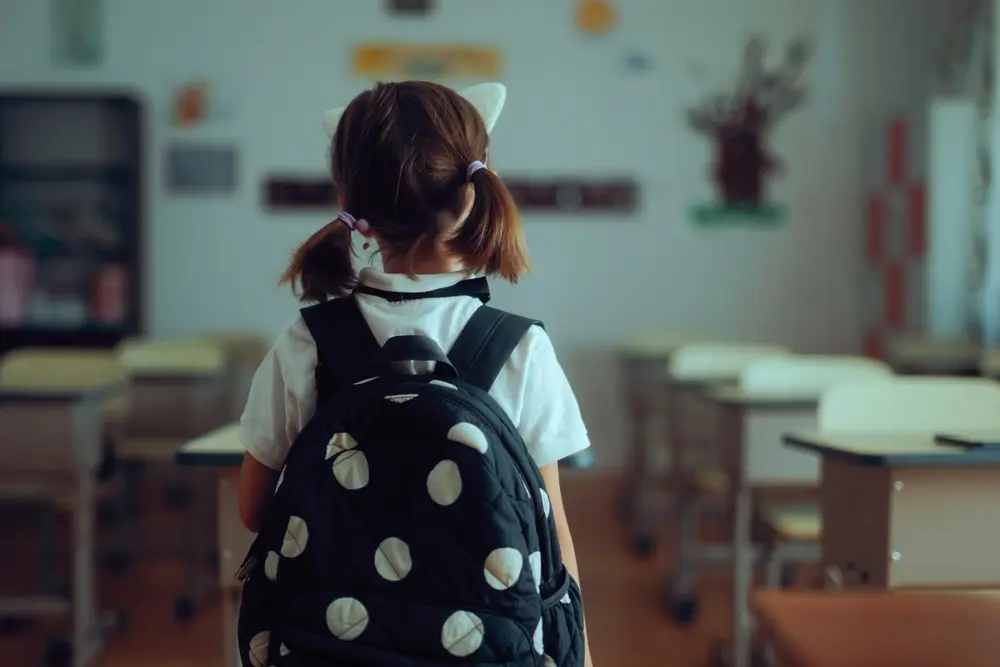
© Nicoleta Ionescu/Shutterstock
© Nicoleta Ionescu/Shutterstock
Due to declining student numbers, the Ministry of Education is optimizing school classes – a process that involves merging smaller classes to provide students with better conditions for socialization and learning. This move by the Ministry has resulted in the complete closure of 26 schools, primarily in rural areas across the country.
In a report from the rural Municipality of Karbinci, near the city of Štip, the Kolegium news portal highlights the situation facing the “Strašo Pindžur” primary school in the village of Dolni Balvan.
Established over fifty years ago and serving as the central hub/object for all satellite schools in the Karbinci municipality, it is now being closed as part of the optimization process due to low enrollment and inadequate learning conditions – specifically, structural instability that makes the building unsafe for classes.
Parents of the 13 affected students staged a protest, concerned about the safety of their young children having to commute to a neighboring village; they advocated for schooling to continue in Dolni Balvan. Speaking during the protest in late August, they expressed the view that closing the school would further accelerate the exodus of young families from the village and jeopardize its very survival.
In this country of 1.8 million inhabitants, 238,000 students began the school year on September 1st, including 14,952 first-graders and 16,932 first-year secondary school students. Compared to last year, and due to optimization efforts, the new school year began with 433 fewer classes – 222 fewer in primary education and 211 fewer in secondary education.
To illustrate the scale, following the completion of enrollment, the number of first-graders is expected to be at least 3,000 lower than last year.
At the start of the school year, the current Minister of Education and Science, Vesna Janevska, explained that such a reorganization of the school network and school operations was necessary.
“It is no secret that, for years, situations persisted where – for example – there were two separate classes, each with only two students of the same age, within the same school. We have now merged such classes; consequently, there are 433 fewer classes in the education system this year. However, this is in the students’ best interest – allowing them to be part of a larger group, socialize better, and engage in healthy competition,” Janevska said.
Out of a total of 1,023 school facilities, 620 will now operate with single-shift instruction. Half of the schools in North Macedonia operate a second shift that begins around 1:00 PM and lasts until 7:00 PM at the latest. For the authorities, the decline in the number of students represents a positive trend toward eventually implementing single-shift instruction across all schools.
Staff mobility is the key mechanism through which the Ministry plans to implement school optimization without laying off teachers. Teachers who no longer have students to teach would, with their consent, be engaged as educational assistants for a period of one year.
According to the opposition SDSM, the process is being carried out without sufficient public debate and is causing concern among teachers and parents. They warn that, due to what they describe as a disastrous optimization plan, 5,000 teachers are considered redundant.
“A certain number will be transitioned into educational assistant roles, but what about the others? That is a question you persistently fail to answer. We do not know the criteria, nor do I believe we ever will. For the third consecutive year, as Minister, you are allowing the school year to begin without timely educational support in place for children with disabilities,” MP Sanja Lukarevska asked Minister Janevska from the parliamentary podium, demanding answers regarding challenges in the education sector.
“To What Extent Are Schools Child-Centric?” is the title of a 2022 UNICEF policy document assessing the degree to which North Macedonia effectively utilizes available educational resources. The report states that the country is facing a learning crisis, with student achievement levels falling below the averages for the Western Balkans, the EU, and the OECD.
It highlights that neighboring countries have achieved better learning outcomes with only slightly higher levels of education spending.
“Profound demographic shifts – including declining birth rates, migration, and increasing urbanization – combined with a lack of significant adjustments to the primary school network, have resulted in some schools having underutilized space and teaching staff.
Conversely, other schools are overcrowded and lack sufficient teachers, forcing them to organize classes in two or three shifts – a situation that likely impacts student achievement. The document notes that such changes lead to an inefficient and inequitable allocation of resources.
UNICEF reveals that, as of 2022, 87% of primary education expenditure goes toward staff salaries, leaving insufficient funds for capital investments, facility renovation and maintenance, and investments in staff professional development.
All of this is occurring against a backdrop of declining overall education spending as a share of both GDP and total budget expenditure.
This document presents evidence and policy recommendations for urgently improving the effectiveness and efficiency of the primary school network while ensuring equitable access to schooling.”
In its recommendations, the document states that, unless urgent measures are taken to optimize the primary school network and revise the primary education funding formula, school infrastructure will remain inadequate for meeting national educational standards.
The current composition and distribution of school staff will fail to equip students with the skills and knowledge required by the labor market and necessary for boosting workforce productivity. Amidst a deepening fiscal crisis, a point will be reached where maintaining the current primary school network and existing funding levels will no longer be feasible.
Therefore, the initiative to optimize the school network is essentially an effort to enable the education system to deliver high-quality and equitable education – in other words, to become fit for purpose and sustainable.
According to the 2021 census, Macedonia has a larger elderly population (aged 65 and over: 315,331) than a young population (aged 14 and under: 311,347). This situation prevails in 52 of the country’s 80 municipalities, with the highest concentration found in the eastern region. Data from the period between the 2002 and 2021 censuses indicate that the population of North Macedonia has declined by more than 200,000 people.
Found an error in this article? Please contact our editorial team at redazione@balcanicaucaso.org.
Tag: Education
Featured articles
 Montenegro Pride 2026
 Political deadlock