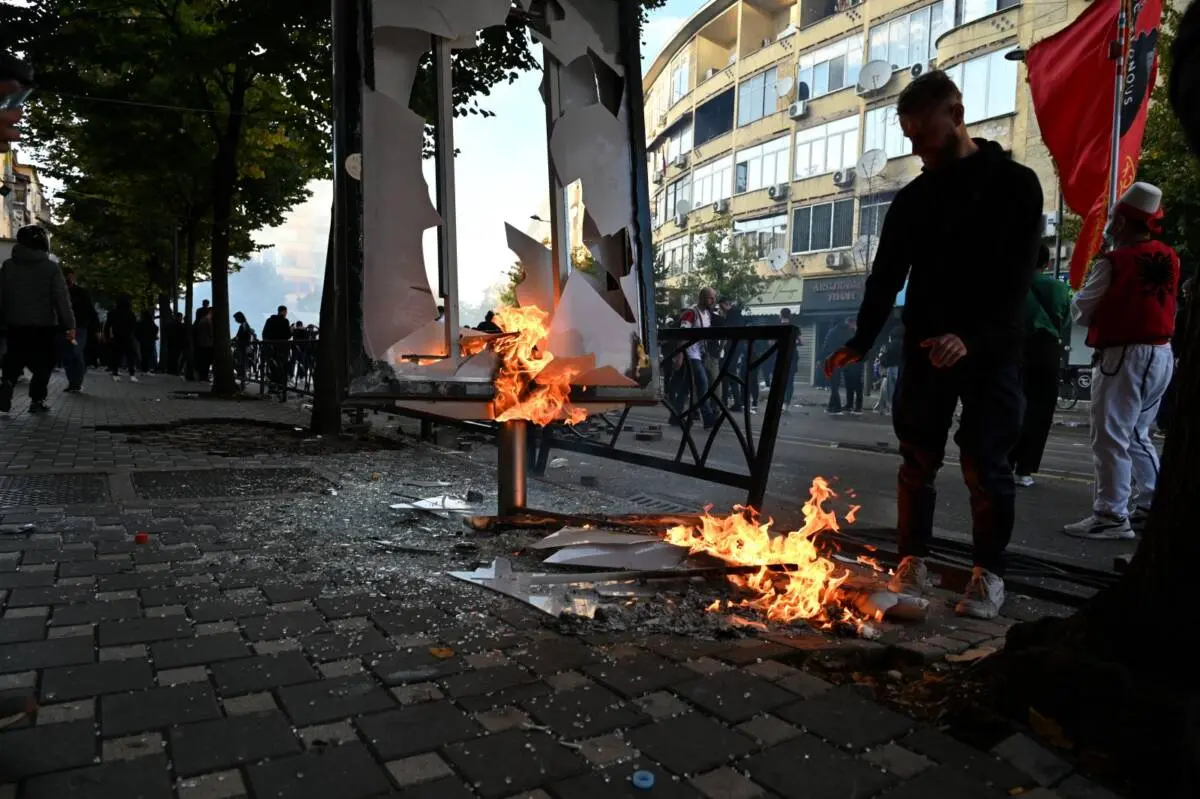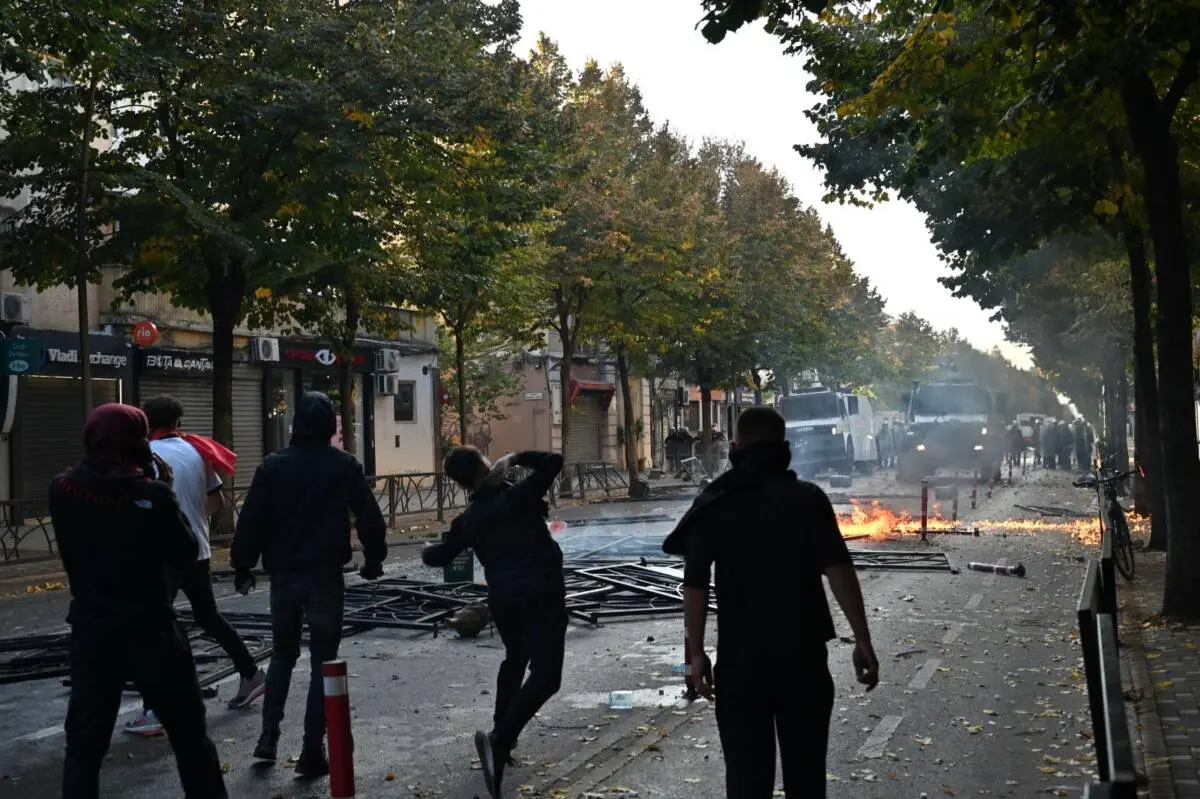
From exception to model: Albania as a laboratory for European migration policies
The Rama-Meloni agreement takes on a significance that goes far beyond the management of repatriations on behalf of the Italian state, and therefore of Europe. More than a simple bilateral agreement, the protocol has become a political and legal precedent, anticipating some of the rationales currently at the heart of the European debate on the externalisation of migration
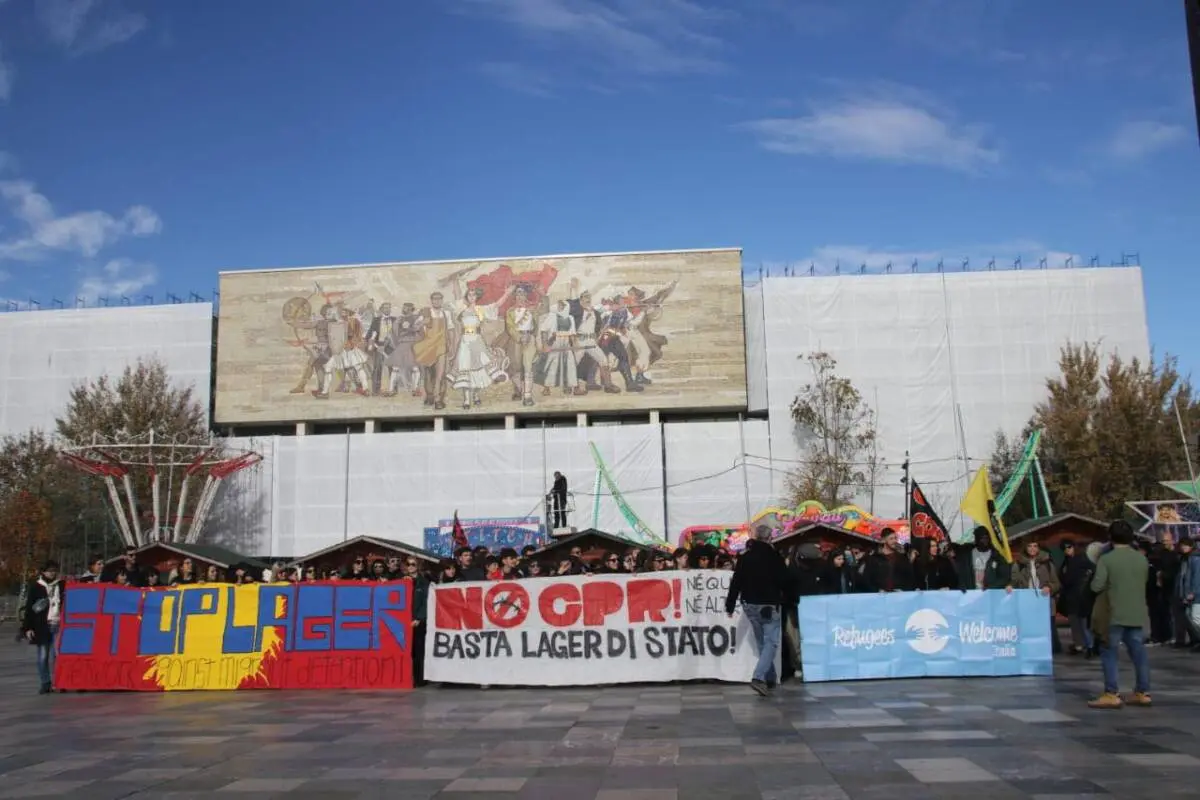
Tirana, protest against CPRs (Repatriation Detention Centres) © for Nyje.al, Ronald Qema
Tirana, protest against CPRs (Repatriation Detention Centres) © for Nyje.al, Ronald Qema
On 14 July, Albania provisionally closed the first three negotiating chapters (science and research, education and culture, external relations) on its path towards EU accession. This progress was made possible by the approval received on 26 May for the so-called Fundamentals: the rule of law and fundamental rights, the functioning of democratic institutions, public administration and justice reform, and economic criteria. The stated goal of Tirana and Brussels is to close all negotiating chapters by the end of 2027.
Albania’s role in the European context
In this context, the Rama-Meloni agreement takes on a significance that goes far beyond the management of repatriations on behalf of the Italian state, and therefore Europe. It is not a simple bilateral agreement; the protocol constitutes a political and legal precedent that anticipates some of the rationales currently at the heart of the European debate on externalisation.
Gjadër, a fully-fledged containment facility converted into Italy’s eleventh repatriation center (CPR) less than six months after its opening, and Shëngjin, a disembarkation and identification area now out of use due to this conversion, represent the first concrete European attempt to relocate a competence typically internal to the Union’s territory: migration control.
For the Albanian government, the willingness to collaborate with Italy and the European Union on a priority issue helps consolidate Albania’s image as a reliable partner on the path to European integration. Although the protocol is not formally part of the accession negotiations nor is it a requirement under the acquis communautaire, its significance is primarily political and propagandistic.
With the entry into force of the new European Pact on Migration and Asylum, the controversial bilateral agreement between Giorgia Meloni’s and Edi Rama’s governments, transferring part of the migrant detention and repatriation procedures to Albanian territory, ceases to be an exception and becomes a precedent and a model to be replicated.
In this context, Albania occupies an unconfortable position: a candidate country whose negotiating chapters are still under discussion, and at the same time one of Europe’s main laboratories for the externalisation of migration. This dual situation creates a paradox: while the EU continues to call on Albania to introduce reforms regarding the rule of law, strengthening the democratic and independent nature of its institutions, respect for fundamental rights and the Copenhagen criteria, it simultaneously demands that the country be “integrated” into the European migration control architecture even before its accession to the Union.
This short circuit was unintentionally made explicit by the Albanian Foreign Minister Ferit Hoxha, who on 12 May 2026 declared that the protocol with Italy would not be renewed beyond its five-year term, not out of political choice, but because, at that point, Albania would have become an EU member state. These statements were later downplayed as “sincere reflection out loud” after the public backlash, but they remain revealing: the model Brussels is proposing as a precedent to be replicated is, from the perspective of the Rama government, a temporary arrangement, destined to expire not because it has been outdated on the merits, but simply by the legal effect of the accession to which the government itself aspires.
In addition to the enormous human, democratic, political and economic costs, the neocolonial logic of the “Albanian model” is also evident: using a “third” country as a fictitious extension or projection of the Italian and European borders; creating a “doubly extraterritorial” space removed from local jurisdiction and handed over to Italy, which exercises its jurisdiction there, erasing the local perspective, which sees its territories exploited, transformed into exclaves, without the involvement of the communities. A space that pays the costs of European policies without fully enjoying the rights that European membership should entail.
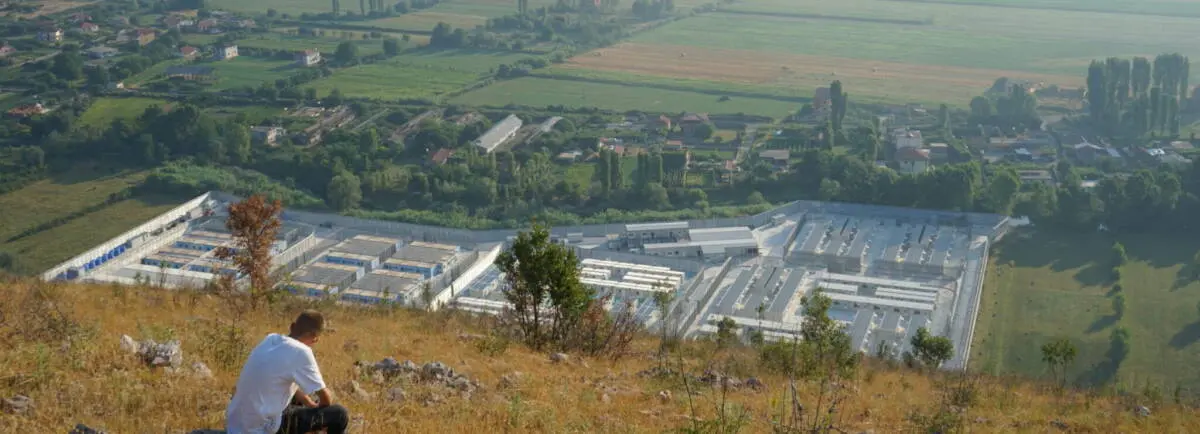
The Gjadër Repatriation Detention Centre © zonesofexception.com
Narratives in Italy and Albania
In Italy, the protocol has been described almost exclusively in terms of a migration policy: deterrence, border control, repatriation management, defined as the “Albanian model”, a term that reflects the delocalisation of Italian and European responsibility.
The public debate has focused on the number of people transferred, the costs and the court rulings that have repeatedly blocked the transfers. Much less space has been given to the voices coming from Albania and the question that Albanian civil society has been asking for two years: what does it mean for a candidate country to become the playground for the EU to experiment with new forms of externalisation, detrimental to democracy, sovereignty and local populations?
In Albania, on the other hand, the protocol has from the outset taken on a significance that goes far beyond “migration policy”. For numerous activists, intellectuals, movements and civil society organisations, it represents the symbol of a governance model based on the progressive cession of decision-making sovereignty, the concentration of executive power and the transformation of territory into a tradable resource, available for sale (if not even on free loan), subject to external political and economic interests.
Mesdhe activists, among others, have interpreted the protocol as a question of the now shattered European dream of rights and democracy, the shattered memory of migration, border violence (including the Kater i Rades shipwreck) and the moral blackmail politically exploited by Edi Rama.
Criticism of the Gjadër and Shëngjin centers has thus become intertwined with, and in the long term fueled, mobilisations against authoritarianism, depopulation (in the latest census, the Albanian population fell to 2,335,930 inhabitants), political protests over the exploitation of migrants as labor for the tourism sector, and the role of vassal state assumed in international agreements on migration.
In addition to the aforementioned agreement with Italy, this framework also includes the agreements promoted by the United States for the temporary reception of Afghan citizens in Shëngjin (housed in several resorts) and, in a different case in nature and origin, the settlement in the country of Iranian MEK dissidents in Manzë. These are different experiences, but they share the use of Albanian territory as a space made available to foreign powers.
It is the same method that the Flamingo Revolution denounces under the slogan “Albania is not for sale”, placing the issue of the Italy-Albania agreement within a broader critique of the development model pursued by the Rama government, now in its fourth term: large-scale tourism development projects, coastal privatisation, construction and real estate projects, corruption, oligarchic capture of institutions, a relative inability to ensure transparency, extractivism, and the weakening of democratic tools and spaces. Environment, democracy, migration and sovereignty are no longer separate domains: they converge in denouncing a system that makes decisions at the center and passes the costs on to the periphery.

Demonstrations against CPRs © From the archive of the collective Mesdhe
It is no coincidence that on 22 February 2024, the Albanian Parliament approved, in the same session, the ratification of the protocol with Italy and the measure allowing construction in protected areas (Law 21/2024, contested by the Flamingo Movement). The two decisions differ in scope, but the method is the same: swift action, minimal public debate and affected communities excluded from the decision-making process.
This convergence also emerged during the mission of MEPs visiting Albania on 29 June. The Greens/EFA delegation (composed of Tineke Strik, Cristina Guarda, Anna Strolenberg, Daniel Freund, Jutta Paulus and Nicu Ștefănuță), joined by MEP Cecilia Strada (Democratic Party, S&D), that visited the Gjadër center together with a delegation from the Asylum and Immigration Table (TAI), denounced the inability to fully access the detention facilities, consult the list of detainees and ensure that all its collaboraters entered the center. Civil society organisations and some Italian MEPs have been highlighting this lack of transparency for months now – the latest case dates back to 10 June.
At the same time, the MEPs met with environmental organisations and civil society representatives involved in the protests, where they delivered well-received speeches, met with the Environment Minister and visited the protected areas involved.
Networking: The Network Against Migrant Detention and the Asylum and Immigration Roundtable
While states are building networks for externalising borders, civil society is building networks for monitoring, research, advocacy and transnational solidarity. The Asylum and Immigration Table in Italy (TAI) has been active since the inception of the Italy-Albania Protocol, contributing to vigilance and reporting, visiting the center with parliamentarians, lawyers and members of various NGOs. The latest initiative launched by TAI is the #renditiconto campaign, which aims to highlight the human and economic costs of this agreement.
Regardless of its purpose, externalisation is not simply a different way of managing migration. It redefines the relationship between law, responsibility and territory, creating spaces where democratic control becomes more difficult and guarantees risk weakening. This is probably the most significant legacy of the experiment launched by Meloni and Rama.
Over the past two years, networks like the Network Against Migrant Detention and numerous Italian and Albanian organisations have gradually shifted their attention to another question: not only whether the Albanian model works, but what kind of European project it is helping to build.
Albania is now at the center of this transformation: it is becoming a testbed for the European Union’s ability to reconcile enlargement, the rule of law, environmental protection and fundamental rights. In this sense, what is happening today between Gjadër, Vjosa-Narta and Brussels concerns much more than just Albania’s future: it concerns the future of the European project itself.
Found an error in this article? Please contact our editorial team at redazione@balcanicaucaso.org.
This publication has been produced within the Collaborative and Investigative Journalism Initiative (CIJI ), a project co-funded by the European Commission. The contents of this publication are the sole responsibility of Osservatorio Balcani Caucaso Transeuropa and do not reflect the views of the European Union. Go to the project page
Tag: Italy-Albania migration deal | CIJI
Featured articles
 the students' voices
 Investigation
 students' protest