Can the EU Growth Plan be a game changer for the Western Balkans?
If the Western Balkans want to catch up with EU standards, they need to seize the opportunity given by the Growth Plan and implement all reforms before the end of 2027. An interview with Nicola Pontara*, former Country Manager of the World Bank in Serbia
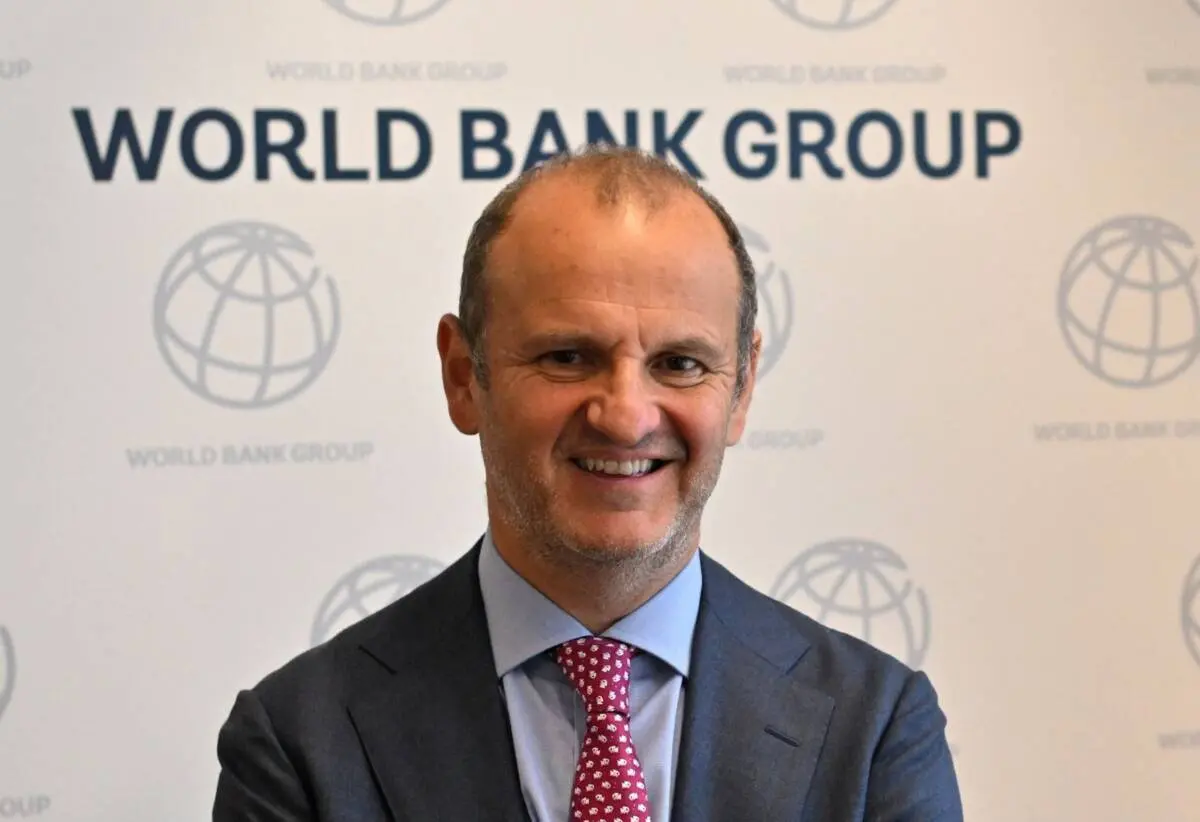
Nicola Pontara
Nicola Pontara (private archive)
In the paper “An Economic Agenda to Accelerate Convergence of the Western Balkans with the EU”, Nicola Pontara and others examine the reasons why the Western Balkans (WB6) have lagged behind EU New Member States (NMS) in economic convergence since 1991 and give a model how higher convergence can be accelerated by closer alignment with the EU’s economic, legal and regulatory framework combined with the access to structural funds and integration into the single market. The EU’s 6 billion euros Growth Plan offers a critical, time-bound opportunity to speed-up this process.
What is the significance of the Growth Plan for helping the WB6 converge faster with the EU? What about Serbia?
First, it is useful to point out that the WB6’s convergence with the EU has been disappointing. In our paper, we examine the growth trajectories of the new member states and the WB6. After the fall of the Berlin Wall in 1989, both groups harbored great hopes of transforming into market economies. While in the 1990s the NMS embarked on a steady transition toward the EU—which culminated in the ‘big bang’ enlargement of 2004— the WB6 remained trapped in the violent breakup of Yugoslavia. They suffered a ‘permanent shock’, setting them back on the starting line with respect to the NMS. Looking forward, under some assumptions, the WB6 is not expected to converge with the EU’s standard of living until the end of this century. The case of Serbia fits this pattern. Serbia will converge with the EU only in 2074, if it continues to grow at an average of 2.8 percent, which was attained during 2001–2021. Hence the imperative, across all the WB6, is to accelerate the rate of economic growth. And in this context, the new EU Growth Plan is a game changer as it offers substantial benefits and incentives to candidate countries before accession. As such, it could significantly accelerate convergence between the WB6 and the EU.
Considering that the Growth Plan is time-bound until 2027 and conditional on reform implementation, is this framework realistically feasible, given the often-slow pace of domestic reforms? Moreover, can a focus on the seven priority areas from the Growth Plan be effective without genuine reforms in governance performance?
The EU has set up a Scoreboard to monitor the WB6 progress. Financial support is only disbursed upon the successful implementation of reforms by the beneficiaries based on the reforms agenda that were already prepared and approved in each country and by the Commission following positive assessment by the Council. Looking at the Scoreboard, to date, only 90 out of the 731 steps (cumulatively) have been achieved; and only 673 million euros have been disbursed. I agree that 2027 is around the corner, and it may be a tall order for the reforms to be implemented by then. Looking at the individual countries, Albania and Montenegro are the front runners, while Serbia is lagging. I do not think that governance can be singled out from the 7 areas of reform. Each reform area can contribute to creating more transparency, accountability and hence, by definition, better governance in these countries.
In your research, you characterize the EU as a formidable ‘convergence machine’. Could you explain what you mean by that?
Yes, it is true. Since 1990, 13 of the 31 countries in the world that managed to transition to high-income economies have done so in the EU. The progressive convergence of the NMS spurred economic development and the achievement of higher standards of living. Those countries grew fast thanks to the access to the large EU market, EU structural and cohesion funds and sustained improvement in institutions and governance. The WB6 should follow these footsteps with a renewed sense of urgency by delivering on the commitments it made under the EU Growth Plan.
What are the key constraints in the Western Balkans to faster economic growth? What sort of structural reforms do these countries need to undertake?
Several factors adversely impacted economic performance in the WB6 These include, first and foremost, exogenous factors. The regional conflicts of the 1990s derailed the region’s development, profoundly disrupting its economic and social fabric and severely damaging infrastructure. Additionally, the succession of global crises from 2008 onward hampered efforts in the WB6 to recapture the robust economic vitality exhibited during 2000–2008. On the internal front, moreover, an examination of the available evidence points to four clusters of issues including: (i) the incomplete transition to veritable market economies; (ii) weak human capital; (iii) a governance deficit; and (iv) limited trade and integration. Structural reforms aimed at boosting progress in these areas would help significantly to spur growth and convergence.
What about the case of Serbia?
Serbia should focus on a dual track strategy. Track 1 should focus on the refinement and better targeting of foreign investment incentives in key priority sectors – such as ICT, e-mobility solutions, biotech, advanced healthcare, machinery, food for the future, the creative industry – with decisions made consistently and transparently. This shift from ‘volumes to quality’ – that is, focusing on modern technologies and innovation – can create higher quality and better paid jobs. Track 2 should focus on addressing the low levels of domestic private investment, one of the lowest in Eastern Europe. During this year’s Kopaonik business forum we heard about the constraints that prevent the emergence of a more dynamic private sector in Serbia. These include the perceived lack of transparency, low control of corruption and inefficiency of the judiciary system.
In a rapidly changing geopolitical landscape, China has been one of the fastest growing international partners in the WB6. Do Chinese investments threaten convergence with the EU?
When contracting new debt or entering new joint ventures, it is always important to pay attention to the fiscal impact; whether the proposed investment is productive and has good spillover effects on the economy (for instance in terms of productivity, innovation, and so on); and whether it is environmentally sustainable. These are important criteria to consider, rather than the specific origin of such investments.
The WB6 are facing significant brain drain and negative demographic trends. Whereas, the EU member states are dealing with labor shortages, indirectly attracting young and educated workers from the region. How can these dynamics be addressed, and is there a risk that current EU labor market demands further exacerbate demographic challenges in candidate countries?
Indeed, this is one of the main challenges for Serbia, and there are no simple solutions. Still, the government can help – by raising the labor force participation rate of women, young adults, and ethnic minorities. It would be also important to help families with children have more productive working lives, so that both parents can work. Then, spend more on human development, with special attention to the inclusion of the poor and vulnerable through more robust poverty-targeted programs that are responsive to shocks. The health system needs to provide affordable care options and evolve its long-term care system in line with an aging society. Additional policies should focus on the modernization of labor market legislation and institutions. But the outlook for migration does not have to be all bleak, as Ireland shows. Ireland, a small economy on the periphery of Europe, was once characterized by low incomes and persistent out-migration. Yet, today, it enjoys one of Europe’s highest living standards and is a magnet for talent and investors. Serbia can emulate this approach by capitalizing on the ideas, skills, networks, and investment potential of the Serbian diaspora.
The Western Balkans need to advance in digitalization, an area where even the EU faces competitive pressure from other global actors. Given Serbia’s progress in e-government, how significant would access to the EU Digital Single Market be for these countries, and could it help them catch up more quickly?
Digitalization, including the fast advance of AI, can greatly improve governance. The WB6 have all committed to advance this agenda in their reform plans. Some countries are already working on implementing ‘digital wallets’ in line with the most recent EU regulations. Here Serbia is a frontrunner by entering, in 2026, the world’s top ten digital government performers. A 50 million dollars World Bank project called Enabling Digital Governance (EDGE) helped Serbia build the plumbing of modern government. New interoperability platforms connected previously siloed databases; a government cloud now hosts more than 420 systems for 80 public entities; a Security Operations Center processes nearly a billion security events daily. But Serbia did not only strengthen infrastructure: it invested in people too. More than 13,000 civil servants were trained in paperless processes, data management, and AI. An AI-powered assistant handles citizen questions: by one estimate, citizens have saved over five million hours annually, and usage has reached 2.5 million users.
Serbia’s success offers lessons for other countries in the WB6. First, digital government requires a comprehensive vision rather than siloed one-off investments. Second, it should not be treated as a technology upgrade, but as a state-wide reform of service delivery. Third, civil servants must be willing to change the way they work, freeing themselves from paperwork to focus on what only humans can do: listen, explain, and solve the problems that resist easy answers. Even in a world where technology constantly races ahead, the work of serving citizens remains a truly human endeavor.
*Nicola Pontara was recently appointed as the World Bank Group Division Director for the Sahel, based in Bamako, Mali. Until June 2026 he served as Country Manager for Serbia, based in Belgrade. He holds a PhD in Economics from the School of Oriental and African Studies, University of London.
Found an error in this article? Please contact our editorial team at redazione@balcanicaucaso.org.
This article was written as part of the project "InteGraLe - Western Balkans vi-à-vis the Trio: single market, cohesion and regional policy for gradual integration into the EU." The project is supported by the Analysis, Programming, Statistics, and Historical Documentation Unit – Directorate General for Political Affairs and International Security of the Ministry of Foreign Affairs and International Cooperation, pursuant to Article 23-bis of Presidential Decree 18/1967. The opinions expressed in this publication are those of the authors and do not necessarily represent the views of the Ministry of Foreign Affairs and International Cooperation.
Featured articles
 the students' voices
 Investigation
 students' protest