Bulgaria: the return of tsar Samuel
After years of negotiations between Bulgaria and Greece, the remains of the medieval Bulgarian tsar Samuel have been laid to rest in a lavish ceremony in the Bulgarian capital. The agreement marks a strategic rapprochement between Athens and Sofia, including as part of their opposition to Skopje. It has also provided a spectacular backdrop to the opening of Bulgaria’s presidential election campaign
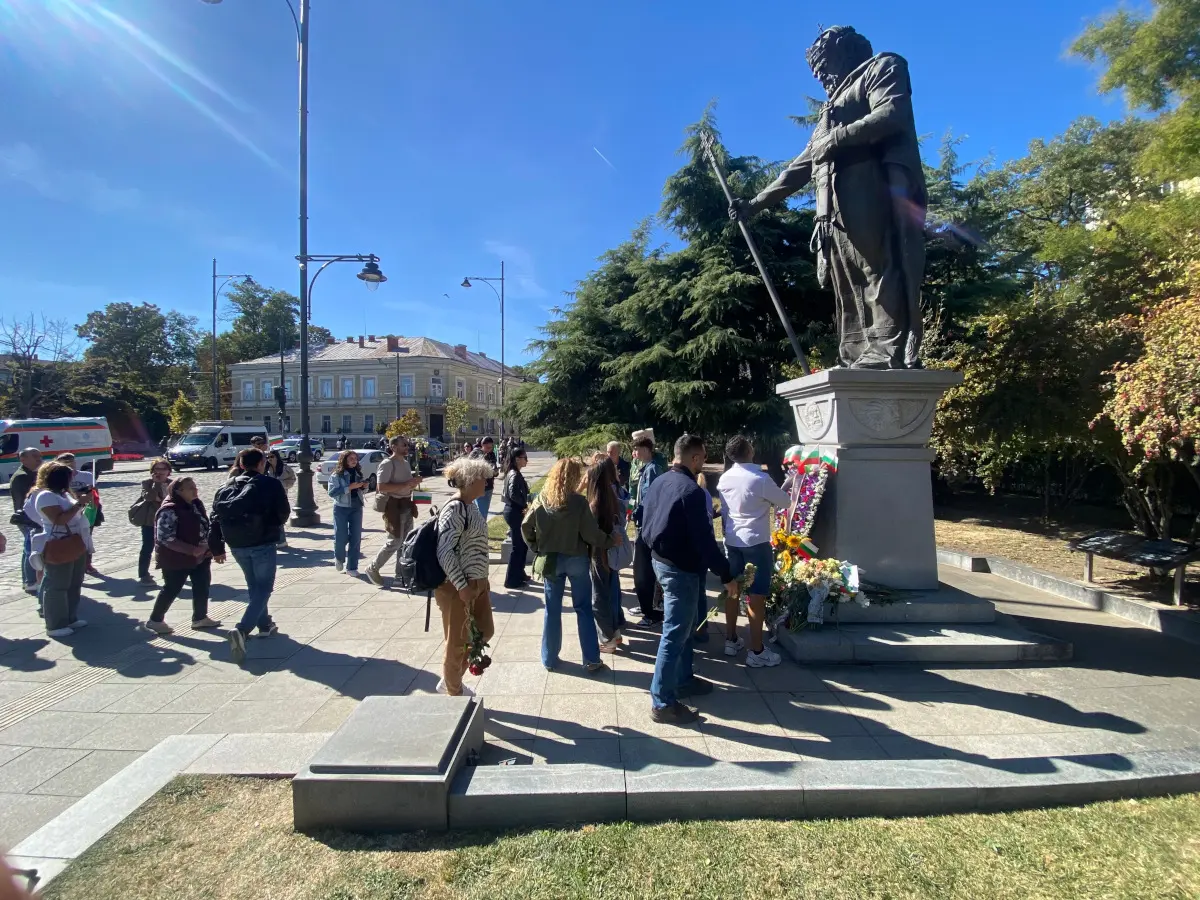
Sofia, the statue of Tsar Samuel, on the day of his burial – Photo by F. Martino
Sofia, the statue of Tsar Samuel, on the day of his burial - Photo by F. Martino
On Saturday 3 October, on a mild, sunny day in early autumn, Sofia became the stage for a piece of history. After decades of largely fruitless negotiations with neighbouring Greece, the Bulgarian capital came to a standstill to receive, with full honours, the mortal remains of Tsar Samuel, a figure both tragic and heroic in Bulgaria’s medieval history.
Virtually everyone turned out in Sofia to welcome Samuel’s remains (Samuil in Bulgarian): the government, headed by Prime Minister Rumen Radev; the army, which escorted them – first by air and then by land – from Thessaloniki to the Church of St Sofia in the Bulgarian capital; the Bulgarian Orthodox Church, which conducted the lavish burial ceremony at the place of worship; the media, which followed the event live minute by minute; and thousands of citizens, who lined the route in a festive and curious throng as the long procession accompanied the coffin, draped in the Bulgarian tricolour.
At the end of the religious ceremony, broadcast live on television, Samuel’s remains were laid to rest in a large marble sarcophagus. It had been specially prepared for the occasion and will preserve them in the heart of the Bulgarian capital. “Today we are completing an important mission and fulfilling an ancient duty. At last, the remains of Tsar Samuel are among us,” Prime Minister Radev said, visibly pleased, during a ceremony attended by the country’s political elite in full.
Samuel between past and present
The handover of Samuel’s remains to Bulgaria brings to a close a long chapter of negotiations between Sofia and Athens, with an eye also on neighbouring Skopje. The tsar is, after all, an awkward and highly symbolic figure for more than one of today’s modern Balkan nations.
His reign dates back to the turbulent period around the turn of the first millennium. It marked the twilight of the First Bulgarian Empire, which had long contested Constantinople’s supremacy in the Balkans. After a succession of reversals of fortune, Samuel, who had made Ohrid – in what is now North Macedonia – his capital, suffered the most devastating of defeats.
In 1014, his army was annihilated by the forces of the Byzantine emperor Basil II at the Battle of Kleidion (or Belasitsa). Legend has it that Basil – from then on known as “the Bulgar-Slayer” – showed no mercy after his victory.
The 14,000 prisoners were divided into groups of one hundred. Ninety-nine were blinded, while one man in each group was left with a single eye, so that he could lead his unfortunate companions back home.
According to tradition, Samuel’s heart could not withstand the sight. A few years later, his kingdom disappeared as well.
Leaving aside the stories and legends, Samuel himself vanished from the historical record for almost a millennium. Then, in 1969, during excavations at the Church of St Achilleios on an island in the middle of the small Lake Prespa, in what is now Greece, the Greek archaeologist Nikolaos Moutsopoulos discovered a number of medieval tombs containing the remains of what appeared to be important nobles.
Although there was no conclusive or incontrovertible evidence, a number of clues led Moutsopoulos to believe that the remains belonged to Samuel and his family.
From that point on, the remains, kept at the Museum of Byzantine Culture in Thessaloniki, became the subject of negotiations between the Bulgarian and Greek governments. After decades of failed attempts, those negotiations finally produced a breakthrough in recent weeks.
An agreement with winners and losers
But what lies behind the agreement that persuaded Greece to hand Samuel’s remains over to Bulgaria?
First and foremost, there is an element of reciprocity. In return for the gesture, Sofia has undertaken to return around fifty artefacts to Athens, chiefly valuable religious objects seized by the Bulgarian army during the First World War from monasteries in areas then disputed between the two countries and now part of northern Greece.
The sacred objects have already been handed over to the Greek authorities. They will be displayed in Thessaloniki for several weeks before being returned to the religious institutions from which they were taken a century ago.
There is also the political and diplomatic dimension. With this move, the two countries are successfully bringing the dispute over Samuel to a close. They are reaffirming the spirit of mutual cooperation that has grown stronger in recent years within the EU framework. That cooperation has taken further steps forward since Bulgaria joined the Schengen Area in 2025.
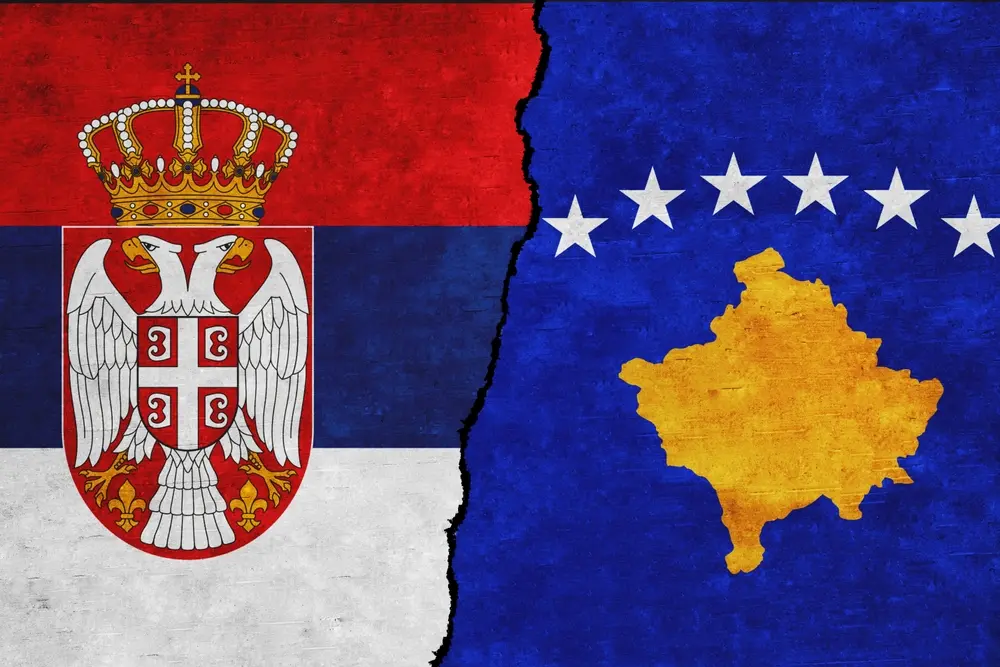
Although it is not explicitly mentioned, the agreement has not only winners but losers as well. In the case of Samuel and his remains, that means neighbouring North Macedonia, which has spent decades at odds first with Athens and now with Sofia over questions of ethnic, linguistic and historical identity – disputes that have clouded Skopje’s EU prospects.
Samuel is also part of the long list of historical figures contested by the modern states that emerged across the territories once ruled by his ancient empire. Although international historiography almost unanimously regards Samuel’s kingdom as “Bulgarian”, the official narrative in Skopje is radically different.
According to Macedonian historians, while drawing on the tradition of the Bulgarian Empire, Samuel created the “first state of the Slavic Macedonians”, which they see as the root and foundation of the present-day ethnic and state identity of North Macedonia.
It is therefore no coincidence that statues of Samuel have been erected in recent years both in Sofia and in Skopje, where his name is rendered slightly differently, as Samoil. Nor is it surprising that the arrival of his remains in Bulgaria has been seen by many in North Macedonia as a painful political and diplomatic defeat.
“Although the issue is partly avoided, the roots of today’s solidarity between Greece and Bulgaria stem from a clear political context, namely opposition to ‘political Macedonism’,” Lachezar Stoyanov, a professor of history at New Bulgarian University in Sofia, told the Bulgarian press.
Lavish ceremonies and an election campaign
Despite the enthusiasm shown by the institutions and many citizens, the “return of the tsar” has not been universally welcomed by Bulgarian public opinion. The arrival of Samuel’s remains has stirred deep emotions. For significant sections of Bulgarian society, it has also reflected a genuine need for roots and a sense of belonging at a time of rapid change and growing uncertainty.
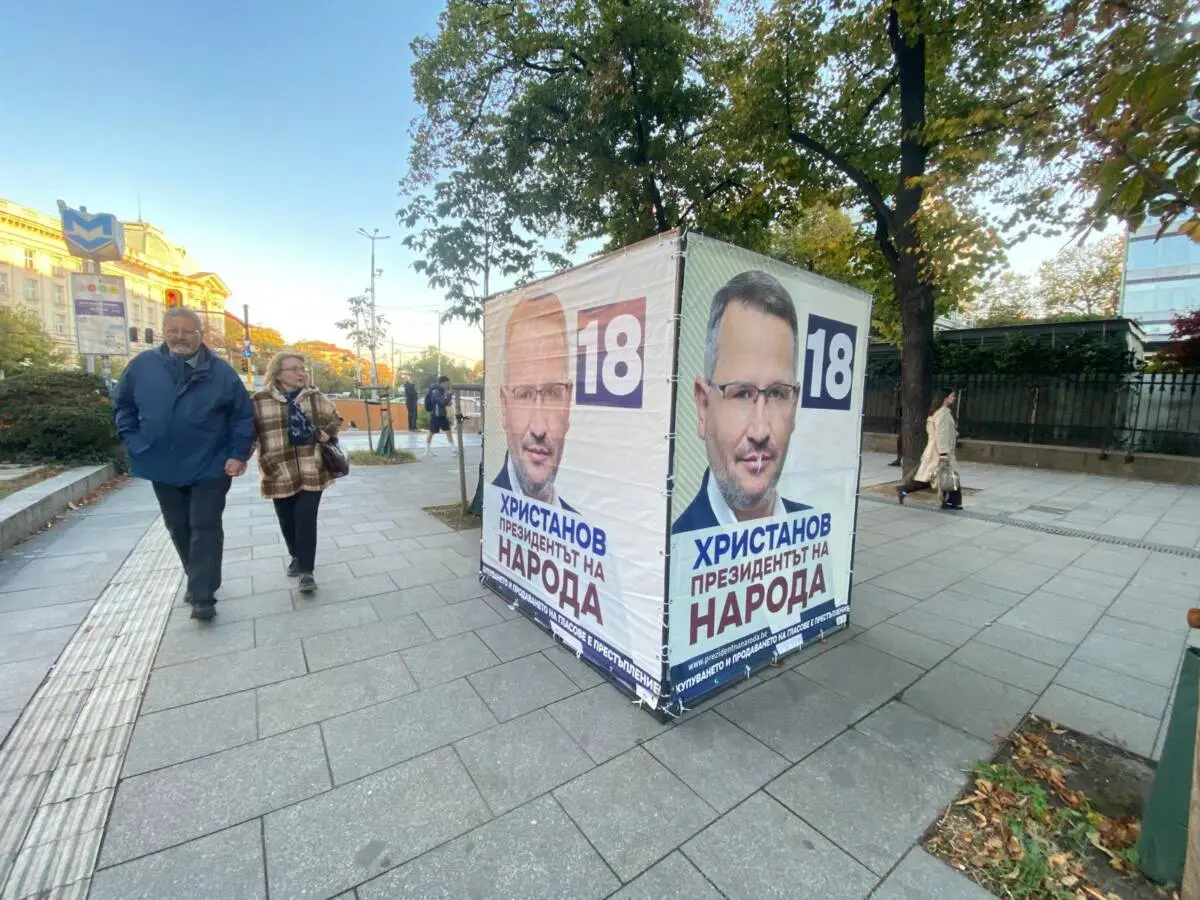
Yet even among those ready to acknowledge the historical significance of the event, many found it difficult not to notice that the arrival of the mortal remains and the lavish ceremony accompanying it effectively coincided with the opening of the presidential election campaign. The first round is due to take place on 25 October.
The clear favourite is Iliyana Yotova, the current interim head of state following Radev’s resignation at the beginning of the year – he subsequently became prime minister – after she had served as his vice-president for two terms.
As expected, Yotova will be backed by Radev’s Progressive Bulgaria, which wants to capitalise on its electoral triumph last April and strengthen its political position by also securing the presidency.
And the wave of national pride that accompanied Samuel’s return looks like an ideal springboard for her to do just that.
Found an error in this article? Please contact our editorial team at redazione@balcanicaucaso.org.
Tag:
Featured articles
 the students' voices
 Investigation
 students' protest