2016 Turkish coup attempt: Kübra, the president’s rebellious daughter
Ten years after the 2016 coup attempt in Turkey, we have gathered four firsthand accounts from the country. A 36-year-old from Istanbul, Kübra is a “raised and born activist” for Havle, a Muslim feminist association. She does not support Erdoğan, but states that the success of the coup “would have set the country back 20 years”
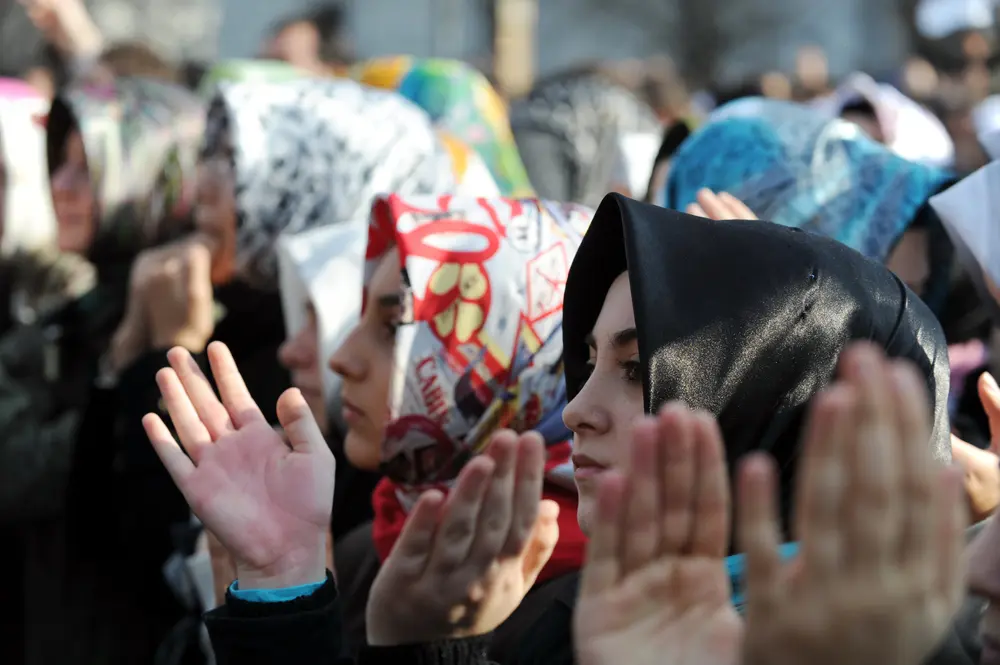
Istanbul © thomas koch/Shutterstock
Istanbul © thomas koch/Shutterstock
“I cannot believe it has already been 10 years. On 15th of July, I was at home with my husband. Back then, I was married. We were sitting together and he was checking something on his phone. Suddenly he said: “There is a coup attempt”. I took my own phone, and I saw all the messages from my groups, all kinds of people asking each other what was going on. I remember hearing loud jets flying over our house while going through the news, watching all the channels live, trying to follow five, six different sources. It was total chaos. I come from a family which has both opponents and supporters of President Erdoğan. In our family, my cousins, my father, my uncle were already fighting about something that was still unfolding. Some friends cheered thinking that the end of Erdoğan was near, other were scared because they are Alevi, and people in their neighbourhood came and hit their doors. The polarization of the society was openly there, even in my friends’ group, even in my family. I was so scared. I thought: “Oh my God, they’re going to kill the President”.
Kübra is a 36 year old young woman from Istanbul. She describes herself as a born and raised activist. Since 2017 she’s part of Havle, a Muslim feminist association created with the aim of tackling the difficulties that women face in their lives.
“We went out in the streets in the Fatih neighbourhood, we wanted to observe what was happening since no news was coming from there. My brother was on the bridge (the Istanbul Bridge was the theatre of the bloodies clashes and it was later renamed in honour of the civilians who died there, ndA) and he saw someone who got shot. He took the person to the hospital and came home covered in blood. My father went there too, feeling that a fight between the people and the soldiers could happen while the police was nowhere to be found. At a certain moment of that night, the call from the mosques started and I clearly remember feeling relieved. As long as those prayers could be heard, we were going to be fine. We returned home around six, after the sun was up. We couldn’t sleep that day”.
Click here to read the other testimonials we collected to mark the tenth anniversary of the attempted coup in Turkey
Clashes ended that night and the country woke up in a strange calmness the day after. Nevertheless, historical events were now moving, and the country was about to undergo profound changes.
“While I personally despise President Erdoğan, I still wouldn’t want him to be killed in a military coup: that would be a blow to the Turkish democracy. I wasn’t really worried for my life, I was worried for my country and the future of my generation. We were going to see something like what happened with the coups in the 1960s or 1980s, setting us 20 years back.
The government then lunched this narrative of people coming together and being one national body, but I never believed it. I realised it was a show when a meeting in Yenikapı (a district of Istanbul known for pro-government AKP rallies, ndA) was called with all the political parties of Turkey. The Kurdish party HDP (today known as DEM Parti, ndA) was left out. As one of their voters, I really felt betrayed. I remember the then Republican party’s leader Kılıçdaroğlu accusing the government of putting up a play. In some respects, I agree with him: the whole thing might have been orchestrated by Erdoğan himself. He already knew how the Gülen movement had infiltrated the state, and he knew that since 2013”.
In 2013 Turkey saw huge and participated protests. Named after park Gezi in Istanbul, these protests quickly turned from an environmental initiative into mass pro-democracy demonstrations supported by many diverse souls of the Turkish society. They represented a dramatic turning point in the contemporary history of the country.
“I have my inside sources; I know that the AKP members were largely unaware of the decisions behind the brutal attacks against the protesters by the police forces. It was later argued that they were under the guidance of the Gülen movement. That was one of the fault lines between Erdoğan and Gülen. Both sides were attacking each other everywhere they could. Erdoğan knew that the infiltration of the Gülen movement in the government was very deep, not only in the education system, but also in the judicial institution, in the police, the bureaucracy, diplomatic bodies, really a lot of people. He brought those people into those power positions, so he knew that something so atrocious, so contrary to the sense of loyalty to the homeland was needed for the whole country to support the coming purge of the Gülen movement. He waited until that moment arrived, and that was the coup attempt in July 2016”.
The events and transformations that followed, the mass purges, the state of emergency, the new presidential system reform, deeply affected the whole civic space.
“We work in the women’s movement as Muslim feminists, most of us come from families who support Erdoğan’s AK Parti. We are seen as the naughty, rebellious daughters of the Pharaoh, raised by him, but also going against it. As Muslim feminists, it’s a very special place in the political dynamics of the country. After the constitutional changes that introduced the presidential system in 2017, I realized that was the end of the Turkish Republic as we knew it. That was very upsetting. I thought about my future children asking me: “What were you doing back then when democracy was being torn down in our country?”. I wanted to have an answer for them.
Civil society organisations are struggling, women’s and LGBTQ organisations in particular. It is getting harder to find a safe space in the public discourse. Even being pro-Palestinian is not safe enough in a country that presents itself as guarantor of the Palestinians. At the same time, when activism goes through times of hardships, people look for a place where they feel safe and they can stick together. I think this is one of the factors that makes Havle a very strong civil society organization. We’re build a community of Muslim feminists who believe that the existing mainstream Islam is a crooked patriarchal interpretation of the Islamic values. We don’t need to loudly scream that all the time, you first need to have a strong base that you support financially and socially. When the time comes, that community will stand up for you”.
As the country moves forward, experiences from previous democratic struggle set the path for the rediscovery of tactics and strategies.
“There are lessons from the 90s, when the state took the rights of women away, forcing on them a choice between two evils: take off your headscarf and get an education, or stay at home. Those women built an informal school and where they taught the school curricula and Islamic theology. I witnessed that when the times get hard, when oppression is hanging above your head and you cannot find anywhere to go through the formal legal system, you go illegal and find ways to survive in uncharted waters. And that is what’s going to happen in the next 10 years in Turkey. We are closely in contact with many movements, I always say the same thing: withdraw yourself from the centre of attention or you’re going to get crushed, and that’s not going to serve you or the future of this country. This is a time of learning, organizing, and getting ready. The system will collapse, its demise written in its own DNA. Then a new and ready movement will be needed, and I believe that that movement will be the feminist and LGBTQ movements working together”.
Found an error in this article? Please contact our editorial team at redazione@balcanicaucaso.org.
Featured articles
 the students' voices
 Investigation
 students' protest