Armenia: How labor migration is changing
In recent years, labor migration in Armenia has undergone a significant transformation: the number of Armenian citizens moving to Russia for work is gradually decreasing, while Armenia is becoming a host country for migrant workers
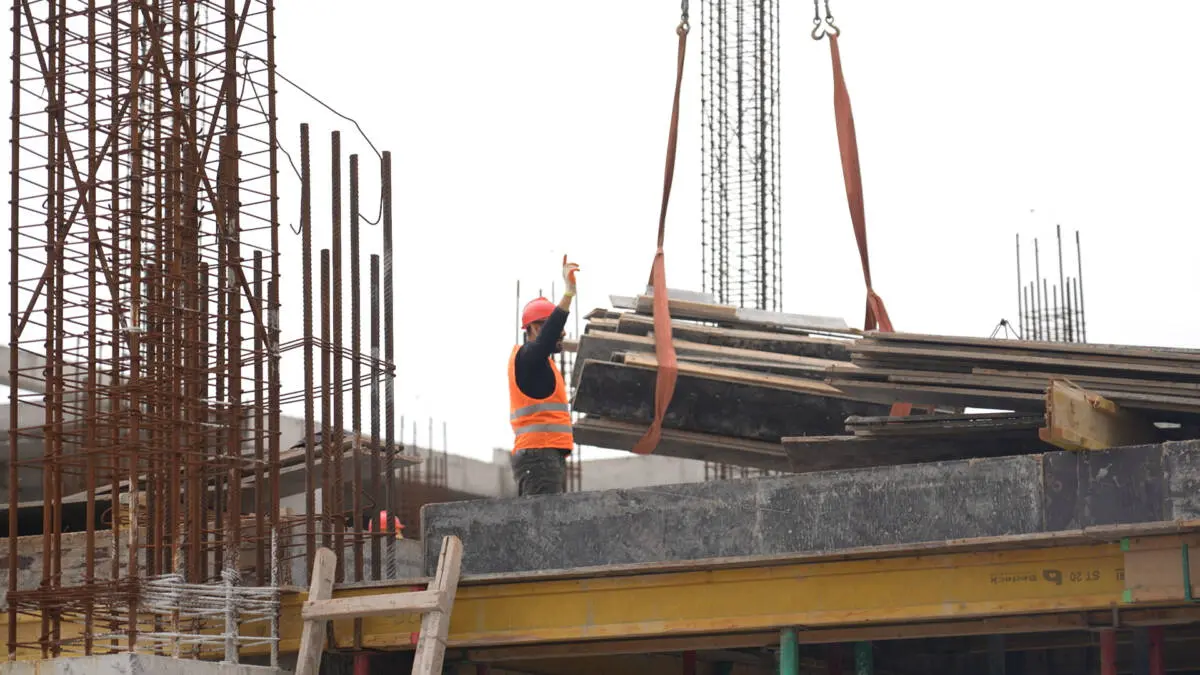
Yerevan, Armenia, migrant workers at a construction site – photo by A. Avetisyan
Yerevan, Armenia, migrant workers at a construction site - photo by A. Avetisyan
In the early morning, in one of the villages of the Shirak Region in northern Armenia, the chill is still palpable, but smoke rising from the hearths already signals the start of a new workday. For decades, spring in this area began the same way: the village men packed their bags, said goodbye to their families and headed off to various cities in the Russian Federation for “khopan” (work abroad). Tens of thousands of Armenian families have lived following this rhuythm: farewells in spring, returns in late autumn, and, in between, months filled with work and longing.
However, in recent years, this well-established pattern, that seemed unbreakable, has begun to falter. The road leading to work is no longer so far away.
When remittances are not enough
Armen Grigoryan, 42, is one of hundreds of Shirak men who, for several years now, no longer begins his days in a small cabin in a distant Russian village, but in his own home, built with his own hands in his native village. He has a quick breakfast and, traveling about a hundred kilometers, begins his workday in the capital, Yerevan.
For about fifteen years, every spring he would leave for Surgut to work with other men in the construction industry, building houses and roads. Armen remembers how for years he lived “two lives”. One life was spent on the cold construction sites of Siberia, in temporary shelters ,where dozens of men shared the same room and daily life, while the other life was filled with phone calls to his family back in Shirak.
:First and foremost, it was financial calculation that made me stop. In 2020–21, I noticed that when I converted the rubles I earned in Russia into drams, the value of the Russian currency halved. While in the past, the hundred thousand rubles I sent to Armenia were a considerable sum, over time, they barely covered household expenses”, explains Armen.
“Add the travel costs, living expenses there, paperwork and patent costs. Every year the documentation procedures became more complicated. In 2021, I sat down, did some calculations and realised that it no longer made sense”.
Armenia’s construction boom gave Armen the opportunity to quickly find a job in Yerevan. Now he works as a bricklayer and, in his words, earns well, much more than he earned in a foreign country. According to his calculations, the net money left in his hand at the end of the month differs from the income received from overseas work, and the quality of life in Armenia has changed significantly.
“The biggest advantage is daily life and family. Before, I only saw my children via Viber or WhatsApp. My son grew up, and I did not even notice. Every time I returned home, I saw that my son had grown taller, and my daughter had already become a schoolgirl. I was missing the most important moments of their childhood. Now every evening I come home. My wife and I take care of the household chores, and I help the children with their studies. I would stay even if I earned a little less… after all, I am at home, in my country”.
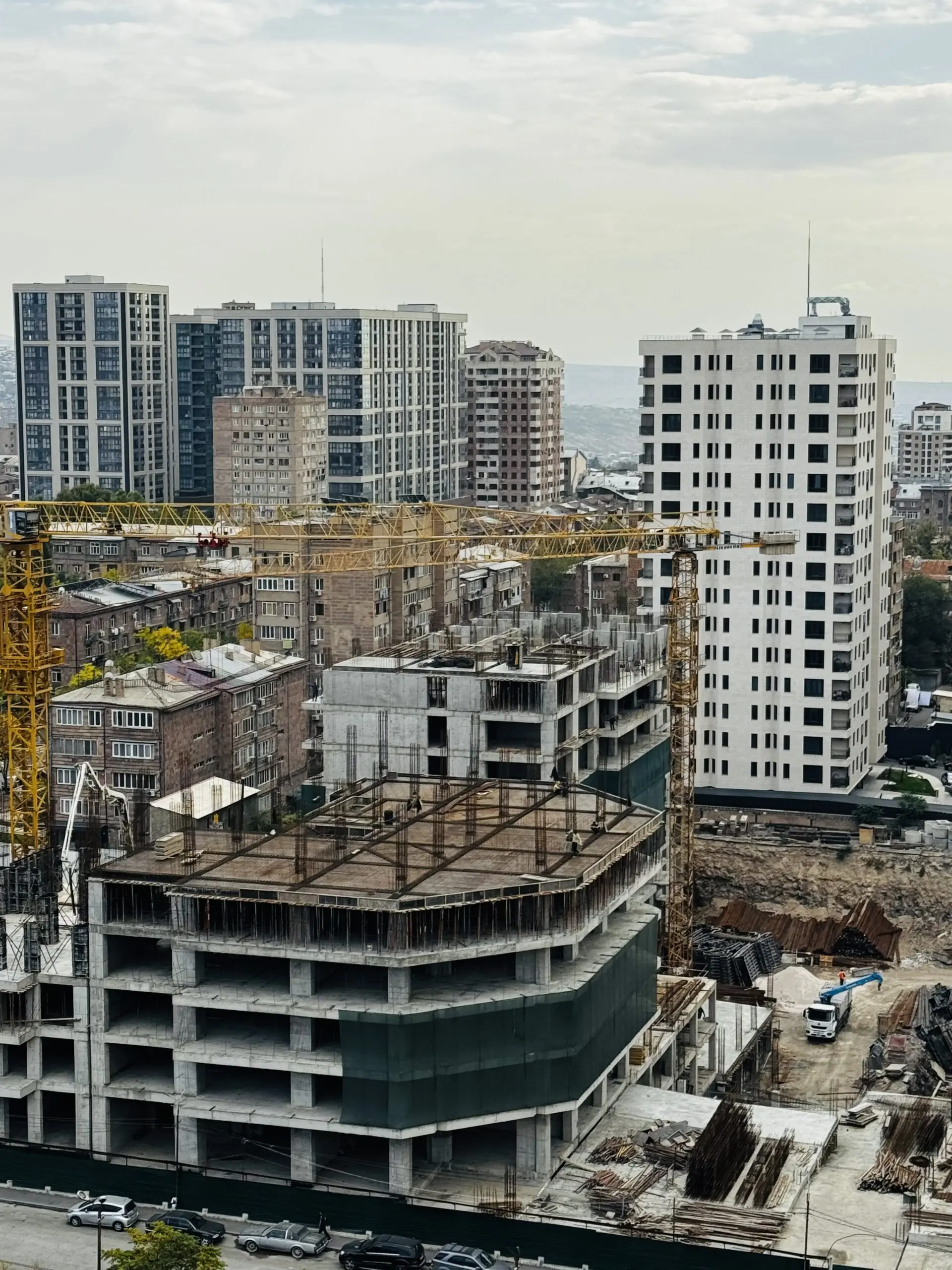
Yerevan, Armenia – Photo by A. Avetisyan
A greenhouse, in place of the khopan
In the family of Suren Manukyan, living in one of the villages of the Armavir region, a turning point decision was also made in 2022. For years, Suren had been working abroad, doing interior finishing work, so the entire burden of caring for the house, the land, and his elderly parents fell on his wife’s shoulders.
Suren notes that in rural life, a man’s absence is not only a psychological burden, but also means hard physical labor for a woman. His wife had to take care of watering the garden, ongoing home repairs, raising the children, and caring for her sick parents-in-law alone.
Given the collapse of the ruble and the agricultural support programs provided by Armanian government, he decided not to work abroad anymore, but to stay in his homeland, combining his work in the construction sector with farming.
“Every time I left, my wife cried”, recalls Suren. “I have two elderly parents at home. They would get sick, my wife could not cope alone – children, land, livestock, parents. In the autumn of 2021, when I returned, we sat down and had a serious talk. First, we decided that I would stay home. My friends assured me that there was plenty of construction work here too”.
“Then we calculated our savings, looked into government support programs, and decided to start a small greenhouse business. At first, we were scared, wondering if it could work”.
Suren explains that this change eased the psychological and daily burden on the family. “Before, my wife felt alone facing all the problems. If something broke at home, if the roof leaked, if a child got sick – it all fell on her shoulders. In the winter, when I returned, we were just getting used to living together, and then spring would come again and I would leave. Now we are together. I manage to help my wife with greenhouse matters, and also five days a week I go to Yerevan to do construction work”.
According to Suren, although the first year was difficult, today the mindset has changed.
“Many of my friends are also planing to stay. Some work here in construction, others are taxi drivers, and still others farm like me. They have realised that even by working in their own country, they can support their families”, concludes Suren
Facts and figures
According to official data from the Eurasian Economic Commission, the annual figure regarding Armenian citizens’ labor migration towards Russia was 135,435 in 2021, and sharply decreased in 2022, reaching 105,013. In subsequent years, the number fluctuated, and in 2025 it decreased again.
Entries into Russia for work purposes also declined in the first quarter of 2026. According to the Russian state agency TASS, in January-March 2026, 42,366 citizens of the Republic of Armenia entered the Russian Federation for work purposes. In the same period of 2025, that number was 45,526 people.
In fact, changes are taking place in Armenia’s labor market and migration flows. On one hand, Armenians prefer to find jobs in their homeland, build their own small businesses, or get involved in local construction and massive service projects; on the other hand, Armenia itself is gradually turning into a country that hosts and provides work for thousands of foreign workers.
In the last 3-4 years, foreign workers have increased on the streets, construction sites, delivery services, restaurants, and the service sector of Yerevan, mainly from India, Iran, the Philippines, and Central Asian countries. This is a new phenomenon in Armenia, changing urban culture and daily life.
“Yerevan has become a safe and familiar city for me”
Rajesh Kumar, 29, is originally from the Punjab state of India. For two years now, he has been living and working in Armenia. He works as a food delivery driver. He speaks English, but has already learned a few everyday Armenian words: “barev dzez” [hello], “shnorhakalutyun” [thank you], “khndrem” [you are welcome], “aj” [right], “dzakh” [left].
Rajesh explains that finding a job in his home state is extremely difficult, and salaries are low. After learning about the labor demand in Armenia through an agency, he decided to apply.
“In India, I worked in a textile factory, 12 hours a day, but what I earned was barely enough for food. When I learned about Armenia, at first I was looking on the map for where this country is. I applied through an agency and moved to Yerevan. At first, I worked as a construction worker and now in my free hours I deliver food”, says Rajesh.
The daily life of foreign workers in Yerevan is mostly collective. Rajesh and his five compatriots rent a two-room apartment in one of the outskirts of the city.
“I really like living in Yerevan. the most important thing here is safety”, notes Rajesh. “I can do deliveries at 2 a.m. at night without fear of being attacked or robbed. That is rare in many countries. The locals are mostly very nice and friendly. Older people sometimes look with surprise, but young people help if I cannot find an address. When my bicycle tire was punctured, a stranger on the street stopped and helped inflate it with a pump. Among Armenian foods, I really liked khorovats [barbecue] and lahmajo [flatbread topped with minced meat, vegetables, and herbs
Every month, Rajesh sends a part of the money he earns to India to his parents and younger sister so that the latter can get an education. For him, Armenia has become a place where he can work with dignity and provide for his family.
Found an error in this article? Please contact our editorial team at redazione@balcanicaucaso.org.
Tag: