Beyond the clash of civilisations: imagining the Balkans as a home
The idea of Europe as a besieged fortress, with a bulwark of Christendom running through the Balkans, is still widely popular. Debunking it is not enough: according to historian Edin Hajdarpašić, Europe needs a counter-narrative in which the Balkans turn from a wall into a home
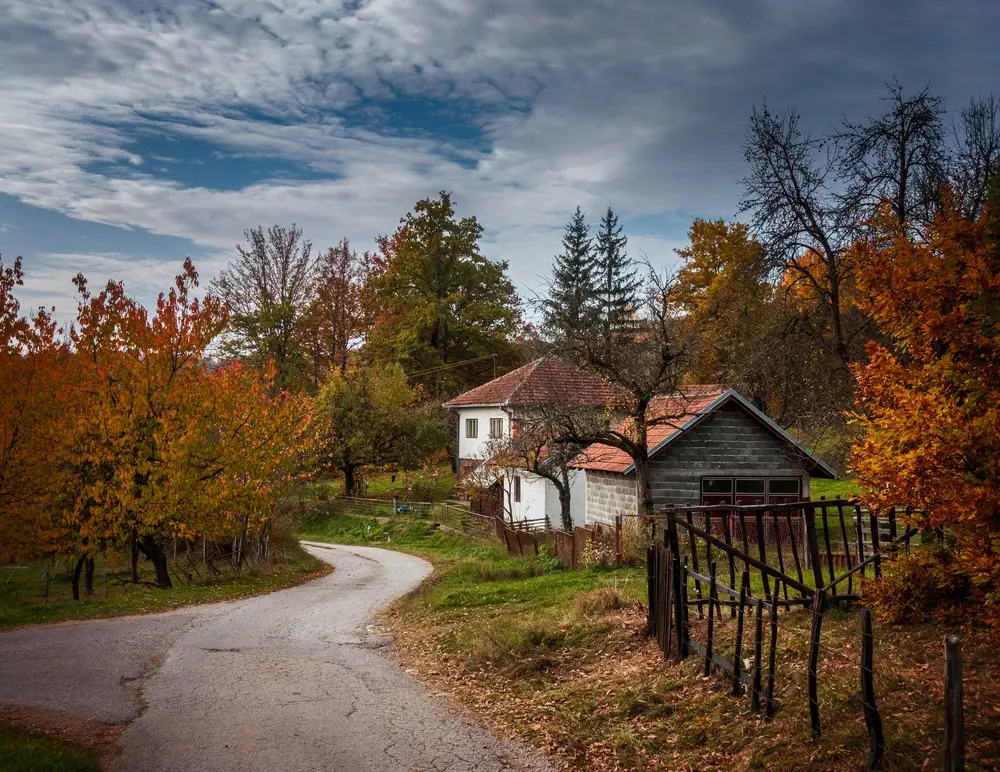
Old rural houses in Bosnia and Herzegovina © DMZ001 /Shutterstock
Old rural houses in Bosnia and Herzegovina © DMZ001 /Shutterstock
Edin Hajdarpašić is Associate Professor at Loyola University Chicago, where he teaches the history of the modern Balkans, nineteenth-century Europe, and the Habsburg and Ottoman Empires. He is the author of Whose Bosnia? Nationalism and Political Imagination in the Balkans, 1840-1914 (Cornell University Press, 2015). We met him in Pristina, where the Civil Society & Think Tank Forum (CSF) 2026 took place from 5 to 7 October.
I would like to start by asking you what was the topic of your public conversation at the CSF 26? Where did you want to lead all the convened people?
The notion of civil society as a site of pluralism and criticism that was necessary for a vibrant polity was really important to my own education, which took place in the shadow of the 1990s war and post-war reconstruction in Bosnia. So when I was invited to speak at the OSF Civil Society Forum, I wanted to return to criticism as a fundamental intellectual value that could shed light on some enduring problems in the relationship between Europe and the Balkans. And one of the most enduring ideas associated with this region has been the notion of clashing civilizations meeting and fighting over the Balkans. Samuel Huntington was one of the key proponents of this view since the 1990s, but the notion itself is older. Before Huntington, it was Bernard Lewis, a major Cold War expert on Islamic history, who traced similar lines of East-West clashes over the same outlines and even came up the phrase “the clash of civilizations.” And many Balkan nationalists have enthusiastically embraced this framing of their own nations. For me a historian, it’s important to take the weight of this history seriously. The idea of Europe building a defending wall around itself may be a rhetorical myth at odds with a more complicated reality, but at the same time, that old antemurale Christianitatis idea remains an enduring and mobilizing political touchstone. In the past and in the present, many powerful figures have imposed that vision of civilizational clashes directly onto our region. And it seems to me that Europe does not have an effective counter to these recurring stories.
Watch the speech by Edin Hajdarpasic and Valbona Zeneli.

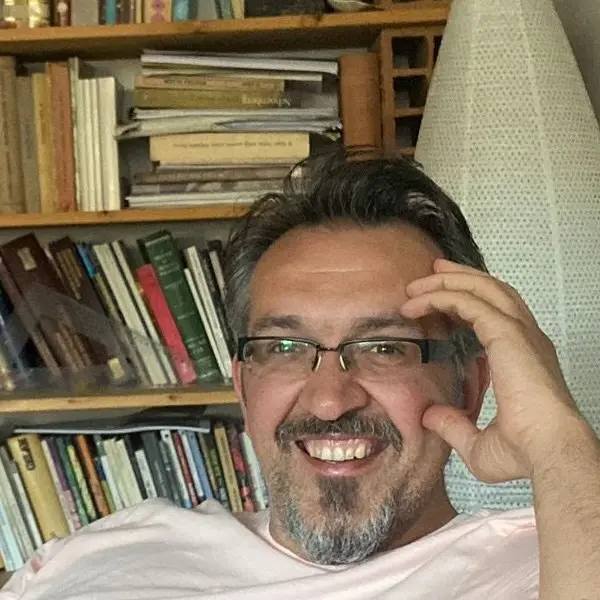
Edin Hajdarpašić (foto private archive)
You mentioned that Europe has no counter narrative. What did you mean?
Let me suggest some examples. Over the past few decades, we’ve seen a number of far-right figures carry out violent attacks across Europe, the US, and New Zealand. These figures often portrayed themselves as defenders of the West and explicitly invoked examples from Balkan history in their manifestos. The response of both politicians and historians, beyond the standard condemnation of any violence, has been to say that these manifestos got both the past and present wrong. If a far-right insurrectionist in 2011 styles himself after the defenders of Vienna against the Ottomans in 1683, then the usual liberal response was to say that the attacker misunderstood, distorted, or oversimplified a complex history. But even as it tries to fact-check and debunk it, that response ultimately re-centers the clash of civilizations view as the starting story. And decades of such fact-checking have not reduced the power of “the clash” narratives. Just this month, the US Secretary of State used his visit to Greece to talk again about Western civilization and its struggle against mass migration. It passed without much pushback. There’s less and less difference between the manifestos of attackers and the stances of many politicians. That’s what I mean by contemporary European politics having no effective counter-narratives. A genuine challenge to such deeply ingrained narratives would provide not mere fact-checking, but a different story about Europe, one that does not revert to variations on “the defending wall” myths. While civil society can provide necessary spaces of critical reflection, broader counter-narratives would have to emerge from collective and creative efforts across European societies. Perhaps I’m missing something, but I just do not see much of that kind of self-reflection underway in contemporary EU.
What kind of examples you can offer to a Balkan audience of the larger world they should reconnect to, drawing from their history?
In the relationship between Europe and the Balkans, the pull of gravity toward Europe has often blinded us to other relationships to other parts of the world. I think it’s really important to expand our perspectives and to hone the skill of comparative analysis, of trying to understand and connect with other parts of the world. I don’t have one specific prescription or place that we should look to, but I do think that it’s very important to try to situate our Europe-Balkans relations in other kinds of analytical and global frameworks. In my talk I tried to discuss some histories of liberalism in the Balkans and also more broadly. But that’s just one case study and there could be more. Among other things, critical attention to global connections has the potential to help us recover our region’s long-neglected cosmopolitan histories and attitudes. For too long, it’s been too easy for Balkan nationalists to volunteer themselves to be good little soldiers in patrolling the defending walls of Europe, which ultimately meant defining oneself against the non-European. But the actual histories of Balkan societies are much richer, they’re also connected to what was called “non-European.” I hope that critical inquiry has potential to make us less provincial and more worldly, more humanist in Edward Said’s sense of the word.
You concluded the conference with a very inspiring message. Could you share it with our readers too?
You know, what I said was kind of improvised, but basically it was about this very common metaphor about the Balkans as a bridge. Usually it’s the bridge between cultures, between religions, between East and West, and so on. And I was thinking about that and about so many people who live here or live abroad, like myself, but remain deeply connected to this region in various ways. And I wanted to think about what kinds of lives we could build out of that. It’s very difficult to live on a bridge. A bridge might get someone’s strategic attention, but a bridge is not a home. For me, I hope different metaphors and different discourses will emerge, not with the Balkans at the center of the world, but with us more comfortable with inhabiting the world we live in. Given the state of the world, that is obviously very hard. There are so many fires burning around the world, whether from the wars that have been started or from the climate collapse that we’re living through. There is so much to be done. And there are many people who are actively engaged in that on a local level, like with activism around rivers, forests, and nature across different Balkan states. So my hope is that, in our own different ways, we can contribute to making a world which we can actually inhabit with others.
Found an error in this article? Please contact our editorial team at redazione@balcanicaucaso.org.
Tag:
Featured articles
 the students' voices
 Investigation
 students' protest