Serbia elections: the bearers of freedom
On the eve of the parliamentary elections in Serbia, we spoke with three students and a lawyer who believe that freedom is the greatest human value and that the future does not necessarily have to be marked by abandoning one’s country. We must fight for a society where no one has to choose between their rights and their safety
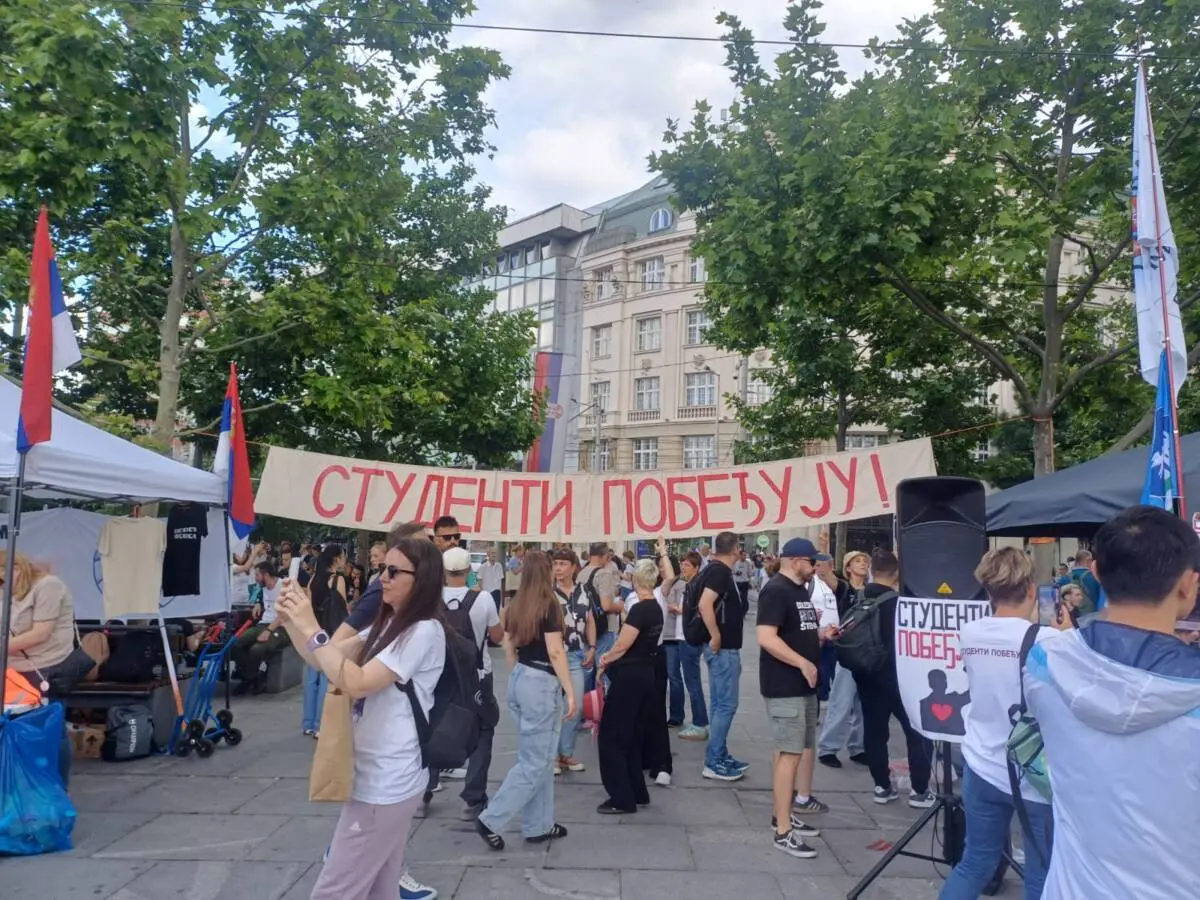
Belgrade, Serbia, during a student march, “Students Win!” – Photo: D. Nenadić
Belgrade, Serbia, during a student march, "Students Win!" – Photo: D. Nenadić
There are moments when a society suddenly recognises itself in individuals for whom it had little expectation until then. Think, for example, of young people, whom we have long considered disinterested, apathetic, apolitical, focused only on themselves and their own needs. Then comes an earthquake, almost like an unexpected force that suddenly appears and moves everything in its path, changing the lives not only of young people, but of hundreds of thousands of citizens who see young people as bearers of freedom.
The last two years in Serbia have been marked by student and citizen protests, occupations of universities and schools, large rallies and mobilisations unseen in the country since the reinstatement of a multiparty system. After the tragedy at the Novi Sad train station on 1 November 2024, issues related to justice and accountability have become much more than just the demands of a single generation. They have become a matter of daily survival, of trust in institutions and of living without fear. They have become a path toward regaining the right to a life worth living.
Ahead of the Serbian parliamentary elections, scheduled for 25 October, we spoke with students Aleksandar Marinković, Emilija Gospavić and Bogdan Jevtić, and with lawyer Ivan Todorović.
Their voices convey no great promise, pathos, or fear, but something more precious: an unwavering commitment to a better life. In the way they recount their experiences, the attacks they endured, the support they received and the fears they overcame together, we glimpse a different, better Serbia.
Perhaps this is precisely where the deepest meaning of the student struggle and movement lies: in the awareness that the country is not only what we have been given, but also what we give to others and what we can become together.
Hunger for justice
Aleksandar Marinković is twenty-one and a student at the Faculty of Computer Science at the University of Belgrade. He joined the student movement because he had long been told that nothing was working in Serbia and that the institutions were not doing their job. He does not remember, as he himself says, better times, but he quickly realised that the country where he was born could be changed.
“I have always thirsted for justice. Betraying this feeling would mean giving up, and that is the last thing I would do. If I were to give up, I would not be human anymore”, says Aleksandar with a firm voice.
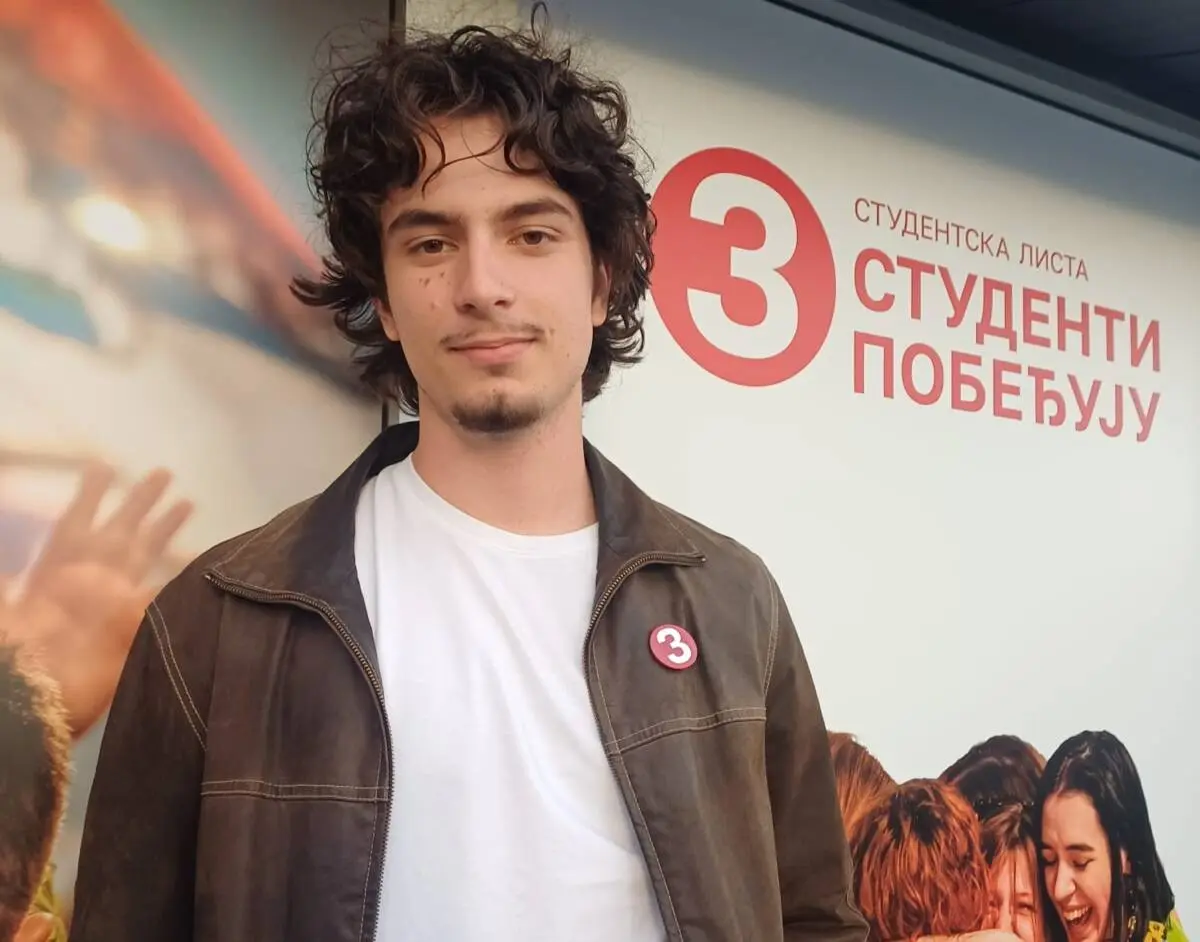
Aleksandar Marinković – foto D. Nenadić
For him, freedom is neither an unattainable goal nor an abstract concept. “Freedom means being able to publicly say what I think, being able to express myself without fear, being able to obtain information through free media. It means the ability for us, the citizens of this country, to influence the decisions made in our name”.
Aleksandar explains that the love of freedom and the fight for a just society are deeply intertwined with his family’s history. “Considering that my ancestors fought for the freedom of this nation, how could I ever give up freedom today?”, asks the young man.
He speaks as if he were much older and more experienced. He says he grew up thanks to the student movement. “We learned to take care of each other, to network and to talk openly about everything”. Since the protests broke out in 2024, the students have grown, shared roles and responsibilities, gained experience, and are convinced that differences can be overcome through dialogue and compromise.
“There is no room in our hearts for hatred and revenge. Those responsible for all the injustices our society has suffered over the past ten years must be held accountable. So that it never happens again”. His generation is not calling for revenge, but for accountability.
Speaking about the student movement, Aleksandar finds it disconcerting that people ask him in amazement where the students found the strength and will to fight uninterruptedly for almost two years to achieve their goals. “We are guided by simple ideas: faith and love, along with a little common sense”, adds Aleksandar, smiling with an almost childlike naiveté.
He gets emotional when he talks about injustices, insults and labels that have been attributed to him. “It is not pleasant to be accused of being a traitor or an Ustasha, especially when it is said by someone who knows you”. Nonetheless, the hunger for justice and the belief that he is doing the right thing keep Aleksandar firmly tied to the student movement.
“I want to stay in Serbia. I envision the future not as an escape from problems, but as an opportunity to preserve and further improve what works well and to fix what does not”.
Fourteen years of injustice
Bogdan Jevtić is a twenty-three-year-old student at the Faculty of Law in Belgrade. He joined the student movement immediately after protests broke out at his faculty, and during the occupation of the building, he replaced his bed at home with a mattress on the floor of a classroom.
Bogdan instinctively senses the injustice around him. “I have never tolerated injustice since I was a child. I vividly remember how I cried every time I was unjustly accused”.
Aleksandar also perceives his choice of major as a kind of injustice. “I wanted to study history, it is my first love. But in Serbia, you cannot make a living as a historian. The teachers are degraded, on the brink of extinction. My parents, wanting the best for me, did not consider history studies a choice that would allow me to have a dignified life. That is why I enrolled in the degree course in law, which I have grown to love over time, but I still find it deplorable that a young person in this country has to make decisions based not on their desires and interests, but on their own survival”.
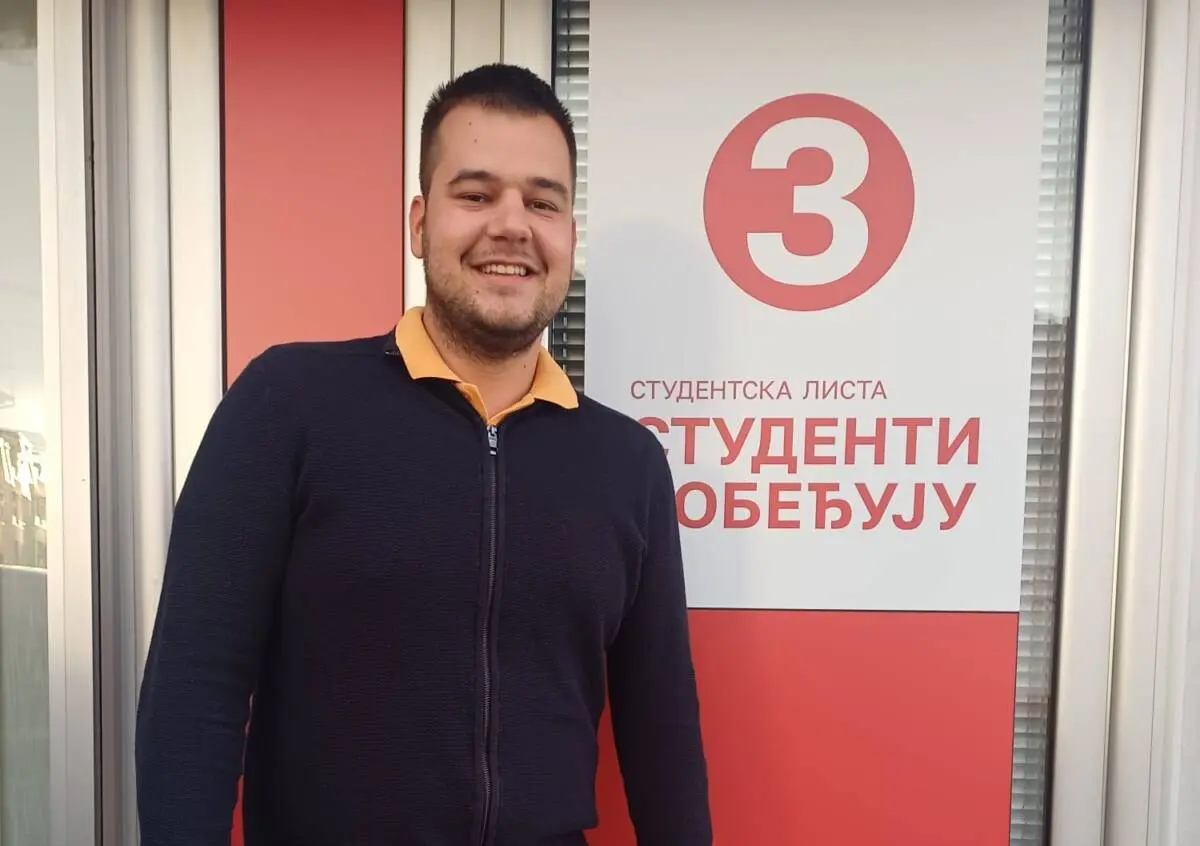
Bogdan Jevtić – foto D. Nenadić
For Bogdan, injustice is not just a legal and political concept. It permeates every aspect of Serbian society, where not everyone can freely express their opinions. Some fear losing their jobs if they do not support the ruling party, others are exposed to threats because of their differences, and some are unable to provide for their families’ basic needs. “Injustice is anything that prevents human beings from freely living a normal life”.
He speaks with great enthusiasm about the aftermath of the elections, from which, he is convinced, the students will emerge victorious. “Serbia is like a patient who has been in a coma for fourteen years. On 26 October, that patient will wake up and have to start all over again. Recovery will not be quick or easy, but we have the skills and patience. We have demonstrated this. We will have to renew the institutions, the judiciary and the school system, restoring respect for the rules and laws that must be applied equally to everyone”.
In this vision of the future, there is room for everyone. For Bogdan, it is important to rediscover faith in the Church to which he belongs and respect all differences. “In a different Serbia, my friend from Novi Pazar, like my friend from Subotica, will have a place and a dignified life, even if they do not belong to my religion. We all ask for the same thing: to be able to live in a stable country where the laws are respected”. Community, according to Bogdan, does not mean being all the same, but recognising and valuing what we have in common.
He has felt fear several times. Now he speaks about it without nervousness. “During the first rallies and large protests, we heard all sorts of rumors: that the police would intervene, that we wolud be attacked by criminals, and that our safety would be threatened”. Preparing for one of the protests, Bogdan had written a lawyer’s number on his right hand and a verse from Paul of Tarsus’s “Letter to the Philippians” on the other.
Today, Bogdan is no longer afraid. Not because the risks have disappeared, but because the experience of a shared battle has changed his perception of risk. “We know very well what awaits us on 25 October and what this government is prepared for. But times have changed, and we are ready for whatever they try. The citizens have awakened and are supporting the students”.
Bogdan does not want to leave Serbia. “The student protests will end sooner or later. After the upcoming parliamentary elections, the presidential ones will follow. We will not leave anything to chance. Then I want to study and do everything normal for a young person. I will stay active, and the kind of society I live in is important to me”.
School as a space of freedom
Emilija Gospavić was only eighteen years old when, together with some of her peers, she organised the occupation of the high school she attended in Lazarevac, one of the municipalities of Belgrade.
“At first, there were only a few of us. I remember observing and following the students’ activities every day. When the university and then high school blockades began, I realised I could not remain a silent observer. I called a friend, then another, and so on, until we had mobilised classmates from every senior year of high school, ready to join us in organising a joint protest at our school”.
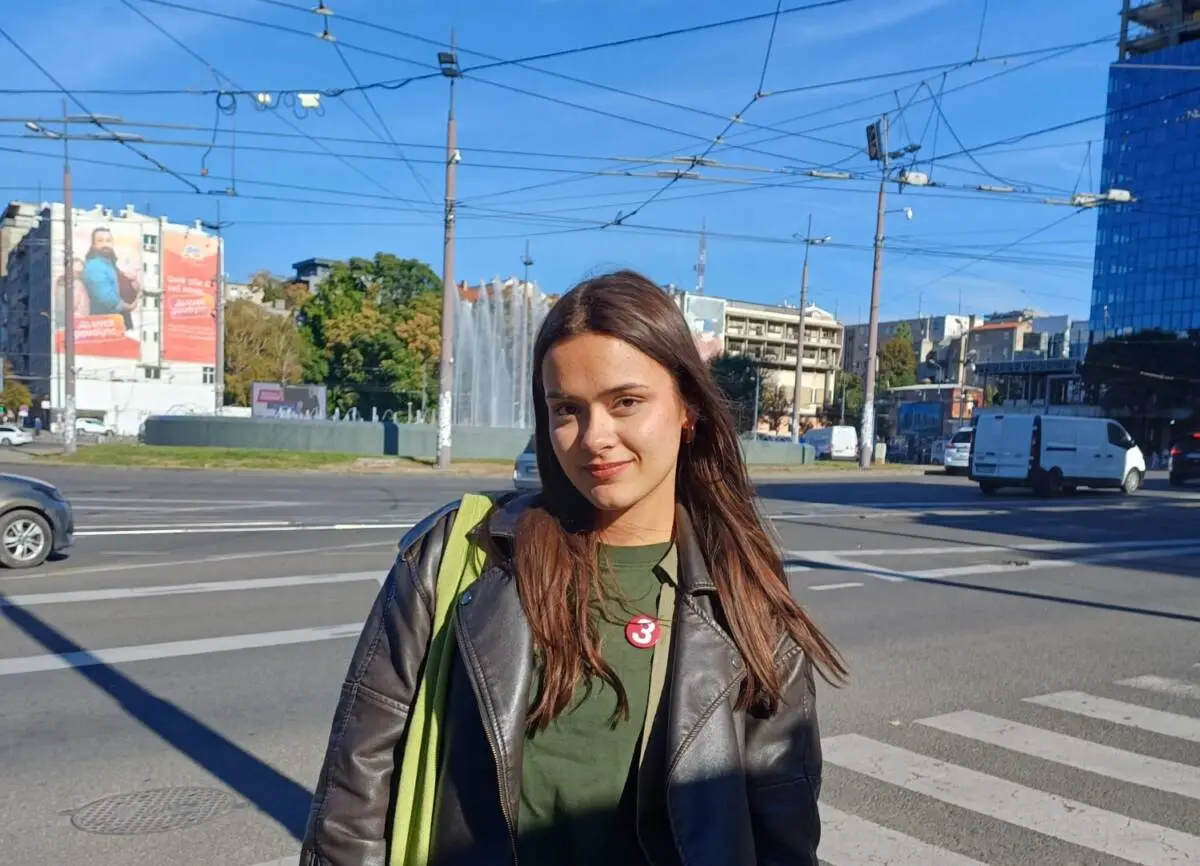
Emilija Gospavić – foto D. Nenadić
Emilija’s experience confirms that these young people, barely 18, have put democracy into practice in a way that most Serbian citizens would envy. “We followed the university students’ activities and learned about plenary sessions, working groups and other initiatives, so we organised similar activities at our school, with the support of the Lazarevac university students involved in the protests at their faculties, who supported us wholeheartedly”.
The most difficult moment, as Emilija explains, was when they had to enter the assembly hall and inform the professors and the principal that they were organising a protest. “We were very worried, but we did not give up. Once we realised that most of the professors supported us, everything became much easier, despite the intense pressure and even the insults we endured from the principal and some professors”.
They felt fear when they blocked the school, occupying it for over a month. “I was not so afraid for myself. I was aware of the responsibility we had, so we did our best to avoid giving anyone cause for criticism. We took care of the school as if it were our own home, and we protected and encouraged each other”.
Emilija and her classmates received support from parents and residents of Lazarevac, who stood guard outside the school at night to ensure the safety of the young people.
“It was a positive experience, despite the difficulties. I learned a lot and became more mature. That closed and occupied school was our space of freedom. There we could exchange opinions, discuss and decide together how to carry on the protest”.
Emilija does not dwell too much on the past, firmly convinced that there is still much work to be done. She still has the strength and energy to fight for the society she wants to live in. “Like everyone, there were times when I had to take a short break, especially after enrolling in university and leaving my hometown. I found myself facing new situations, but I never stopped working. At a certain point, my commitment diminished, but now, with the elections approaching, I am active again”.
What saddened this young girl most was the discovery that her parents, for her own good, wanted to persuade her to leave the country. “Imagine what kind of country we live in when parents insist their children leave, convinced there is no future here”. For Emilija, the greatest joy is not her friends, nor books, nor travel, nothing one would expect from a nineteen-year-old girl. What makes her happiest is the opportunity to canvass door-to-door.
“It makes me especially happy when I see older people, especially in the villages, who are exposed to the regime’s propaganda, change their minds when they talk to us. In those moments, my heart fills with joy”.
Emilija agrees with Aleksandar and Bogdan. “My generation has never been apathetic, disinterested or apolitical. The fact that we were perceived as such is not our problem. This perception is probably linked to the fact that traditional political parties failed to reach us and established modes of political action and activism weren’t close to us. But we have always been deeply aware of the suffering and injustices present in the society”.
Emilija, Bogdan and Aleksandar experienced the collapse of the canopy in Novi Sad with great sadness. Aware of the great tragedies that have shaken Serbian society over the past decade – think, for example, of the massacre at the Vladislav Ribnikar elementary school in Belgrade and those in Dubona and Malo Orašje – they did not expect a protest of this magnitude. All three thought the protests would subside within a few weeks.
“I was on the train on my way home from university when I saw the news of the roof collapse on my phone. I thought it was a set-up. I could not believe it. Then I felt pain, and then also anger at the loss of sixteen lives, cut short by corruption and this system”, says Bogdan. Aleksandar and Emilija share this feeling of sadness and anger, but also the determination not to let the names of sixteen people be forgotten after just a few months.
Freedom that resists
Ivan Todorović is a lawyer dedicated to assisting students and citizens who were victims of the regime. He has supported the student movement from its inception and, when necessary, at the students’ invitation, participates in all activities where his expertise can be useful.
While some increasingly speak of Serbia as a divided society, Ivan observes the student movement from a broader perspective. According to the lawyer, the students’’ mobilisation and their hopes of winning the elections open the possibility of establishing a new social contract, necessary for Serbia, based on respect for rights and well-functioning institutions.
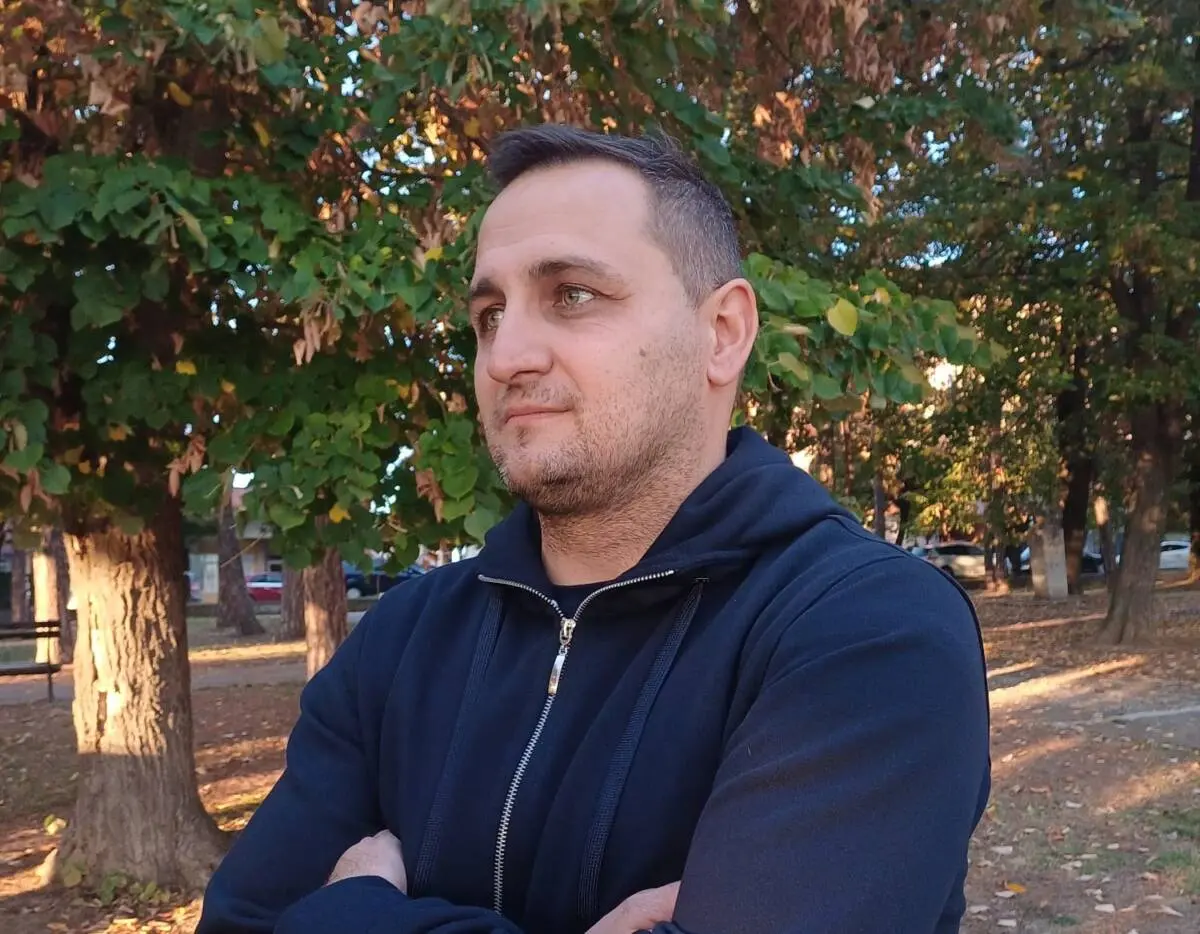
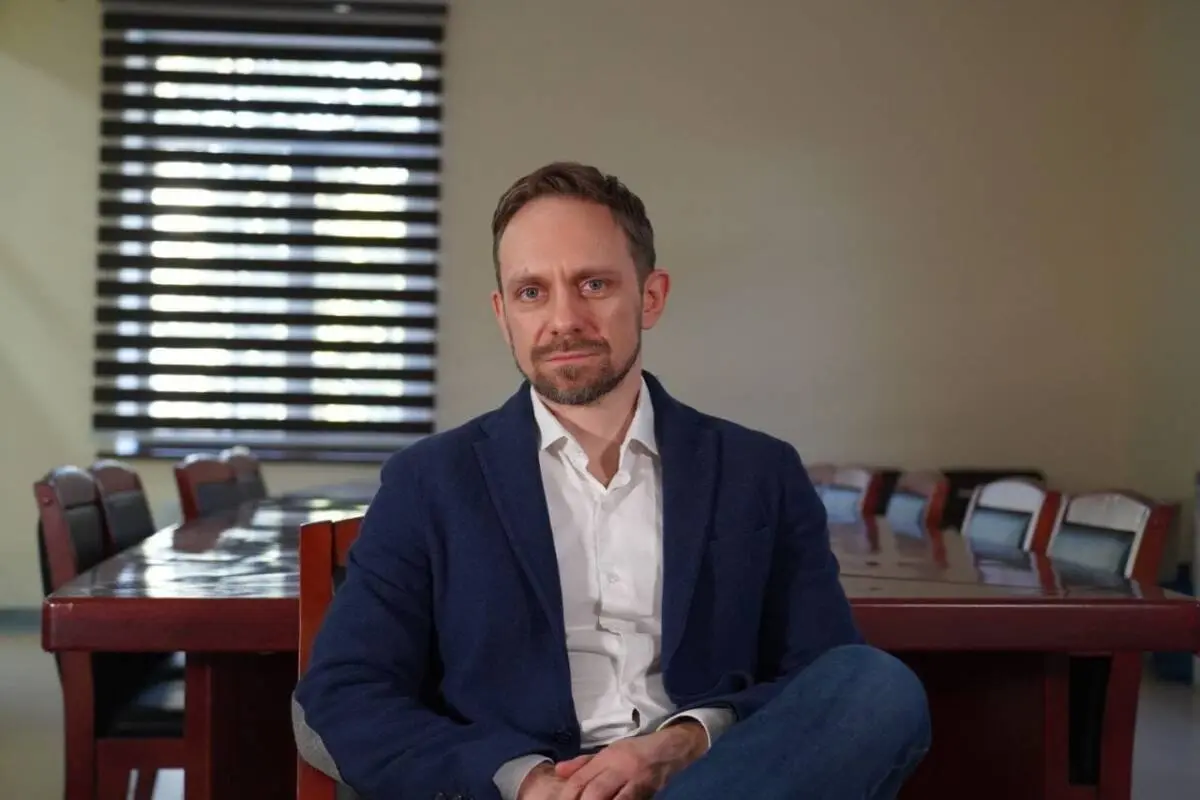
Ivan Todorović – foto D. Nenadić
“Rules must apply to everyone, and no one can be above the law, says Ivan. He emphasises that for a community to function, something we often take for granted is needed: the agreement to follow the agreed-upon rules, which must be respected first and foremost by those governing the country. Otherwise, institutions become devoid of any meaning, and citizens lose faith and believe they cannot choose their own future.
This is not the time for grand ideological debates. There is nothing more important than establishing the rule of law and accountability. It must be remembered that after 2012, Serbia reverted to a pre-political state, and that is why a new social contract is needed, as strange as it may seem to those who do not live here. We no longer have institutions or a system.
When reflecting on the reasons why the students were able to mobilize citizens, Ivan emphasises their enthusiasm and good organisation, while also pointing out an aspect that many overlook: emotion. “People trust the students because they recognise the sincerity of their commitment and because they have managed to reawaken hope that change is still possible”.
“Students are the bearers of freedom, they carry the torch and spread the idea of freedom”, says Todorović. He disagrees with the idea that student protests grew in a society already desperate. “That could be one point of view. But hope has never disappeared. A generation has arrived that only needed a spark to demonstrate what it can do”.
Ivan speaks vividly about the student movement: “A spark has been lit, an irrepressible flame of freedom”. He emphasises, however, that the commitment to change does not end with a change of government. “It is necessary to renew the institutions, especially the prosecutor’s office, the courts and the police, to ensure that all those who have committed crimes are held accountable before the law”.
The student movement inspires hope, but Serbia’s recovery will not be easy. Serbian citizens will take the first step in the October 25 elections, from which – Ivan is convinced – the students will emerge victorious.
After the conversation with Emilija, Aleksandar, Bogdan and Ivan, one is left with the impression that behind the lofty words about freedom, justice and responsibility lie completely ordinary human desires. The ability to freely express one’s opinion, the ability to live without belonging to a political party, the ability to think differently as long as the freedom of others is not infringed, the ability to live in an orderly and democratic Serbia.
The path will not be easy or quick, our interlocutors warn. They have experienced fear, exhaustion and uncertainty, but giving up this fight, which has lasted nearly two years, has never been an acceptable option for them. The justice they unanimously advocate is not merely punishment for a wrong suffered. It is the opportunity to build a better future. And freedom, once recognised as a shared value, ceases to be an individual matter and becomes an obligation to others, especially to future generations.
Found an error in this article? Please contact our editorial team at redazione@balcanicaucaso.org.
Tag:
Featured articles
 Investigation
 students' protest
 Montenegro Pride 2026