SOTEU 2026: What future for EU migration policies?
Falling arrivals, a stronger Frontex, a new emergency framework: in her State of the Union address (SOTEU), European Commission President Ursula von der Leyen announced new migration measures. But as people keep dying in the Mediterranean, the question remains of who is actually providing protection to those forced to leave.
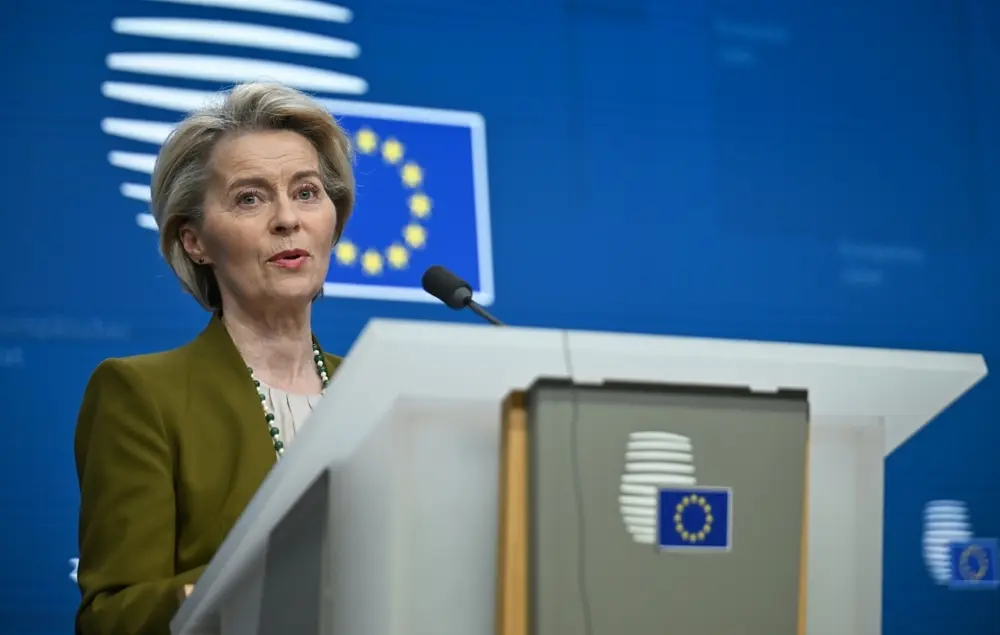
EC president Ursula von der Leyen © photoibo / shutterstock
EC president Ursula von der Leyen © photoibo / shutterstock
In her State of the Union address on 16 September, the president of the European Commission Ursula von der Leyen announced plans for a new European Emergency Response Framework on migration, alongside stronger support for returns and a Mediterranean youth employment initiative.
The proposed emergency framework would allow temporary, strictly defined flexibility in standard procedures when specific criteria are met, particularly where mass movements of people are engineered or weaponised.
Referring to the pressure that occurred this summer on Europe’s eastern borders, in Ceuta and Crete, von der Leyen promised that “border protection would remain consistent with fundamental rights”. However, she did not specify which procedures might be changed.
Have a question, comment or suggestion? Share it with us through the PULSE reader form — we read and reply to every message. Be part of Europe’s conversation. Your experiences and ideas can inspire the next stories we tell. Join the PULSE readers’ community by filling in this short form.
The Commission president called for full implementation of the Pact on Migration and Asylum. Built on the Commission’s September 2020 proposals, the Pact was adopted by the Council on 14 May 2024. The application of the rules began on 12 June 2026, establishing a common framework for asylum procedures, border management and solidarity between member states.
Von der Leyen spoke of a 55% reduction in irregular arrivals over the past two years and a further 35% drop this year. She presented these figures as progress, while arguing that this summer’s events demonstrated the need for additional emergency tools.
EU Commission president also referred to an already-proposed sanctions regime targeting smugglers and traffickers. Looking ahead, she pledged to strengthen the EU’s border guard agency (Frontex), particularly to accelerate returns, and improve early-warning systems in cooperation with third countries.
Alongside border enforcement, von der Leyen announced measures addressing employment opportunities and legal migration.
“This is why I am announcing today a new Mediterranean Youth Skills and Jobs initiative”, said von der Leyen. The announcement followed a call for investment in neighbouring countries and opportunities through jobs, skills, training and apprenticeships, so that young people do not have to undertake dangerous journeys.
She also referred to new gateway offices in partner countries to facilitate safe and legal migration, while reaffirming protection for asylum seekers and the freedoms of the Schengen area. However, the EC president’s references to migration-related policies did not contain earmarked budgets or implementation timelines for these initiatives.
Returns legislation follows a separate track that complements the Pact. The Commission’s proposal for a Common European System for Returns, presented on 11 March 2025, included a legal framework for return hubs in non-EU countries.
On 1 June 2026, Council and European Parliament negotiators reached a provisional agreement envisaging such hubs for people who do not have the right to remain in the EU. The agreement requires arrangements with third countries that respect international human rights standards, including protection against return to persecution or serious harm. The Council announcement described a provisional legislative deal requiring formal adoption, but it did not announce the opening of operational hubs.
Ahead of the address, we met a senior EU official, who agreed to speak on condition of anonymity. He said that the Commission had already put forward a proposal on returns and that member states needed to agree on return hubs. The official also indicated that von der Leyen would not raise the hubs in her speech.
The politics of “fewer arrivals”
What does a decline in arrivals actually tell us? Fewer people reaching European territory does not necessarily mean that fewer people are trying to move, that fewer are being displaced, or that European policies are becoming more effective in protecting human lives.
The latest IOM data highlights this contradiction: by 15 september 2026, around 59 500 people had reached Europe by sea, and more than 2400 people died or are missing.
Von der Leyen stated that arrivals were lower than in previous years. However, the number of arrivals cannot be considered a sufficient indicator of the effectiveness of migration policies as long as the Mediterranean Sea remains a deadly border area. Deterrence and protection are not the same thing.
When legal pathways are limited and cooperation with third countries focuses more and more on interception and containment, people do not necessarily stop moving. The routes simly change, the journeys become more dangerous, and protection becomes increasingly difficult to achieve. Fewer arrivals may therefore reflect a combination of interception, containment, route displacement and people being prevented from reaching European territory in the first place. All this through pushbacks in collaboration with Frontex and the so-called Libyan Coast Guard, funded through agreements between Italy and Libya.
European institutions increasingly frame migration through the language of emergency, and the SOTEU of this year is evidencing more than ever the pressure, crisis and weaponisation. In the meantime, the geopolitical conditions that produce displacement receive far less political attention. Wars, authoritarian repression, climate-related displacement and regional conflicts are treated as normal background conditions and the real “emergency” begins when displaced people approach Europe.
Europe is increasingly choosing to build permanent capacities for surveillance, border control, returns and cooperation with third countries. Safe routes, search and rescue, reception, asylum systems and long-term infrastructure are not a priority either in the allocation of resources or in political discourse.
When migration is continuously constructed as an emergency, crisis measures risk becoming permanent architecture of the European policies. The EU Commission is now proposing an Emergency Response Framework with the focus of strengthening Frontex. However, its expanding role in surveillance, border management, returns, training and cooperation with third countries makes it a central actor in consolidating the European border regime.
From a political standpoint, though, the direction taken is significant. The border is no longer simply the line preventing people from moving. It is becoming a network of infrastructures extending beyond the EU territory. Screenings, interception, transfer and return will gradually be moved outside the EU, making third countries part of the European border-control architecture.
This raises questions about the actual protection of the people on the move. When migration is described as something that can be “engineered” or “weaponised”, where exactly does the protection fit within this emergency framework?
New initiatives as an alternative to dangerous journeys?
The same imbalance emerges in the announcement of the Mediterranean Youth Skills and Jobs Initiative. Von der Leyen presented jobs, skills, trainings and apprenticeships as alternatives to dangerous journeys. However, the Commission has not specified a number of beneficiaries, the rules for accessing the programme, the dedicated budget, and a clear timeline with a specific list of participating countries.
Therefore, the question arises: how can this investment be compared to the resources mobilised for border control, repatriation centers and Frontex?
Creating a protection-centred approach would require measurable investments in asylum, reception, search and rescue, safe pathways, family reunification, child protection, legal assistance and social inclusion.
The number of people prevented from arriving irregulary cannot be the only criterion that matters. The number of people gaining access to safety, mobility, decent work, and real rights in Europe must also be taken into account.
The fundamental question raised by the SOTEU 2026 is not so much how effective European migration policy and its implementation are in keeping people out, but how effectively they provide protection to those forced to move.
Found an error in this article? Please contact our editorial team at redazione@balcanicaucaso.org.
 This article was produced as part of PULSE, a European initiative coordinated by OBCT that supports transnational journalistic collaborations
Tag: PULSE