Kosovo, anger and disappointment for the conviction of KLA leaders
Former Kosovo President and Kosovo Liberation Army (KLA) leader Hashim Thaçi has been convicted of war crimes in a first-instance ruling by the Kosovo Specialist Chambers, alongside three other KLA leaders: Kadri Veseli, Jakup Krasniqi, and Rexhep Selimi. The verdict has sparked anger and disappointment in Pristina
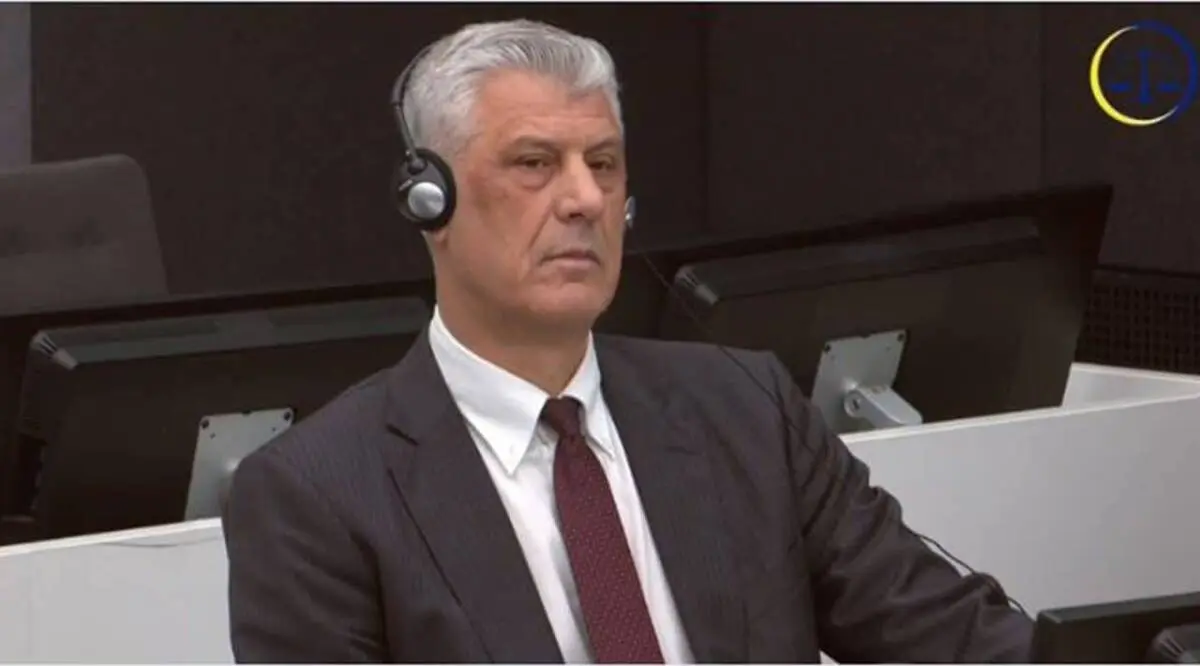
Hashim Thaçi at the Kosovo Specialist Chambers in the Hague – Photo: Kosovo Specialist Chambers
Hashim Thaçi at the Kosovo Specialist Chambers in the Hague © Photo Kosovo Specialist Chambers & Specialist Prosecutor's Office
Former President of Kosovo, also one of the key leaders of the Kosovo Liberation Army (KLA) Hashim Thaçi, and his three comrades, Kadri Veseli, Jakup Krasniqi and Rexhep Selimi, have been found guilty by the Kosovo Specialist Chambers of war crimes committed between April 1998 and 20 June 1999.
In the decision presented this Wednesday by Presiding Judge Charles Smith III, Hashim Thaçi was sentenced to 25 years in prison, Jakup Krasniqi to 25 years, Kadri Veseli to 18 years and Rexhep Selimi to 13 years. The six-year time they have already spent in detention will be counted towards their sentences.
While responsibility for their actions remains individual and personal, as Judge Smith said, the Trial Panel treated them as they have worked together to achieve their mission; independence of Kosovo and the institutional control of Kosovo. The Panel found that they established a system for implementing common criminal purpose, including detention facilities, and assigned roles to structures such as the military police, intelligence service and special units.
“The Trial Panel found that the existence of the common criminal purpose was supported by a number of factors, most notably the pre-war targeting and killing of Albanians suspected of being collaborators and ethnic Serbs as enemies, criminals or occupiers, and the use of communiqués to claim responsibility for these attacks and killings; the further targeting of Albanians, Serbs and others during the war for the same alleged reasons; and the use of communiqués and political statements during the war to claim responsibility for “punitive measures” and to warn and threaten other opponents,” says in the summary of the judgment.
The four former KLA leaders were found guilty on four counts of war crimes: illegal or arbitrary arrest and detention, cruel treatment, torture, and murder.
Regarding unlawful or arbitrary arrest and detention, the Trial Panel concluded that between April 1998 and 20 June 1999, at least 385 people were deprived of their liberty by KLA members in detention centers controlled by the KLA in different municipalities in Kosovo and at some locations in the northern Albania. Many were accused of being “Serb collaborators,” “collaborators,” “spies,” “traitors” or similar.
In relation to cruel treatment and torture, the Trial Panel found that during the same period, 348 people were subjected to cruel treatment and, of those, 303 were tortured. The judgment says that many KLA members involved in their detention physically mistreated detainees.
“The persons targeted by the KLA fell into different categories, including: (i) members and representatives of other political or military forces, or persons associated with them, particularly the LDK and FARK, who had not completely renounced their allegiance to these organisations; (ii) persons alleged to be associated with the FRY/Serbian authorities; and (iii) members of ethnic minorities, including a number of Roma and Serbs,” Judge Smith said while reading the summary of the judgment.
The Trial Panel also have come to the conclusion that between April 1998 and 20 June 1999, KLA members intentionally committed acts or omissions resulting in the deaths of at least 96 people who were not taking an active part in hostilities, in 12 municipalities in Kosovo and at one location in northern Albania.
The responsibility of each defendant and how their sentences were argued
While the judge said that the acts, such as more than 300 detainees, tortured, and 96 killed, had been committed by members of the KLA – not mentioning specifically the four accused ones, he later connected the guilt of the defendants to their positions and power held during the time for which they are accused.
Former Kosovo President Hashim Thaçi, as a member of the KLA General Staff and head of its Political Directorate, was found to have played a key role in the creation and implementation of what is called the common criminal purpose.
“In this respect, the Trial Panel found that the Political Directorate had almost exclusive authority over the KLA’s political decisions and created the KLA’s political vision, which it expressed publicly,” the judgment summary says.
According to the judgment, Thaçi participated in crimes, including the arrest, detention and questioning of 13 parliamentarians in villages of Qirez and Baicë, as well as the unlawful arrest, detention, transfer and killing of Behajdin Allaqi, and had knowledge of the arrest and detention of several other people.
Kadri Veseli, as head of the Intelligence Directorate, was responsible for intelligence activities involving the identification and monitoring of people suspected of being collaborators.
According to the judgment, Veseli was involved in implementing the General Staff’s “special warfare,” in identifying and targeting opponents, and in crimes including the unlawful arrest, detention, transfer and killing of Behajdin Allaqi and the arrest, detention, transfer and release of another KLA detainee.
Similarly, regarding Krasniqi, the Trial Panel found that he used his role as a member of the Political Directorate and KLA spokesperson in formulating and implementing the policy of targeting opponents.
Rexhep Selimi was treated somewhat differently in terms of the authority he exercised over other KLA members. He served as Inspector General of the KLA. However, the Trial Panel found that he did not take action to stop the mistreatment and criminal acts committed by other KLA members.
“Specifically, Mr Selimi participated in the arrest and detention of the 13 parliamentarians in Qirez and was present at several crime sites charged in the Indictment,” according to the judgment summary.
The Trial Panel rejected the prosecution’s case that the requirement of a widespread or systematic attack directed against a civilian population therefore the four members of KLA were acquitted of the crimes against humanity counts.
In Kosovo, anger and disappointment are mounting
In The Hague, the judgment was followed by Kosovo foreign minister Glauk Konjufca.
“A sad, unjust, undeserved decision for the four KLA leaders. It really is something that will cause great damage for Kosovo,” he told reporters a few minutes after the hearing ended.
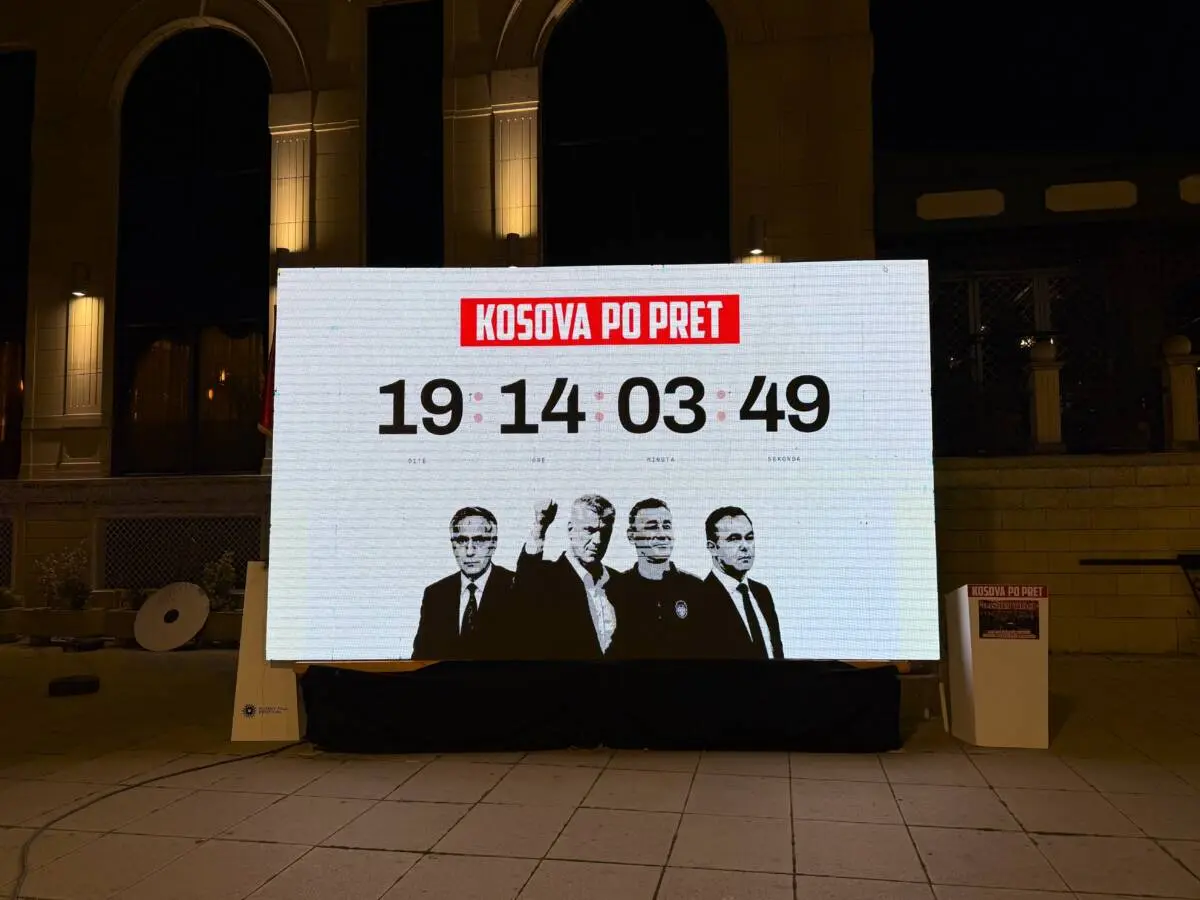
In Prishtina, for days people had been putting up countdown clocks, waiting for the four KLA leaders to return home after being cleared of all charges. Dozens watched the judgment live on television in Skenderbeu Square in Prishtina.
Kosovo established the Specialist Chambers in 2015 after strong pressure from the West, particularly the EU and the US, through constitutional amendments and the adoption of a special law, targeting only Albanians, but Serbian forces.
“On a day like this, the weight of this decision cannot be separated from the history we have come through. Kosovo experienced the violence of a state apparatus that killed civilians, committed massacres, expelled hundreds of thousands of Albanians from their homes and left behind thousands killed and missing,” acting President Albulena Haxhiu said in her reaction.
Similarly, dozens of Kosovo Albanians traveled to the Hague to celebrate of what they thought would be the liberation of the four KLA leaders. The Kosovo Specialist Chambers confirmed to OBCT that 64 journalists from 51 media outlets were accredited to follow the final hearing, Hague, including 15 media outlets from Kosovo.
Found an error in this article? Please contact our editorial team at redazione@balcanicaucaso.org.
Tag: