Water shortages in Greece and EU funds: a missed opportunity
Greece faces serious water supply problems: despite its promises, however, the Greek government has failed to utilise the measures provided by the EU Recovery Fund to tackle the situation, and the planned measures on water scarcity and management have largely been abandoned
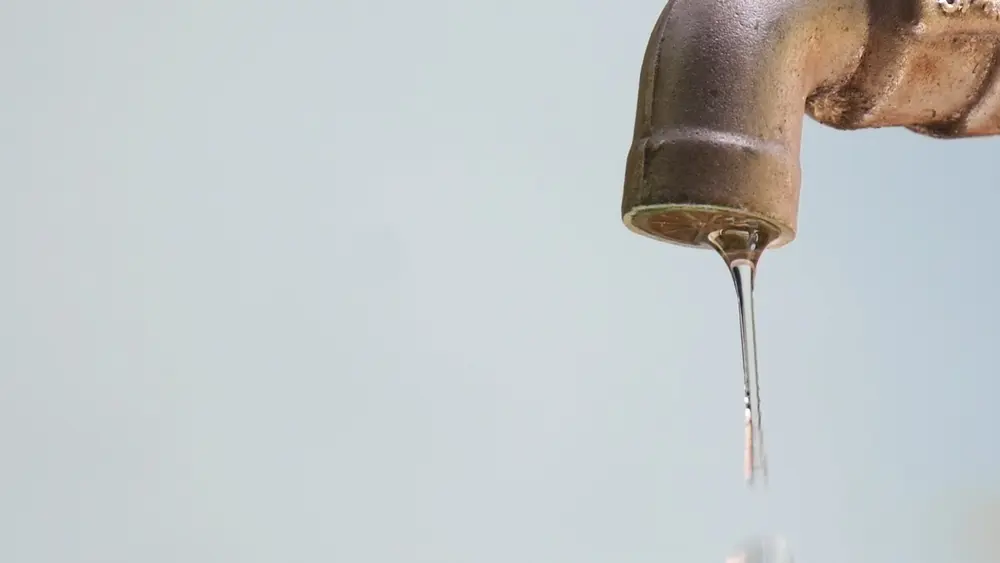
© 2000studio/Shutterstock
© 2000studio/Shutterstock
(Originally published by our project partner EuSEE EFSyN)
The Panhellenic Socialist Movement (PASOK) has recently launched an “information campaign” regarding how the government managed the “historic opportunity” presented by the Recovery Fund, namely the 36 billion euros that flowed into the Greek economy from the European Union in response to the pandemic.
The main opposition party recently highlighted that, regarding the major problem of water scarcity afflicting Greece, the government has been chasing a mirage. In short, all three measures under the Recovery Fund – which directly concerned water scarcity and water management – have either been amended or scrapped. These “measures” involved the implementation of at least 70 water supply projects across the country.
These figures reveal a complete lack of planning, particularly at a time when the government is boasting about how “green” it is.
Not a drop from the NSRF either
Tourist numbers are currently at their peak, yet in the South Aegean region, six islands are in a state of emergency due to water shortages.
Specifically, the Ministry of Environment and Energy has issued a red alert for Karpathos, Tinos, Astypalaia, Symi, Leros and Patmos.
After examining the funds managed by the Region under the NSRF regional programme, the Cohesion Observatory found that no funding for water management projects is planned there either.
In other words, out of a total of approximately 60 billion euros, neither the Greek government nor those providing technical services have managed to draw up a plan addressing humanity’s most pressing need: water.
The needs are however very real and the problems will be resolved using public funds and probably through half-measures, given the meagre resources that will be made available.
Half a million euros for desalination plants
The Cohesion Observatory contacted Nikitas Tsambalakis, the mayor of Patmos, regarding the issue of water scarcity, and he informed us that the island’s reservoir has run dry. He also said that two desalination plants are operating on the island to meet its water supply needs.
The mayor seemed reassuring, and confirmed that the Ministry of Environment and Energy will fund the operation of two additional desalination plants through the Public Investment Programme. In fact, the new plant at the ‘Kampos’ site – which cost 600,000 euros – came into operation a few weeks ago.
The issue, as he emphasised, is the cost of these plants. He pointed out that each desalination plant requires 500,000 euros in electricity costs alone making it a solution with significant energy and financial costs.
However, the mayor said that he has taken action to ensure that the required electricity is generated by solar farms, thereby reducing costs.
It is worth emphasising that the plan for desalination plants is a strategic choice by the Ministry of Environment and Energy, which is promoting this solution.
The plans of the Ministry of Environment and Energy
Last 23 June, the Ministry of Environment and Energy launched a public consultation on the “National Water Strategy”, a new comprehensive framework that, according to the Ministry, aims to change the way the country plans, protects and utilises its water resources.
According to the Ministry, this is the first nationwide strategy to clearly set out the country’s priorities regarding water, linking the protection of water systems with climate adaptation, technological modernisation, sustainable development and a more efficient water service operation. This new approach is based on the premise that water availability and quality are prerequisites for public health, agricultural production, tourism, entrepreneurship and, overall, for each region’s ability to develop sustainably.
As emphasised, the new Strategy aims to address long-standing weaknesses, such as administrative fragmentation, the piecemeal nature of interventions and the need for better coordination between stakeholders.
The three pillars
The National Water Strategy is organised around three key pillars.
The first concerns water as a guarantee of life, health and prosperity. The State is committed to ensuring that all citizens have access to sufficient, high-quality water, while protecting aquatic ecosystems and each region’s natural balance.
The second pillar is related to the country’s climate resilience. The new strategy shifts the focus from crisis response to prevention and preparedness, ensuring that Greece has the necessary mechanisms in place to respond promptly to water shortages and extreme flooding.
The third pillar concerns modern water governance. In this new era of water resource management, digitalisation, data utilisation, transparency and institutional strengthening are key tools.
The Ministry of Environment and Energy recognises the importance of creating stronger and more effective water service providers, so that the infrastructure can meet the increased needs of citizens and the challenges posed by climate change.
In this context, the relevant decisions have been made for 25 municipalities, covering 33 projects with a total budget of over 41 million euros.
Found an error in this article? Please contact our editorial team at redazione@balcanicaucaso.org.
This article was produced as part of the EuSEE project, co-funded by the European Union. However, the views and opinions expressed are solely those of the author(s) and do not necessarily reflect those of the granting authority, and the European Union cannot be held responsible for them.
Tag: Coesione UE | EuSEE