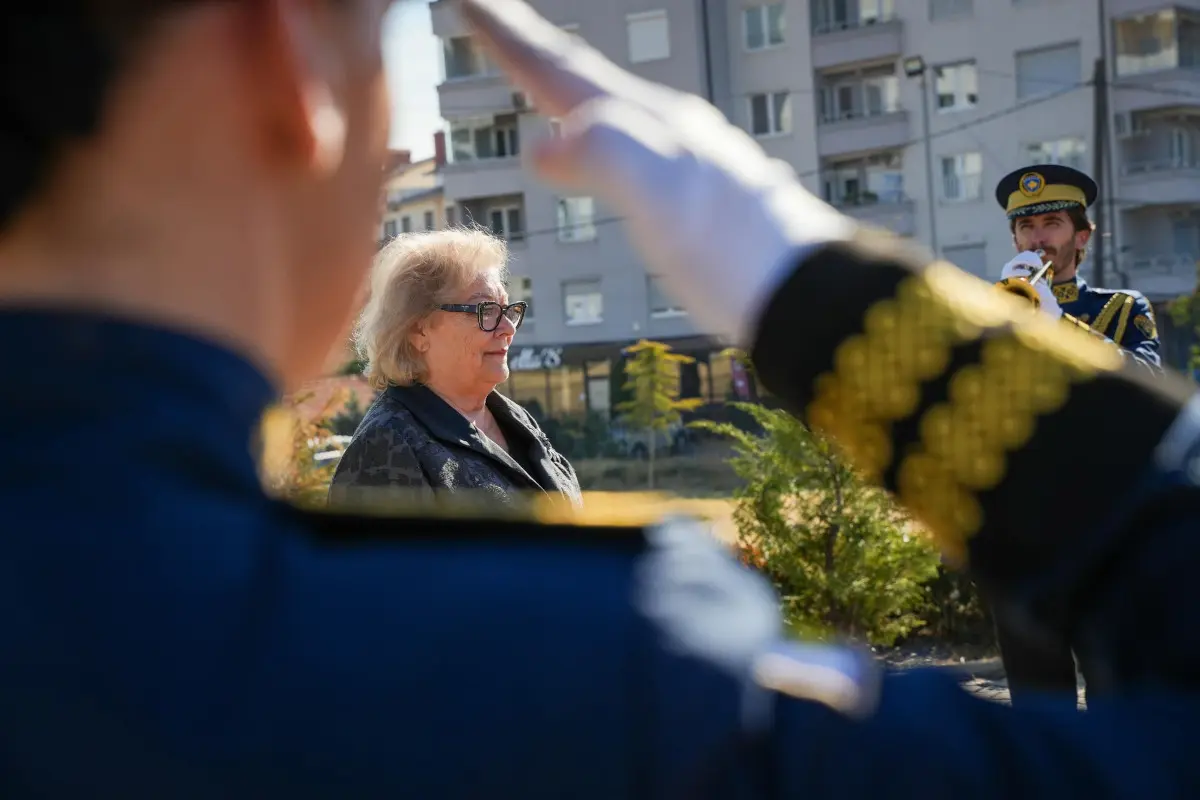
After Gaza, the Global Sumud Flotilla heads to Albania
On August 21, three vessels from the Global Sumud Flotilla set sail for Vlora. On board, Albanian and Palestinian activists were determined to demonstrate that the Mediterranean is a political space and that the struggles erupting on its shores can be interconnected
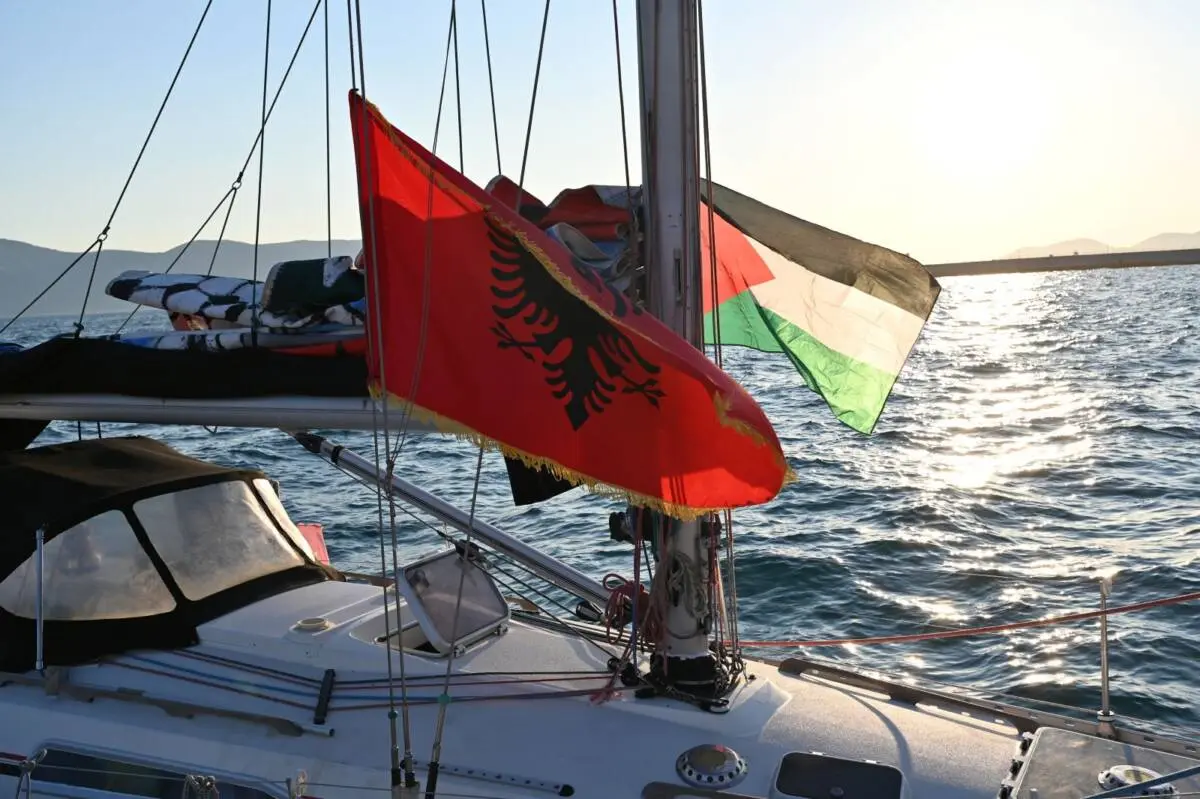
Un’imbarcazione della Global Sumud Flotilla con le bandiere albanese e palestinese – Foto per gentile concessione di Vjolanda Peca
A Global Sumud Flotilla vessel flying the Albanian and Palestinian flags - Photo courtesy of Vjolanda Peca
Every summer, thousands of people cross the Adriatic Sea between Italy and Albania. For many children of the Albanian diaspora growing up in Italy, those ferries have always meant one thing: returning home. They are the route for vacations, visits to grandparents, and family reunions.
“We grew up on those ferries,” Clara Osma, an Italian-Albanian activist from the Mesdhe collective (Mesdhe means Mediterranean in Albanian), tells OBCT. A phrase that evokes a familiar image for an entire generation raised between two shores of the sea.
This summer, however, that crossing took on a different meaning. On August 21, three vessels from the Global Sumud Flotilla reached Vlora, accompanied by dozens of activists from the Albanian diaspora. For the first time, the boats built to challenge Israel’s naval blockade of the Gaza Strip crossed another stretch of the Mediterranean, transforming a daily route into a political gesture.
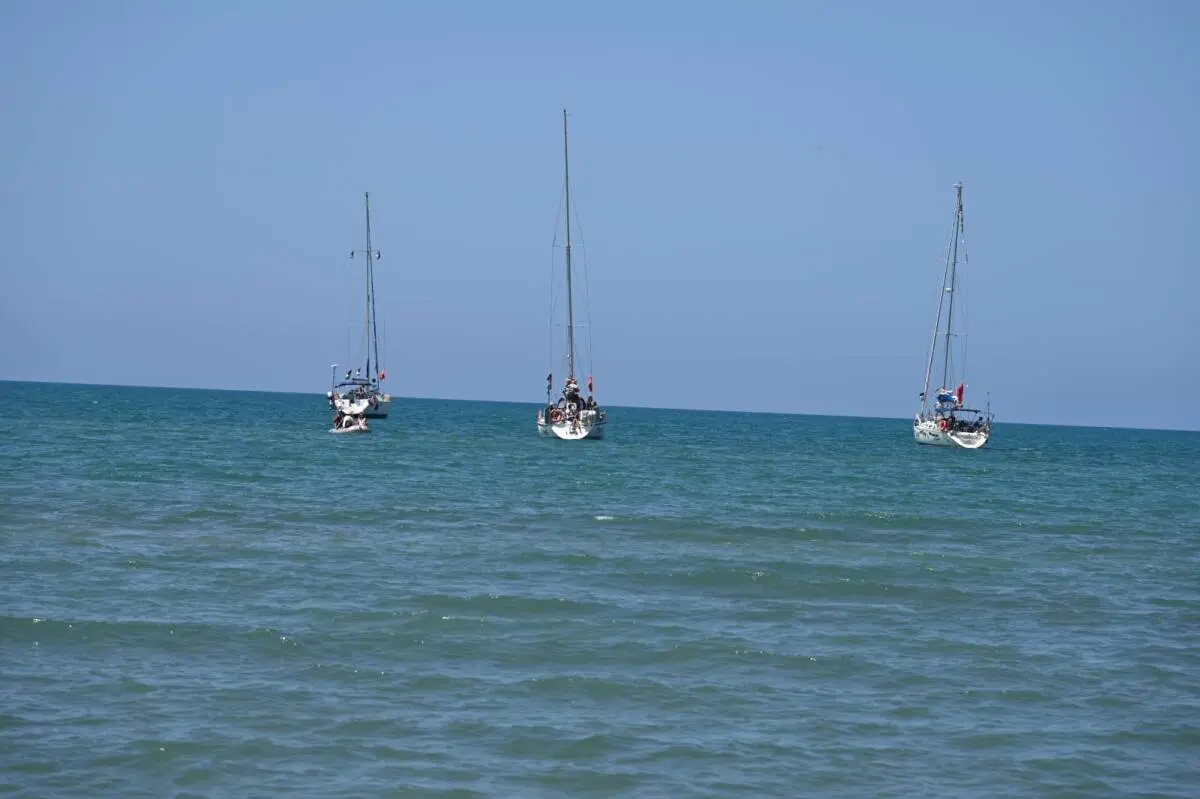
The Global Sumud Flotilla heading towards Vlora, Albania – Photo courtesy of Vjolanda Peca
The Mediterranean as a political space
The choice is not accidental. Mesdhe sought to assert a simple principle: the sea is not merely a space to be crossed, but a place where power relations are exercised. Who can navigate it freely? Who decides what crosses the Mediterranean and what must be stopped?
The same waters traversed daily by commercial ships, military fleets, tourism investments, and energy corridors are also those where migrants are forcibly turned back and activists in solidarity with Palestine are arrested.
The crossing to Albania stems precisely from this awareness. If the Mediterranean is a political space, the struggles unfolding on its shores can also be interconnected.
On the one hand, Gaza, where Israel continues to impose a naval blockade that has totally limited the freedom of movement of over two million Palestinians for years. On the other hand, Albania, where for three months thousands of people have been protesting major tourism projects planned on the island of Sazan and the Zvërnec protected area, denouncing a development model based on the privatization of the coast and the exclusion of local communities from decisions regarding their own territory.
The crossing sought to demonstrate how the Mediterranean is becoming a theater of shared transformation. Its coasts are being progressively reshaped by large-scale real estate investments, energy infrastructure, military bases, and luxury resorts; the sea itself is being governed through security measures, migration agreements, and border control.
In this context, crossing the Adriatic with the Global Sumud Flotilla vessels means reclaiming an opposite idea of the Mediterranean: a shared space, crossed by memories, relationships, and solidarity. The sea that returns to the people, to the peoples.
It is within this framework that the journey to Vlora takes on a meaning that goes beyond its symbolic value.
For the activists of the Global Sumud Flotilla, it is the continuation of a journey born in solidarity with Palestine and now intertwined with other mobilizations in the Mediterranean.
For activists of the Albanian diaspora, it represents a return to their origins along a route that is part of their family history.
35-Year-old memories
On August 8, 1991, the ship “Vlora” entered the port of Bari with approximately 20,000 Albanian emigrants aboard. Thirty-five years later, the journey took place in the opposite direction.
Among those who arrived in Vlora on August 21, 2026, aboard the three vessels of the Global Sumud Flotilla, was Klea Meksi.
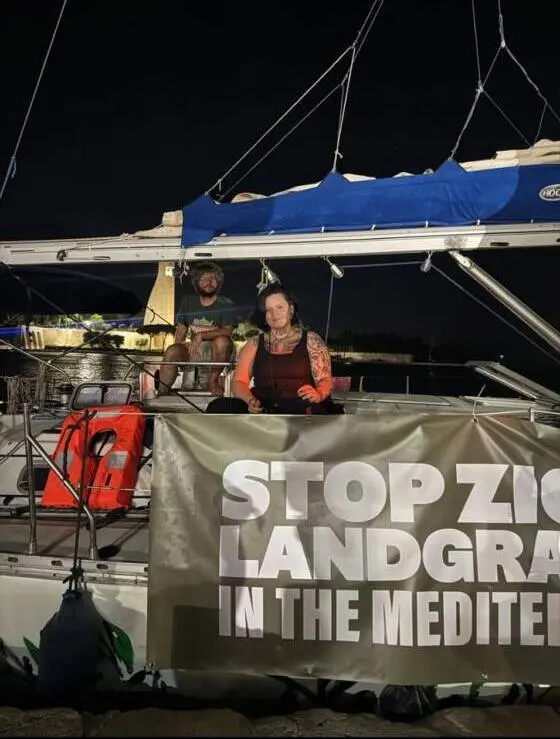
Klea Meksi on the Global Sumud Flotilla – Private archive photo
Her parents arrived in Italy on the “Vlora.” She grew up in Bari, speaking Albanian and Italian, maintaining ties to Albania through family and language. This time, she was the one who left, toward her roots.
For Meksi, the journey had both personal and political significance. She sees participating in the Flotilla as a way to give greater international visibility to the Flamingo Revolution.
“The Flotilla didn’t come to lead the protest, but to join it,” she told OBCT.
When protests cross borders
Detjon Begaj, another Albanian diaspora participant, describes the trip as a further step in his commitment to supporting the largest citizens’ movement Albania has seen since the 1990s.
Born near Vlora, a few kilometers from Zvërnec, Begaj says he has participated in protests in Tirana and activities in Zvërnec to combat illegal construction in recent months. In Bologna, together with other Albanians in the diaspora, he organized a protest attended by approximately 700 people.
Along with the Albanian diaspora, foreign activists also participated on this trip.
Among them is Yazan Eissa, a Palestinian activist on the Flotilla. He says he joined the initiative at a time when he felt helpless in the face of what was happening in Gaza. For him, the Flotilla is one of the initiatives that goes beyond symbolic solidarity, but is “on the move.” He sees the Flotilla’s participation in Albania as the continuation of a broader idea: connecting different struggles through international solidarity.
According to Eissa, the Global Sumud Flotilla is well aware of the position of Albanians protesting development projects, which he describes as new forms of imperialism and colonialism, particularly Jared Kushner and the Trump family’s projects in Sazan and plans for tourism development in the area.
Although they don’t share the same history, what unites Albania and Palestine for the Palestinian activist is precisely the conflict over land, territory, development, and the role of local communities.
“As a Palestinian, I recognize this dynamic,” he says.
When causes meet
But uniting these causes wasn’t easy.
“We saw many people who agreed with the Flotilla, who couldn’t wait to meet and welcome us. But also others who thought we should only talk about Albania and nothing else,” says Begaj.
In Tirana, reactions were more mixed.
“People thought we were coming only for Palestine. I even read that they thought we were promoting Islam, which is far from the truth,” adds Meksi.
For Meksi, however, these causes can’t always be considered separately. Issues related to land, foreign investment, and the way communities are treated can create bonds that transcend borders.
“You can’t only focus on your own country when the situations are similar in other countries. It’s the same elite that uses the world as if it were their property,” he concludes.
Valentina Bonizzi, of the Tirana Feminist Collective, also believes that solidarity with Palestine is not a cause unrelated to the Flamingo Revolution, but part of a broader struggle against the concentration of power, territorial control, and large economic interests. “If we continue to separate these struggles, we lose sight of the goal: the system that enables all this violence.”
About 1,700 kilometers separate Albania and Gaza, as the crow flies. But there are those who would like similar development for them: luxury resorts in Zvërnec and Sazan, a “Middle East Riviera” in Gaza. By connecting those two points, the Global Sumud Flotilla has effectively united two struggles into one.
Found an error in this article? Please contact our editorial team at redazione@balcanicaucaso.org.
Tag: CIJI | La rivoluzione dei fenicotteri | Palestina
Featured articles
 Investigation
 students' protest
 Montenegro Pride 2026