
SLAPPs in Moldova: Lessons from investigative media outlet Cu Sens
The Moldovan investigative journalism outlet Cu Sens has faced numerous legal threats in recent years. In this interview, Felicia Crețu and Liuba Șevciuc discuss how they responded to these challenges and the lessons they learned from their experience
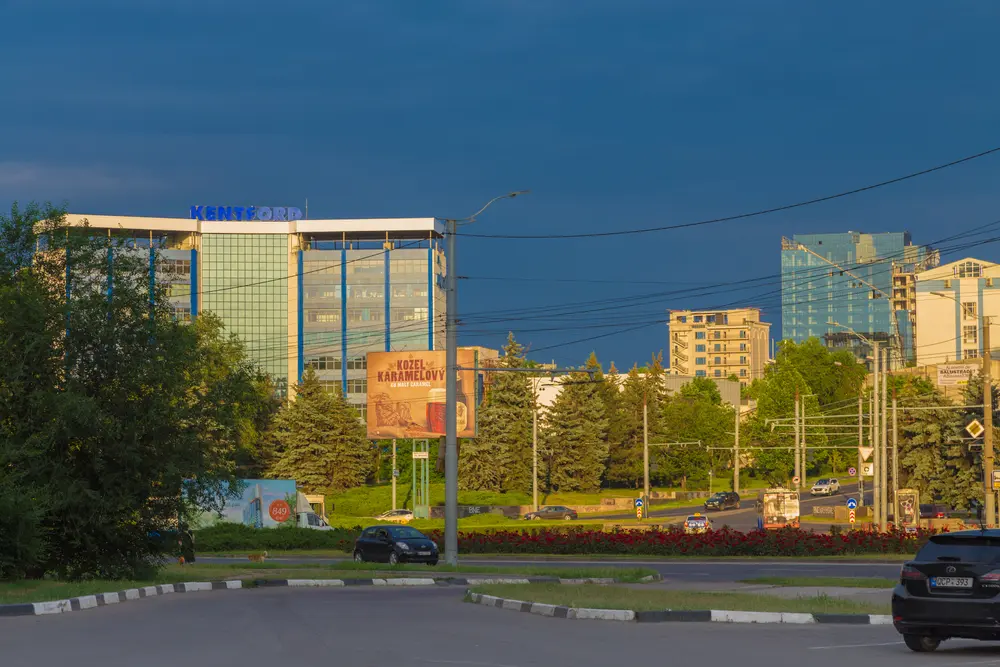
Chișinău © indigolotos / Shutterstock© indigolotos / Shutterstock
Chișinău © indigolotos / Shutterstock© indigolotos / Shutterstock
Cu Sens is a non-profit newsroom founded in 2019 by three experienced female investigative journalists, producing video-only content that supports democratic accountability in Moldova. Their work has been recognized with multiple national and regional awards since 2020, including “Investigation of the Year” titles in Moldova, two second-place finishes at Romania’s #Superscrieri Gala, and recognition from the EU Delegation in Moldova in 2024. In 2021, following two major investigations, the newsroom became subject of two different SLAPP cases. We had the opportunity to discuss them with the author of one of the investigations Felicia Creţu, and with one of the three co-founders of the newsroom Liuba Șevciuc.
Tell us about your case “The Partnership of Private Interests” (“Parteneriatul intereselor private”) and the SLAPP case that followed.
In September 2021, we published “The Partnership of Private Interests,” an investigation into schemes for seizing public property through public-private partnerships. One especially troubling case centered on a private high school in Chișinău. Under the deal, the school’s founders received an old school building to renovate into a private institution. In practice, however, the founders went on to construct their own private buildings on public land they had only received for management.
Shortly after publishing, we received pre-trial claims from four separate but connected entities: the school, its founding company, the founder, and even his parents, demanding corrections or threatening to sue not just the reporter, but each of the media outlet co-founders individually and our newsroom as a legal entity. That meant four parallel lawsuits, each targeting five defendants, seeking a combined 50,000 euros in damages, an enormous sum for a newsroom that survives entirely on grants and has no reserve budget of its own. The sheer volume of lawsuits that hit us all at once was clearly an intimidation strategy, not correction. When we refused to make the requested edits, the case proceeded, and the damages claim eventually dropped to about 1,500 euros. Far more revealing was how much time, legal coordination, and psychological strain the initial threat had already extracted before a single hearing took place.
The lawsuits came as a complete surprise. This was the first time in the newsroom’s two years of activity that we had ever been sued, let alone by four parties at once. The impact was all the greater because Cu Sens had no budget allocated for a lawyer at that point, and no savings or free funds of our own.
We looked for help from donors and the first to respond was the Independent Journalism Center in Moldova, which provided the resources to hire a lawyer for one of the four cases and recommended a lawyer already trained to represent media outlets in defamation proceedings. We also received 3,000 USD from the Lifeline Embattled CSO Assistance Fund. Their support covered legal assistance for the remaining cases. Non-profit Equal Rights and Independent Media (ERIM) also provided the newsroom with a 4,000 EUR budget to hire a lawyer to represent the organization in future proceedings.
What was the personal impact of these lawsuits?
One core principle at Cu Sens is that reporters are never left to face legal consequences alone, the newsroom stands behind them. That’s what happened here: the team members named in the lawsuits had the newsroom’s full backing, while management, in turn, found support among our external partners. Had that support not come through, we were prepared to turn to our community directly and launch a public crowdfunding campaign to cover the legal costs, so the pressure never became something any individual had to carry alone.
Unluckily, this is not your only SLAPP case. What happened with “ Digital Isn’t Going Well” (“Digital, ne merge prost”)?
The investigation began with the procurement of laptops for schools during the pandemic. We traced roughly 70 million MDL (about $4 million, including a $3 million World Bank loan) spent on laptops for schools during the pandemic, and found the money often didn’t reach the people who needed it: thousands of devices sat unused in storage rooms, some schools received laptops without internet access, and the World Bank-funded tender was won by a company linked to a businessmen close to the now jailed oligarch Vladimir Plahotniuc. We also found the procurement dragged on so long that many laptops arrived only after schools had already returned to in-person classes, making the whole exercise close to useless for its stated purpose.
After publication, you received requests to retract the article, corrections. What was your initial reaction?
One claim came from the company at the center of our investigation, one of the country’s largest IT equipment distributors, and another came from its founder, an influential figure connected to one of the country’s most powerful oligarchs. This time, we had a financial cushion: a reserve left over from the legal defense fund raised during the first SLAPP case, which softened the impact considerably. The punishment isn’t really financial, it’s the months of legal preparation, court appearances, and diverted attention that drain a small newsroom regardless of the final verdict, which is precisely why SLAPP suits remain effective even when they’re destined to fail in court.
During the workshop in Chișinău, we discussed how SLAPP suits in Moldova don’t just exert economic or political pressure, they can also exploit the claimants’ social influence.
In both cases, the claimants were influential people, well connected politically, with strong public images and substantial financial resources. In the private school case, beyond the barrage of lawsuits aimed directly at Cu Sens, the founders also sued the independent experts we had consulted during our investigation. The goal was to make people around us reluctant to speak to us again, out of fear of being associated with “the side that gets sued.”
Moldovan legislation requires those seeking compensation to pay a fee proportional to the amount claimed. Does this rule truly act as a deterrent against SLAPP-style actions, or do economically more powerful parties continue to use them?
In theory, this rule should discourage inflated compensation claims, since a higher demand means a higher court fee upfront. In practice, we’ve seen it used as a tactical maneuver rather than a genuine deterrent: in one of our cases, the plaintiff initially threatened us with a 1 million MDL compensation claim (equivalent of 50,000 euros), but once the case was actually filed in court, the amount dropped to 25,000 MDL (around 1250 euros). This suggests the large sum was never meant to be pursued, it was leverage, used to intimidate us during the pre-litigation phase, while the real legal claim was calibrated to something far more modest once formal costs came into play.
If you hadn’t had this legal and professional support, do you think the outcome would have been different?
We were confident our reporting was accurate, but being right doesn’t make a SLAPP suit cheap or fast to fight. Without legal support, we would have had to publicly appeal for help, search for a pro bono lawyer, or represent ourselves in court, which for journalists without legal training is a serious disadvantage against an opposing side with resources.
In your opinion, is the number of SLAPP-type actions in Moldova increasing, or is there a greater capacity to recognize and combat them?
From where we stand, we can only speak to our own experience, and for us, the pattern hasn’t gone away, it’s just become something we’re better equipped to handle thanks to lessons learned since 2021. Judicial pressure remains one of the main tools used against investigative journalism in Moldova. It’s an attractive tactic precisely because it offers a legal channel for people unhappy with an investigation to achieve intimidation goals that would otherwise be punishable by law. The lawsuit itself becomes the shield. That said, there are signs of progress: just last week (July 24, 2026), members of parliament adopted an anti-SLAPP bill that transposes European standards into Moldovan law. The draft introduces criteria that will help courts identify when a lawsuit qualifies as a SLAPP, along with new procedural tools to protect journalists, human rights defenders, civic activists, whistleblowers, and NGO members, including a security deposit requirement for claimants, an early-dismissal mechanism for manifestly unfounded claims, fines of up to roughly 12,000 euros for abusive litigation, and full compensation for victims, including legal costs and moral damages. The bill also removes criminal-administrative liability for defamation, in line with Council of Europe recommendations. That said, this is only the first reading, the bill still needs a second reading in Parliament, with no clear timeline yet, and the new provisions would only take effect.
What advice would you give a young investigative journalist who receives their first vexatious lawsuit?
As long as you’ve documented your investigation rigorously and it’s gone through a proper fact-checking process, you have no reason to be afraid or discouraged. In many ways, that first legal threat is a sign you did your job well, you hit a nerve that mattered enough for someone to fight back rather than just respond.
Found an error in this article? Please contact our editorial team at redazione@balcanicaucaso.org.
This publication is the result of the activities carried out within the framework of Media Freedom Rapid Response and the project Media Advocacy Action for Moldova: Empowering Moldova’s Public Watchdogs to Safeguard Media Freedom, co-financed by the CEI Fund of the European Bank for Reconstruction and Development (EBRD), with the contribution of the Italian Ministry of Foreign Affairs and International Cooperation. The views expressed in these materials are those of the authors alone and do not necessarily reflect those of the co-financing institutions.
Tag: MAAM | Media Freedom Rapid Response (MFRR) | SLAPP
Featured articles
 Political deadlock
 Economy and Dialogue
 Water shortage