Western Balkans, water and cohesion policy: the case of Waterlink
After the disaster of the war, cooperation between Bosnia and Herzegovina, Croatia and Montenegro continued, also thanks to EU support. The second part of the report on joint management of cross-border water resources
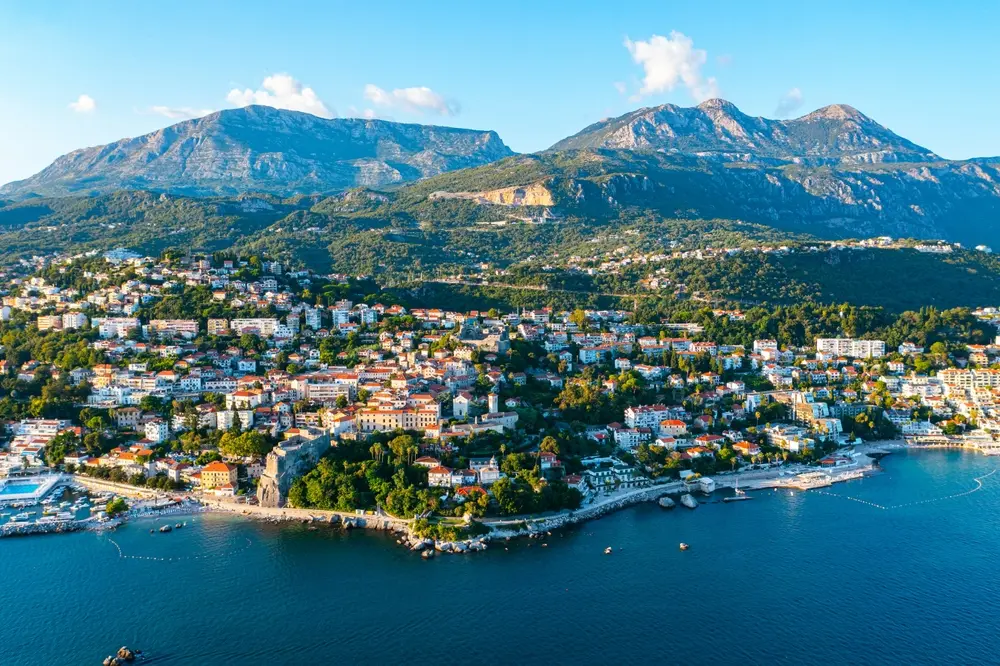
Herceg Novi, Montenegro © foxychka/Shutterstock
Herceg Novi, Montenegro © foxychka/Shutterstock
In the area where Bosnia and Herzegovina, Croatia and Montenegro meet, cross-border water cooperation is not a choice, but a necessity imposed by the physical configuration of the soil. This cooperation, concretised through Yugoslav mega-projects, fell into crisis with the wars of the nineties. However, in the new millennium, new initiatives for the consolidation of the joint management of water resources that stretch across – or below – the former republic’s, now international borders, began to emerge.
Some of these initiatives are in continuity with the past, such as the mega-project Gornji Horizonti, planned during the socialist period as an addition to Donji Horizonti, which was discussed in detail in the previous episode of our report.
However, the main interventions that should affect the upper course of the Trebišnjica River, which were to begin in 2023, are today blocked to the (current) satisfaction of various opponents of the project, who point the finger at its lack of transparency and, above all, serious environmental impacts.
Interreg Waterlink
The initiatives supported by the EU over the past two decades are of a completely different nature. Through IPA (Instrument for Pre-Accession Assistance) and the Interreg programme, the pillar of EU cohesion policy focused on transregional cooperation, Brussels has funded dozens of projects that combine local socio-economic development with biodiversity protection.
Among the twenty-five Interreg projects launched in this area in the period 2021-2027, one focuses specifically on the Trebišnjica basin: Waterlink (Smart and Innovative Management Practices for Preservation of Regional Water Quality and Supply) with a budget of almost 1.64 million euros (85% co-financed by the Union).
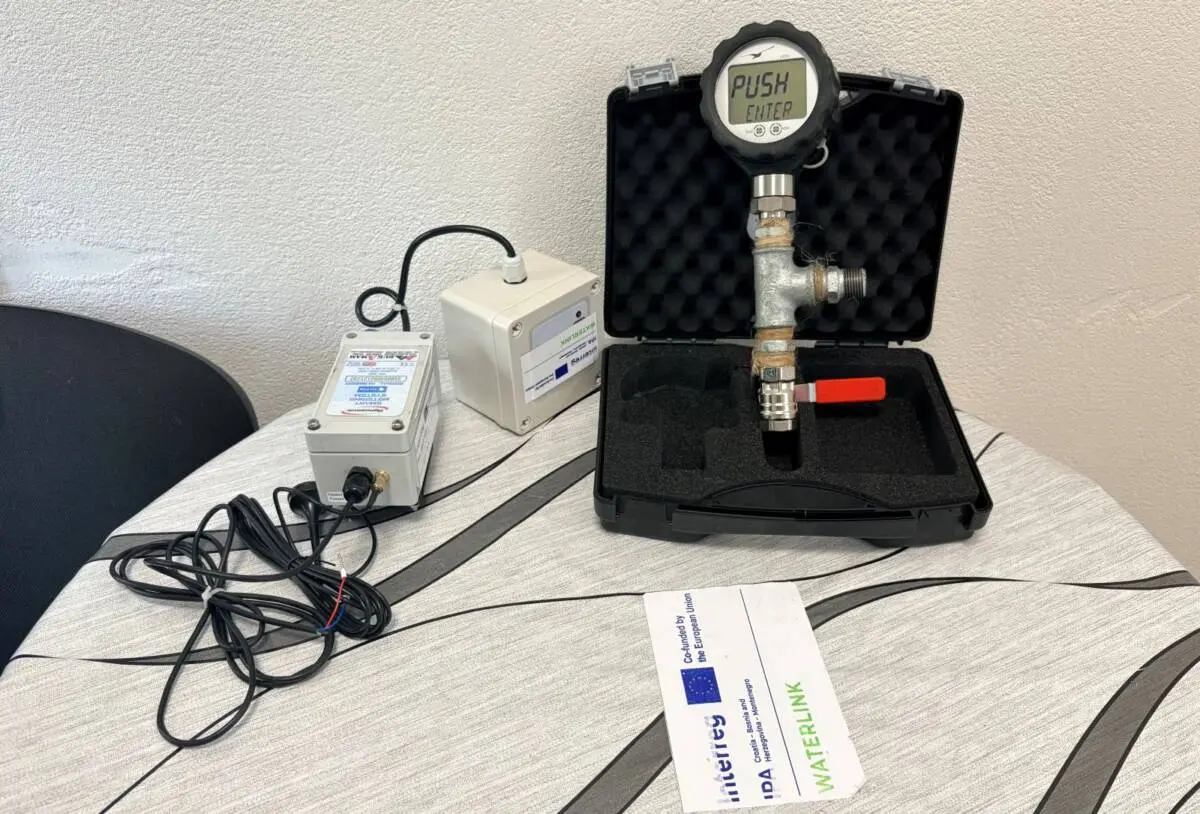
Equipment purchased by the Montenegrin partner of the Waterlink project: a hydraulic pressure gauge with a converter for digital remote reading. Photo: Francesco Bortoletto
The project was launched in August 2024 and will end next month. It involves a consortium of three partners: the Municipality of Trebinje (Bosnia and Herzegovina), the Municipality of Konavle (Croatia) and the company Vodovod i Kanalizacija, which manages the water supply and sewage network in Herceg Novi (Montenegro).
The aim is to modernise monitoring systems and distribution infrastructure to improve drinking water supply, with a focus on reducing technical losses. The area is exposed to severe water stress due to the karst nature of the soil that absorbs precipitation, while the seasonal variability of available water quantities is further negatively affected by the effects of climate change.
From Trebinje to Konavle
In fact, Waterlink follows the route traced by Donji Horizonti sixty years ago: “The water starts in Trebinje, passes through the Konavle River and arrives in Herceg Novi”, says Nataša Tučić, project manager for the lead institution, the Municipality of Trebinje. “We were once one country and all the infrastructure reflects that common past”, she explains, adding that “today, through projects like this, we are returning to cooperation and learning from each other”.
“The infrastructure is worn out, some are over a century old, and with outdated measurement systems it is difficult to identify faults”, points out Tučić. The result: pipes that resemble sieves. “In Konavle, leaks amount to 30%, in Trebinje they are around 55%, and in Herceg Novi they go up to 80%”, she adds, referring to the loss of water in relation to the total amount entering the network. But even measuring these values is not reliable, and this is where EU-funded technologies come into play.
The heart of Waterlink is a GIS (Geographic Information System), a database developed using a series of digital sensors that map the entire regional infrastructure – pipes, valves, tanks, connections, pumping stations and so on – providing in real time all the technical data essential for monitoring hydraulic components and consumption. Remote reading of data allows the identification of faults, leaks and waste, increasing the efficiency of the partners’ interventions within their local networks.
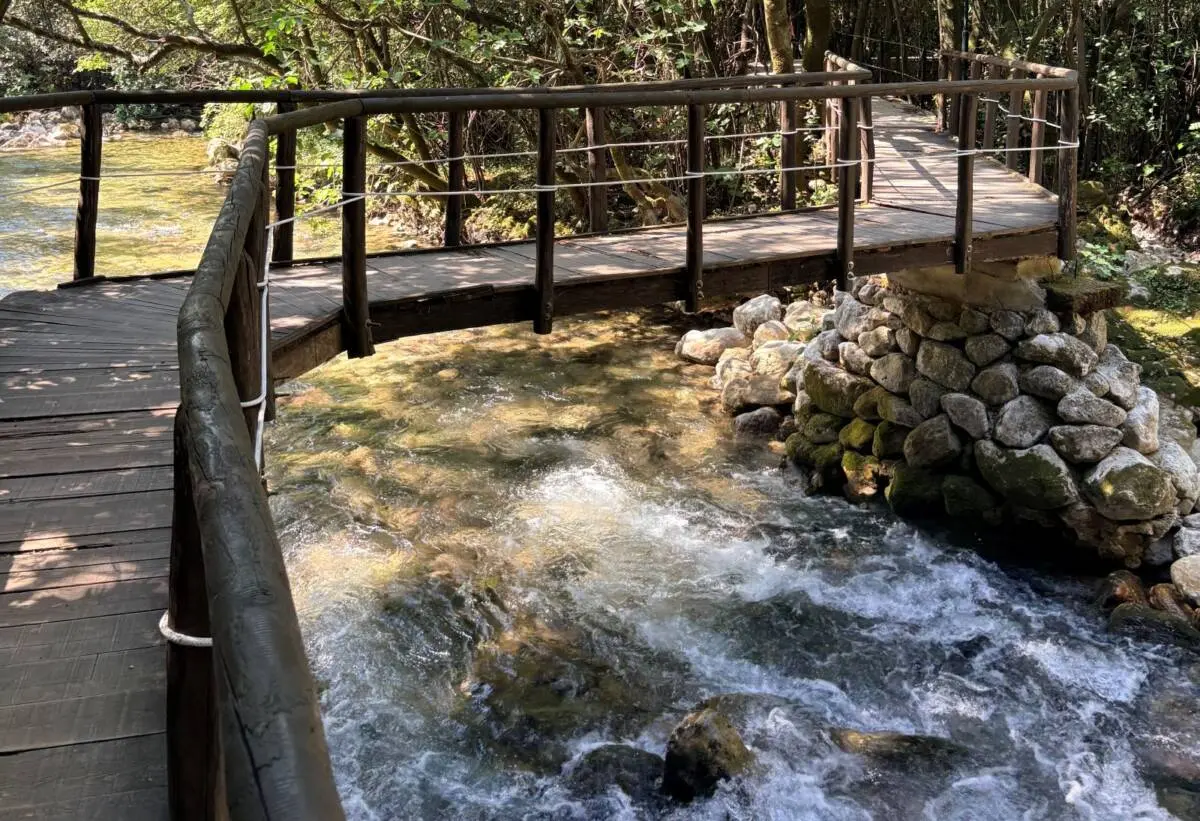
The Ljuta River, the main water source in Konavle, near Gruda. Photo: Francesco Bortoletto
With Interreg support, water quality is also being monitored. The Croatian partner installed a testing laboratory at the Molunat wastewater treatment plant, near the Montenegrin border, worth over 183,000 euros.
“Another important goal”, explain to OBCT Perica Pušić and Jelena Banović, project coordinators for the Municipality of Konavle, “is the interconnection of the eastern and western water supply networks, supplied by the karst springs Konavoska Ljuta and Duboka Ljuta, via a two-kilometer pipeline”. They specify: “We are currently finalising the documentation for the connection, which will strengthen the security of water supply in Konavle”.
Perspective of Herceg Novi
Herceg Novi, located at the entrance to the Bay of Kotor near the Croatian border, has historically drawn its water from the Opačica, a short karst river that, although the main source of fresh water in the area, cannot meet human needs on its own. The lion’s share of the local water supply is provided by the Bileća Lake, from where water is piped in from Donji Horizonti via Plat.
However, the flow – halved during the war – is not uniform: it is periodically interrupted during maintenance of Croatian pipelines, forcing Herceg Novi to rationalise supplies for a few weeks each year, in June or September. At such times, Opacica comes as a rescue.
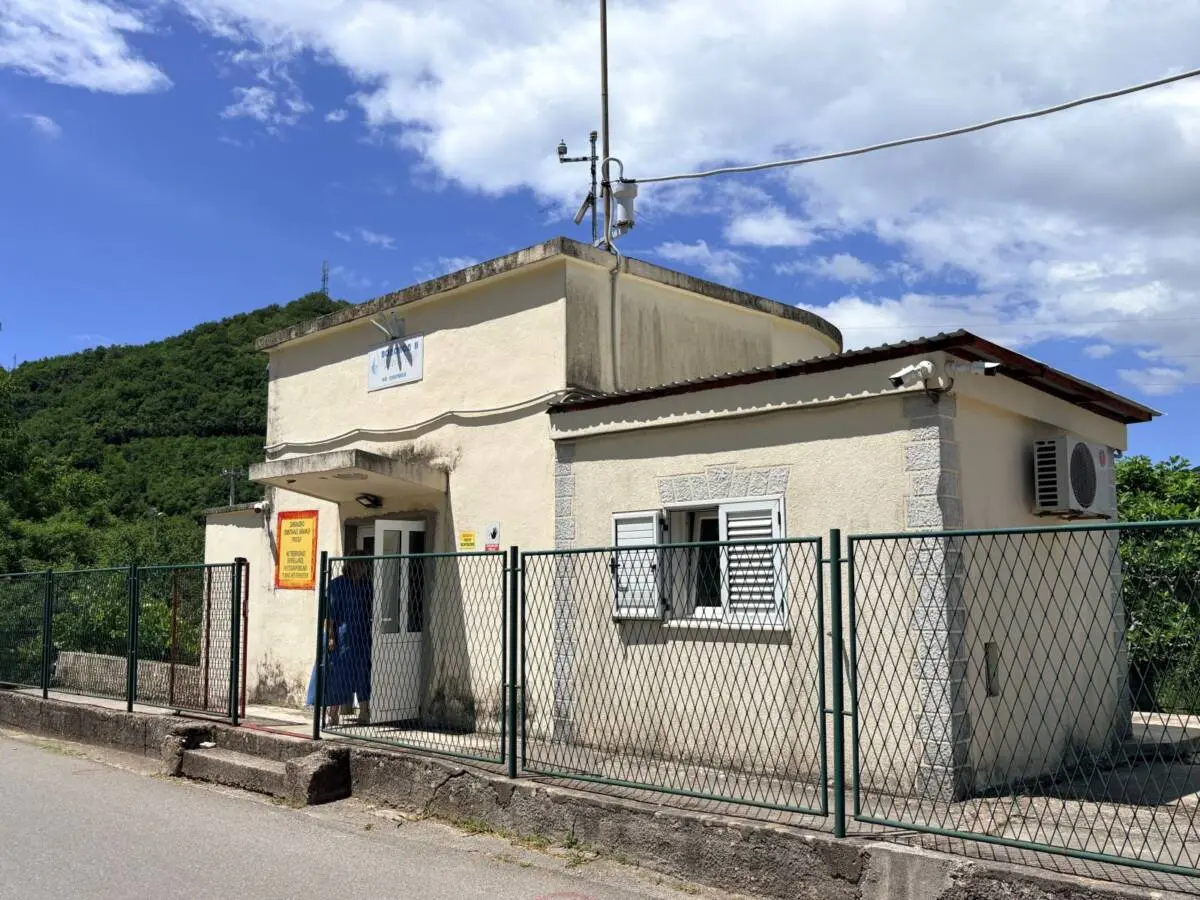
The building housing the operations room in Zelenica, near the Opačica pumping station. Photo: Francesco Bortoletto
“In winter, water from Bileća is sufficient, around 330–360 m3/s, while in summer, when demand is higher, we take another 120–160 m3/s from Opačica”, explains Luka Radović, an employee of the Herceg Novi Vodovod, showing us the monitoring center set up in the pumping station at the karst source of the river, in the eastern hamlet of Zelenika.
The room houses around 600,000 euros worth of technological equipment purchased thanks to the Waterlink project. From there, remote measurements of various components of the local network are carried out: one screen updates the status of the city’s 18 water tanks every 15 minutes (“For now, we only see our own, but soon we will have data from other partners”, assures Radović), another displays readings from a GIS that monitors consumption along 240 kilometers of pipes via 80 flow meters scattered throughout the municipality.
The highlight is Cloud, a system that identifies leaks by marking them with different colors (green, yellow and red) depending on their severity. “In summer, when the pressure in the pipes is lower, leaks average 62-63%, then drop to 50% in August”, explains Radović, noting that “before Interreg, they exceeded 75% in summer and even more in winter”.
Once leaks are identified, the necessary repairs must be made. However, the utility company is understaffed: “We see more problems than we can solve”, admits Radović, lamenting the lack of staff and emphasising that “for every hole we fix, new ones always appear”. But he sees the glass half full: last year, they carried out a total of about 950 repairs, less than half the number recorded in 2023, a sign that the project is yielding tangible results.
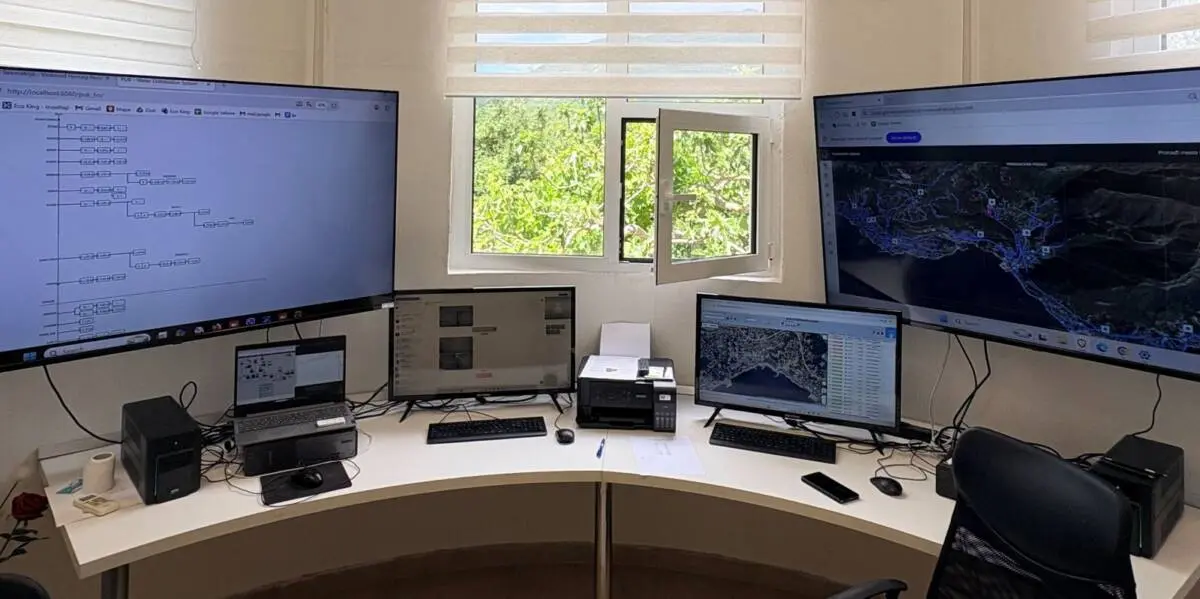
Digital equipment purchased by Vodovod Herceg Novi with Waterlink funds. From left to right, the screens show: city reservoirs, Cloud and GIS database. Photo: Francesco Bortoletto
Against techno-bureaucracy?
There is no shortage of criticism, however. While Yugoslavia’s mega-infrastructure projects undoubtedly caused environmental damage, the EU’s approach raises new questions. “While the major works of the socialist era at least partly responded to redistributive logics, Brussels manages these projects in a bureaucratic manner, promising sterile technical solutions that, however, produce real impacts on local communities and ecosystems”, says Dženeta Hodžić, a researcher at the Frankfurt Institute for Social and Ecological Research (ISOE).
Referring to the idea of “infrastructure diplomacy”, the scholar criticises what she sees as the “depoliticisation of collective demands for democratic participation in processes aimed at improving the territory” promoted by the EU executive. In contrast, Hodžić advocates for an “informal, bottom-up, fairer and more inclusive model of cross-border cooperation”, involving residents and experts from all fields.
Finally, Hodžić suggests a “holistic” approach to planning strategies and infrastructure: “An integrated approach to karst water management is needed”, she tells OBCT, in order to “fully understand the functioning of river basins, with an emphasis on synergies between ecological, economic and social plans”.
The author thanks his colleague Marco Ranocchiari for his cooperation in preparing the interview with the Bosnian partner.
Found an error in this article? Please contact our editorial team at redazione@balcanicaucaso.org.
This article was produced as part of the EuSEE project, co-funded by the European Union. However, the views and opinions expressed are solely those of the author(s) and do not necessarily reflect those of the granting authority, and the European Union cannot be held responsible for them.
Featured articles
 Political deadlock
 Economy and Dialogue