Pathways for gradual integration of candidate countries into the EU
A recent study compares the existing legal frameworks governing relations between the EU and candidate countries, with the aim of facilitating their gradual integration into the Union. The research pays particular attention to the link between enlargement and cohesion policy in light of the future EU Multiannual Financial Framework.
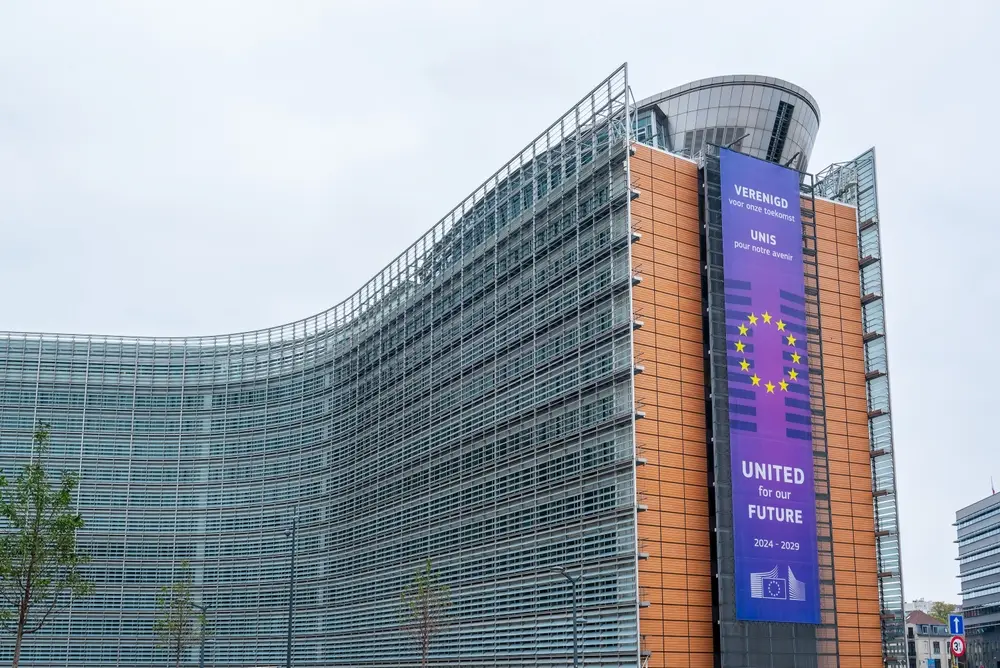
Bruxelles, Belgium, seat of the European Commission
Bruxelles, Belgium, seat of the European Commission - © Shutterstock/Delpixel
After years of political deadlock, the EU enlargement process has entered a new phase of renewed momentum, particularly following Russia’s war of aggression against Ukraine in 2022. This renewed impetus has brought to light the concept of gradual integration, a new approach that complements the traditional accession negotiations by injecting greater dynamism into the process and allowing candidate countries to benefit from access to the EU Single Market before achieving full membership.
The implementation of gradual integration relies on different legal frameworks for the two groups of candidate countries, creating an important asymmetry in their progress toward integration into the Single Market. The Stabilisation and Association Agreements concluded between the EU and the Western Balkan countries during the first decade of the 2000s were primarily designed to promote regional stabilisation, placing comparatively less emphasis on aligning national legislation with the EU acquis related to Single Market access. By contrast, the Deep and Comprehensive Free Trade Agreements concluded in the following decade between the EU and the countries of the Eastern Trio were specifically designed to foster the integration of their markets with the European Single Market.
Within this framework, it is implemented the research project InteGraLe – Western Balkans vis-à-vis the Trio: Single Market, Cohesion and Regional Policy for Gradual Integration into the EU, co-funded by the Italian Ministry of Foreign Affairs and International Cooperation.
The project’s main findings were presented during a webinar held on 23 June, bringing together institutional representatives and civil society stakeholders from both the EU and the candidate countries.
In his remarks, Federico Paolini, an official of the DG for Europe at the Italian Ministry of Foreign Affairs, stressed that the enlargement process is advancing on several fronts simultaneously: the opening of the first negotiation cluster with Ukraine and Moldova, the provisional closure of 16 out of 35 negotiating chapters by Montenegro, and Albania’s fulfilment of the rule of law benchmarks at the end of May 2026. “Enlargement is no longer a theoretical prospect. It is happening […] and Italy strongly supports it” he stated, describing it as a strategic investment in the continent’s security, stability and prosperity rather than an act of generosity toward the candidate countries.
Zoé Gaspar, from DG ENEST, illustrated how gradual integration is being implemented in practice in the Western Balkans, highlighting ongoing initiatives such as the support provided through the Reform and Growth Facility to facilitate progressive access to the Single Market, as well as participation in agencies including Europol, European Medicines Agency (EMA), and European Union Agency for Cybersecurity (ENISA). Nevertheless, the implementation timelines remain uneven. For example, the “Roam Like at Home” regime has been in force for Ukraine and Moldova since 1 January 2026, whereas for the Western Balkans the Council authorised the opening of negotiations for its implementation only on 4 June. Modelled on the system already in place among EU Member States, the initiative allows citizens of candidate countries to make calls, send messages and use mobile data abroad at the same rates as in their home country. “The disparity in timing largely stems from the absence of an adequate legal basis for the Western Balkans”, Gaspar explained.
The research highlights precisely this structural paradox of integration resulting from the different legal frameworks governing the EU’s relations with candidate countries. Deep and Comprehensive Free Trade Agreements provide a significantly deeper and institutionally more robust basis for gradual integration thanks to their dynamic implementation mechanisms. By contrast, Stabilisation and Association Agreements rely on static and evolutionary clauses that require substantial external political intervention to translate regulatory alignment into tangible access to the Single Market.
Sokol Zeneli, one of the authors, described the Growth Plan for the Western Balkans as a “financial patch”, useful but temporary, and proposed transforming it into a permanent instrument while expanding the use of sectoral arrangements such as the Energy Community Treaty. “Money alone cannot overcome domestic political resistance or address shortcomings in the rule of law,” he warned. “Only the prospect of EU membership provides the political incentive needed to pursue reforms.”
Researcher Raffaella Coletti focused on the future of enlargement in the context of the next EU Multiannual Financial Framework. As outlined in the European Commission’s proposal for the new financial framework published in July 2025, enlargement now falls under the “Global Europe” heading, with 43.2 billion euros allocated to the Europe, Enlargement and Neighbourhood pillar, in addition to a further 100 billion euros earmarked for Ukraine. Coletti also drew attention to the reform of EU cohesion policy, which would replace the current national and regional plans with reform-linked plans. However, it remains unclear how much of these resources will ultimately be allocated to the Western Balkans and the Eastern Trio. The Council’s agreement of 16 June clarified only the functioning of the instrument, not its overall financial envelope.
The discussions concluded with a shared point by all speakers: gradual integration instruments represent useful intermediate steps, but without a credible and reasonably near-term prospect of full EU membership, they risk becoming a permanent waiting room rather than a genuine bridge to accession.
For further information, readers are invited to consult the research papers:
Found an error in this article? Please contact our editorial team at redazione@balcanicaucaso.org.
This research is written as part of the project “InteGraLe – Western Balkans vi-à-vis the Trio: single market, cohesion and regional policy for gradual integration into the EU.” The project is supported by the Analysis, Programming, Statistics, and Historical Documentation Unit – Directorate General for Political Affairs and International Security of the Ministry of Foreign Affairs and International Cooperation, pursuant to Article 23-bis of Presidential Decree 18/1967. The opinions expressed in this publication are those of the authors and do not necessarily represent the views of the Ministry of Foreign Affairs and International Cooperation.