Moldovan wine route to the EU
Wine in Moldova is one of the main exports to the EU. With the 2006 Russian embargo and the country’s new direction, Moldova has increasingly oriented itself towards the EU market. We interviewed Margherita Gobbat, a researcher at the Research Center for East European Studies (FSO) at the University of Bremen, Germany, and the Center for Social Sciences (CSS), Georgia
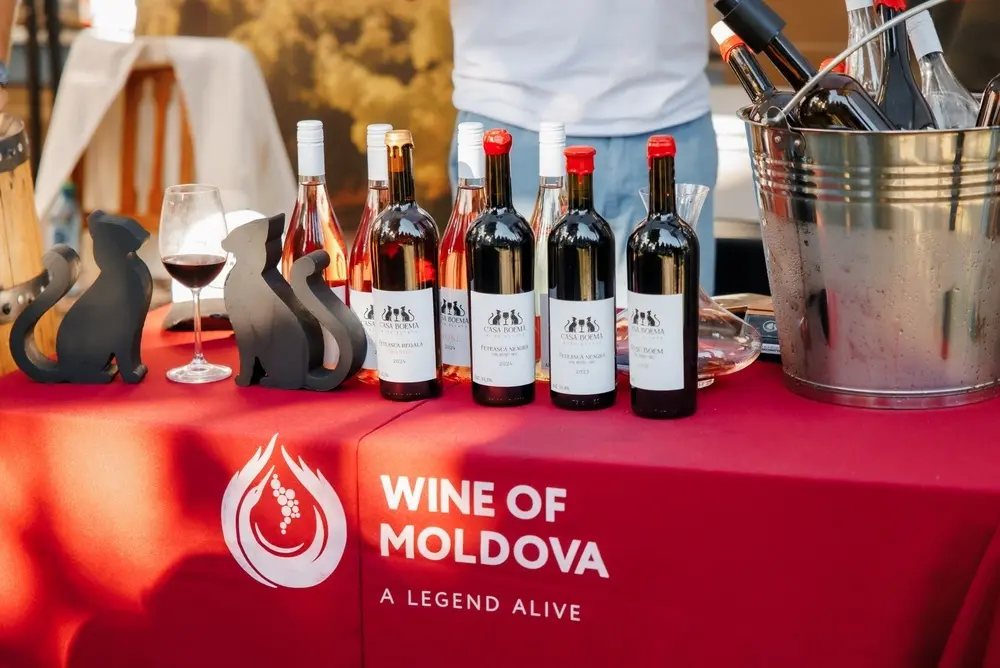
Bottles of wine from Moldova
Bottles of wine from Moldova - Photo © Alexandru Panis/Shutterstock
Why did you study the wine sector in Moldova?
I studied the wine sector in Moldova, along with Georgia, as a case study to analyze the effects of Europeanization and the relationship between European regulations and local informal practices in the wine sector. I was interested in understanding whether and how European wine regulations might conflict with traditional production practices.
The wine sector is a particularly interesting case study because it not only provides a direct and indirect source of employment, but also has strong cultural and social significance in an EU candidate country. In Moldova, the Wine Festival celebrations in Chisinau and Comrat (in Gaguzia) demonstrate how wine is also used as a national symbol and a tool for cohesion between the country’s different communities. Therefore, it is also important to consider its identity-building aspect and the influence of the European market on the identity of producers, in an economically crucial, growing, and evolving sector.
What are Moldova’s European markets?
Wine is one of Moldova’s main exports to the EU, accounting for approximately 60% of its total exports, highlighting its economic and social importance. A large portion is exported to Romania, accounting for over 33%. The Romanian “brothers” are familiar with the product; some of the same grape varieties are grown in Romania, and there are many family and friendship ties between the two banks of the Prut River. Furthermore, trading is easier thanks to the common language. Many producers also use Romania as a logistics hub to re-export wine more quickly to other European countries, as shipping the wine becomes easier and cheaper once it crosses EU borders.
Poland is also an important market; it is the third largest exporter of Moldovan wine in absolute terms, after Romania and Belarus. The Czech Republic is also among the important markets. In these countries, the product is also appreciated because it was known and consumed during the socialist period. Moldovan wine manages to reach large-scale Polish and Czech retailers, gaining recognition among a large group of consumers.
Russia has maintained a partial embargo on Moldovan wine since 2006 for political reasons, and imports have been insignificant for years. However, some wine is likely still purchased through indirect channels, especially Belarus and Georgia. Many producers interviewed are aware of the instability of the Russian market and no longer wish to associate with a country that, historically, is also perceived as a consumer of sub-par wines.

Margherita Gobbat (photo private archive)
Does Moldova also export raw grapes?
Yes, table grapes. Moldova can export approximately 40.000 tons per year to the EU duty-free; once the quota is exceeded, standard “most favored nation” duties apply.
Regarding the raw material intended for wine production, international transportation of fresh grapes is very complex because they are highly perishable over long distances. Since October 2025, however, the grape juice from which must is obtained has been completely liberalized in trade relations with the EU and is no longer subject to quotas. This makes it easier to export processed raw materials and, consequently, to produce wine in Europe using must obtained from grapes grown and harvested in Moldova.
In the case of the Balkans, the 2008 crisis severely slowed economies and exports. What happened to Moldova, and its wine sector in particular?
Moldova also suffered severely from the 2008 economic crisis, primarily due to its dependence on emigrant remittances, the structural fragility of its economy, and its heavy dependence on external markets. However, for the Moldovan wine sector, the real crisis and turning point had already begun, with the 2006 Russian embargo on Moldovan wine (a country that imported over 80% of its wine before the embargo).
That embargo forced many producers to seek new markets and rethink their production models. While this initially caused serious economic and social difficulties, many industry players now describe it as a sort of “new beginning.” Over the long term, the embargo pushed part of the sector toward higher quality standards, reduced dependence on the Russian market, increased bottling, better product promotion abroad, and progressive diversification of export markets.
I think it’s also interesting to note how other external shocks, such as COVID-19 and the war in neighboring Ukraine, have negatively impacted the Moldovan wine sector.The pandemic has reduced food and wine tourism, which was previously growing, especially affecting restaurants, wine shops, and exports towards certain markets. Subsequently, Russian aggression against Ukraine created further difficulties: rising raw material prices, logistical problems, and sharply rising energy costs.
In the case of the Balkans, a report highlights that large companies will primarily benefit from entering the single market, partly due to the difficulty of shouldering the costs of complying with European regulations. Is there a similar situation in Moldova?
In part, yes. In Moldova, too, larger and more structured companies tend to be more able to adapt to European regulations, from phytosanitary requirements to the technical and bureaucratic standards required to export to the EU market.
The signing of the Free Trade Agreement (AA/DCFTA) with the EU in 2014 marked a fundamental step, paving the way for greater trade liberalization, provided that European rules and standards were respected. EU investments are the main driver of the Moldovan economy, accounting for approximately 80% of the total stock of foreign direct investment in the country. However, overall, the adjustment process takes time, and results in recent years have been mixed, depending on the sector. Starting in 2025, the free trade agreement has been revised, further reducing tariff quotas – particularly in the agricultural sector – which should encourage increased imports and exports to the EU.
Larger companies are more easily able to sustain the costs of certification, marketing, technological innovation, and international distribution. This is particularly important in a sector like wine, which has very high initial costs: land, machinery, facilities, the ability to hire workers, and years of investment before achieving economic returns. For small producers, however, these costs can be much more burdensome.
Many producers, especially small farmers and wineries, complain that Moldovan institutions, such as the Moldovan National Wine Agency, do not always truly represent the interests of the entire sector. Some wonder whether the international promotion of Moldovan wine primarily benefits large, already stronger companies, while small producers lack greater marketing activities, training courses, distribution support, and access to exports. Interviews revealed that the main needs of winemakers are to increase their marketing capabilities, establish stable contacts in the EU, and promote Moldovan wine abroad.
What about the European Carbon Tax (CBAM)?
The topic is still under public discussion, and environmental issues are not yet a priority in Moldovan political debate. Naturally, with the integration process underway, Moldova will eventually have to comply with the CBAM, and this will result in higher costs for companies. For example, in the wine sector, any costs related to the ecological transition would primarily affect larger producers and companies that use materials such as glass and plastic for bottling and packaging.
In the interviews I conducted, the environmental and energy issues emerged primarily in relation to rising energy costs. Several interviewees also emphasized that extreme weather events are increasingly occurring in southern and southeastern Moldova, directly impacting agriculture and the wine sector.
Is there institutional concern about the potential consequences of integration into the single market for those who are not strong enough?
The issue exists, even though public discourse among Moldovan institutions often highlights only the positive aspects of European integration. It is worth noting, however, the significant effort made in recent years by both state agencies and producers to adopt all the necessary reforms to obtain the certificates of conformity required for exporting to the EU, starting from a sector almost destroyed by the Russian embargo.
A significant shift has been observed in recent years: the total exported volume is decreasing, but the value per exported unit is increasing, a sign of the growth of the premium sector and of bottled wine compared to bulk wine. This allows for greater value added and a better positioning of the product in international markets, although it entails higher production, bottling, and distribution costs, especially for small winemakers.
Serious structural problems remain: depopulation, declining birth rates, climate change, labor migration, and the widespread presence of informal and underpaid work in the agricultural sector. For this reason, a more comprehensive and coordinated approach among the institutions involved in the country’s rural and economic development is needed. Some of the priorities of the Moldovan National Wine Agency include digitizing sector monitoring processes, replanting and replacing older vineyards, and improving the traceability of raw materials.
Found an error in this article? Please contact our editorial team at redazione@balcanicaucaso.org.
This article was written as part of the project "InteGraLe - Western Balkans vi-à-vis the Trio: single market, cohesion and regional policy for gradual integration into the EU." The project is supported by the Analysis, Programming, Statistics, and Historical Documentation Unit – Directorate General for Political Affairs and International Security of the Ministry of Foreign Affairs and International Cooperation, pursuant to Article 23-bis of Presidential Decree 18/1967. The opinions expressed in this publication are those of the authors and do not necessarily represent the views of the Ministry of Foreign Affairs and International Cooperation.
Featured articles
 New political movements
 History and memory