Transnistria is in serious economic crisis
Transnistria is in serious economic crisis, so much so that it has initiated the creation of a fund called “Vmeste” (Russian for “Together”), which collects donations to pay salaries and pensions, and also to maintain its distance from the Moldovan government
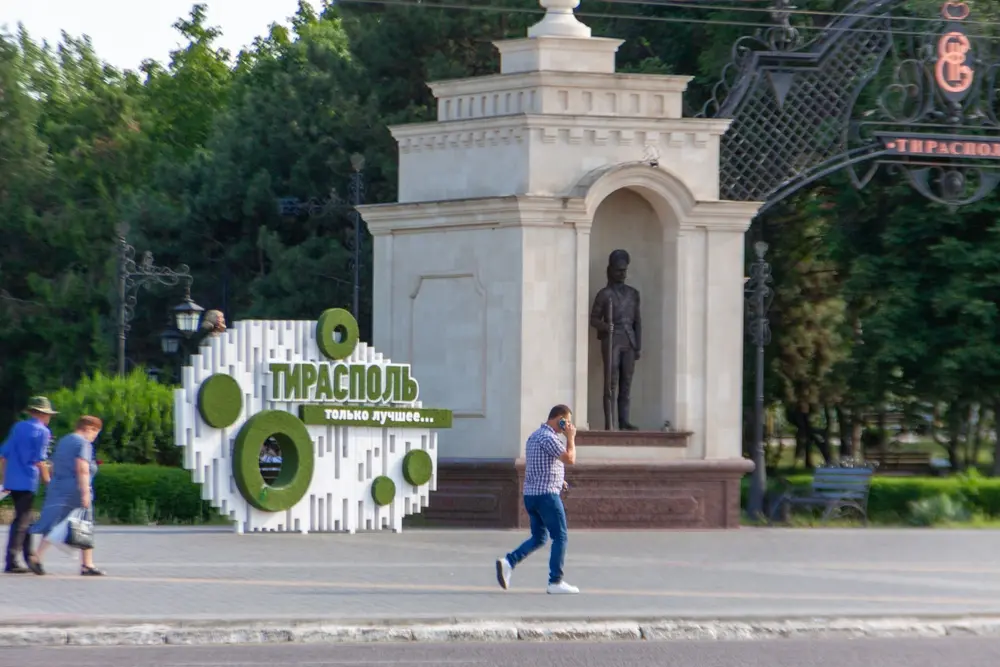
Tiraspol, Transnistria, Moldova
Tiraspol, Transnistria, Moldova © RudencoMihail/Shutterstock
The economic crisis in Transnistria is severe, so severe that it has prompted Tiraspol to create a fund to collect donations from businesses and citizens to pay the salaries of “public employees” and pensions.
Together against Convergence
The “Vmeste” fund (from the Russian, “Together”) was created after Chișinău announced the launch of the Convergence Fund, starting August 1st. The fund aims to bridge the two banks of the Dniester/Nistru River, which would channel taxes and duties from Transnistrian companies. Tiraspol opposed the initiative, and the Vmeste fund appears to be a last-ditch effort to keep the region outside the influence of the Chisinau government.
The leader of the de facto Transnistrian government, Alexandr Rozenberg, described the economic situation in the region as one of the most difficult in recent years and stated that the Tiraspol authorities are counting on the help of the business community and citizens. Rozenberg explained that budget revenues have decreased due to export and import difficulties and energy supply problems.
In the first three months of 2026, production volumes decreased by almost 24% compared to the previous year, several companies closed, and some planned mass layoffs. On May 13, the so-called Supreme Soviet extended the state of economic emergency until June 17, at the request of separatist leader Vadim Krasnoselski. A few days after the fund’s opening, over 145 million Transnistrian rubles, equivalent to approximately 7.4 million euros, were raised. The most generous donors are the Sheriff holding company with 100 million rubles and two Transnistrian banks with 10 and 15 million rubles (500,000 and 750,000 euros, respectively).
Over 80% of the Transnistrian region’s exports go to the EU, and only a small portion to CIS countries, including Russia. Approximately 2,400 economic operators on the left bank of the Dniester/Nistru River are registered with the Public Services Agency of the Republic of Moldova. According to Deputy Prime Minister for Reintegration, Valeriu Chiveri, every day, approximately 25,000 citizens from the left bank of the Dniester/Nistru River commute to work on the right bank, and approximately 75,000 Transnistrians are covered by national health insurance.
In 2025, Russian gas supplies to Tiraspol were interrupted, and Chișinău stopped purchasing electricity from the Cuciurgan power plant, controlled by the de facto regime. Without this revenue, considered essential to the local budget, the region has lost over 80% of its financial resources.
To better understand the dynamics behind the creation of this fund, OBCT spoke with Irina Tabaranu of Zona de Securitate.
Is the creation of the “Vmeste” fund primarily an economic necessity or also a political message?
I think it’s both, because it’s not economically sustainable. They’ll collect this money in the first month, maybe even the second, but after that, the amount will certainly decrease. People have no way of donating regularly, and practically half the region’s population depends on this budget. They can’t donate and then get it back. We know of one case where economic agents were pressured and insistently urged to make these donations, but they won’t be able to do so indefinitely. Perhaps in the initial phase it was an economic necessity, but it’s certainly a political tool to demonstrate unity. We’ve noticed that on the left bank of the Nistru, these narratives about the Transnistrian people have intensified: “Together we are stronger,” “We will overcome these difficulties.” And this demonstrates their true unity. “Look at the economic blockade that Chișinău is creating; we have united and mobilized.” This is just one aspect of this propaganda, and the fact is that the major donors are the same ones who kept this region isolated—Sheriff—who donated the largest sum; two other companies in his holding company later donated equally large sums. This shows that there’s something more behind this idea of unity, that the image of the authorities on the left bank of the Nistru and of the Sheriff holding company has become increasingly negative lately, and that they have tried to maintain some sort of loyalty from the population.
Could the “Vmeste” fund become a conduit for disguised Russian funding?
Here, I see more of a legalization of Sheriff’s money, because we don’t know where the initial hundred million and, subsequently, the other millions donated came from. This money will reach the people who will use it to make purchases, legally, and then the money will return to Sheriff’s coffers, but already through this [money laundering] procedure. It’s a procedure to get rid of the Transnistrian rubles, which Sheriff possesses in what I believe are enormous quantities. I’m not an expert on economics or money laundering, but at first glance it seems like this is what’s happening.
Was the announcement about the Convergence Fund perceived in Tiraspol as a form of political pressure?
Yes, they say that this way, Chișinău is impoverishing, robbing the region’s population, and that this money will not be returned to the left bank of the Nistru. I also believe it’s a communication error on the part of the Chișinău government, in communicating how they are helping the population of the left bank of the Nistru, and that these contributions are now being returned. On the left bank of the Nistru, over 2,000 children study in schools under the Ministry of Education: teachers’ salaries are paid, buildings are maintained, and the Chișinău government covers expenses for the children, teachers, and parents of the left bank of the Nistru. For example, children up to 18 years of age, citizens of the Republic of Moldova, have the right to free education; As do pensioners from the Republic of Moldova, who also benefit from a free pension. They already receive various benefits, including this Convergence Fund, and the funds are being returned to the region. Our failure to communicate this is wrong, and Tiraspol has no choice but to present it this way. They certainly won’t encourage the creation of such funds, because their goal is to build as many bridges as possible between the population of the left bank of the Nistru and the government or authorities, which is obviously not in Tiraspol’s interest.
Found an error in this article? Please contact our editorial team at redazione@balcanicaucaso.org.
Tag: Economy
Featured articles
 Political deadlock
 Economy and Dialogue
 Water shortage